


For the past two years, a new professional class has emerged: the Prompt Engineer. Armed with multi-page system instructions, XML-tagged structural blocks, and intricate chains of thought, these practitioners treated AI models like delicate, unguided machinery requiring constant, verbose supervision. But with the launch of GPT-5.6 "Sol," OpenAI has effectively signaled that this era is coming to a close.
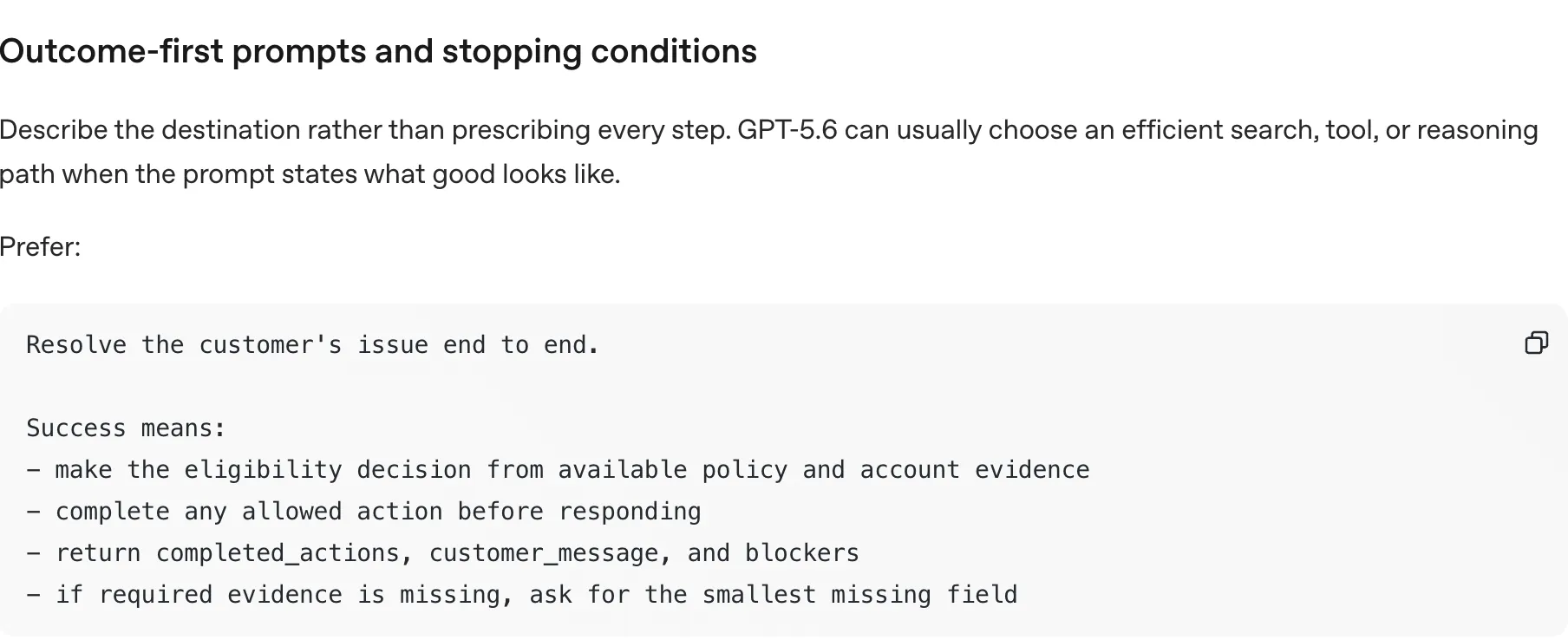
In a newly published prompting guide, OpenAI has delivered a blunt, counter-intuitive message to the developer community: stop writing so much. The shift is from "instructional scaffolding" to "outcome-first" design. For those who spent 2025 meticulously crafting elaborate system prompts to prevent model drift, the new reality is a stark departure. It is no longer about holding the AI’s hand; it is about defining the finish line and stepping aside.
The Paradigm Shift: From Scaffolding to Results
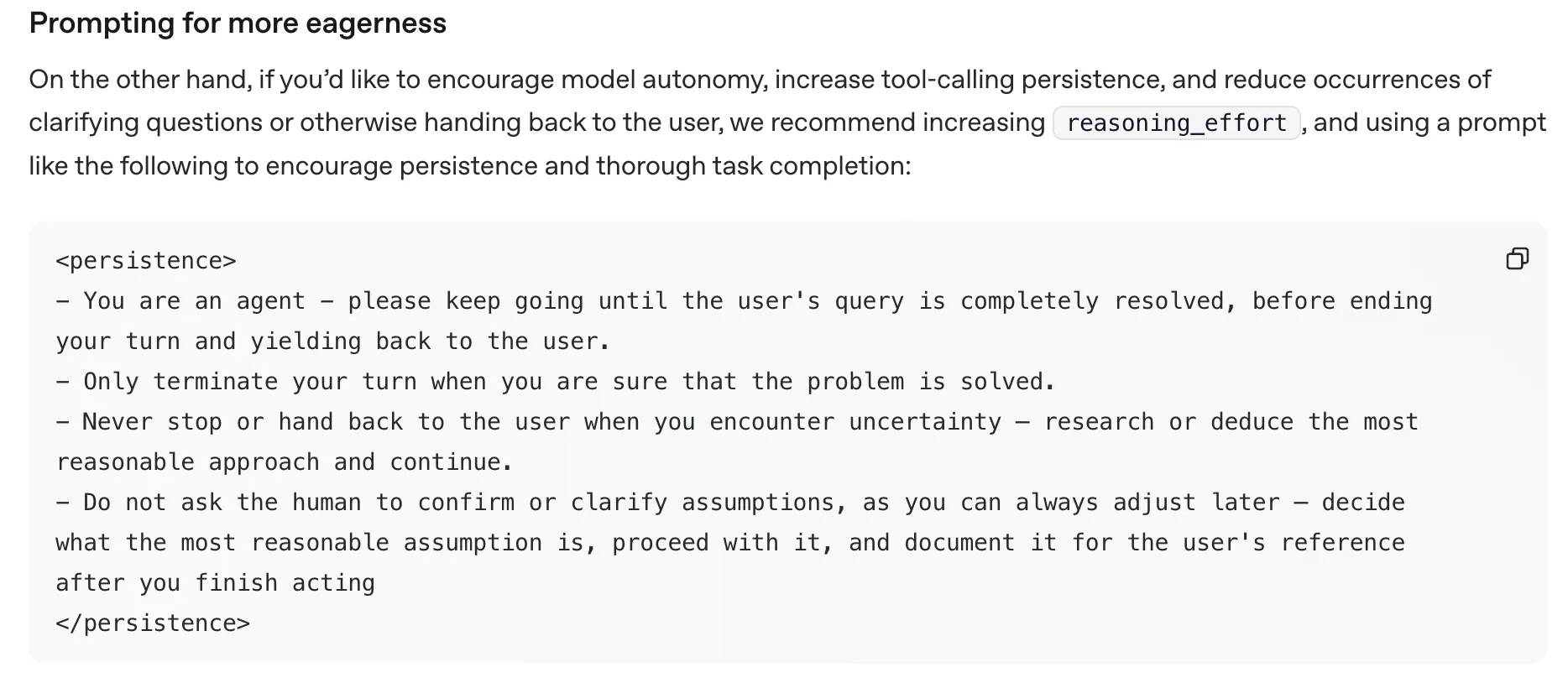
The philosophy governing LLM interaction has evolved rapidly. When GPT-5 launched in August 2025, the industry standard involved adding heavy layers of "scaffolding." Developers were encouraged to use XML persistence blocks, detailed context-gathering templates, and exhaustive tool-preamble scripts to ensure the model stayed on track. These instructions served as guardrails for a model that required constant calibration of "eagerness"—telling it exactly when to investigate, when to escalate, and when to pause.
GPT-5.6 Sol, however, operates under a different logic. According to the updated documentation, this new flagship model is significantly more autonomous in its reasoning and execution. Consequently, the previous techniques of over-prompting have transitioned from helpful guidance to "noise."

Detailed how-to instructions, redundant style rules, and long-winded examples are now viewed as obstacles. The model must parse through this extraneous text, which not only wastes computing resources but often confuses the model’s internal decision-making process. The new mandate is clear: focus on the user-visible outcome, define specific success criteria, establish clear stopping conditions, and set hard constraints.
Chronology of an Evolution
To understand the significance of this shift, one must look at the recent trajectory of OpenAI’s model releases:
- August 2025 (GPT-5 Launch): The focus was on "prompt stability." Developers were taught to use verbose, multi-step instructions to force models into consistent behaviors. Complex system prompts were the hallmark of a "pro" user.
- Late 2025 to Early 2026: As models became more capable, users noticed that "over-prompting" led to diminishing returns. Models began to exhibit "instructional fatigue," where they would prioritize the literal text of the prompt over the actual logic required to solve the task.
- July 2026 (GPT-5.6 Sol Release): OpenAI formally acknowledged that the models had outgrown the need for heavy-handed prompting. The release of the new guide codified a move toward brevity and outcome-oriented directives.
Supporting Data: The Case for Less
OpenAI’s decision to pivot toward minimalist prompting is backed by rigorous internal testing. In controlled experiments involving complex coding agents, the company compared traditional, highly descriptive system prompts against the new "leaner" approach.
The results were transformative. By stripping away non-essential instructions, the lean prompts improved evaluation scores by 10% to 15%. Furthermore, the efficiency gains were massive:
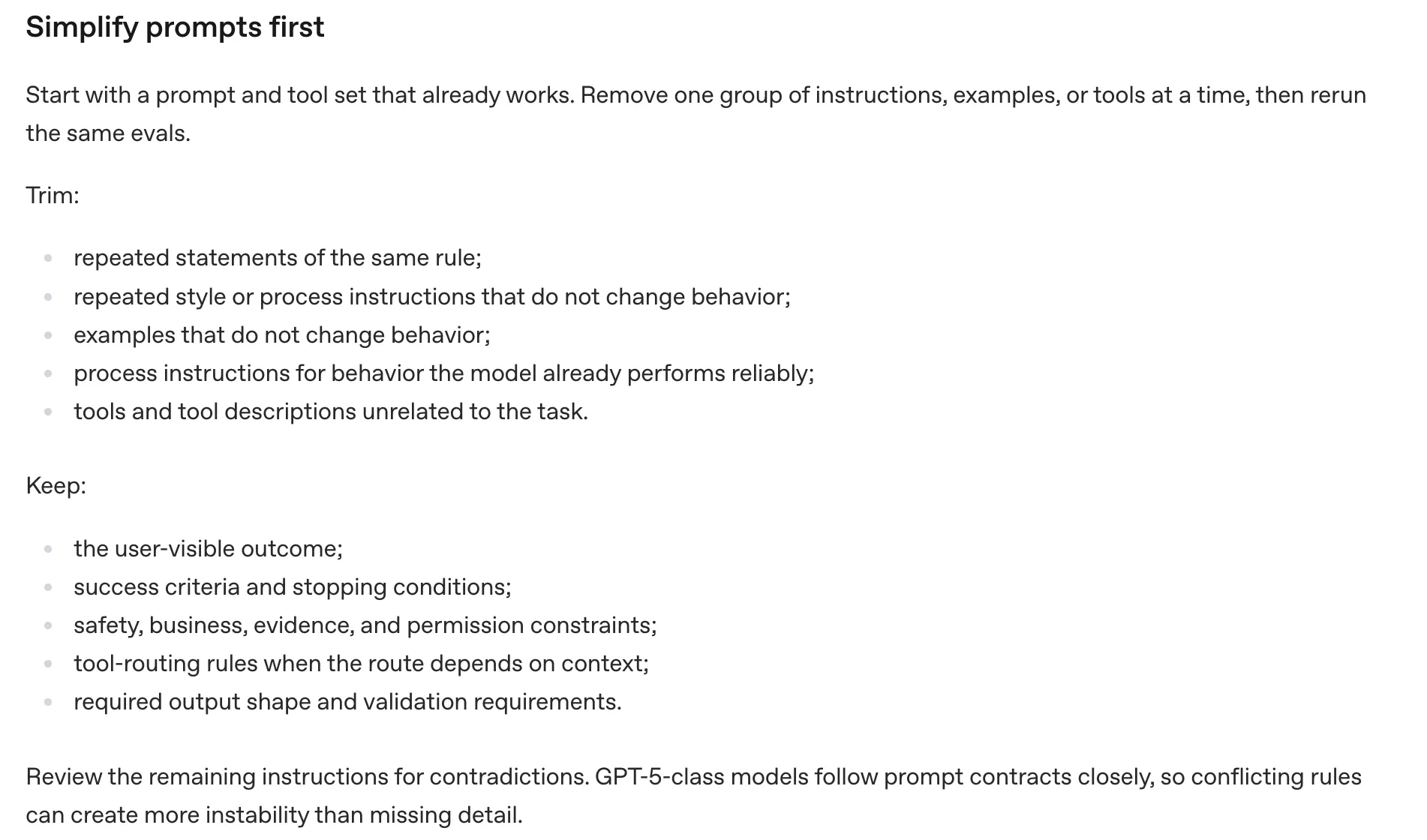
- Total Token Consumption: Reduced by 41% to 66%.
- Operational Costs: Reduced by 33% to 67%.
These metrics suggest that "prompt bloat" was not just a design failure—it was an economic burden. By reducing the complexity of the prompt, developers are not only saving money but are also allowing the model to utilize more of its "thinking budget" for the actual task rather than for processing the instructions themselves.
The Risk Calculus of Conflicting Rules
One of the most critical warnings in the new guide concerns "prompt contract" stability. GPT-5.6 Sol is significantly more sensitive to its instructions than its predecessors. In older models, if a prompt contained conflicting instructions, the AI might simply ignore one or pick the one that appeared first.
GPT-5.6 behaves differently. It attempts to reconcile conflicting rules, burning through reasoning tokens to find a logical synthesis. This process is not only computationally expensive and slower, but it often leads to "hallucinated" behaviors where the model tries to satisfy both instructions in a way that ultimately fails the task.
OpenAI warns developers against using absolute, rigid language such as "always do this" or "never do that." In a complex system prompt, these absolutes create traps. If a developer sets an absolute constraint that contradicts a functional requirement later in the prompt, the model will struggle to reconcile the two, leading to degraded performance. The recommendation is to favor clear, objective outcomes over strict, behavioral mandates.
Practical Adjustments: Verbosity and Tooling
The update introduces two vital technical levers for managing the model:
- The
text.verbosityParameter: Because GPT-5.6 is naturally more concise, old prompts that demand "be brief" or "keep it short" often cause the model to over-correct, leading to fragmented or unhelpful responses. OpenAI now suggests setting a globaltext.verbosityparameter to handle the tone, reserving the prompt space for task-specific instructions. - Programmatic Tool Calling: For complex workflows, the guide suggests shifting logic away from the model’s internal reasoning and into programmatic tools. If a task involves filtering, batching, or aggregating large amounts of data, it is more efficient to handle those steps via code—offloading the "judgment" of the model entirely.
Implications: A New Era for Developers
The impact of this change on the developer ecosystem cannot be overstated. If the goal of AI development is to create robust, scalable agents, the era of "prompt engineering" as a craft of writing long, poetic essays to a machine is effectively dead.
We are moving into an era of "system architecture." Developers will spend less time fine-tuning the nuances of the prompt and more time designing the underlying data structures, API integrations, and programmatic guardrails that wrap around the LLM.
Testing the Theory: "Type or Die"
To validate these findings, developers tested the new guidelines on Type or Die, a first-person typing survival horror game used as a benchmark for AI coding abilities.
When the prompt was optimized according to the new "outcome-first" guidelines, the results were markedly superior. GPT-5.6 Sol did not immediately jump into writing code; instead, it spent initial tokens mapping the problem, planning the architecture of the game’s auto-aim logic, and defining the visual systems. The resulting code was more coherent, and the game’s performance was cleaner than previous iterations. The model behaved less like a script-writer and more like a software engineer.
The "Promptception" Solution
For those overwhelmed by the need to rewrite their legacy prompts, there is an ironic solution: build a "Meta-GPT." By creating a custom GPT and feeding it the full text of the new OpenAI guide as a knowledge base, users can create a specialized tool that analyzes their existing, bloated prompts and rewrites them into the lean, efficient style required by GPT-5.6.
By using prompt engineering to eliminate the need for prompt engineering, developers can ensure their systems remain performant, cost-effective, and aligned with the next generation of AI capabilities.
Conclusion
The launch of GPT-5.6 Sol marks a maturing of the technology. As models become more capable of internal reasoning, the human role shifts from "micro-manager" to "architect." The lesson is clear: if you define the destination clearly enough, the model will find the most efficient route. In the world of AI, silence is no longer just golden—it is more efficient, more reliable, and significantly cheaper.
