

Introduction
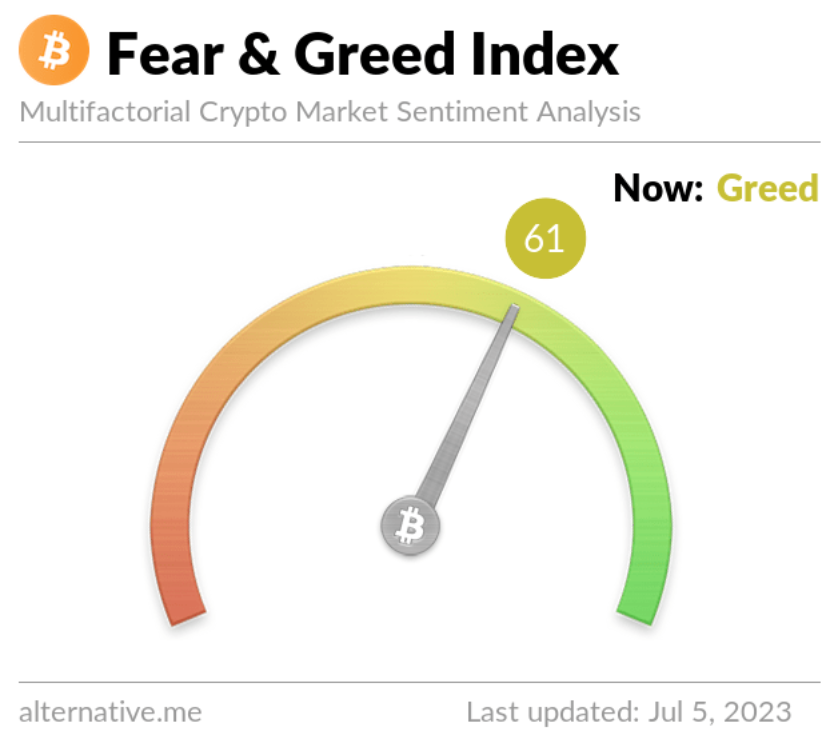
The cryptocurrency market is once again defying traditional financial gravity. In a span of just three weeks, Bitcoin has surged 20%, decisively reclaiming the $30,000 threshold, while Ethereum has mirrored this momentum with a 16% climb toward the $2,000 psychological barrier. This sudden wave of optimism, reflected in a "Greed" score of 61 on the Fear and Greed Index, appears to be a direct response to institutional heavyweight maneuvers. However, beneath the surface of this bullish sentiment lies a complex, often contradictory reality characterized by regulatory hostility, thinning market liquidity, and a restrictive macroeconomic environment that suggests the current rally may be built on shifting sands.
Main Facts: The Catalyst for the Rally
The primary driver behind the current market enthusiasm is the sudden influx of applications for Bitcoin spot Exchange-Traded Funds (ETFs) from the world’s largest asset managers. BlackRock, the globe’s largest fund manager, initiated the movement, followed swiftly by Fidelity and other major players. This institutional pivot is seen as a "holy grail" for crypto adoption, promising to bridge the gap between traditional finance (TradFi) and digital assets.
Simultaneously, the launch of EDX Markets—a new exchange backed by a consortium of financial giants including Citadel Securities, Fidelity, and Charles Schwab—has added a veneer of institutional legitimacy to the ecosystem. By offering trading for Bitcoin, Ether, Litecoin, and Bitcoin Cash, these firms are signaling a long-term commitment to the asset class, providing the catalyst that traders needed to break out of the stagnant price ranges seen throughout the early second quarter.
A Chronology of Conflict
To understand the current volatility, one must look at the timeline of events that have defined the last several weeks:
- Early June 2023: The SEC files high-profile lawsuits against the industry’s two largest exchanges, Binance and Coinbase, alleging various securities violations and operational malfeasance.
- Mid-June 2023: BlackRock and Fidelity shock the market by filing for spot Bitcoin ETFs.
- Late June 2023: The SEC signals to exchanges like Nasdaq and CBOE that the initial ETF applications were "inadequate," specifically citing a lack of clarity regarding "surveillance-sharing agreements."
- July 2023: Despite the regulatory pushback, the market continues to hold its gains, seemingly ignoring the warnings from Washington.
Supporting Data: The Liquidity Mirage
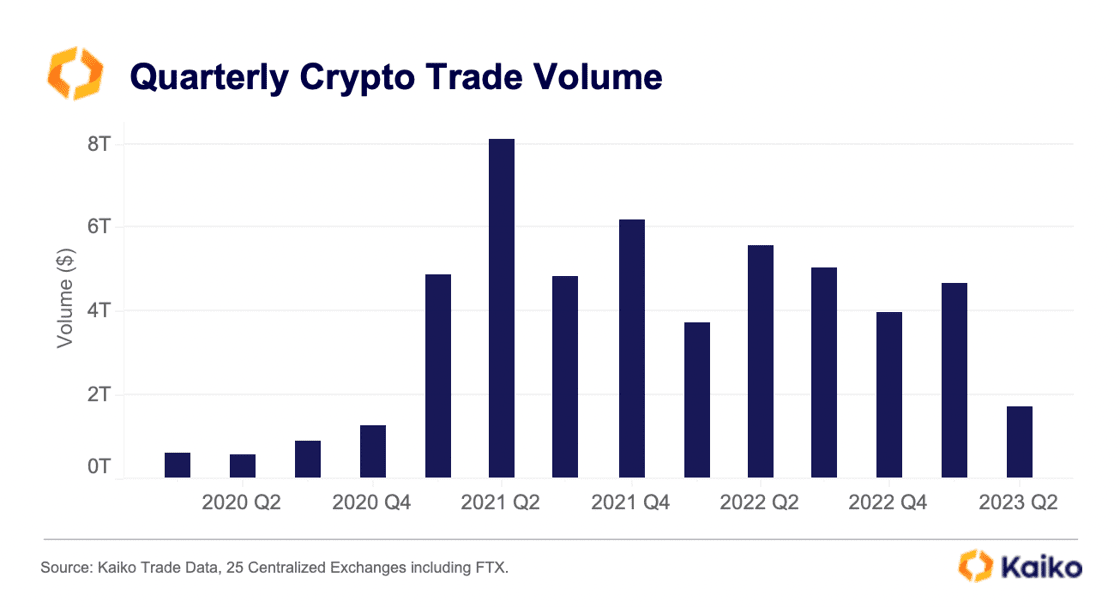
While price action suggests a bull market, the structural health of the market tells a different story. Data from Kaiko indicates that liquidity on centralized exchanges has hit its lowest levels since 2020.
The Liquidity Drought
Liquidity acts as the "shock absorber" for any financial market. When liquidity is high, large orders can be executed without causing massive price swings. When it is low, as it is currently, volatility is naturally exacerbated. This explains why the market has been so responsive to news headlines—there is simply less capital moving through the order books to stabilize price action.
Stablecoin Outflows
Perhaps the most alarming metric is the exodus of stablecoins from exchange balances. Over the past six months, there has been a staggering $26 billion outflow of stablecoins—a 60% decline. Stablecoins are the "dry powder" of the crypto market; their absence suggests that investors are either moving to cold storage or, more likely, exiting the space entirely. This reduction in accessible capital makes the current price surge appear fragile, as there is less "fuel" to sustain a long-term breakout.
Official Responses and Regulatory Friction
The regulatory landscape remains the most significant headwind for the industry. The SEC’s rejection of the initial ETF filings was not a total death knell, but a stark reminder of the agency’s skepticism.
The SEC’s insistence on "surveillance-sharing agreements"—which require an ETF issuer to have access to trading data from the underlying market to prevent fraud—is a high bar that the crypto industry has struggled to clear. While CBOE and Nasdaq have moved to refile these applications with more robust language, there is no guarantee of success. History suggests caution: the SEC rejected a similar application from Fidelity in January 2022.
Furthermore, the legal assault on Coinbase and Binance creates a "regulatory paradox." The SEC has classified several altcoins as securities while simultaneously presiding over the IPO of Coinbase, which facilitates the trade of those very tokens. This internal inconsistency has left investors wondering whether the SEC is interested in clear regulation or total eradication.
Implications: The Macroeconomic Reality
The market is currently operating under the assumption that the Federal Reserve has finished its tightening cycle. However, the data does not support this complacency.
The Illusion of a Pivot
At the most recent Federal Reserve meeting, Chair Jerome Powell announced a "pause" in interest rate hikes. However, he was explicit that this was a tactical pause, not a policy pivot. "Nearly all committee participants view it as likely that some further rate increases will be appropriate this year," Powell noted.
The futures market currently prices in an 86% probability of a 25 basis point hike in the coming weeks. Compared to market sentiment from one month ago, the likelihood of a "no hike" scenario has actually decreased. Despite this, crypto assets have rallied. This indicates that traders are choosing to ignore the "higher for longer" interest rate environment, which historically exerts downward pressure on risk-on assets like Bitcoin and tech stocks.
The Lag Effect
Monetary policy operates with a significant time lag. The aggressive shift from a zero-interest-rate environment to a regime where rates exceed 5% takes months, or even years, to filter through the broader economy. We are currently in the midst of one of the most rapid tightening cycles in modern history. The implication is that the full economic impact of these hikes has yet to be felt. For crypto investors, the current rally may be a temporary decoupling from the macro reality, one that is vulnerable to a "re-coupling" should the economy show signs of deeper distress.
Conclusion: Caution in a Time of Greed
The "Crypto is going to crypto" sentiment—the idea that the market moves based on internal dynamics rather than external fundamentals—is a popular refrain, but it is a dangerous one. While the potential approval of a spot Bitcoin ETF represents a watershed moment for the industry, it is not a panacea for the structural issues currently plaguing the space.
Investors are faced with a divergence: on one hand, the promise of institutional integration via ETFs and the resilience of Bitcoin as a digital commodity; on the other, a severe liquidity crunch, ongoing regulatory warfare, and a macroeconomic environment that remains hostile to speculative assets.
As we move into the second half of the year, the primary challenge for the market will be to prove that this 20% rally is built on sustainable capital inflows rather than a temporary "short squeeze" or speculative excitement. Until liquidity returns to centralized exchanges and the regulatory fog surrounding the SEC’s lawsuits lifts, the current rally should be viewed with a high degree of caution. History teaches us that when sentiment becomes disconnected from structural reality, the subsequent correction is often as swift as the rally itself. Investors would be wise to remember that while the tide may feel like it has turned, the currents beneath remain turbulent.
