

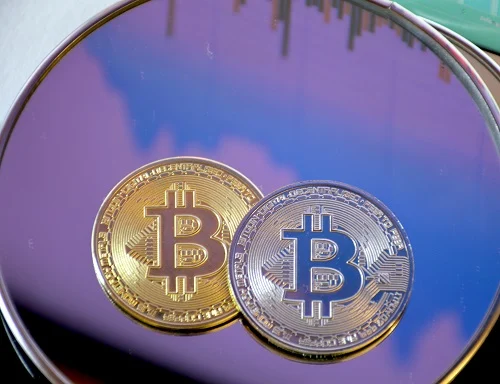
The digital asset industry is currently navigating its most precarious period since the inception of Bitcoin. After a meteoric rise that saw crypto assets become a mainstream financial curiosity, the sector has been brought back to earth by a "perfect storm" of economic cooling, massive layoffs, and a relentless regulatory onslaught. However, a seismic shift may be on the horizon. The recent filing by BlackRock—the world’s largest asset manager—for a spot Bitcoin ETF has sent shockwaves through the financial world, offering both a lifeline to the industry’s legitimacy and a potentially existential threat to the centralized exchanges that have dominated the market for over a decade.
A Chronology of Decline: The Industry’s "Great Reshuffle"
The current state of the crypto exchange landscape is defined by contraction. To understand the gravity of the present, one must look at the trajectory of the last 18 months.
- June 2022: As the broader market began to contract, Coinbase—a bellwether for the industry—initiated its first major retrenchment, cutting 18% of its workforce. This move was particularly stinging given the company’s high-profile Super Bowl advertising push just three months prior, which saw the firm burn $14 million in a single night.
- Late 2022: The collapse of FTX acted as a catalyst for a global "trust crisis." Following the fallout, major players like Kraken and Crypto.com were forced to shed 30% and 20% of their staff, respectively, to maintain operational sustainability.
- January 2023: Coinbase returned to the chopping block, announcing an additional 20% reduction in its headcount.
- Mid-2023: Even Binance, the world’s largest exchange by volume, which had previously positioned itself as an outlier by aggressively hiring during the downturn, announced it would be trimming its workforce to optimize operations.
This period of contraction is not merely anecdotal; it is mirrored in the raw data of the market. Capital has been fleeing the space at an unprecedented rate, with significant percentages of stablecoin balances exiting exchange platforms entirely as investors seek safety in traditional assets or cold storage. Coinbase’s share price, which has cratered roughly 86% from its April 2021 public offering, stands as a grim reminder of how far the sector has fallen from the highs of the 2021 bull market.
The Regulatory Squeeze
The operational headwinds faced by exchanges are exacerbated by a hostile regulatory environment in the United States. The Securities and Exchange Commission (SEC), under the leadership of Chair Gary Gensler, has pivoted toward an aggressive enforcement-first approach.
In June 2023, the SEC initiated landmark lawsuits against both Binance and Coinbase. Gensler’s rhetoric has been uncompromising, frequently characterizing the sector as one defined by "mass non-compliance." For exchanges, this represents a twofold threat: legal defense costs are mounting, and the threat of being forced to delist certain tokens or change core business models could permanently impair their revenue-generating capabilities.
The BlackRock Factor: A New Institutional Paradigm
Amidst the gloom, the filing for an iShares Bitcoin Trust by BlackRock represents a potential inflection point. For years, the "mythical Bitcoin ETF" has been the industry’s greatest source of unfulfilled hope. The SEC has historically rejected every application for a spot Bitcoin ETF, citing concerns over market manipulation and custody.
However, BlackRock is not an ordinary applicant. With over $10 trillion in assets under management, the firm carries a level of political and institutional clout that previous applicants lacked. If approved, the ETF would allow traditional investors to gain exposure to Bitcoin through a familiar, regulated, and fee-efficient vehicle.
While the iShares product is technically a trust—functioning similarly to the SPDR Gold Shares ETF—it would provide the daily creation and redemption mechanisms required for an ETF-like experience. This would effectively bridge the gap between Wall Street capital and digital assets.
The Competitive Dilemma: Will Exchanges Become Obsolete?
While an ETF would be a significant win for Bitcoin’s price and the general adoption of crypto, it introduces a complex competitive dynamic for the exchanges themselves.
1. The "Ease-of-Use" Arbitrage
For the vast majority of retail investors, the "true" Bitcoin experience—self-custody, blockchain interaction, and decentralization—is secondary to price exposure. Most users simply want to participate in the asset’s upside without the technical burden of private key management or the reputational risk associated with holding funds on a centralized exchange. A BlackRock ETF provides a "one-click" solution that is vastly more user-friendly than the onboarding process of a standard exchange.
2. The Fee War
Exchanges have long relied on trading fees as their primary revenue stream, with platforms like Coinbase charging upwards of 0.6% per trade. ETFs, by contrast, are famous for their razor-thin expense ratios. Should a regulated, low-fee institutional product become available, price-sensitive investors will inevitably migrate away from the higher-cost retail exchange models.
3. The Trust Gap
The "crypto-native" firm profile has suffered from a series of high-profile disasters, from the collapse of Terra/Luna to the criminal downfall of Sam Bankman-Fried at FTX. By contrast, BlackRock offers a brand synonymous with institutional stability. In a market where trust is the scarcest commodity, an asset manager with a global reputation will naturally outperform a crypto exchange that is currently embroiled in public "wars of words" with federal regulators.
Implications for the Future
The irony of the current situation is profound. The BlackRock ETF filing actually lists Coinbase as the proposed custodian for the underlying Bitcoin. This suggests that while exchanges may lose the retail trading volume, they may pivot to becoming "back-end" infrastructure providers—the digital vaults for the massive institutions that will manage the wealth of the future.
However, this transition would force a fundamental restructuring of the crypto economy. Exchanges would shift from being high-margin retail platforms to lower-margin institutional custodial services.
Key Takeaways for Market Observers:
- Liquidity Migration: If capital moves to ETFs, liquidity will follow. This could drain retail exchanges of the depth required to maintain their current operational models.
- Regulatory Convergence: A successful ETF would necessitate a clearer regulatory framework. While this might hurt exchanges in the short term, it could stabilize the market in the long term, potentially ending the "wild west" era of crypto.
- The Valuation Reset: Investors should expect continued volatility for exchange stocks, as the market begins to price in the possibility of a post-ETF world where centralized trading platforms face stiff, institutional competition.
Conclusion
The crypto industry is currently in a state of purgatory. The era of unchecked growth has ended, replaced by a cold, hard focus on compliance and utility. The potential arrival of a BlackRock Bitcoin ETF serves as a powerful symbol of the industry’s maturation. While it offers the prospect of renewed capital and institutional legitimacy, it also signals that the "crypto-native" era of exchanges may be reaching its sunset.
For these platforms, survival will no longer be about who has the loudest marketing or the most aggressive growth strategy, but rather who can successfully adapt to a new landscape where the barriers to entry for traditional capital have been permanently dismantled. The next chapter of crypto will likely be defined by the very institutions that were once its harshest critics, forcing a radical evolution in how digital assets are traded, stored, and regulated.
