

Lido Finance, the dominant force in Ethereum liquid staking, has officially signaled its intent to expand into the decentralized finance (DeFi) lending sector. The announcement of "Lido Lend," a security-focused, institutional-grade lending protocol, marks a pivotal shift for the project as it looks to evolve from a staking-only utility into a comprehensive yield-generating ecosystem. By leveraging the technical architecture of Morpho Blue, Lido aims to capture a segment of the market that prioritizes risk mitigation and asset quality over speculative yield.
Main Facts: What is Lido Lend?
Lido Lend is not designed to be a "catch-all" lending protocol. Instead, it is a specialized, security-first offering tailored for institutional investors and professional DeFi participants. The platform will be built upon a modified version of the Morpho Blue architecture—a modular lending protocol known for its efficiency and permissionless nature.
However, unlike broad-market lending protocols that support a long tail of volatile tokens, Lido Lend will strictly focus on high-liquidity, blue-chip collateral assets, specifically stETH and WETH. This conservative strategy is a direct response to the recurring exploits that have plagued the DeFi space over the past two years, where low-liquidity or "toxic" collateral has often served as the catalyst for protocol-wide systemic failures.
The project is slated for a release within the current quarter, though the team has stopped short of providing a concrete roadmap or specific launch date, opting instead to maintain flexibility as they finalize security audits and stress tests.
A Chronology of Strategic Evolution
Lido’s journey began with the democratization of Ethereum staking. By lowering the 32 ETH threshold required for solo staking, Lido became the bedrock of Ethereum’s Proof-of-Stake (PoS) consensus. With over $24 billion currently staked, the project has effectively "solved" the staking problem for the average user.
However, the transition into lending was not an overnight decision. The move follows a period of significant volatility in the broader DeFi lending market:
- Q1-Q2 2026: Increased scrutiny of systemic risks in lending protocols following several high-profile hacks.
- April 2026: The $292M KelpDAO exploit, which heavily impacted Aave, brought the issue of "unbacked tokens" and bad debt to the forefront of the industry conversation.
- Q3 2026: Aave and other protocols began implementing aggressive risk-management frameworks, effectively axing low-liquidity assets to protect solvency.
- October 2026: Lido formally announces its entry into the lending space, positioning itself as the "secure alternative" for those disillusioned by recent systemic failures.
Supporting Data: The Current Lending Landscape
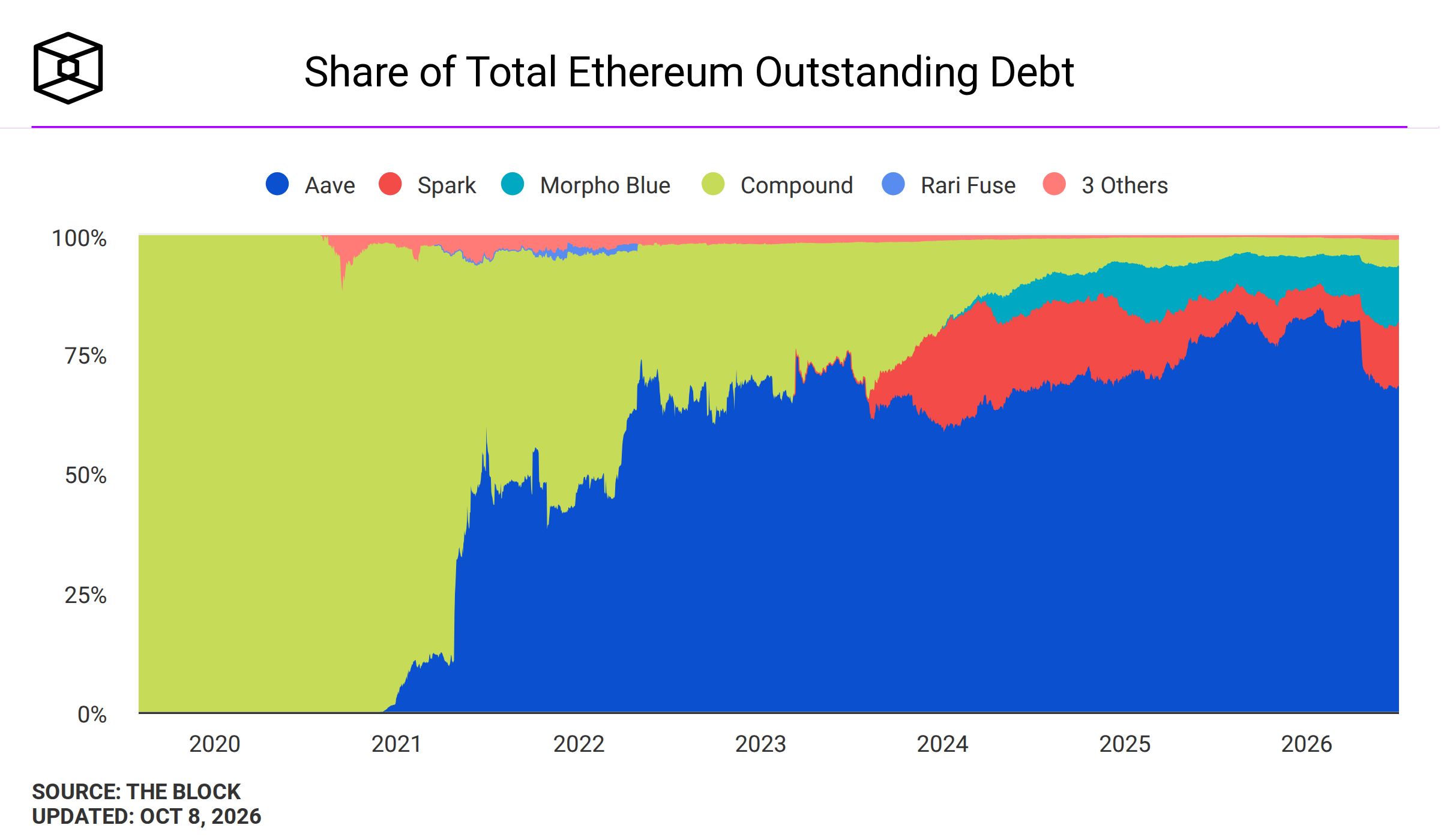
The on-chain lending market remains a multi-billion dollar pillar of the crypto economy, currently boasting a Total Value Locked (TVL) of approximately $55 billion. Despite this massive figure, the sector faces a "utilization gap," with active loans totaling roughly $31 billion.
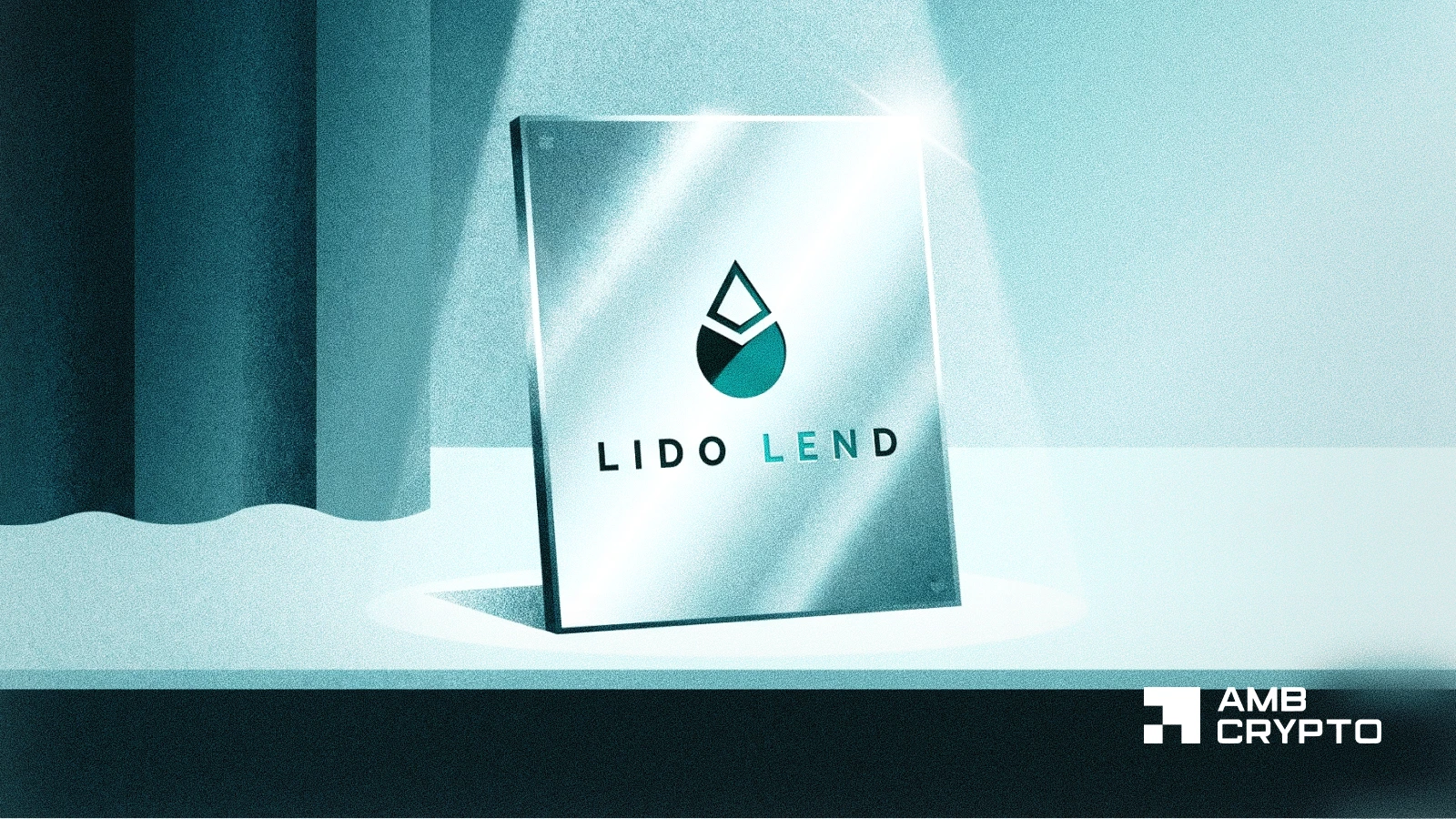
The market is currently dominated by a triumvirate of major players:
- Aave: Holds the lion’s share of the market with a 68% dominance.
- Spark (Sky/MakerDAO): Controls 13% of the market.
- Morpho: Holds approximately 12%.
The data suggests that while the total volume of supplied assets is high, the borrowing side is heavily concentrated within the top-tier protocols. Lido enters this space at a time when liquidity is abundant but trust is at a premium. The industry’s recent scars—specifically the $120M in estimated bad loans linked to the KelpDAO incident—have created a vacuum for a platform that prioritizes capital preservation over rapid expansion.
Official Responses and Market Positioning
Lido has been careful to frame its entry into the lending space not as an act of aggression against incumbents like Aave, but as a strategic "flywheel" to enhance its existing ecosystem.
In a statement released via X (formerly Twitter), the team noted: "Lido Lend complements the stETH flywheel and Lido Earn. The synergy between these products opens a new growth vector for the Lido ecosystem, giving on-chain natives everywhere a path to earn rewards in a user-forward and security-first manner."
Addressing rumors that the project is looking to "go to war" with Aave or Morpho, the team clarified: "Lido Lend is a tailored solution to meet the specialized needs of professional borrowers and long-term lenders, not the general-purpose lending market. It is built to complement—not compete with—current market solutions."
Market analyst Konstantin Lomashuk reinforced this narrative, suggesting that the industry is ripe for a pivot. "Lido built the most secure staking solution in crypto… That market is solved. The next is lending. Too many hacks. Too much inefficiency. Lenders deserve far better protection. That’s what Lido Lend is built for."
Implications: The Future of LDO and Market Dynamics
The announcement has naturally sparked debate regarding the impact on the LDO token and the broader Lido DAO governance structure. While the integration of lending is a significant fundamental update, the market response has been cautious.
The Tokenomics Perspective
At the time of reporting, the LDO token experienced a 14% pullback. Despite this, technical analysts point out that the token remains firmly within its H2 2026 rising channel. This suggests that while short-term sentiment is impacted by market-wide volatility, the long-term outlook remains bullish, provided the lending product achieves product-market fit.
The core question remains: will the revenue generated from Lido Lend be funneled into the protocol’s ongoing LDO buyback program? If the lending arm achieves significant scale, it could theoretically provide a massive boost to the DAO’s treasury, potentially accelerating the buyback initiatives that have previously struggled to gain sustained momentum.
The Competitive Landscape
For incumbents like Aave, Lido’s arrival presents a unique challenge. Aave has spent much of the last six months pivoting toward risk-off strategies, purging its platform of smaller, riskier assets to prevent further exploits. By intentionally positioning itself as a "conservative" and "specialized" lender, Lido is essentially attempting to "out-Aave" Aave on the security front.
If successful, Lido Lend could siphon off the most risk-averse institutional capital—those who are comfortable with Ethereum’s staking yields but have been sidelined by the security volatility of general-purpose lending protocols.
Conclusion: A New Era for Lido?
Lido Lend represents a maturation of the DeFi ecosystem. By moving from a singular focus on staking to a multifaceted yield-generation suite, Lido is signaling that it intends to be a long-term infrastructure provider rather than a one-trick pony.
While the "flywheel" effect is a common buzzword in DeFi, in this case, the synergy is logical: a user stakes ETH to receive stETH, uses that stETH as collateral in Lido Lend to borrow WETH, and potentially re-invests into more staking or yield-bearing assets. This closed-loop ecosystem could create a highly efficient, high-security environment for institutional players who have thus far been hesitant to commit large capital to more experimental protocols.
As the launch date approaches, the industry will be watching closely. Will the integration of lending solidify Lido’s dominance, or will the complexity of managing a lending protocol introduce new risks to an ecosystem that prides itself on being the "safest" in crypto? The answer will likely define the trajectory of the Ethereum DeFi landscape for the remainder of 2026 and well into 2027.
