

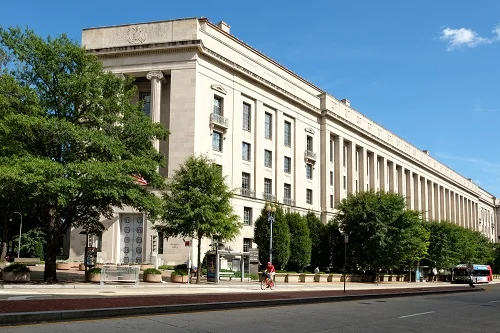
The legal odyssey of Sam Bankman-Fried (SBF), the disgraced founder of the collapsed cryptocurrency exchange FTX, reached a critical inflection point this week. As the October trial date for his sprawling federal fraud case looms, the United States Department of Justice (DOJ) has formally petitioned the court to revoke Bankman-Fried’s bail and remand him into custody. The motion signals a significant escalation in the government’s approach, shifting from mere monitoring of his pre-trial conduct to a direct assertion that the former billionaire poses an ongoing threat to the integrity of his own criminal proceedings.
The Core Allegation: Witness Tampering and Strategic Leaks
At the heart of the DOJ’s motion is a pattern of behavior that prosecutors describe as a calculated effort to manipulate public perception and influence key witnesses. Specifically, federal prosecutors allege that Bankman-Fried engaged in witness tampering by leaking the private, highly personal journals of Caroline Ellison—his former romantic partner and the former CEO of Alameda Research—to the New York Times.
Ellison, who serves as one of the government’s primary witnesses, entered into a plea agreement with federal authorities shortly after the collapse of FTX. By allegedly leaking portions of her diary, the DOJ contends that Bankman-Fried was not merely exercising his First Amendment rights but was actively attempting to discredit Ellison in the eyes of the public and potential jurors.
"The defendant’s conduct—specifically the disclosure of the Ellison diary—is a direct attempt to intimidate and harass a witness," the prosecution argued during a hearing on July 26. The government maintains that no set of release conditions can sufficiently mitigate the risk that Bankman-Fried will continue to interfere with the judicial process.
A Chronology of the FTX Collapse and Legal Fallout
To understand the gravity of the current situation, one must look back at the rapid descent of what was once the crown jewel of the digital asset industry.
- November 2022: FTX, once valued at $32 billion, files for Chapter 11 bankruptcy protection following a liquidity crisis triggered by a run on deposits. Revelations of commingled funds between FTX and Alameda Research spark global outrage and regulatory investigations.
- December 2022: Bankman-Fried is arrested in the Bahamas at the request of U.S. authorities. He is subsequently extradited to the United States.
- December 2022: Following his extradition, Bankman-Fried is released on a $250 million personal recognizance bond, one of the largest in American history. He is confined to his parents’ home in Palo Alto, California, under strict conditions.
- February 2023: Prosecutors accuse Bankman-Fried of violating bail conditions by using a Virtual Private Network (VPN), prompting Judge Lewis Kaplan to impose tighter restrictions on his digital access.
- July 2023: The DOJ files its motion to revoke bail, citing the New York Times report regarding Ellison’s diaries.
- July 26, 2023: A heated hearing takes place in the Southern District of New York (SDNY) regarding the potential detention of the former CEO.
Analyzing the Prosecution’s Stance vs. The Defense
The DOJ’s argument for incarceration rests on the concept of "witness tampering." In federal law, any attempt to influence or intimidate a witness is a severe offense that typically necessitates immediate detention. Prosecutors argue that Bankman-Fried’s actions have moved beyond "speaking his truth" into the territory of systemic obstruction. They have expressed deep concern that he intends to use his platform to shape the narrative of the trial, effectively conducting a "trial by press" rather than allowing the judicial process to unfold in the courtroom.
Conversely, Bankman-Fried’s legal team has mounted a vigorous defense against the motion. His attorneys argue that revoking his bail would be a draconian measure that would irreparably damage his ability to prepare for trial. They contend that he has a fundamental right to defend his reputation in the public square, particularly given the high-profile nature of the case and the intense media scrutiny he has faced.
"Sending Mr. Bankman-Fried to jail would make it impossible for us to review the millions of pages of discovery and effectively prepare his defense," his lawyers argued. They emphasize that the conditions currently imposed upon him are sufficient to prevent any further issues.
The Judge’s Warning: A Thinning Veil of Patience
Judge Lewis Kaplan, presiding over the case, has maintained a balanced but stern demeanor throughout the proceedings. During the July 26 hearing, he did not immediately grant the DOJ’s request to remand, acknowledging the complexity of stripping a defendant of their pre-trial freedom. However, his rhetoric was unambiguous.
Judge Kaplan warned Bankman-Fried directly, stating that he must "take this seriously." The court’s refusal to grant an immediate order for remand should not be interpreted as an exoneration of the defendant’s conduct. Rather, it suggests that the judge is carefully weighing the legal threshold for detention against the constitutional protections afforded to the accused.
As a bridge to a potential resolution, the court has authorized both parties to collaborate on a comprehensive gag order. This order, expected to be finalized by August 3, would likely restrict Bankman-Fried from making public comments regarding the case, his co-conspirators, or potential witnesses.
The Implications: Why This Matters for the Crypto Industry
The potential imprisonment of Sam Bankman-Fried carries implications far beyond the walls of the courtroom.
1. The Precedent for Digital Asset Accountability
This case serves as the ultimate litmus test for the accountability of "crypto-kings." For years, the industry operated in a gray area of oversight. The aggressive posture of the DOJ suggests that federal authorities are determined to treat crypto fraud with the same severity as traditional financial crimes, such as those committed by Bernie Madoff or Enron executives.
2. The Integrity of the Judicial Process
If a defendant of Bankman-Fried’s stature is able to influence public opinion—and by extension, the jury pool—through selective leaks, it undermines the public’s faith in the fairness of the trial. By seeking to revoke bail, the DOJ is signaling that it will not tolerate the use of media manipulation as a defensive strategy.
3. The Impact on FTX’s Bankruptcy Proceedings
The ongoing drama involving SBF provides a distracting backdrop to the bankruptcy estate’s efforts to recover assets for creditors. Every headline about witness tampering or bail hearings adds a layer of complexity to the recovery efforts, as the legal costs associated with these motions are significant and potentially deplete the funds available to be returned to defrauded customers.
Moving Toward October: The Trial of the Century
As the August 3 deadline for the gag order approaches, all eyes remain on the Southern District of New York. Whether or not Bankman-Fried ends up behind bars before his trial, the dynamic of the proceedings has fundamentally shifted. The "cooperative" defendant who was granted bail has been replaced by a figure who is now viewed by the government as an active threat to the sanctity of the trial.
The coming weeks will be a test of endurance for the legal teams involved. If Bankman-Fried complies with the impending gag order, he may remain free until the trial commences. If, however, he continues to test the limits of the court’s patience, the doors of the Metropolitan Detention Center may soon close behind him.
In the broader context of the FTX collapse, this episode is a stark reminder of the "wild west" era of cryptocurrency—a time when massive fortunes were built on sand, and when the fall of one company could threaten the stability of an entire financial ecosystem. As the legal system grinds toward a resolution, the central question remains: will justice be served, or will the spectacle continue to overshadow the underlying facts of the largest fraud in the history of the digital asset market?
For now, the world waits, watching a man who once sat at the right hand of regulators and politicians struggle to keep his own freedom as the legal machinery of the United States begins to finalize its case against him.
