

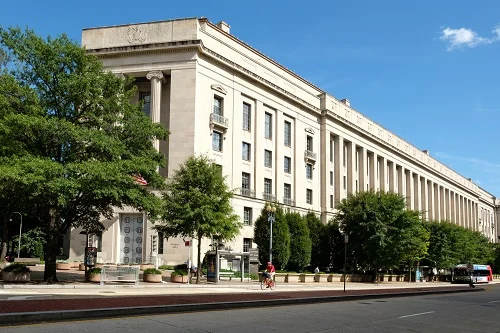
The legal odyssey of Sam Bankman-Fried (SBF), the disgraced founder of the collapsed cryptocurrency exchange FTX, has reached a critical inflection point. As the countdown to his landmark criminal trial—scheduled for October—nears its conclusion, the United States Department of Justice (DOJ) has formally requested that the court revoke Bankman-Fried’s bail and remand him into custody. The motion, argued during a heated hearing on July 26, marks a significant escalation in a case that has captivated the global financial community and exposed the precarious regulatory landscape of the digital asset industry.
The Core Allegations: A Pattern of Obstruction
The DOJ’s request for detention is rooted in a fundamental breakdown of trust regarding the defendant’s compliance with his pre-trial release conditions. Federal prosecutors allege that Bankman-Fried has engaged in a consistent pattern of witness tampering, undermining the integrity of the judicial process.
The tipping point for the prosecution was the recent leak of private diary entries belonging to Caroline Ellison, the former CEO of Alameda Research and Bankman-Fried’s one-time romantic partner. Ellison, who has entered a plea deal with federal authorities, is expected to be a star witness for the government. Prosecutors argue that by leaking these intimate, private documents to the New York Times, Bankman-Fried intended to harass and intimidate a key witness, effectively attempting to discredit her testimony in the eyes of the public and potential jurors before the trial even commences.
The DOJ contends that these actions represent more than just a lapse in judgment; they illustrate a deliberate attempt to interfere with the administration of justice. In their filing, prosecutors explicitly stated their belief that no set of release conditions—no matter how restrictive—would be sufficient to prevent Bankman-Fried from continuing to interfere with witnesses.
A Chronology of the FTX Collapse and Legal Fallout
To understand the gravity of the current situation, it is necessary to view the arc of the FTX saga through a chronological lens:
- November 2022: The FTX exchange, once valued at $32 billion, files for Chapter 11 bankruptcy in the United States following a massive liquidity crisis triggered by a run on deposits. Revelations emerge regarding the commingling of customer funds between FTX and Alameda Research.
- December 2022: Sam Bankman-Fried is arrested in the Bahamas at the request of U.S. authorities. He is subsequently extradited to the United States to face a litany of federal charges, including wire fraud, conspiracy to commit securities fraud, and money laundering.
- December 2022: Upon his arrival in New York, Bankman-Fried is granted a $250 million bond—one of the largest in American history—allowing him to remain under house arrest at his parents’ home in Palo Alto, California, subject to strict electronic monitoring and limitations on internet and device usage.
- January–June 2023: Throughout the pre-trial phase, the court makes several modifications to SBF’s bail conditions, tightening restrictions on his access to encrypted messaging apps like Signal and his ability to communicate with former FTX employees.
- July 2023: The New York Times publishes an article featuring excerpts from Caroline Ellison’s private journals. The DOJ immediately flags this as a violation of pre-trial decorum and moves to have Bankman-Fried detained, citing witness tampering and the risk of jury tainting through extrajudicial public relations campaigns.
Supporting Data and Judicial Tensions
The government’s case against Bankman-Fried relies on the principle that the defendant’s massive digital reach and propensity for media manipulation pose a unique risk. Prosecutors have highlighted that Bankman-Fried’s ability to disseminate information to his millions of followers creates an environment where he can influence the narrative of the trial outside the courtroom, thereby potentially tainting the jury pool.
During the July 26 hearing, Judge Lewis Kaplan of the Southern District of New York expressed significant concern over the defendant’s conduct. While Judge Kaplan did not immediately grant the DOJ’s motion for detention, he issued a stern, unequivocal warning to Bankman-Fried, stating, "Take this seriously."
The defense team, led by Mark Cohen, has argued that revoking bail would be an overly punitive measure that would significantly hinder their ability to prepare an effective defense. They claim that the constraints of incarceration would limit their access to their client and impede the complex process of reviewing millions of pages of discovery documents.
Despite these objections, the court has signaled a shift in tolerance. Judge Kaplan has permitted both the prosecution and the defense to collaborate on the drafting of a comprehensive "gag order," which is expected to be finalized by August 3. This order is intended to strictly limit what Bankman-Fried can say publicly about the case and the witnesses involved.
Official Responses and Strategic Maneuvers
The DOJ’s strategy is clear: they are characterizing Bankman-Fried as a defendant who views the judicial system as a game to be manipulated. By emphasizing the "extrajudicial statements" made by SBF, the government is highlighting the risk that the defendant’s ongoing media presence poses to a fair trial.
Conversely, the defense is framing the DOJ’s move as an overreach. Their argument rests on the constitutional right to mount an adequate defense. They assert that the information leaked to the media was not a targeted attack on a witness, but rather a misguided attempt to defend his own reputation in the face of relentless public scrutiny. However, this defense has been weakened by the specific nature of the leaked documents, which directly targeted the character of a government cooperating witness.
Legal experts observing the case note that Judge Kaplan’s "take this seriously" remark is a significant indicator of his temperament. If the defense cannot guarantee that Bankman-Fried will adhere to the forthcoming gag order, the likelihood of a revocation of bail increases exponentially.
The Broader Implications: Justice and Crypto
The potential detention of Sam Bankman-Fried carries profound implications for the broader cryptocurrency industry and the American legal system.
- The Precedent of Pre-Trial Detention: If SBF is remanded, it will serve as a stark reminder that even the wealthiest and most influential defendants are not immune to the consequences of witness interference. It reinforces the idea that the court’s authority over the trial process is absolute.
- The "Media Trial" Problem: This case highlights the challenges modern courts face when dealing with defendants who possess a high-profile media platform. The blurring of lines between public relations and legal defense strategies is becoming a central issue in high-stakes litigation.
- The FTX Legacy: Regardless of the trial’s outcome, the proceedings have become the definitive narrative of the "crypto winter." The revelation of systemic corruption, coupled with the ongoing legal battle, has accelerated the push for comprehensive crypto-regulation in the United States.
- Impact on Cooperation: The government’s aggressive stance is also a signal to other potential defendants in the crypto space: the DOJ is committed to protecting its cooperating witnesses. By shielding individuals like Caroline Ellison from public harassment, the government ensures that its pipeline of witnesses remains intact for future investigations.
Conclusion
As the August 3 deadline for the gag order approaches, all eyes remain fixed on the courtroom in the Southern District of New York. The tension between Sam Bankman-Fried’s constitutional rights and the integrity of the judicial process is at its peak. Whether or not he remains a free man until his October trial date, the events of the past week have fundamentally altered the trajectory of the case.
For the victims of the FTX collapse, the sight of Bankman-Fried being held to account—first by the law and potentially now by the court’s strict oversight—is a small but necessary step toward closure. For the defendant, the message from Judge Kaplan is clear: the time for maneuvering is over, and the time for accountability has arrived. The coming weeks will determine whether Bankman-Fried will spend the remainder of his pre-trial period behind bars or under the increasingly watchful, and increasingly impatient, eye of the federal judiciary.
