

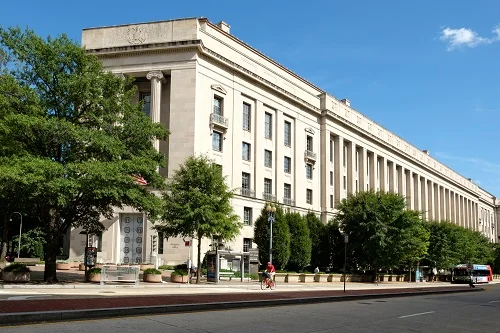
The legal odyssey of Sam Bankman-Fried, the disgraced founder of the collapsed cryptocurrency exchange FTX, has reached a critical inflection point. As the October trial date for his massive federal fraud case approaches, the U.S. Department of Justice (DOJ) has formally requested that the court revoke Bankman-Fried’s bail and remand him to custody. The move follows a series of escalating allegations that the former billionaire has repeatedly violated the conditions of his pretrial release, most notably through attempts to intimidate or influence key witnesses.
The Core Allegation: Witness Tampering and the Ellison Leak
At the heart of the DOJ’s motion is the assertion that Bankman-Fried’s actions go beyond mere PR management and cross into criminal interference with judicial proceedings. Prosecutors argue that the defendant has demonstrated a pattern of behavior designed to undermine the integrity of his upcoming trial.
The tipping point for the prosecution was the recent publication of a New York Times article that featured private diary entries written by Caroline Ellison. Ellison, the former CEO of Alameda Research—FTX’s sister trading firm—and a one-time romantic partner of Bankman-Fried, has entered a plea deal with federal authorities. She is expected to be a star witness for the government, providing critical testimony regarding the alleged commingling of funds between FTX and Alameda.
The DOJ alleges that Bankman-Fried leaked these private documents to the media in a calculated effort to smear Ellison’s character and discredit her upcoming testimony. By painting his former colleague in a negative light, prosecutors argue, Bankman-Fried is not only attempting to influence potential jurors but is also sending an implicit warning to other prospective witnesses about the consequences of cooperating with federal investigators.
Chronology of a Collapse and Legal Struggle
To understand the severity of the current situation, one must look at the timeline of events that have defined the FTX saga:
- November 2022: The FTX empire, once valued at $32 billion, implodes following a liquidity crisis. Revelations of massive customer fund mismanagement surface.
- December 2022: Bankman-Fried is arrested in the Bahamas at the request of U.S. authorities. He is subsequently extradited to the United States.
- December 2022: Bankman-Fried is released on a $250 million personal recognizance bond, one of the largest in American history, confined to his parents’ home in Palo Alto, California.
- Early 2023: Prosecutors add multiple superseding indictments to the case, significantly expanding the scope of the charges against him.
- July 2023: The DOJ files a motion to revoke bail, citing "extrajudicial statements" and the leak of Ellison’s private writings.
- July 26, 2023: A high-stakes hearing takes place before Judge Lewis Kaplan of the Southern District of New York, where the DOJ makes its case for incarceration.
Supporting Data and Prosecution Arguments
During the July 26 hearing, the government was uncompromising. Assistant U.S. Attorney Danielle Sassoon argued that no set of release conditions—including electronic monitoring or restrictive communication protocols—would be sufficient to ensure the safety of witnesses or the integrity of the trial.
The DOJ contends that Bankman-Fried’s behavior is not a momentary lapse in judgment but a continuous strategy. Prosecutors highlighted his history of using encrypted messaging apps and his propensity for "public commentary" as evidence that he remains a flight risk and a danger to the witness pool. Furthermore, the prosecution expressed concern that Bankman-Fried’s continued public advocacy and attempts to "tell his side of the story" serve only to prejudice the jury pool, making it increasingly difficult to conduct a fair trial.
The Defense’s Counter-Position
Bankman-Fried’s legal team has mounted a vigorous defense against the motion for detention. Their primary argument rests on the Sixth Amendment: the right to counsel and the ability to effectively prepare a defense.
Defense attorneys have argued that incarcerating their client would severely handicap his ability to review the massive volume of discovery materials—millions of pages of documents and data—that are central to the fraud case. They contend that his presence in a detention facility would limit his access to his legal team and the technology required to analyze the case evidence. Furthermore, the defense claims that Bankman-Fried’s public statements are an exercise of his First Amendment rights and do not constitute criminal witness tampering.
The Judiciary’s Stance: A Stern Warning
Judge Lewis Kaplan, presiding over the case, has maintained a balanced but firm demeanor. While he did not immediately grant the DOJ’s request for immediate detention, he issued a warning that resonated through the courtroom. Addressing Bankman-Fried directly, Judge Kaplan remarked that the defendant needs to "take this seriously," implying that further slips in conduct would lead to an immediate revocation of bail.
Recognizing the gravity of the witness tampering allegations, the judge instructed both the defense and the prosecution to collaborate on a comprehensive gag order. This order, expected to be finalized by August 3, is intended to restrict Bankman-Fried’s ability to communicate with the press or make public statements that could be construed as witness interference or jury tampering.
Broader Implications: What’s Next for SBF?
The potential imprisonment of Sam Bankman-Fried before his trial would mark a significant shift in the optics of the case. In the American legal system, pretrial detention is typically reserved for those who pose a clear threat to the public or a high risk of flight. Should Judge Kaplan decide to revoke bail, it would send a powerful signal regarding the court’s intolerance for attempts to manipulate the judicial process.
Impact on the Crypto Industry
The fallout from the FTX collapse has been the primary driver of regulatory scrutiny in the cryptocurrency sector. A trial where the central figure is incarcerated would likely heighten the pressure on other crypto entities facing regulatory probes. It frames the entire narrative around "accountability" and "transparency," themes that the Securities and Exchange Commission (SEC) and the Commodity Futures Trading Commission (CFTC) have leaned into heavily since the FTX implosion.
The Trial Strategy
If Bankman-Fried is moved to jail, his legal team will be forced to alter their strategy significantly. They would have to rely on remote access to evidence and limited meeting times, which could lead to requests for trial delays. However, the DOJ is clearly pushing to keep the trial on its October track, eager to bring resolution to one of the largest financial fraud cases in modern history.
The Witness Pool
The outcome of this bail motion will also have a profound effect on the witnesses in the case. If the court demonstrates that it will protect them from intimidation, it may embolden other potential whistleblowers or associates to come forward with information. Conversely, if Bankman-Fried remains free, the DOJ faces the ongoing challenge of managing a defendant who seems determined to utilize the media to influence public perception and potential trial testimony.
Conclusion
The request to jail Sam Bankman-Fried is a testament to the high-stakes environment surrounding the FTX litigation. As the October trial approaches, the DOJ’s attempt to tighten the leash on the former CEO highlights a fundamental tension between a defendant’s right to prepare a defense and the court’s obligation to ensure a fair, untainted trial.
Whether or not the court grants the detention request, the damage to Bankman-Fried’s reputation has been compounded by these latest allegations. The upcoming weeks will be decisive; the implementation of a gag order will likely serve as the final barrier between his current state of relative freedom and a jail cell. For a man who once sat at the top of the financial world, the walls are closing in, and the judicial system is signaling that the era of public maneuvering is coming to an abrupt end.
