

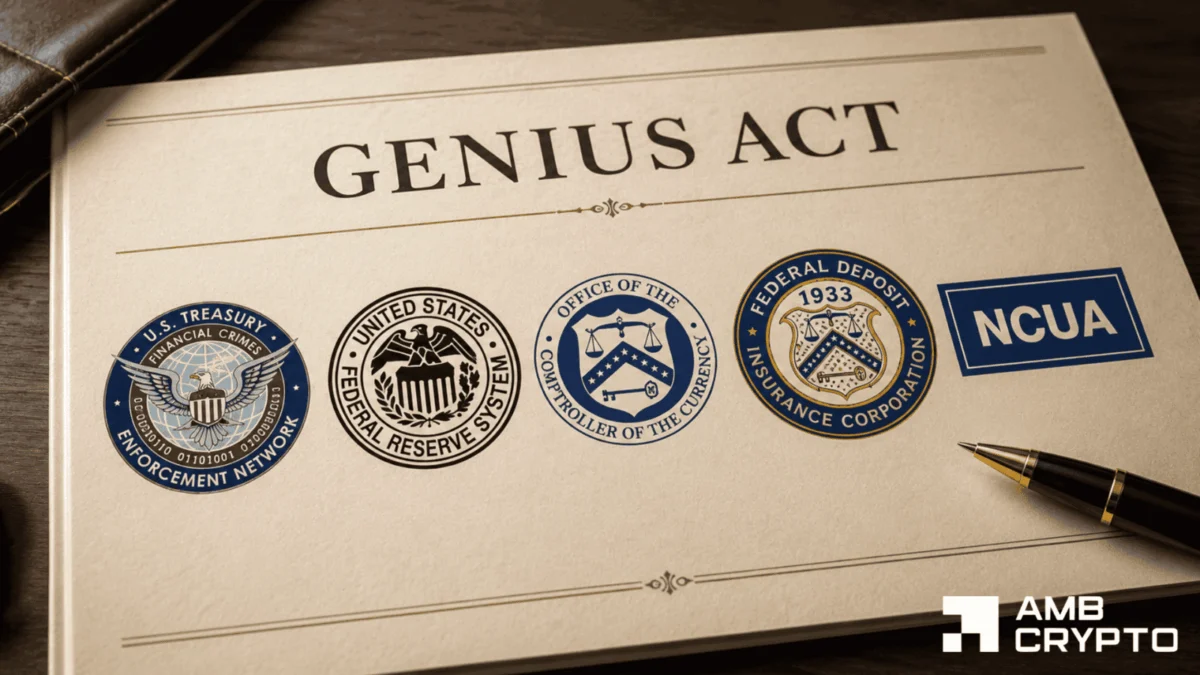
In a move aimed at bridging the gap between traditional banking safeguards and the burgeoning digital asset economy, a coalition of top U.S. financial regulators has unveiled a landmark proposal to standardize customer identification requirements for stablecoin issuers. The joint announcement, released by the Financial Crimes Enforcement Network (FinCEN), the Federal Reserve, the Office of the Comptroller of the Currency (OCC), the Federal Deposit Insurance Corporation (FDIC), and the National Credit Union Administration (NCUA), marks a pivotal step in implementing the stablecoin provisions of the GENIUS Act.
The proposed rule would require "Permitted Payment Stablecoin Issuers" (PPSIs) to adopt rigorous Customer Identification Programs (CIPs), aligning them more closely with the compliance burdens historically shouldered by traditional depository institutions. However, in a strategic nod to the technical realities of blockchain technology, regulators have carved out a significant exemption: the new requirements will not extend to secondary-market activity, such as peer-to-peer wallet transfers.
The Regulatory Framework: Harmonizing Crypto with Banking Standards
The core of the proposal lies in the integration of PPSIs into the existing Bank Secrecy Act (BSA) framework. By treating these issuers as "financial institutions" for the purpose of identity verification, the agencies aim to create a consistent regulatory baseline that mitigates risks associated with money laundering, terrorist financing, and illicit financial flows.
Under the proposed mandate, issuers must implement formal procedures to verify the identities of any individual or entity that opens a direct account. This involves collecting and validating comprehensive "Know Your Customer" (KYC) data, including legal names, physical addresses, dates of birth or business formation, and government-issued identification numbers.
Why the GENIUS Act Matters
The GENIUS Act serves as the legislative bedrock for this initiative. By providing a federal framework for the issuance of stablecoins, the Act aims to prevent the fragmentation of regulatory oversight that has historically plagued the crypto industry. By mandating that issuers operate under a centralized compliance umbrella, the government seeks to ensure that stablecoins—often touted as the "rails" of future global finance—possess the same level of institutional trust as the dollar-denominated accounts held at commercial banks.
Chronology: The Path to Regulatory Clarity
The journey toward this proposal began with the broader legislative push to address the systemic risks posed by non-bank stablecoin issuers.
- Pre-GENIUS Era: The absence of a clear regulatory perimeter led to significant uncertainty regarding whether stablecoin issuers should be treated as money transmitters, banks, or something entirely new.
- Enactment of the GENIUS Act: Once passed, the Act necessitated a secondary layer of rulemaking. Federal agencies spent months evaluating the specific operational risks of stablecoins compared to traditional bank deposits.
- The Joint Consultation Phase: Throughout the drafting process, the five agencies engaged in inter-agency deliberations to ensure that the rules would be uniform across both federal and state-chartered entities.
- Current Proposal: The release of the current framework represents the conclusion of the initial drafting phase, moving the industry into a period of public comment and potential modification before final implementation.
The "Secondary Market" Exception: A Pragmatic Compromise
Perhaps the most significant aspect of the proposal is its restraint. Recognizing that blockchain networks are designed for permissionless, decentralized exchange, regulators have explicitly distinguished between direct customer relationships and secondary-market activity.
Preserving Blockchain Utility
Regulators acknowledged that requiring stablecoin issuers to identify every participant in a secondary-market transaction would be a technical impossibility and a functional death knell for the industry. If an issuer were required to perform KYC on every user who happens to hold their token—a scenario inherent to public, pseudonymous ledgers—the utility of stablecoins as a medium of exchange would be effectively neutralized.
By focusing compliance strictly on the "on-ramp" and "off-ramp" points where a user interacts directly with the issuer to mint or redeem stablecoins, the agencies have demonstrated a sophisticated understanding of how digital assets function. This distinction allows the ecosystem to maintain its high velocity and global reach while ensuring that the "gatekeepers"—the issuers themselves—maintain a clear record of who is interacting with the underlying dollar reserves.
Supporting Data: The Rationale Behind the Mandate
The agencies justify these requirements by citing the necessity of the "reasonable belief" standard. In the banking world, a financial institution must form a reasonable belief that it knows the true identity of its customers. This belief is not merely a bureaucratic hurdle; it is the cornerstone of the entire anti-money laundering (AML) architecture.
According to regulatory impact assessments, the volume of stablecoin transactions has grown exponentially, with market caps frequently exceeding $100 billion. The sheer scale of this liquidity, coupled with the ability to move value across borders in seconds, necessitates a level of oversight that matches the traditional banking sector. The agencies argue that by standardizing the CIP requirements, they are not just regulating crypto; they are protecting the stability of the U.S. dollar by ensuring that stablecoins remain a transparent and verifiable instrument.
Official Responses and Industry Sentiment
The response from the regulatory community has been one of cautious optimism. Spokespeople for the Federal Reserve and the OCC have emphasized that this is a "balanced approach," intended to foster innovation while maintaining the integrity of the financial system.
Conversely, industry advocates have expressed relief that the scope of the rule was limited. Many crypto-native companies had feared an "over-reach" that would require them to track every wallet address on the blockchain, a task that would have required massive capital expenditure and potentially violated privacy norms. By narrowing the scope to direct customer relationships, regulators have effectively provided a "safe harbor" for secondary-market activity, signaling that the U.S. government remains committed to supporting digital asset growth, provided that the foundational issuance process is transparent.
Implications for the Future of Finance
The long-term implications of this proposal are profound.
1. Increased Institutional Adoption
By placing stablecoin issuers under a standardized federal framework, institutional investors—who have previously been wary of the "wild west" nature of crypto—may feel more comfortable integrating stablecoins into their treasury management and payment systems. The "bank-style" compliance gives institutional players the assurance that the assets they are holding are backed by regulated entities with rigorous identity controls.
2. A New Regulatory Paradigm
This proposal signals a shift away from "regulation by enforcement" toward "regulation by rule-making." Instead of suing companies for compliance failures, the government is now providing a clear, written roadmap for what is expected. This provides the industry with the regulatory certainty necessary for long-term planning and investment.
3. Challenges in Implementation
Despite the benefits, challenges remain. Stablecoin issuers will need to invest heavily in robust digital identity verification systems. The cost of compliance could be a barrier for smaller, emerging issuers, potentially leading to market consolidation where only the largest, well-capitalized firms can afford to remain in the stablecoin issuance business.
4. Global Competitiveness
As the U.S. sets its own standards, the global race to establish a stablecoin regulatory framework intensifies. The U.S. approach—by distinguishing between direct issuers and secondary markets—might serve as a model for other jurisdictions, such as the European Union under its MiCA (Markets in Crypto-Assets) regulation, to refine their own rules.
Conclusion
The joint proposal by the FinCEN, the Federal Reserve, and other banking regulators is a landmark moment for the integration of digital assets into the mainstream financial system. By requiring stablecoin issuers to adopt bank-style Customer Identification Programs while wisely exempting secondary-market transactions, the regulators have struck a delicate balance.
As the industry enters the public comment phase, the focus will shift to the practicalities of implementation. Will the compliance burden prove too heavy for smaller players? Will the secondary-market exemption be interpreted broadly enough to protect the decentralized nature of blockchain networks? These questions remain open. However, one thing is certain: the era of stablecoin ambiguity is rapidly drawing to a close, replaced by a new, more transparent framework that seeks to marry the efficiency of blockchain with the security of the American banking tradition.
The GENIUS Act and its implementing rules represent a defining chapter in the evolution of money, ensuring that as we transition into a digital-first financial landscape, the guardrails that prevent crime and protect consumers remain firmly in place.
