

The Decentralized Finance (DeFi) sector, once hailed as the vanguard of a new, transparent, and immutable financial paradigm, finds itself embroiled in a fierce existential debate. At the heart of this controversy is a provocative assertion made by Manuel Aráoz, founder of the prominent blockchain security firm OpenZeppelin. Aráoz’s declaration that the "entire sector is unsafe" has sent shockwaves through the industry, triggering a high-stakes standoff between security purists and those who champion the maturing resilience of DeFi infrastructure.
The Catalyst: A Warning from Within
The controversy ignited earlier this week when Manuel Aráoz, a figure deeply embedded in the bedrock of blockchain security, publicly advised his inner circle to divest from all DeFi positions. His warning was not limited to experimental protocols; he explicitly named established "blue-chip" projects like Aave, MakerDAO (now Sky), and Compound.
Aráoz’s skepticism stems from the rapid advancement of artificial intelligence. He posits that AI-powered cybersecurity agents—the very tools intended to protect code—are becoming dual-use weapons. In the hands of malicious actors, these agents possess the capability to audit, analyze, and exploit smart contract vulnerabilities at a speed and scale that human developers cannot match. To Aráoz, the "offensive" potential of AI in finding exploits renders the current security model of DeFi fundamentally fragile.
Chronology of the Conflict
The sequence of events has unfolded rapidly, reflecting the high-velocity nature of the crypto industry:
- The Provocation: Manuel Aráoz posts his cautionary outlook, framing DeFi as inherently unsafe due to AI-driven threat vectors.
- The Backlash: Industry leaders immediately push back, arguing that Aráoz’s perspective ignores the compensatory defensive advancements provided by AI.
- The Corporate Pivot: Recognizing the potential impact on its reputation, OpenZeppelin officially distances itself from its founder’s personal views, reaffirming its commitment to the security of the ecosystem.
- The Data Debate: Analysts weigh in with year-to-date figures, attempting to distinguish between "codebase vulnerabilities" and "operational security failures."
- The Market Reality: As the debate rages, data from platforms like DeFiLlama reveals a concerning trend of capital flight, with $45 billion in outflows recorded in 2026 alone.
Supporting Data: Parsing the Hacks
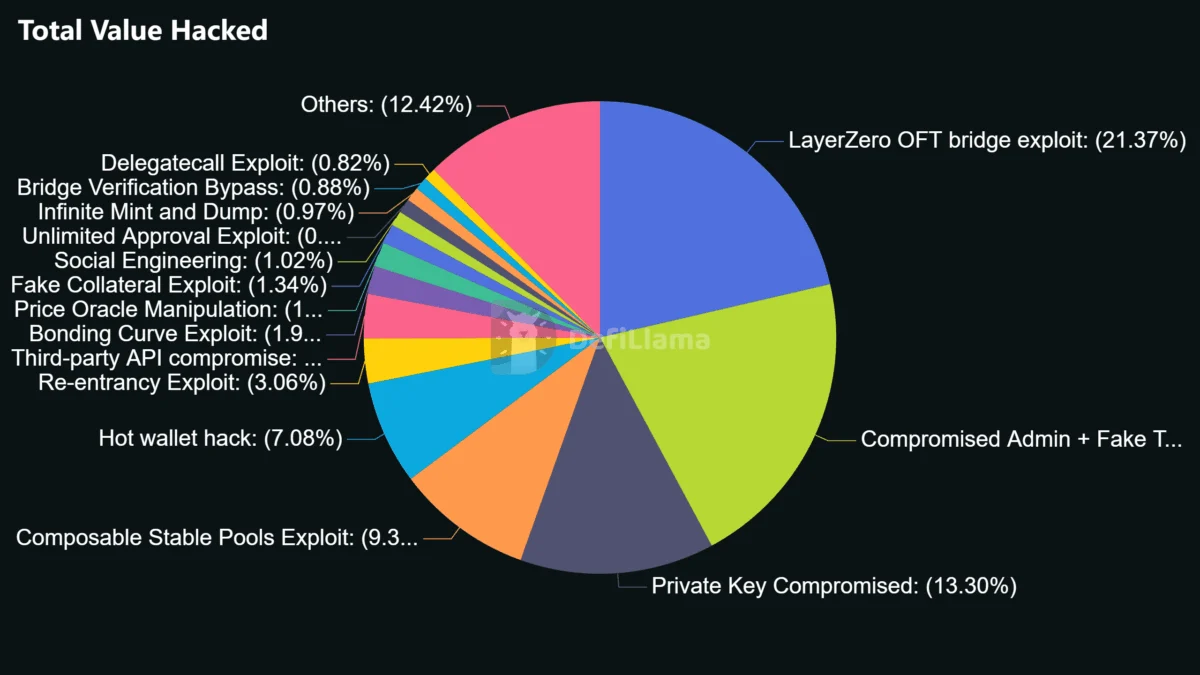
To understand the gravity of the situation, one must look at the empirical evidence. According to industry reports, approximately $1.45 billion has been siphoned from the DeFi sector year-on-year. However, the nature of these exploits is a point of contention.
Proponents of the "DeFi is maturing" narrative, such as Sam MacPherson, co-founder of Sky (formerly MakerDAO), argue that core protocol logic is not the primary target. Their data suggests that less than 10% of 2025 DeFi hacks were directly attributable to codebase vulnerabilities. Instead, the vast majority of exploits were linked to:

- Operational Security (OpSec): Compromised private keys, stolen credentials, and human error.
- Configuration Errors: Incorrect parameter settings during protocol upgrades.
- Bridge Vulnerabilities: Exploits targeting the cross-chain bridges that connect disparate blockchain ecosystems.
Aráoz, however, maintains that this data point is misleading. He contends that while current hacks may be due to "human error," the next generation of AI agents will be superhuman in their ability to detect and exploit even the most minute, non-obvious logic errors in smart contracts, effectively making the "codebase" a much larger surface area for attack than it has been historically.
Official Responses and the Industry Split
The industry response has been largely defensive, with many leaders viewing Aráoz’s comments as alarmist. Stani Kulechov, the founder of Aave, provided one of the most prominent rebuttals, stating, "Not a good take. DeFi infra today is materially more resilient than in prior cycles (partially also thanks to AI)."
Kulechov’s argument is that the same AI tools that Aráoz fears are being deployed by protocol developers to perform automated, continuous audits. He emphasized that the industry is constantly evolving, and to suggest that AI is a "net negative" for security is to ignore the massive leaps in formal verification and real-time monitoring tools that have been integrated into modern DeFi stacks.
OpenZeppelin, caught in the crossfire of its founder’s remarks, released a statement clarifying that Aráoz’s views do not necessarily represent the company’s official stance. This distancing was seen by many observers as a necessary move to protect the firm’s credibility, as OpenZeppelin’s products are the industry standard for securing the very protocols Aráoz criticized.
Implications for the Future of DeFi
The broader implications of this debate extend far beyond Twitter discourse. The market is already showing signs of fatigue. Fears of systemic contagion, coupled with the ongoing "crypto winter" and these publicized security concerns, have led to a 35% drop in Total Value Locked (TVL), now sitting at approximately $80 billion.
1. The Institutionalization of Security
The most likely outcome of this debate is an acceleration toward professionalized security standards. If the industry accepts that AI is a double-edged sword, it must respond with even more robust defensive layers, such as decentralized insurance pools, mandatory multi-signature governance, and institutional-grade custody solutions.

2. The Shift in Threat Modeling
The debate has shifted the focus from "code security" to "operational resilience." As smart contracts become more battle-tested, hackers are increasingly targeting the human element. Future security efforts will likely move toward hardware security modules (HSMs), multi-party computation (MPC) for key management, and sophisticated anomaly detection systems that can pause protocols if suspicious activity is detected.
3. The "Unsafe" Label as a Barrier to Adoption
For DeFi to reach mainstream financial adoption, the perception of "safety" is as important as the reality. If prominent figures like Aráoz continue to signal that even the largest protocols are unsafe, it will inevitably stall the entry of institutional capital. Conversely, if the industry successfully pivots to a "security-first" culture—adopting standardized audit frameworks and transparent security reporting—the current debate might eventually be viewed as the "growing pains" that forced the industry to reach a higher level of maturity.
Conclusion: A Nuanced Path Forward
Both sides of the debate hold a piece of the truth. Aráoz is correct that the offensive capabilities of AI are growing at an exponential rate, and that past security performance is not a guarantee of future immunity. Simultaneously, Kulechov and MacPherson are correct that the DeFi infrastructure has become significantly more robust, resilient, and better monitored than in the early, experimental days of the "DeFi Summer."
The reality of 2026 is that DeFi is neither inherently "safe" nor "doomed." It is a high-stakes, high-innovation ecosystem that operates in a permanent state of adversarial evolution. As long as capital flows into these protocols, the incentive for attackers will remain high. However, the industry’s response—moving away from reliance on perfect code toward a model of continuous, automated, and multi-layered defense—suggests that DeFi is not collapsing, but rather hardening.
The exit of $45 billion in capital may be a painful correction, but it also forces the remaining protocols to prove their utility and security to a more skeptical, educated, and demanding user base. Ultimately, the survival of DeFi will not be determined by the warnings of individuals, but by the ability of the decentralized collective to build systems that are as resilient as they are innovative.
