

The decentralized finance (DeFi) ecosystem was shaken this week as Taiko, a prominent Ethereum Layer 2 (L2) scaling solution, fell victim to a sophisticated security exploit. The breach, which resulted in the unauthorized drainage of approximately $1.7 million in assets, has sent shockwaves through the community, forcing a re-evaluation of the security assumptions underpinning modular blockchain infrastructure. Unlike typical phishing or social engineering attacks that target individual user behavior, this incident struck at the heart of Taiko’s core technical architecture: its chain-state verification mechanism.
Main Facts: Anatomy of the Breach
The incident occurred when the attacker successfully circumvented critical validation checks within Taiko’s protocol. By exploiting a failure in the chain-state verification mechanism, the perpetrator was able to bypass the system’s inherent security gatekeeping, allowing them to manipulate the ERC20 Vault and the Taiko Bridge Proxy Contracts.
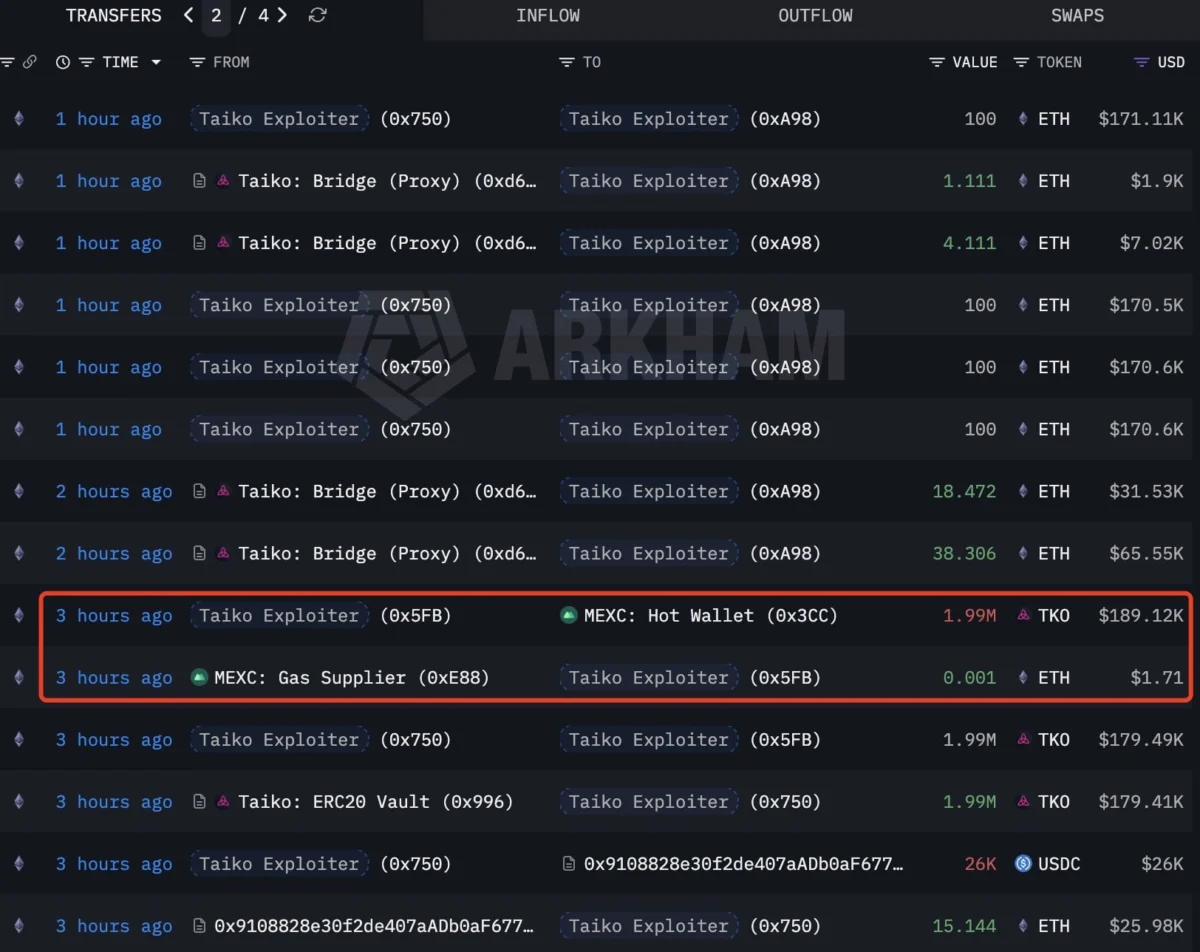
The total value of the stolen assets is estimated at $1.7 million. Following the breach, the attacker moved with calculated speed to consolidate the pilfered funds. Through a series of rapid transactions, the assets were funneled into various intermediary wallets—a classic tactic used to obfuscate the origin of funds and hinder on-chain tracking efforts.
The immediate financial impact was not limited to the direct theft. The market reacted sharply to the news, with the TKO token price witnessing a significant decline. At the time of writing, the token had shed approximately 10% of its value, falling from $0.1279 to $0.07499. This volatility underscores the fragility of investor confidence in the immediate wake of protocol-level vulnerabilities.
Chronology of the Attack and Monetization
The attack unfolded in a rapid, highly coordinated sequence of events. Once the vulnerability in the chain-state verification was identified and exploited, the attacker immediately began the liquidation process.
Phase 1: The Breach
The exploiters identified a weakness in the verification flow that validates the state of the L2 chain against the Ethereum mainnet. By feeding fraudulent data into the bridge contract, the attackers bypassed the standard validation protocols, granting them unauthorized access to the vaults holding liquidity.
Phase 2: Consolidation
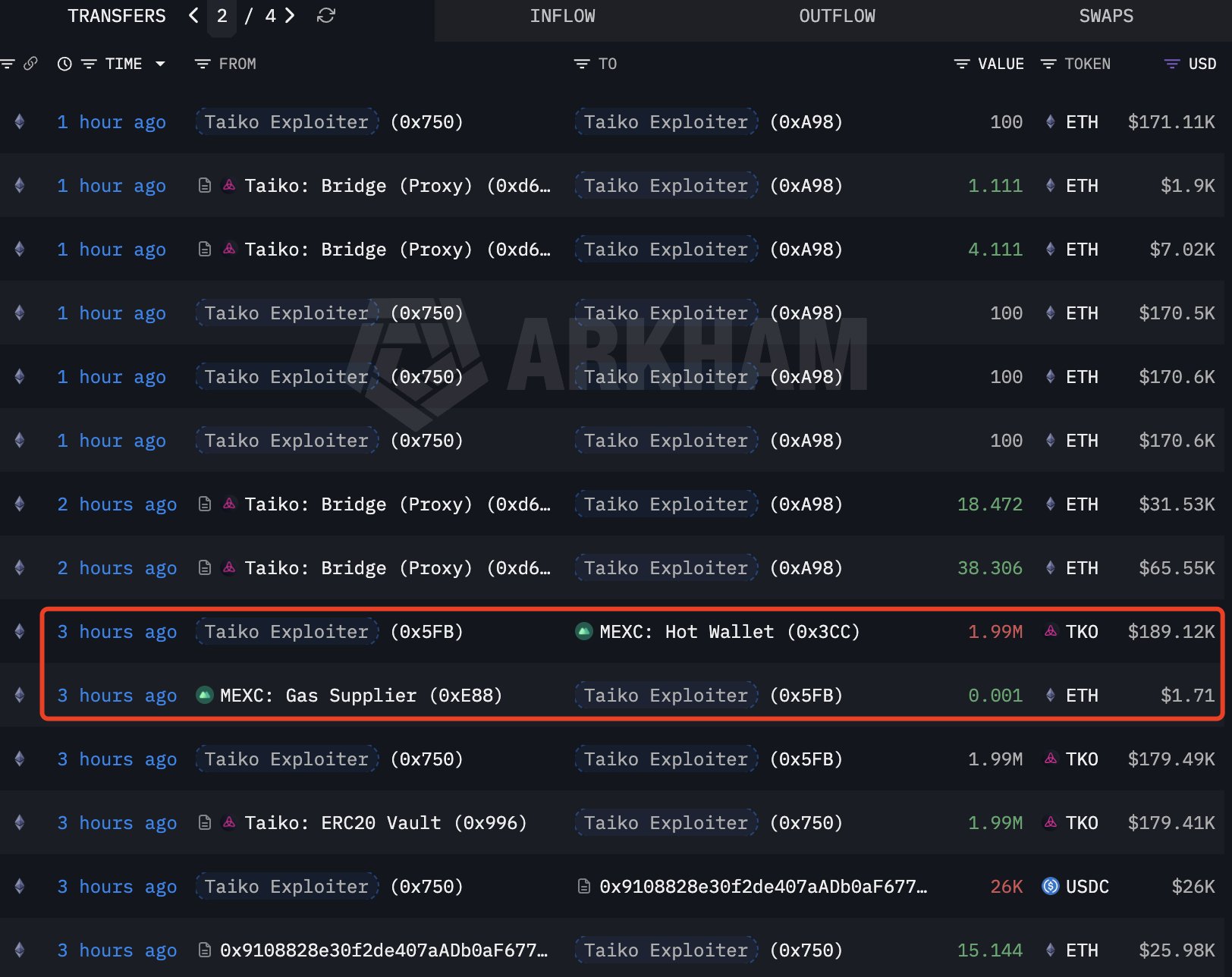
Immediately following the drainage of the ERC20 Vault and the Bridge Proxy, the attacker moved to aggregate the disparate assets into a single cluster of wallets. This consolidation is a standard precursor to money laundering, signaling an intent to dispose of the assets while minimizing the "footprint" of the theft.
Phase 3: Liquidity Seeking
The monetization phase began almost instantly. On-chain data indicates that 1.99 million TKO tokens—valued at roughly $189,000—were transferred directly to a hot wallet belonging to the MEXC cryptocurrency exchange. This move suggests an attempt to achieve "instant liquidity" by offloading the tokens onto a centralized platform before the news of the exploit could lead to a broader market collapse or further security freezes.
Phase 4: Current Status
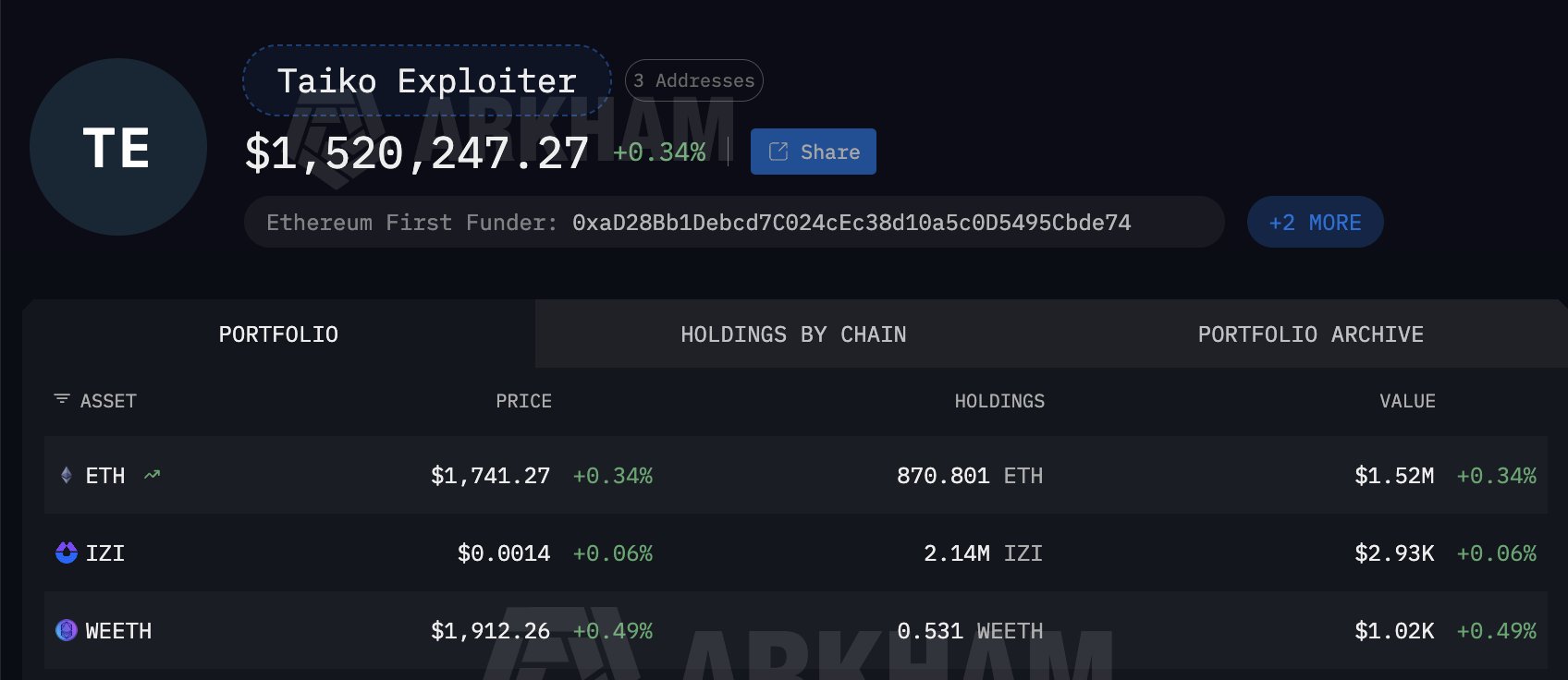
As of the latest reports from Arkham Intelligence, the majority of the loot remains under the attacker’s control. Specifically, roughly 870.8 ETH (valued at approximately $1.52 million) remains stagnant in the attacker’s primary wallet. This concentration is a double-edged sword; while it represents the bulk of the theft, it also keeps the stolen funds under the watchful eye of blockchain security analysts, law enforcement, and centralized exchange compliance teams.
Supporting Data and Market Impact
The fallout from the Taiko exploit has been measurable across various on-chain metrics. While the price of the TKO token suffered a double-digit drop, the broader ecosystem metrics present a complex picture of resilience versus caution.
- DeFi TVL (Total Value Locked): Despite the hack, Taiko’s DeFi TVL actually saw a slight increase to $3.84 million, marking a 3.64% rise. This suggests that while the protocol was compromised, the underlying demand for its L2 services remains relatively intact, or that liquidity providers are opting to stay put despite the turbulence.
- Bridged TVL: The bridged TVL remained stable at approximately $12.85 million. The lack of a mass exodus from the bridge suggests that the community may be waiting for further details or official patches before withdrawing their assets.
- Transaction Volume: The network did see a decline in activity, with weekly transaction counts hitting 324,630—a 3.37% decrease. This cooling effect is typical following security incidents, as users exercise increased caution regarding network stability.
Official Responses and Containment Efforts
Taiko’s response to the crisis was both immediate and aggressive. Recognizing that the integrity of the chain-state verification process had been compromised, the development team acted to prevent further erosion of funds.
Stopping the Bleeding
The first defensive action taken by the Taiko team was to halt all block production. By commanding all block proposers to cease operations, they effectively paused the network’s ability to process new transactions. This "circuit breaker" approach prevented the attacker from further exploiting the bridge contract and provided the core developers with a sanitized environment to conduct a forensic investigation.
Collaborative Security
Recognizing the attacker’s intent to offload tokens via centralized exchanges, Taiko’s team reached out to major trading platforms, including MEXC, urging them to blacklist the attacker’s wallet addresses and freeze any TKO deposits linked to the incident. This collaboration between protocol developers and centralized entities is becoming a hallmark of modern crypto-incident response, effectively narrowing the "exit ramps" for malicious actors.
The team has been transparent in their communication, using social media channels to keep the community updated on the status of the investigation. While the technical details of the fix are still being vetted, the team has signaled that security hardening is their current top priority before the resumption of normal network operations.
Implications: The "Security Assumption" Dilemma
The Taiko incident is a microcosm of the risks inherent in the rapidly evolving Layer 2 landscape. Unlike decentralized applications (dApps) that suffer from logic errors in their smart contracts, this exploit targeted the "plumbing" of the network—the infrastructure layer.
The Vulnerability of Core Infrastructure
When an exploit occurs at the bridge or chain-state verification level, it calls into question the "security assumptions" of the entire chain. Users and developers trust L2 solutions under the assumption that the underlying math and consensus mechanisms are immutable and robust. When these fundamental components are breached, the entire trust model of the L2 is compromised.
The Need for Audits and Formal Verification
This incident will undoubtedly lead to renewed calls for more rigorous formal verification and multi-stage audits for L2 infrastructure. In the race to scale Ethereum, some projects may be prioritizing throughput and user experience over the exhaustive, time-consuming security audits required for core protocol components.
Future-Proofing the Ecosystem
The ability of the attacker to move funds to a major exchange like MEXC also highlights the persistent struggle between the decentralization of blockchain and the centralization of liquidity. Until there is a more seamless way to "blacklist" stolen assets across all chains and exchanges, the incentive for such attacks will remain high.
Conclusion: Lessons Learned
The Taiko exploit serves as a sobering reminder that even the most promising blockchain scaling solutions are not immune to sophisticated attacks. The breach of the chain-state verification mechanism is a "red flag" event that will force the industry to look closer at how L2s validate their state against the Ethereum L1.
However, the rapid and coordinated response from the Taiko team—coupled with the relatively stable TVL figures—suggests that the protocol has the maturity to weather the storm. As the investigation continues and the team works to restore full network functionality, the community will be watching closely to see how Taiko patches its infrastructure and, more importantly, how it restores user trust.
The road ahead for L2 security will be defined by how projects balance the need for rapid deployment with the necessity of absolute, battle-tested security. For Taiko, this $1.7 million incident is a painful, yet necessary, lesson in the ongoing pursuit of a secure and scalable decentralized future.
