

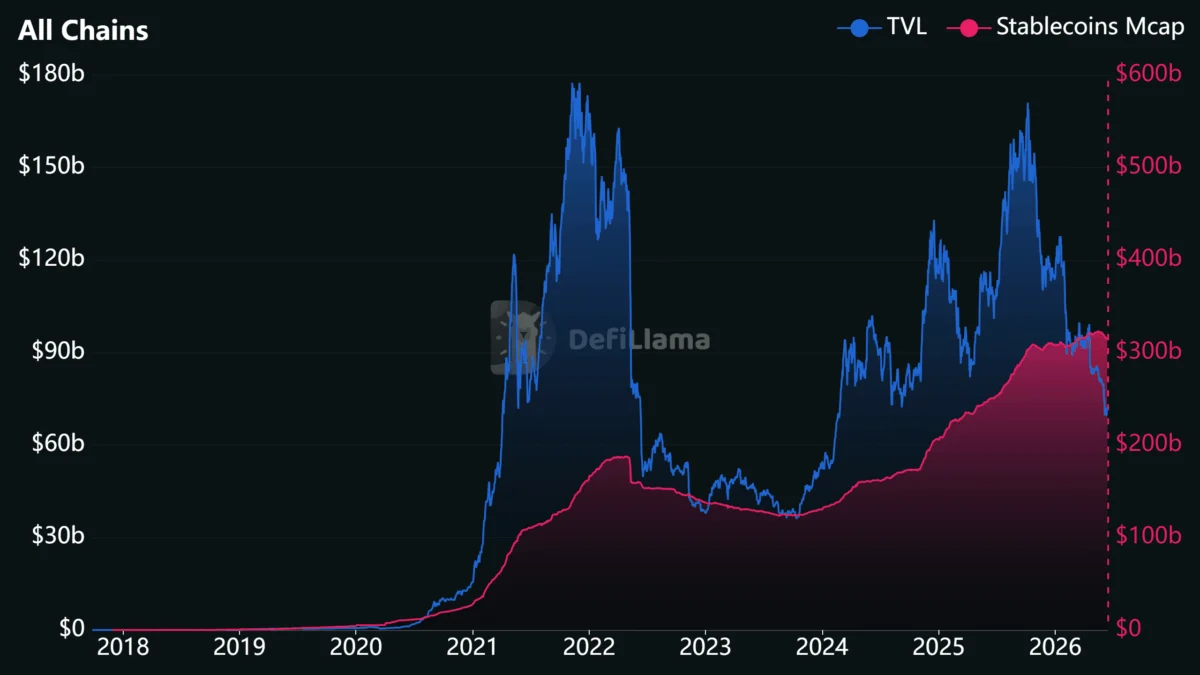
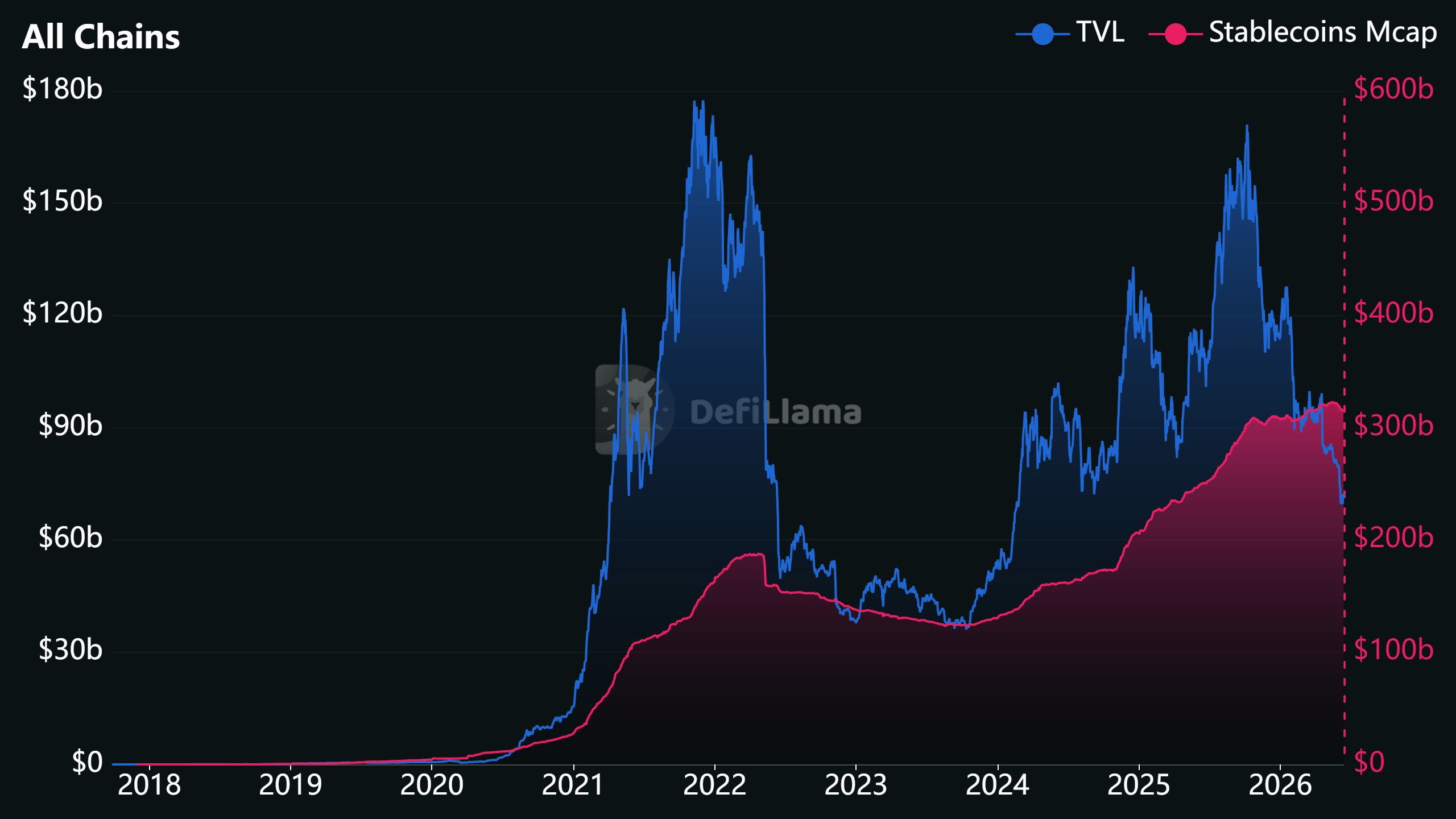
The decentralized finance (DeFi) ecosystem is currently navigating its most challenging period of capital attrition since the market maturity of late 2025. According to data provided by DeFiLlama, the Total Value Locked (TVL) across the sector has plummeted from a peak of nearly $178 billion to approximately $72.5 billion. This precipitous decline is not localized to a specific niche; rather, it represents a broad-based withdrawal of liquidity spanning lending markets, liquid staking derivatives, and cross-chain bridge protocols.
As capital flees the high-risk yield-farming strategies that defined the previous bull cycle, the industry is grappling with a fundamental question: Has the DeFi value proposition finally reached a point of diminishing returns, or is this merely a cyclical recalibration of risk?
The Anatomy of the Decline: A Chronology of Capital Flight
To understand the current state of DeFi, one must look at the trajectory of the past several months. The peak in late 2025 was fueled by a combination of speculative fervor and aggressive incentive programs designed to lure liquidity into nascent protocols. However, as the calendar turned to 2026, the macroeconomic environment began to shift.
Q1 2026: The Initial Cooling
By early January 2026, the initial exuberance began to wane. Investors, spooked by shifting interest rate expectations in traditional markets, began to pull capital from secondary DeFi protocols, favoring the "blue chip" assets. The transition was gradual, marked by a steady erosion of TVL as algorithmic stablecoins and high-leverage lending platforms faced liquidity crunches.
Q2 2026: The Security Crisis
The decline accelerated significantly during the second quarter of 2026. This period was marred by a series of high-frequency exploits that eroded investor confidence. Reports indicate that nearly 70 distinct protocols suffered security breaches during this window, resulting in a combined loss of approximately $746 million. While no single hack rivaled the catastrophic incidents of previous years, the sheer volume of "small-scale" exploits fostered a climate of fear. For many retail and institutional liquidity providers, the risk of smart contract failure—when paired with shrinking yields—simply became untenable.
The Paradox of Abundant Liquidity
A critical nuance in this narrative is the state of stablecoin supply. Despite the $100 billion exodus from DeFi protocols, the total supply of stablecoins remains stubbornly high, hovering near $315 billion.
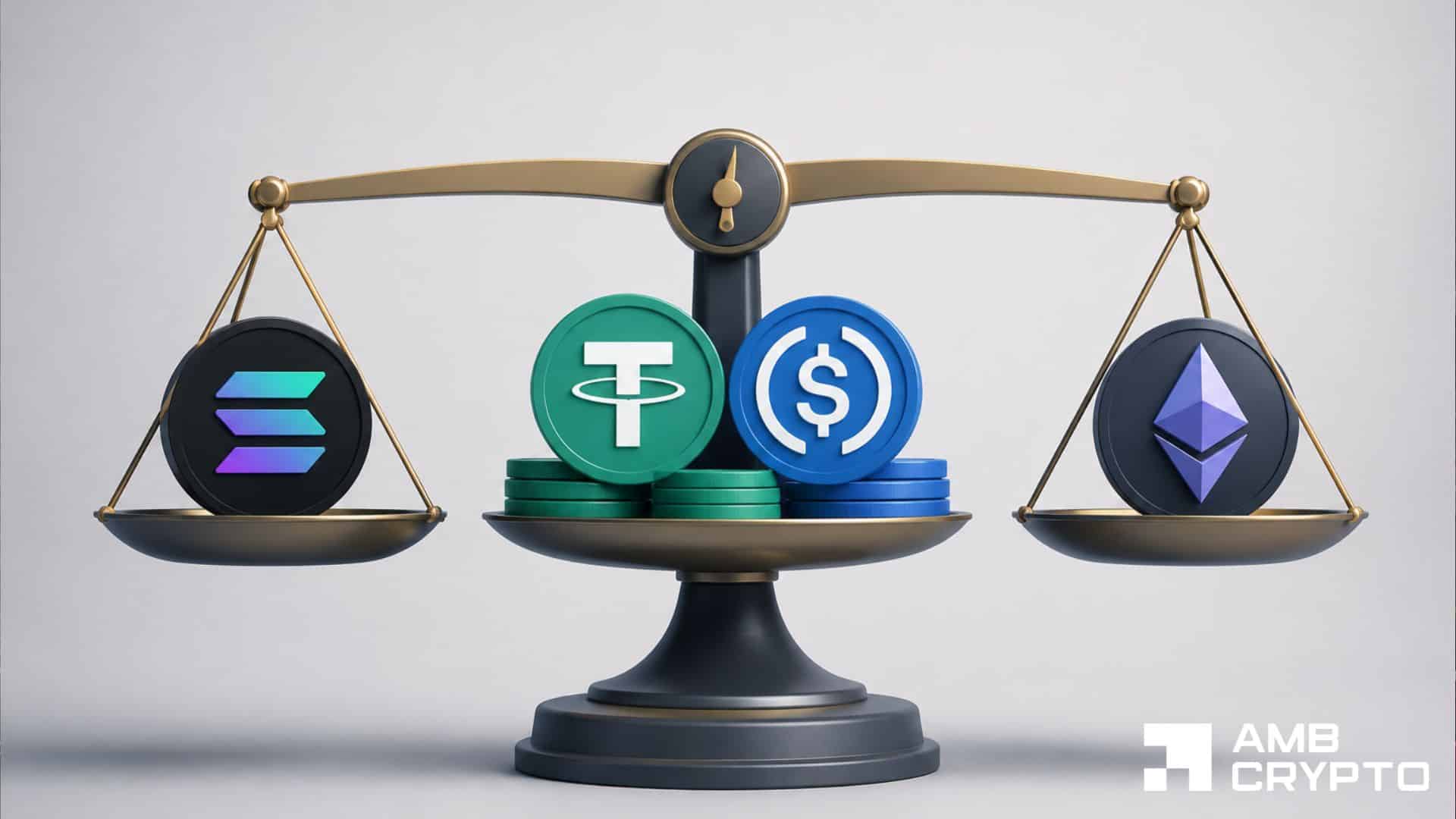
This creates a fascinating, if contradictory, economic landscape. The capital has not left the cryptocurrency ecosystem; it has merely moved to the sidelines. Investors are holding "dry powder" in the form of stablecoins, waiting for a more favorable risk-to-reward ratio. This indicates that the current decline is not a systemic collapse of the underlying infrastructure, but a conscious decision by market participants to prioritize capital preservation over yield generation. The gap between the $315 billion in available stablecoin liquidity and the $72.5 billion currently deployed in DeFi suggests that the market is waiting for a catalyst to re-engage.
Why Capital is Fleeing: The Mismatch of Risk and Reward
The core driver of the current contraction is a compression of yield. At the height of the 2025 cycle, lending rates on major DeFi platforms were offering double-digit annual percentage yields (APYs). Today, those same platforms are reporting lending rates for stablecoins ranging between 3.5% and 9%.
The Compression of Incentives
In a high-interest rate environment, DeFi protocols struggle to compete with traditional finance (TradFi) or even simple staking. When an investor can earn a comparable or superior yield in a traditional savings vehicle or a Treasury bill with significantly lower risk, the motivation to expose capital to the complexities of smart contracts, bridge risks, and liquidity pool impermanent loss vanishes.
The Risk-Adjusted Return Deficit
The "DeFi Premium"—the extra yield required to justify the inherent risks of decentralized protocols—has effectively evaporated. When you account for the $746 million lost in Q2 exploits, the risk-adjusted return for the average DeFi participant has turned negative. Consequently, the rational actor is choosing to withdraw.
Ethereum and Solana: The Resilience of Network Conviction
While protocol-level TVL has withered, the underlying Layer-1 blockchains remain robust. A striking divergence has emerged between "protocol participation" (DeFi) and "network conviction" (staking).
Ethereum’s Staking Stability
Ethereum [ETH] continues to demonstrate massive institutional and retail commitment. Approximately one-third of the total ETH supply remains locked in staking contracts. This suggests that while users are hesitant to participate in complex DeFi strategies, they remain long-term believers in the Ethereum ecosystem.
The Solana Phenomenon
Solana [SOL] mirrors this sentiment, maintaining a staggering 68% staking participation rate. This level of engagement proves that the "flight from DeFi" is not a flight from crypto itself. Users are opting for the passive security of staking over the active risks of DeFi protocols. The market is signaling a clear preference for the base-layer security of these networks over the experimental utility of dApps.
Implications for the Future of DeFi
The current contraction in DeFi will likely lead to a period of consolidation. The protocols that survive this cycle will be those that can demonstrate:
- Security Transparency: Moving beyond simple audits to formal verification and robust bug bounty programs.
- Sustainability: Transitioning away from inflationary token-emission models that artificially inflated yields in 2025.
- Real-World Integration: Linking DeFi yields to actual on-chain revenue or real-world assets (RWAs) that are not solely dependent on speculative crypto-native borrowing.
The Verdict
The industry is currently in a "Darwinian" phase. The excess liquidity that flooded the space during the 2025 boom created a multitude of redundant and insecure protocols. As that liquidity leaves, it is exposing the protocols that provided little to no genuine utility.
The decline in TVL is a painful but necessary correction. It forces developers to innovate on product-market fit rather than incentive-driven growth. As the sector matures, we should expect to see a more professionalized, security-conscious, and risk-averse DeFi landscape.
Final Summary
The narrative of "DeFi collapse" is hyperbolic. Rather, we are witnessing a "DeFi maturation." The shift from $178 billion to $72.5 billion represents the exit of mercenary capital—liquidity that was only present to farm high-yield incentives. The capital that remains is increasingly sophisticated, favoring the security of staking on major networks like Ethereum and Solana over the high-risk, low-reward environment of current lending protocols.
Moving forward, the health of the DeFi ecosystem will be measured not by the sheer volume of TVL, but by the quality of the activity occurring on-chain. As the market resets, the focus for the remainder of 2026 will undoubtedly center on protocol security and the return of sustainable, risk-adjusted yields that can truly compete with the broader global financial landscape. The dry powder currently sitting in stablecoins suggests that the appetite for decentralized finance remains, provided the industry can prove that it is worthy of the capital it seeks to manage.
