

The digital asset landscape is currently witnessing a high-stakes experiment in brand positioning. Vlad Tenev, CEO of Robinhood, has recently thrust his company’s newly launched Layer 2 (L2) network—the Robinhood Chain—into the center of a heated cultural debate. While the platform was initially architected as a sophisticated infrastructure for the tokenization of Real-World Assets (RWA), Tenev’s recent, highly public pivot toward embracing memecoin activity has polarized the crypto community, drawing both sharp condemnation from industry veterans and massive, speculative capital inflows.
The Strategic Shift: From Institutional Utility to Retail Speculation
Robinhood’s entry into the blockchain infrastructure space was predicated on a narrative of institutional-grade utility. By building an Ethereum L2, the company aimed to bridge the gap between traditional finance and the decentralized web, specifically targeting the burgeoning RWA sector. However, the realities of current market dynamics appear to have necessitated a tactical shift.
In a recent communication that signaled a departure from the "serious finance" branding, Tenev remarked: "While we’re building Robinhood Chain to be the best chain for RWA… it works great for memes too."
This statement, while seemingly casual, represents a profound strategic pivot. In the current crypto cycle, memecoins are no longer just fringe digital collectibles; they have become the primary "on-ramp" for retail liquidity. By acknowledging the utility of memecoins, Tenev is essentially betting that the volume generated by speculative, high-velocity assets will provide the necessary network effect to propel the Robinhood Chain into the top tier of Ethereum scaling solutions.
Industry Backlash: A Question of Legitimacy
The response from the venture capital and development community was swift and largely dismissive. For many, the proliferation of L2s—often criticized as "infrastructure bloat"—is a point of contention. Simon Dedic of Moonrock Capital expressed the frustration felt by many in the space, noting: "Just another L2 that offers no real value over the existing ones is exactly what we were missing. But hey, you can trade memes on it too. Someone tell Vlad it’s not 2024 anymore."
The criticism centers on the concept of "value extraction." Critics argue that by prioritizing memecoin volume, Robinhood is catering to the lowest common denominator of crypto, potentially tarnishing its reputation as a serious player in the RWA tokenization space. Comparisons to Coinbase’s "Base" network are inevitable. While Coinbase has maintained a more measured, albeit increasingly open-minded approach to memecoins, it has faced its own internal debates regarding the balance between "serious" decentralized finance (DeFi) and the chaotic, high-risk world of meme-based speculation.
The Memecoin Paradox: Market Drivers vs. Retail Risk
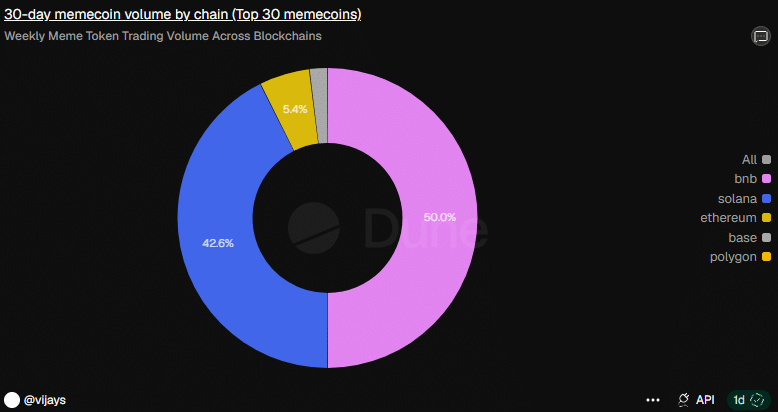
To understand Tenev’s gamble, one must look at the data. In the current market, memecoins are the undisputed drivers of blockchain activity. On established chains like Solana and BNB Chain, memecoin trading accounts for roughly 40% to 50% of total volume. These assets act as a high-octane fuel that drives user acquisition, developer attention, and liquidity.
However, the "memecoin mania" is a double-edged sword. While it generates massive revenue for network operators and decentralized exchanges (DEXs), it also exposes retail investors to significant volatility and systemic risk. The recent cycle has seen countless instances of "rug pulls" and fraudulent schemes, with infamous examples like the Trump-affiliated World Liberty Financial [WLFI] project generating massive, controversial gains for insiders while leaving the broader retail base holding the bag.
Tenev’s embrace of this sector suggests that Robinhood is willing to accept the reputational risks associated with these assets in exchange for the sheer volume they bring to the network.
Chronology of the Robinhood Chain Surge
The timeline of the Robinhood Chain’s recent success is as volatile as the assets it hosts:
- Pre-Launch: Robinhood promotes the L2 primarily as an RWA powerhouse, emphasizing institutional partnerships and regulatory compliance.
- The Tenev Pivot: Following lukewarm adoption, Tenev publicly pivots, acknowledging the viability of the chain for "meme" activity.
- The Viral Spark: The statement goes viral across crypto-native social media platforms, sparking an immediate influx of "degen" traders looking for the next low-cap play.
- The 24-Hour Explosion: Within a single day of the pivot, native tokens like Cash Cat [CASHCAT] and 4663 see astronomical growth, with gains of 1100% and 800% respectively.
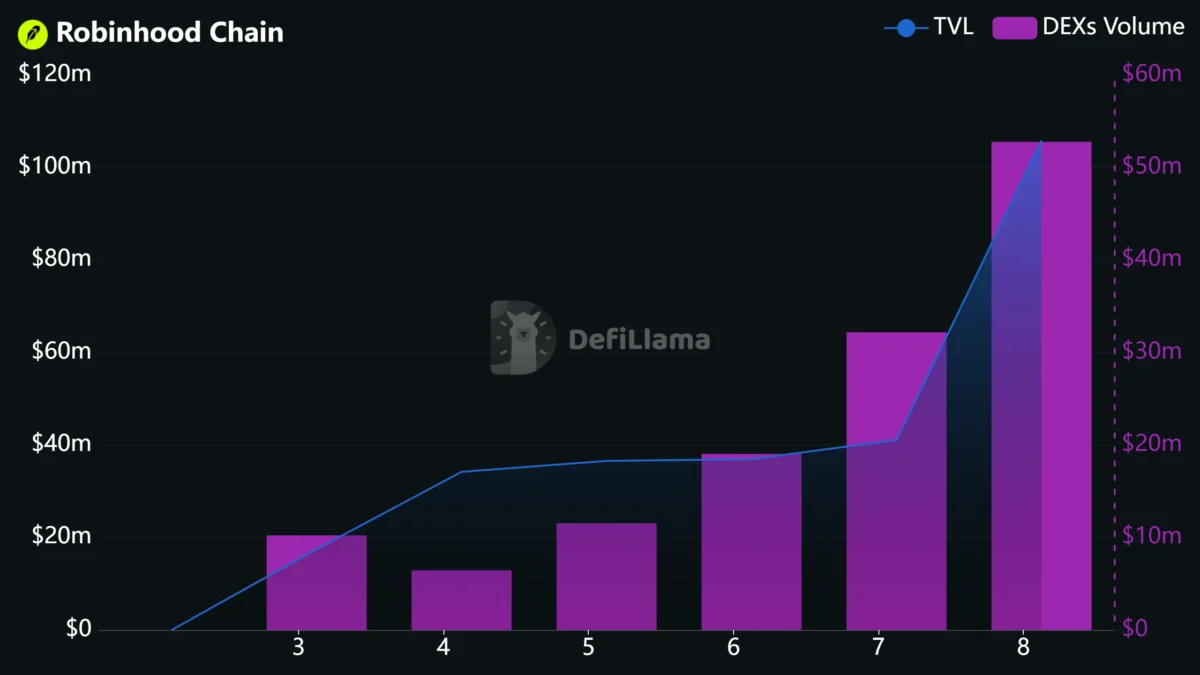
- The Liquidity Influx: Driven by FOMO (Fear Of Missing Out), the Total Value Locked (TVL) on the Robinhood Chain surges from $10 million to over $105 million in under seven days.
- DEX Volume Spike: Trading activity on DEXs hosted on the chain jumps from $10 million to $52 million, signaling that the "meme play" is effectively bootstrapping the network’s ecosystem.
Supporting Data: By the Numbers
The metrics suggest that while the community may be vocal in its criticism, the market is responding with capital.
| Metric | Pre-Pivot | Post-Pivot |
|---|---|---|
| TVL (USD) | $10,000,000 | $105,000,000 |
| Daily DEX Volume | $10,000,000 | $52,000,000 |
| Memecoin Market Share | < 0.5% | ~2.0% (and growing) |
While 2% may seem small compared to the dominance of Solana or Ethereum, the growth trajectory is undeniable. By onboarding new DEX platforms and leaning into the memecoin trend, Robinhood is effectively shortening the time it takes for a new L2 to reach critical mass.
Official Responses and Corporate Positioning
Robinhood has been careful to frame this pivot not as a "surrender" to meme culture, but as a commitment to user-driven demand. By providing a secure, centralized-backed, yet decentralized-capable environment, they argue they are offering a "safer" way to engage in high-risk trading.
Whether this rhetoric satisfies regulators remains to be seen. If the Robinhood Chain becomes a hotbed for scams, the company—which has historically been under intense scrutiny from the SEC—could face significant regulatory backlash. The tension here is palpable: how does a publicly traded, highly regulated company reconcile its desire to be a pioneer of institutional RWA tokenization with its role as a facilitator of the most speculative, unregulated corner of the crypto market?
Implications for the Future of L2s
The implications of this move are significant for the broader Ethereum ecosystem. If the Robinhood Chain successfully captures market share through memecoins, other "serious" L2s may be forced to reconsider their own stance on asset listings and community engagement.
- The Commoditization of Infrastructure: We are seeing a shift where technical superiority matters less than community and liquidity. If an L2 can offer a faster, cheaper experience for trading tokens, it will win, regardless of whether those tokens are "utility-backed" or "meme-backed."
- The "Base" Competition: Robinhood is clearly targeting the market share held by Coinbase’s Base. If they can successfully siphon off even a fraction of the memecoin trading activity from Base, the competition between these two TradFi-native crypto platforms will define the next two years of L2 development.
- The RWA Dilemma: The long-term risk for Robinhood is that they become known as the "Memecoin Casino." If this happens, they may struggle to attract the high-quality institutional partners they originally courted for their RWA initiatives.
Conclusion: A High-Stakes Gamble
Vlad Tenev’s decision to embrace memecoins on the Robinhood Chain is a calculated risk that reflects the brutal realities of the modern crypto market. In an era where user attention is the scarcest commodity, the lure of explosive, viral growth offered by memecoins is difficult for any platform to ignore.
While critics view this as a descent into the shallow end of the crypto pool, the numbers tell a different story: capital is flowing, volume is surging, and the network is growing. Whether this strategy will lead to long-term sustainability or a rapid, boom-and-bust cycle remains the defining question for the Robinhood Chain. For now, the "meme pivot" has succeeded in making the Robinhood Chain a player to watch, even if the price of that relevance is the ire of the crypto establishment.
