

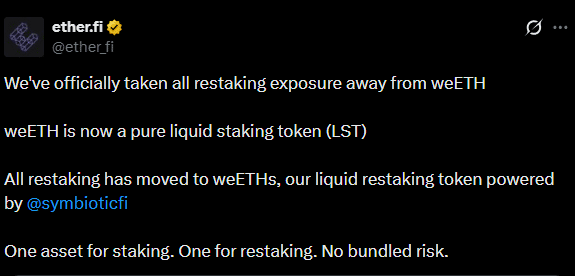
In a move that signals a significant cooling of the "yield-chasing" fervor that has defined the Ethereum ecosystem over the past year, Ether.fi, the dominant force in the liquid restaking sector, has executed a structural overhaul of its flagship token, weETH. As of August 7, 2026, the protocol has effectively stripped away all restaking exposure from weETH, reverting the asset to a "pure" liquid staking token (LST). This strategic pivot, while surprising to some, underscores a growing industry-wide realization: the risks inherent in complex, multi-layered yield strategies may finally be outweighing the marginal gains they offer to users.
The Core Transformation: Simplifying the Protocol
The structural change is profound. By decoupling weETH from the restaking activities previously facilitated through the EigenLayer ecosystem, Ether.fi is attempting to insulate its token holders from the "bundled risk" that has become a hallmark of the liquid restaking token (LRT) sector.
Under the new architecture, Ether.fi has migrated its restaking operations to a distinct vehicle, weETHs, deployed on the Symbiotic platform. This separation is intended to provide greater clarity for investors. By isolating "pure" staking—which earns standard Ethereum consensus rewards—from the volatile and often experimental world of restaking—which involves securing third-party Actively Validated Services (AVS)—Ether.fi is effectively drawing a line in the sand regarding risk appetite.
Chronology of a Market Pivot
The decision did not happen in a vacuum. The timeline of this transition reflects a broader trend of "de-risking" within the decentralized finance (DeFi) sector.
- October 2025 – Q1 2026: The peak of the restaking mania. Total Value Locked (TVL) in the liquid restaking sector soared as users sought to "loop" assets across various platforms to maximize Annual Percentage Yield (APY).
- Mid-2026: A series of high-profile security vulnerabilities, including the infamous $292 million exploit of KelpDAO, sent shockwaves through the industry. The incident served as a wake-up call, highlighting that the complexity of smart-contract-based "looping" creates massive attack vectors.
- July 2026: Aave, the largest decentralized lending protocol, initiated an aggressive risk-management campaign. Recognizing the systemic danger posed by highly leveraged, yield-bearing assets, the platform "scrapped" or deprecated over $98 million worth of assets deemed to have low adoption or high collateral risk.
- August 7, 2026: Ether.fi officially announced the decoupling of weETH, effectively signaling an end to the "era" of aggressive, integrated yield-looping for their primary token.
The Mechanics of the Shift: LSTs vs. LRTs
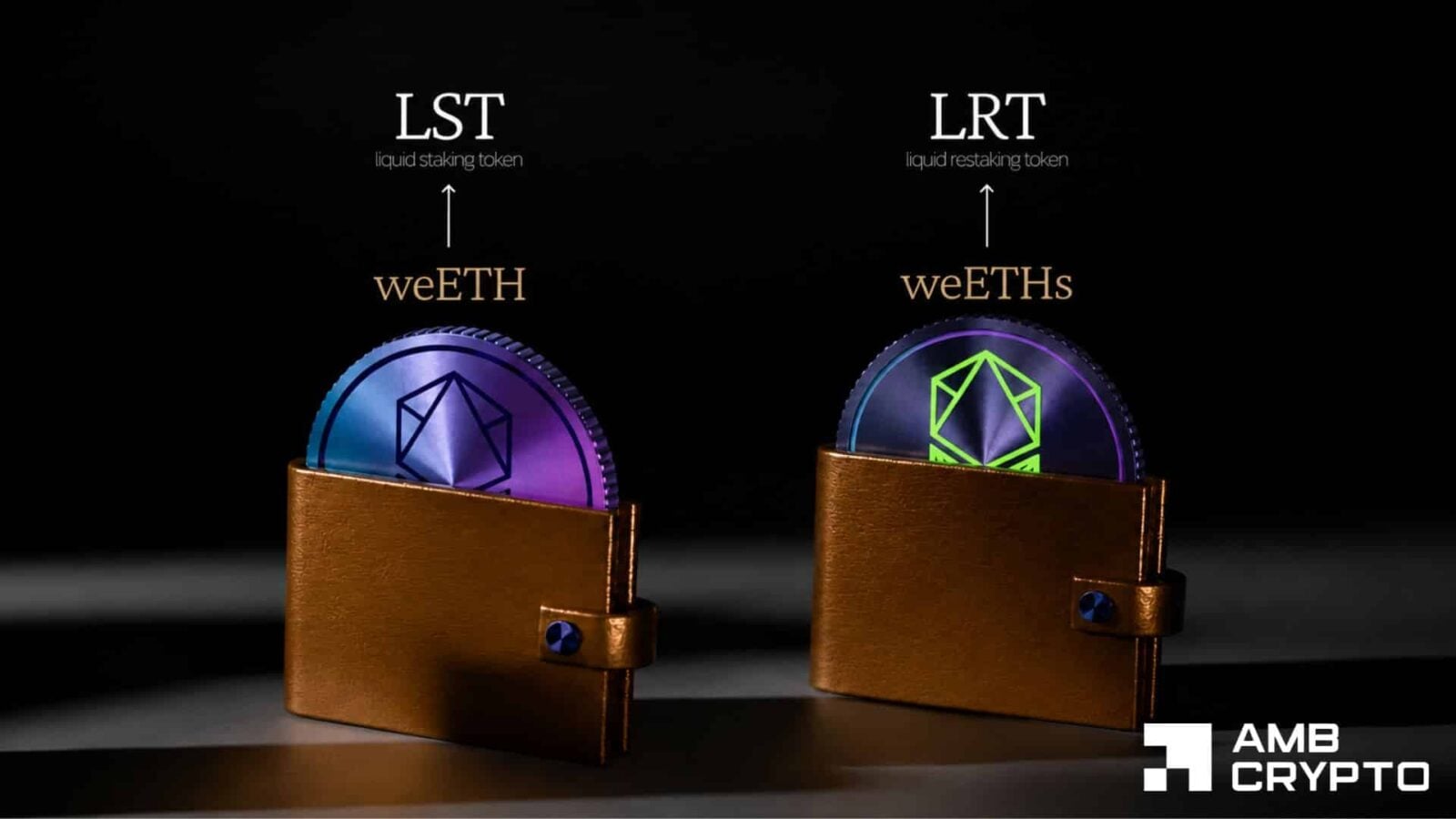
To understand the gravity of Ether.fi’s move, one must distinguish between the two core financial instruments at play. A Liquid Staking Token (LST) provides liquidity for staked Ethereum, allowing users to earn native staking rewards while remaining able to trade or utilize their capital in other DeFi protocols.
Conversely, a Liquid Restaking Token (LRT) adds a layer of complexity. LRTs allow users to "restake" their already-staked ETH into multiple yield-generation strategies simultaneously. While this can result in higher interest rates, it also creates a daisy-chain of dependencies. If one underlying strategy fails—or if a smart contract vulnerability is exploited—the contagion risk can ripple through the entire chain of restaked assets. By stripping away this second layer, Ether.fi is fundamentally changing the risk-reward profile of weETH, prioritizing asset safety over yield maximization.
Supporting Data: A Market in Contraction
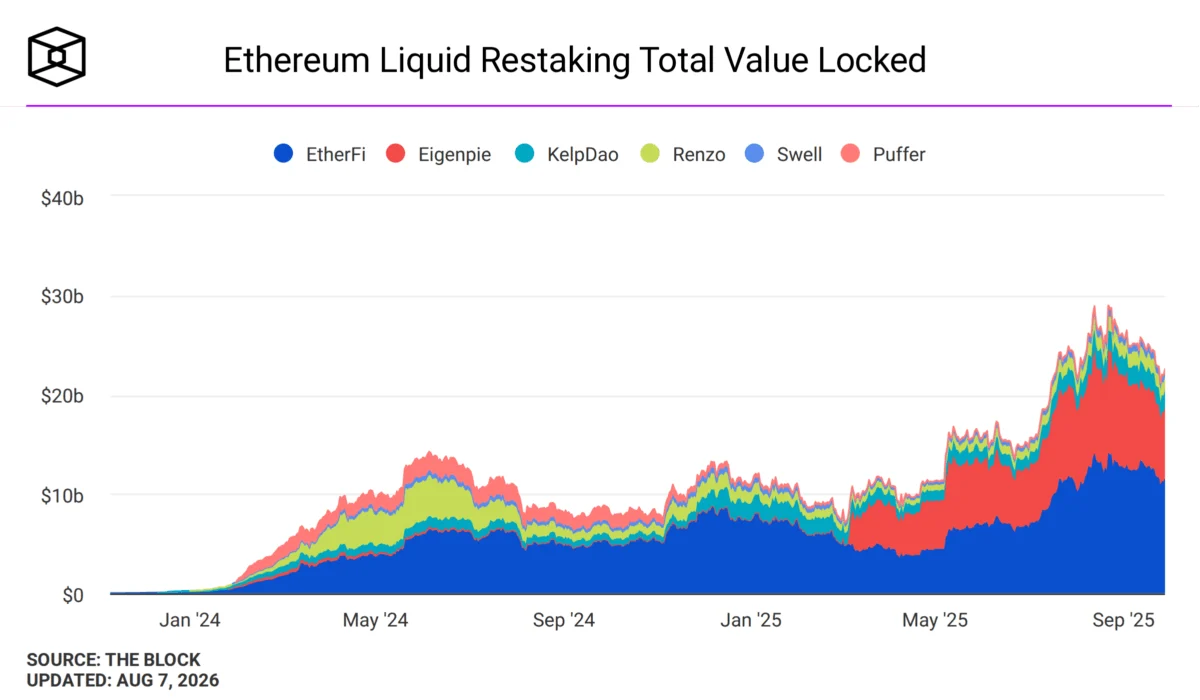
The data surrounding the liquid restaking market paints a clear picture of an ecosystem undergoing a correction. Since its peak in October 2025, the overall liquid restaking market has contracted significantly, falling from $29 billion to approximately $22 billion.
Despite this contraction, Ether.fi maintains a commanding lead, holding roughly $11.4 billion in TVL—effectively controlling half of the total market share. This dominance makes their decision to pivot particularly influential. When the market leader pulls back from aggressive restaking, it forces other protocols to reconsider their own risk parameters.
Furthermore, the "Pendle PT" (Principal Token) trade, which once offered a reliable 50-100 basis points (bps) of additional yield on top of native staking, has been largely deprecated by major lending protocols like Aave. As these "low-hanging fruit" yield opportunities disappear, the incentive for users to engage in complex restaking loops diminishes, leading to the current market-wide consolidation.
Official Responses and Industry Sentiment
The move has prompted a candid, if somewhat somber, acknowledgment from the leadership at Ether.fi. Mike Silagadze, the CEO of Ether.fi, addressed the change on social media, characterizing it as the "end of an era."
"I still think restaking will come back in one form or another," Silagadze noted. "I think it was just a bit too early."
This sentiment is echoed by industry analysts, such as Tom Wan of Entropy Advisors. Wan highlighted the role that Ether.fi and EigenLayer played in kickstarting the first wave of "ETH looping" on Aave. "Ether.fi & Eigen kickstarted the first wave of ETH looping on Aave and the Pendle PT trade," Wan explained. "With the deprecation of these loops by major lending giants, the ecosystem is entering a period of necessary maturation."
Implications for the DeFi Ecosystem
The ripple effects of this decision are likely to be felt throughout the DeFi space for months to come. The implications can be categorized into three major areas:
1. The Death of "Yield-at-All-Costs"
For the past year, the prevailing mantra in DeFi was to maximize APY through any means necessary. The Ether.fi move signals that this phase is over. Future growth in the sector will likely be driven by security, capital efficiency, and "real" yield, rather than synthetic yield generated through complex, fragile loops.
2. The Rise of "Risk-Adjusted" DeFi
Aave’s aggressive cleanup of $98 million in risky assets was the precursor to this move. It is now evident that major DeFi infrastructure providers are moving away from a "deploy everywhere" strategy. We are witnessing a transition toward more conservative, risk-managed liquidity pools, which is a sign of a maturing financial market.
3. Consolidation of Power
While the market is contracting, the leaders—like Ether.fi—are becoming more resilient by shedding risky liabilities. This suggests that the future of DeFi will be dominated by a few "blue-chip" protocols that prioritize institutional-grade security over the experimental, high-risk strategies that characterized the 2025 boom.
Conclusion: A Maturation Milestone
The decoupling of weETH from restaking is more than just a technical update; it is a profound pivot for the Ethereum staking industry. By embracing a "back to basics" approach, Ether.fi is acknowledging that the future of decentralized finance depends on stability and sustainable growth rather than the speculative loops of the past. As the market continues to recalibrate, the focus will inevitably shift toward how these protocols can deliver value in a more rigorous, risk-conscious environment. The "era" of experimental restaking may have come to a close, but the foundation for a more robust and secure DeFi ecosystem may finally be taking shape.
