

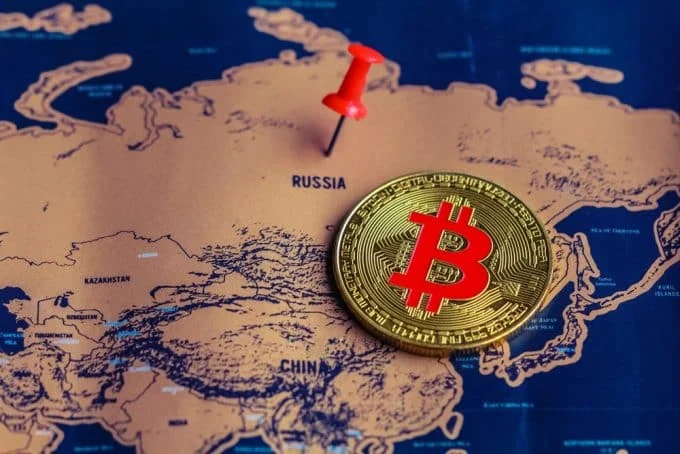
The global financial landscape is currently navigating a period of profound uncertainty, characterized by a potent cocktail of geopolitical tension and shifting regulatory frameworks. Cryptocurrencies, once heralded as a potential "safe haven" or "digital gold" in times of economic distress, are finding themselves increasingly tethered to the volatility of traditional markets. As reports of a potential military escalation between Russia and Ukraine dominate global headlines, the digital asset sector has witnessed a sharp contraction, wiping hundreds of billions of dollars from its total market capitalization in a single trading session.
The Convergence of Geopolitical Jitters and Market Contraction
On Thursday, the cryptocurrency market experienced a synchronized decline, mirroring the anxieties seen in traditional stock indices. Bitcoin (BTC), the industry’s bellwether, retreated to the $43,352 level on Coingecko charts, reflecting a 0.7% daily drop and a significant retreat from the $47,000 threshold observed at the start of the year. Ethereum (ETH), the world’s second-largest cryptocurrency by market value, mirrored this downward trend, sliding 2.14% to trade at approximately $2,873.
The broader market impact has been swift and unforgiving. Across a 24-hour window, the aggregate cryptocurrency market shed roughly $200 billion in value, dragging total capitalization down to approximately $1.8 trillion. This downturn is not occurring in a vacuum; it is the direct result of mounting Western concerns over Russian military mobilization. With more than 100,000 troops currently positioned along the Ukrainian border, the specter of armed conflict has acted as a catalyst for risk-off sentiment among institutional and retail investors alike.
Chronology of Escalation: From Border Tensions to Market Sell-Offs
The recent market volatility can be traced through a series of escalating geopolitical developments that have kept investors on high alert:
- Early January 2022: Bitcoin opens the month near $47,000, buoyed by hopes of sustained growth. However, macroeconomic headwinds begin to form as the US Federal Reserve signals a more aggressive stance on interest rate hikes.
- Mid-January 2022: As diplomatic talks between Russia and Western powers stall, Bitcoin experiences a sharp dip, reaching lows of $32,950. While the asset has since recovered some of that ground, the underlying anxiety remains palpable.
- Late January 2022 (The Current Week): Tensions peak following a flurry of high-level diplomatic activity. US President Joe Biden and Ukrainian President Volodymyr Zelensky engage in an hour-long dialogue to address the security crisis. Concurrently, US National Security Adviser Jake Sullivan warns of the imminent risk of a military strike.
- Thursday’s Market Reaction: News reports confirming the hardening of stances between Moscow and the West trigger a widespread sell-off, with BTC, ETH, and other altcoins like Cardano (ADA) experiencing significant downward pressure.
Supporting Data: Volatility and Market Behavior
To understand the current state of the market, one must look beyond the price charts and examine the underlying volatility metrics. According to data from BuyBitcoinWorldwide, Bitcoin’s 30-day volatility is currently experiencing a compression, losing roughly 3.35% in its volatility index. While this is lower than the 4.56% average seen throughout 2021, it is a testament to the fact that the asset is still finding its equilibrium.
Interestingly, some market analysts have noted a "relative calmness" in trading volumes despite the geopolitical noise. This suggests that while there is a clear exodus from risk-on assets, many long-term holders—often referred to as "HODLers"—are choosing to sit on their positions rather than capitulate. Nevertheless, the recent 9% drop in both Bitcoin and Ethereum to six-month lows underscores the fragility of the current market structure. The correlation between crypto and the Nasdaq Composite index has become increasingly pronounced, with the crypto sector now reacting to international security threats with the same intensity as tech-heavy equities.
Official Responses and The Regulatory Shadow
The market’s woes are not solely the result of potential war in Eastern Europe. Simultaneously, Russia—a critical hub for the global digital asset ecosystem—has emerged as a source of severe regulatory concern.
The Central Bank of Russia has recently floated the possibility of a "blanket ban" on cryptocurrency mining and trading. This proposal is rooted in a fundamental skepticism toward decentralized finance, with the Russian monetary authority arguing that crypto poses a systemic threat to the nation’s financial stability and environmental objectives.
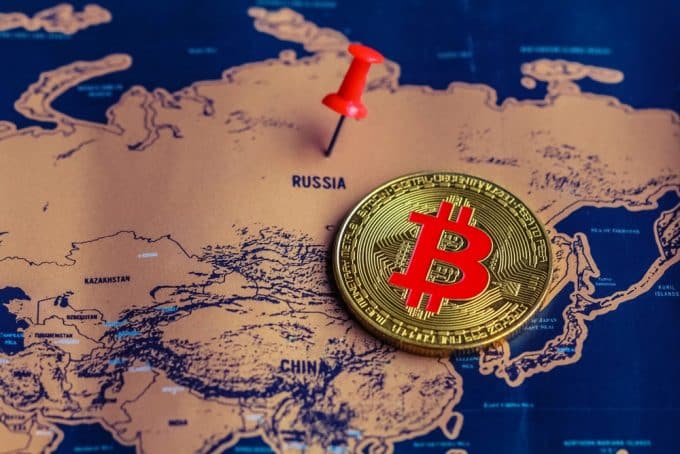
The implications of such a ban are profound. Russia is currently estimated to account for approximately 10% of the world’s total Bitcoin mining capacity. A total prohibition would force a massive migration of mining infrastructure, creating short-term network instability and forcing a reconfiguration of the global hashrate. Furthermore, reports indicate that the Russian government is exploring legislative avenues to impound digital assets that are deemed to have been acquired "unlawfully," signaling a tightening grip on the domestic crypto sector.
For its part, Moscow has dismissed Western warnings of an invasion as "hypocrisy," further complicating the diplomatic landscape and ensuring that market participants remain in a state of high-alert ambiguity.
Implications: The Future of Crypto in an Interconnected World
The current market climate suggests that the cryptocurrency industry has officially graduated from a niche alternative asset class to a core component of the global financial apparatus. Because of this integration, the "crypto-market" is no longer immune to the broader, interconnected crises of the 21st century.
1. The Erosion of the "Safe Haven" Narrative
For years, proponents argued that Bitcoin would act as an inflation hedge and a neutral store of value during geopolitical turmoil. The current data suggests a more nuanced reality: in the short term, crypto behaves as a high-beta, risk-on asset. Investors, when faced with the existential threat of war, prioritize liquidity and stability, often liquidating digital assets to cover margin calls or to hold fiat currency.
2. Regulatory Arbitrage and Decentralization
If Russia proceeds with a total ban, it will serve as a stress test for the resilience of the Bitcoin network. Historical precedent—most notably the 2021 Chinese mining crackdown—suggests that while a country-level ban causes initial price shock, the decentralized nature of the network allows for a rapid redistribution of mining power to more hospitable jurisdictions. The industry is becoming increasingly adept at navigating regulatory hostility.
3. Institutional Correlation
The influx of institutional money into the space has brought with it institutional volatility. As crypto assets become part of the standard balance sheets for major investment firms and public companies, they are inevitably subject to the same macroeconomic and geopolitical triggers as the S&P 500. This is the new normal for the crypto market: it is no longer isolated from the boardrooms of Washington, Moscow, or Wall Street.
Conclusion
As the world watches the unfolding situation in Ukraine, the cryptocurrency market remains at a critical juncture. The dual pressures of potential military conflict and aggressive domestic regulation in a major mining hub like Russia have converged to create a challenging environment for investors.
However, beneath the surface of the current price action, the fundamental thesis of digital assets—security, immutability, and decentralization—remains intact. While the market continues to grapple with these external shocks, it is clear that the future of cryptocurrency is now inextricably linked to the broader political and economic trajectory of the world. For now, market participants are advised to maintain a cautious outlook, acknowledging that until geopolitical clarity is achieved, volatility is likely to remain the defining characteristic of the digital asset landscape.
