

The crypto ecosystem is currently gripped by a high-stakes standoff between a prominent development team and a disgruntled legion of early adopters. Following the surprise announcement that Abstract, an Ethereum Layer 2 (L2) network backed by the team behind the Pudgy Penguins brand, is set to cease operations by December, a wave of indignation has swept through the community. At the center of this firestorm is a growing cohort of "airdrop farmers"—users who spent two years providing liquidity and engagement in anticipation of a native token launch that will now never materialize.
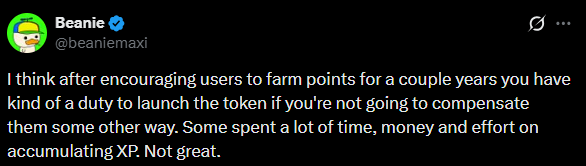
Led by Charles Moscoe, the founder of venture fund GM Capital (widely recognized in the industry as "Beanie Maxi"), a vocal segment of the community is demanding that the Pudgy Penguins team unlock a portion of the PENGU token supply to compensate those who grinded for XP points on a network that has effectively been declared a failure.
The Anatomy of the Conflict: A Promise Unfulfilled
Airdrop farming has become a staple of the decentralized finance (DeFi) landscape. It involves early protocol users committing capital, performing swaps, and providing liquidity to new networks, often under the implicit understanding that their participation will be retroactively rewarded with tokens once the project reaches maturity.
For the Abstract L2 project, this incentive structure was the primary engine of growth. For two years, users were encouraged to accumulate XP points through daily interaction, believing these points were a precursor to an eventual token distribution. However, the project’s recent admission that it failed to achieve "product-market fit" and its subsequent decision to wind down operations has rendered those years of effort worthless.
Charles Moscoe, voicing the frustrations of thousands, took to X (formerly Twitter) to challenge the ethics of the decision. "They’ve already made hundreds of millions of dollars selling PENGU," Moscoe stated. "So why not just distribute the rest of the locked tokens to XP earners?" This rhetorical question has since become the rallying cry for a movement seeking formal restitution.
A Chronology of the Abstract Decline
To understand the gravity of the current situation, one must look at the timeline of Abstract’s development and the subsequent collapse:
- The Launch Phase (Late 2024): The team behind the globally recognized Pudgy Penguins NFT brand signaled their intent to enter the infrastructure layer by introducing Abstract, an L2 designed to integrate the brand’s community with broader Web3 utility.
- The XP Accumulation Period (2024–2026): For nearly two years, Abstract incentivized users with an "XP" system. Users engaged in high-frequency trading, lending, and bridging, effectively subsidizing the network’s early liquidity requirements.
- The Announcement of Failure (October 2026): In a blunt post-mortem, the Abstract team declared that the network had failed to remain competitive in key market segments. They confirmed a total shutdown, scheduled for December 2026.
- The Backlash (Present): Within 48 hours of the announcement, the "repayment movement" gained traction, with high-profile voices like Moscoe demanding that the roughly 26 billion locked PENGU tokens—worth approximately $212 million—be reallocated to the community that sustained the project.
Supporting Data: The PENGU Token Economics
The scale of the requested "stimmy" is significant. According to market data, PENGU has a total supply of 88.88 billion tokens. At present, 70.7% of this supply is in circulation. The remaining 29.3%—approximately 26 billion tokens—is currently locked, intended for future distribution among the development team, liquidity operations, and community reserves.

Critics of the project argue that since the primary vehicle for this ecosystem—the Abstract L2—is being abandoned, the justification for holding these tokens for "future development" is void.
- Total Supply: 88.88 Billion PENGU
- Circulating Supply: ~62.8 Billion PENGU (70.7%)
- Locked/Unallocated Supply: ~26 Billion PENGU (29.3%)
- Estimated Value of Locked Pool: ~$212 Million (subject to market volatility)
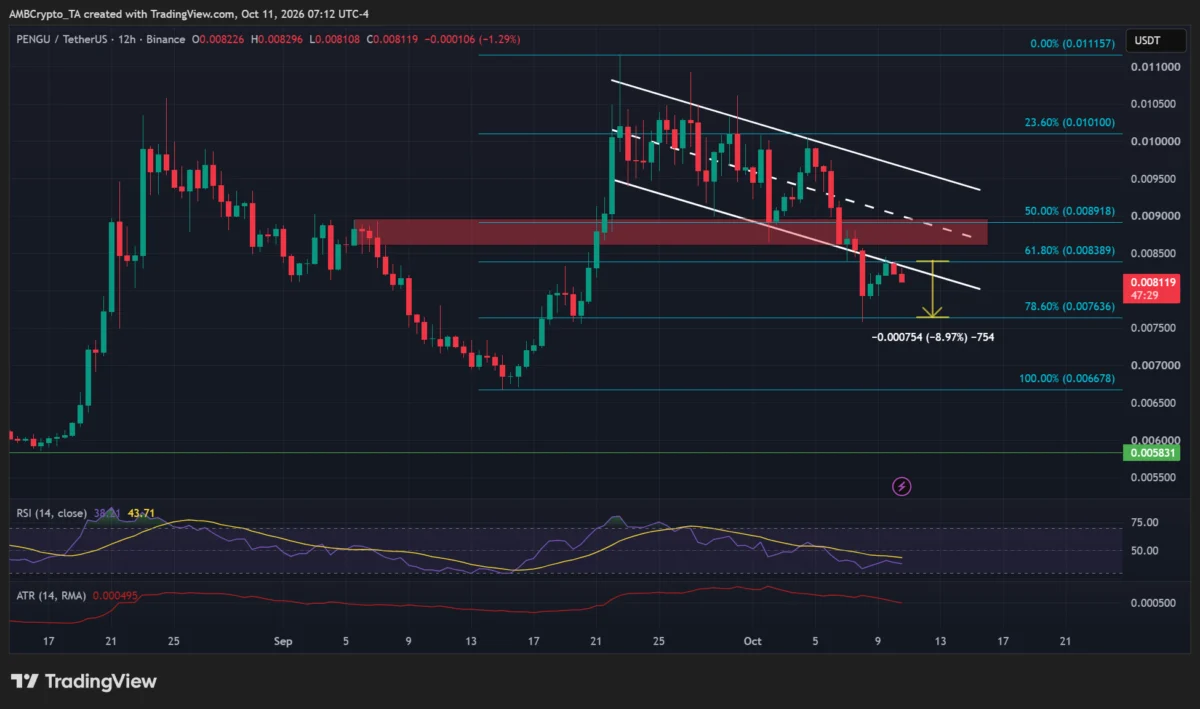
The financial impact of the shutdown is not merely theoretical. As news of the potential loss of value and the subsequent community revolt hit the wires, the PENGU token experienced an immediate sell-off, dropping roughly 2% in value. Technical analysts have warned that if the situation continues to escalate without a clear resolution, the token could face a downward trend of up to 9%, potentially retesting the $0.0076 support level.
Community Outcry and the "Stimmy" Campaign
The push for repayment is gaining institutional-level support. Kona DeFi, a known entity within the ecosystem, has publicly committed to leading a campaign to secure compensation for XP holders. Their promise to initiate a "stimmy campaign" signals that this is not merely an isolated grievance, but a coordinated attempt to force the Pudgy Penguins team into a defensive posture.
"Users got used and sidelined," one prominent community member wrote on social media. "I understand the shutting down aspect of business, but allowing loyal users to walk away with nothing? After 2 years of daily grind? It’s not just ridiculous, it’s evil!"
This sentiment highlights a growing divide between project founders, who view a failed product as a business risk that must be mitigated by closing shop, and users, who view their time and liquidity as an investment that entitles them to a share of the project’s remaining assets.
Official Responses and Strategic Silence
As of this writing, the core team behind Pudgy Penguins and Abstract has maintained a guarded stance. While they have acknowledged the feedback, they have stopped short of agreeing to any form of token redistribution.
The silence from the leadership team is likely due to the complex nature of the PENGU tokenomics. The 26 billion locked tokens are not necessarily "liquid cash." They are often tied to legal, operational, and incentive-based covenants that cannot be easily unwound or redistributed to a decentralized pool of users without potentially creating tax, legal, or regulatory hurdles. Furthermore, there is significant pushback from the core Pudgy Penguins NFT community, many of whom fear that "airdropping" tokens to disgruntled farmers would dilute the value of the token and reward speculators over long-term brand holders.
Implications for the Broader Crypto Industry
The Abstract fallout serves as a case study for the risks inherent in the current "points-based" incentive model. The situation has broad implications for the industry:
1. The Death of the "Points" Narrative
For years, projects have used "points" as a way to bootstrap liquidity without committing to a specific tokenomics schedule. The Abstract collapse demonstrates the inherent instability of this model. If a project fails, the "points" disappear with the product, leaving users with no recourse. This is likely to lead to a decrease in user participation for new, unproven L2s that rely on promises of future airdrops.
2. Legal and Ethical Precedents
While crypto remains largely unregulated, the "implied contract" between a project and its users is coming under closer scrutiny. If a project solicits liquidity based on the promise of future rewards, and then shuts down without fulfilling that promise, they may face not only a reputational crisis but potentially a legal one. The demand for repayment is a test of whether community pressure can effectively act as a proxy for regulatory enforcement.
3. The Future of Project Pivots
The Abstract team argued that they were making a rational business decision by cutting a product that failed to gain traction. This is a common practice in Silicon Valley—the "fail fast, pivot often" mentality. However, the crypto community’s reaction suggests that the Web3 ethos expects a higher degree of accountability. Projects that abandon their users in the name of business efficiency may find it impossible to launch future products, as their reputation will be irrevocably tarnished.
Conclusion: A Turning Point
The showdown over the Abstract shutdown is more than just a dispute over 26 billion tokens; it is a battle over the future of user engagement in the Web3 space. The Pudgy Penguins team finds themselves at a crossroads: they can either ignore the demands, potentially preserving their remaining capital but alienating their most active user base, or they can concede to the "repayment" demand, setting a precedent that failed projects are financially responsible for their early adopters.
As December approaches and the shutdown date looms, the pressure on the leadership team will only intensify. Whether this results in a, "stimmy," a formal apology, or a continued standoff remains to be seen. What is clear, however, is that the era of blind trust in airdrop incentives is over. Users are now demanding the same level of accountability and transparency that they would expect from any other financial institution—and they are proving that they are willing to fight to get it.
