

The cryptocurrency landscape is currently gripped by a paradoxical fervor. Over the past several weeks, a wave of institutional optimism—largely ignited by high-profile Bitcoin spot ETF filings—has propelled digital asset prices to levels that have caught many analysts off guard. Bitcoin has surged 20% to reclaim the $30,000 threshold, while Ethereum has mirrored this momentum, rising 16% and flirting with the $2,000 mark.
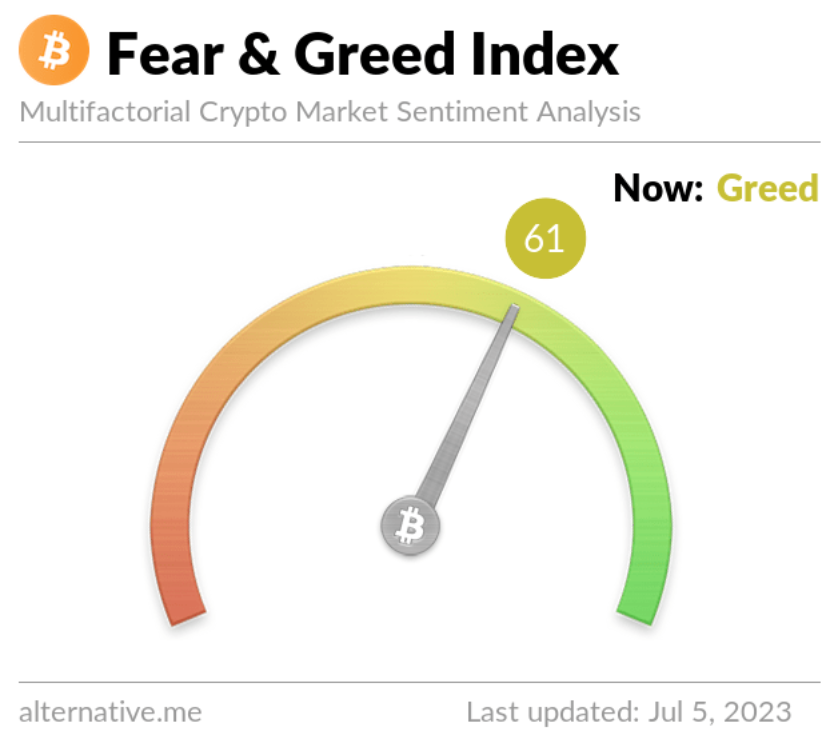
Yet, beneath this veneer of "greed," evidenced by a Fear and Greed Index score of 61, lies a starkly different reality. A granular examination of market liquidity, regulatory headwinds, and macroeconomic constraints suggests that the current price action may be disconnected from the underlying structural health of the industry.
The Catalyst: Institutional Ambition vs. Regulatory Reality
The current bull-run narrative is anchored in the belief that the "institutionalization" of crypto is finally at our doorstep. The seminal filings for Bitcoin spot ETFs by industry titans BlackRock and Fidelity have acted as a massive psychological tailwind. This optimism was further bolstered by the launch of EDX Markets, a non-custodial exchange backed by heavyweights like Schwab, Citadel Securities, and Fidelity, which facilitates the trading of Bitcoin, Ether, Litecoin, and Bitcoin Cash.
However, the regulatory machinery is proving to be a formidable gatekeeper. The Securities and Exchange Commission (SEC) recently delivered a sharp reality check to the industry, deeming the initial ETF filings "inadequate." The Commission cited a lack of detail regarding "surveillance-sharing agreements," a critical mechanism designed to prevent market manipulation.
While CBOE has already refiled its application with Nasdaq likely to follow suit, the process underscores the difficulty of clearing the SEC’s high bar. Skeptics point out that the SEC has rejected similar applications in the past, including a notable dismissal of a Fidelity filing in January 2022. The 20% price surge, therefore, appears to be an anticipatory bet on a "when," not an "if," ignoring the potential for protracted legal and bureaucratic friction.
Chronology of the Recent Surge
To understand the current volatility, one must map the sequence of events that defined the last month:
- Early June: The SEC initiates aggressive enforcement actions against the world’s two largest crypto exchanges, Binance and Coinbase.
- Mid-June: Despite the regulatory cloud, the market sentiment shifts dramatically as BlackRock officially files for a spot Bitcoin ETF.
- Late June: Fidelity and other major financial institutions solidify their backing of EDX Markets, signaling a shift toward institutional-grade infrastructure.
- Early July: The SEC labels initial ETF applications "inadequate," prompting rapid refilings by CBOE and Nasdaq.
- Current Outlook: Markets remain resilient, ignoring both the regulatory assault and the Fed’s persistent hawkish stance on interest rates.
The Liquidity Crisis: A Warning Sign
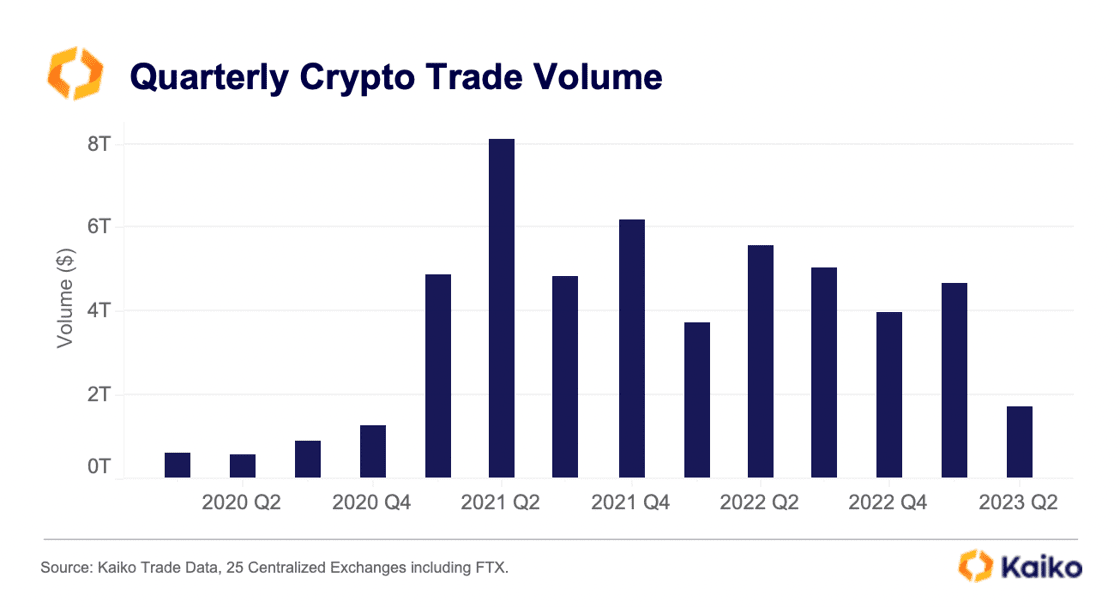
Perhaps the most alarming trend currently ignored by the bulls is the evaporation of liquidity. Data from Kaiko reveals that trading volume on centralized exchanges during the second quarter of 2023 hit its lowest point since 2020.
Liquidity is the lifeblood of any financial market; when it dries up, price swings become significantly more volatile. The current rise in Bitcoin’s price—up 83% year-to-date—has occurred in an environment of thinning order books. This is not the hallmark of a healthy, organic bull market; rather, it suggests that smaller amounts of capital are moving prices more aggressively than they would in a deeper, more liquid market.
Furthermore, the "flight to quality" or "flight to safety" within crypto is evident in the collapse of stablecoin balances on exchanges. These balances have plummeted by 60% over the last six months—a total outflow of approximately $26 billion. This indicates that participants are either moving assets to cold storage or exiting the ecosystem entirely, further exacerbating the liquidity crunch.
Regulatory Firestorms: Binance vs. Coinbase
The legal battles unfolding in the United States represent a bifurcation in the industry’s regulatory risk profile. The suit against Binance is perceived as a classic case of an offshore entity operating outside the bounds of US jurisdiction, with allegations ranging from wash trading to commingling of funds.
Conversely, the SEC’s case against Coinbase is an existential test for the industry. Because Coinbase is a publicly traded entity that the SEC allowed to go public in 2021, the current attempt to classify many of the assets listed on the exchange as "securities" creates a profound legal contradiction. If the SEC prevails, the operational model of nearly every major US crypto exchange could be rendered illegal overnight. Despite this existential threat, the market has treated these tokens with surprising indifference, pushing prices higher even as they are labeled "unregistered securities" by the top financial regulator.
Macroeconomic Headwinds: The "Higher for Longer" Narrative
The macroeconomic environment remains stubbornly restrictive. During the most recent Federal Reserve meeting, Chair Jerome Powell successfully communicated a "pause" that was anything but a pivot. The messaging was clear: this was a temporary respite to evaluate the impact of previous hikes, not the end of the tightening cycle.
Market participants are currently discounting the risk of further rate hikes, despite futures markets indicating an 86% probability of a 25-basis-point hike in the coming weeks. The disconnect here is startling: crypto assets are rallying as if the era of "easy money" is returning, yet the Fed is actively signaling that the cost of capital will likely remain elevated for the foreseeable future.
Monetary policy operates with a significant time lag. The aggressive shift from zero-interest-rate policy (ZIRP) to a 5%+ benchmark rate is the most rapid tightening cycle in modern history. The full economic impact of this policy shift has yet to be felt in the broader economy, and it is highly improbable that crypto assets will remain immune to the resulting contraction in global liquidity.
Implications for Investors
The current state of the crypto market is characterized by a "hope-driven" rally. While the entry of BlackRock and Fidelity provides a veneer of legitimacy, it does not erase the fundamental realities of a shrinking liquidity pool and a hostile regulatory environment.
Investors should consider the following:
- Sentiment vs. Substance: The Fear and Greed index is a psychological indicator, not a financial one. A high score suggests a market prone to over-extension and profit-taking.
- Regulatory Alpha: The outcome of the Coinbase vs. SEC case will likely define the next five years of the industry. Investors should remain cautious of tokens specifically identified as securities by the SEC.
- Liquidity Risk: In a low-volume environment, downside volatility is significantly amplified. Investors should expect sudden, sharp pullbacks as long as exchange volumes remain at multi-year lows.
- Macro-Awareness: Do not fight the Fed. As long as interest rates remain high and the probability of further hikes persists, the "risk-on" environment required for a sustained crypto bull run remains largely absent.
In conclusion, while the potential for a Bitcoin spot ETF offers a genuine long-term catalyst, the current market fervor appears to be running ahead of reality. The industry is navigating a transition from a Wild West phase to a regulated, institutional future, and the road ahead remains treacherous. Investors would be well-advised to distinguish between the long-term promise of the technology and the short-term volatility of a market that is currently ignoring clear warning signals.
