

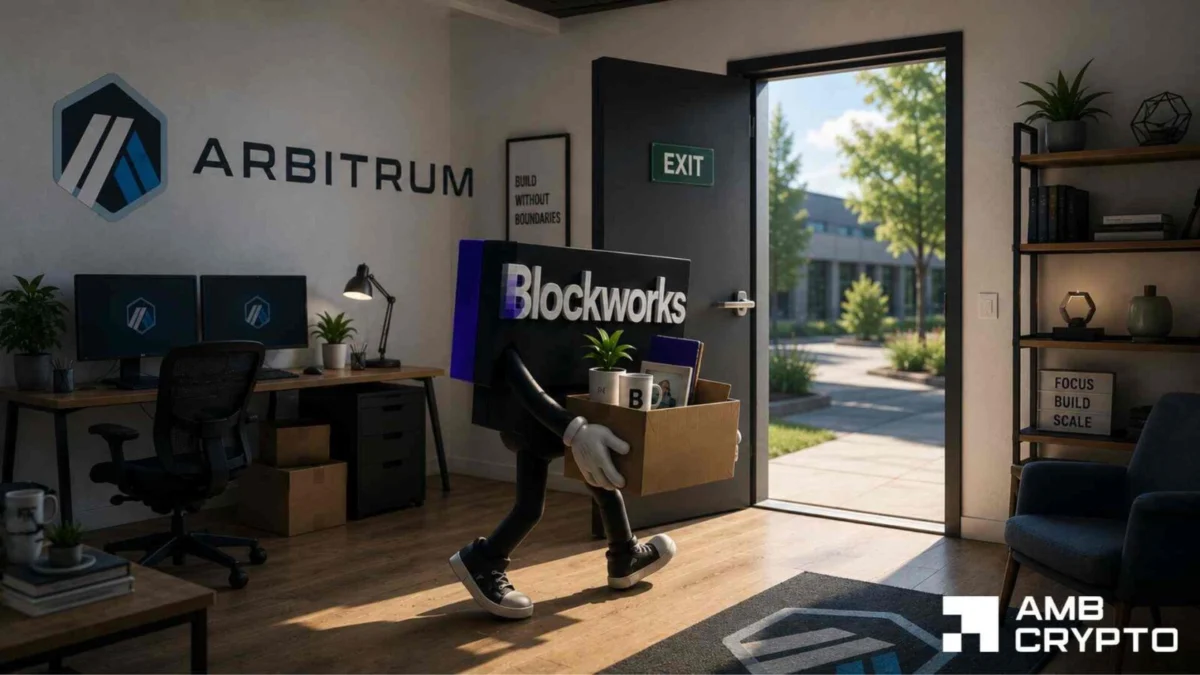
In a move that has sent ripples through the decentralized finance (DeFi) ecosystem, Blockworks Advisory, one of the most prominent institutional delegates in the Arbitrum DAO, has announced it will wind down its governance operations. The decision marks a critical juncture for the Arbitrum network, as the industry begins to grapple with the fading utility of the traditional “three-layered” governance model.
As of early June, Blockworks Advisory—currently the second-largest delegate on the Arbitrum network, trailing only Entropy Advisors—formally signaled its intent to step back from active participation. This withdrawal is not merely a localized operational change; it is a bellwether for a broader, industry-wide reevaluation of how decentralized autonomous organizations (DAOs) function in an increasingly mature, regulated, and corporate-influenced crypto landscape.
The Core Facts: A Strategic Realignment
On June 1st, Blockworks Advisory issued a formal statement clarifying the motivations behind their exit. The firm was careful to frame the move as a strategic realignment rather than a lack of confidence in the Arbitrum ecosystem.
“Stepping back from active delegation is, for Blockworks, a way to align with the current business goals of our organization, and should not be read as a lack of appreciation for Arbitrum nor a bet against the Arbitrum DAO itself,” the firm stated via X (formerly Twitter).
While the firm expressed optimism regarding the DAO’s "bright future," the practical implications are significant. Arbitrum relies heavily on its delegates to act as the steering committee for its massive treasury. With the second-largest voting block effectively removing itself from the equation, token holders are now tasked with re-delegating their influence, creating a vacuum that may lead to power consolidation among remaining entities.
The Evolution of Governance: A Chronology of the Three-Layered Model
To understand why this exit is so consequential, one must examine the architectural evolution of blockchain governance. For years, the industry operated under a standardized, three-tiered framework designed to balance innovation, legal safety, and community control:
- The Labs Companies: Entities like Offchain Labs (for Arbitrum) or Aave Labs (for Aave) were established to raise venture capital, hire top-tier engineering talent, and build the technical backbone of the protocol.
- The Foundation: Acting as the legal bridge between the code and the real world, foundations were established to hold intellectual property, manage treasury reserves, and mitigate legal liability.
- The DAO/Governors: The community, represented by token holders and professional delegates, was intended to function as the “public square,” deciding how treasury funds were allocated to improve the network while maintaining the claim of “decentralization.”
For a time, this model worked. It provided a clear separation of concerns that shielded developers from direct liability while allowing the community to feel a sense of ownership. However, the last 24 months have seen the gradual erosion of this structure. The tension between profit-seeking Labs companies and the sometimes inefficient, slow-moving DAO governance has led to high-profile conflicts, most notably the recent governance spats within the Aave DAO, which saw key delegates exit the protocol entirely following friction with the core developers.
Supporting Data: The Illusion of Decentralization
The exit of a major delegate like Blockworks brings the fragility of the current DAO model into sharp relief. Critics have long argued that the "decentralized" label is often more aspirational than functional.
A recent, comprehensive study by the European Central Bank (ECB) provided empirical weight to these concerns. The study revealed that the vast majority of DeFi DAOs exhibit extreme concentration of power. In many instances, fewer than 100 wallets control up to 96% of the delegated voting power. When a firm as significant as Blockworks chooses to exit, it doesn’t just change a vote count; it destabilizes the existing power structure, forcing a reshuffling that could see even greater centralization in the hands of the remaining, often less transparent, entities.

Furthermore, market sentiment has reacted poorly to these shifts. Following the announcement of the wind-down, the ARB token experienced a 6% decline. While this movement was exacerbated by a broader pullback in the Bitcoin market, analysts point to the governance uncertainty as a "valuation discount" that investors are now applying to protocols experiencing internal leadership friction.
Implications: The Death of the DAO or a New Era?
The professionalization of the industry is no longer a future prospect—it is the current reality. As regulatory clarity improves—partly due to a shift in enforcement priorities and the introduction of frameworks like the CLARITY Act—the need for the “protective shell” of a DAO is diminishing.
The Rise of "Labs-Centric" Governance
Joseph Axisa, a specialist in legal advisory and managing partner at Axis Group, suggests that we are witnessing the “death of the DAO” as originally conceived. “As DAOs continue to die (get killed by Labs companies), this is a decision that will become more common amongst several professional delegates,” Axisa noted.
The implication is a move toward more centralized, efficient corporate governance models. Labs companies, now feeling emboldened by more favorable regulatory environments and frustrated by the "governance debt" incurred by trying to appease thousands of anonymous voters, are beginning to reassert control. This means:
- Decreased Delegate Participation: Professional firms will find the ROI of DAO governance increasingly poor compared to the overhead and public scrutiny.
- Consolidation: Power will likely gravitate toward a handful of "mega-delegates" or return to the Labs companies themselves.
- Regulatory Shift: As protocols transition away from the "DAO as a shield" model, they may face more direct regulatory scrutiny as registered entities, moving away from the "crypto-native" experimental phase.
Looking Ahead: What Happens to Arbitrum?
For the Arbitrum DAO, the departure of Blockworks is a wake-up call. The DAO must now decide if it will continue to rely on the existing delegation model or if it needs to overhaul its incentive structures to attract new, high-quality contributors.
If the goal of the DAO is to remain truly decentralized, it must solve the “participation gap.” Currently, most token holders are passive, leaving the actual governance to a handful of entities. When one of those entities decides that its business model no longer supports the time and resources required for active governance, the system breaks.
The path forward for Arbitrum—and other major chains—will likely involve:
- Direct Incentivization: Moving beyond simple "delegate reward" programs to more robust, performance-based compensation for governance work.
- Institutional Integration: Embracing the reality that professional firms are the ones doing the heavy lifting and creating legal frameworks that allow them to participate without the reputational risks associated with current DAO structures.
- Transparency Requirements: As concentration increases, the remaining delegates will face increased pressure to be transparent about their own internal governance, ensuring that the community remains informed about the motives behind their votes.
Conclusion
The decision by Blockworks Advisory to wind down its role in Arbitrum governance is more than just a business move; it is a symptom of a maturing industry shedding its initial, idealistic skin. The three-layered model, which served as the blueprint for DeFi growth for years, is struggling to survive in a world of institutional requirements and regulatory scrutiny.
Whether this leads to a more efficient, corporate-led governance future or a collapse of the decentralized ethos remains to be seen. However, one thing is certain: the era of "set it and forget it" DAO governance is over. As Arbitrum navigates this transition, the eyes of the entire DeFi sector will be watching to see if the network can evolve, or if the governance crisis will continue to drive away the very entities that once provided its stability.
