

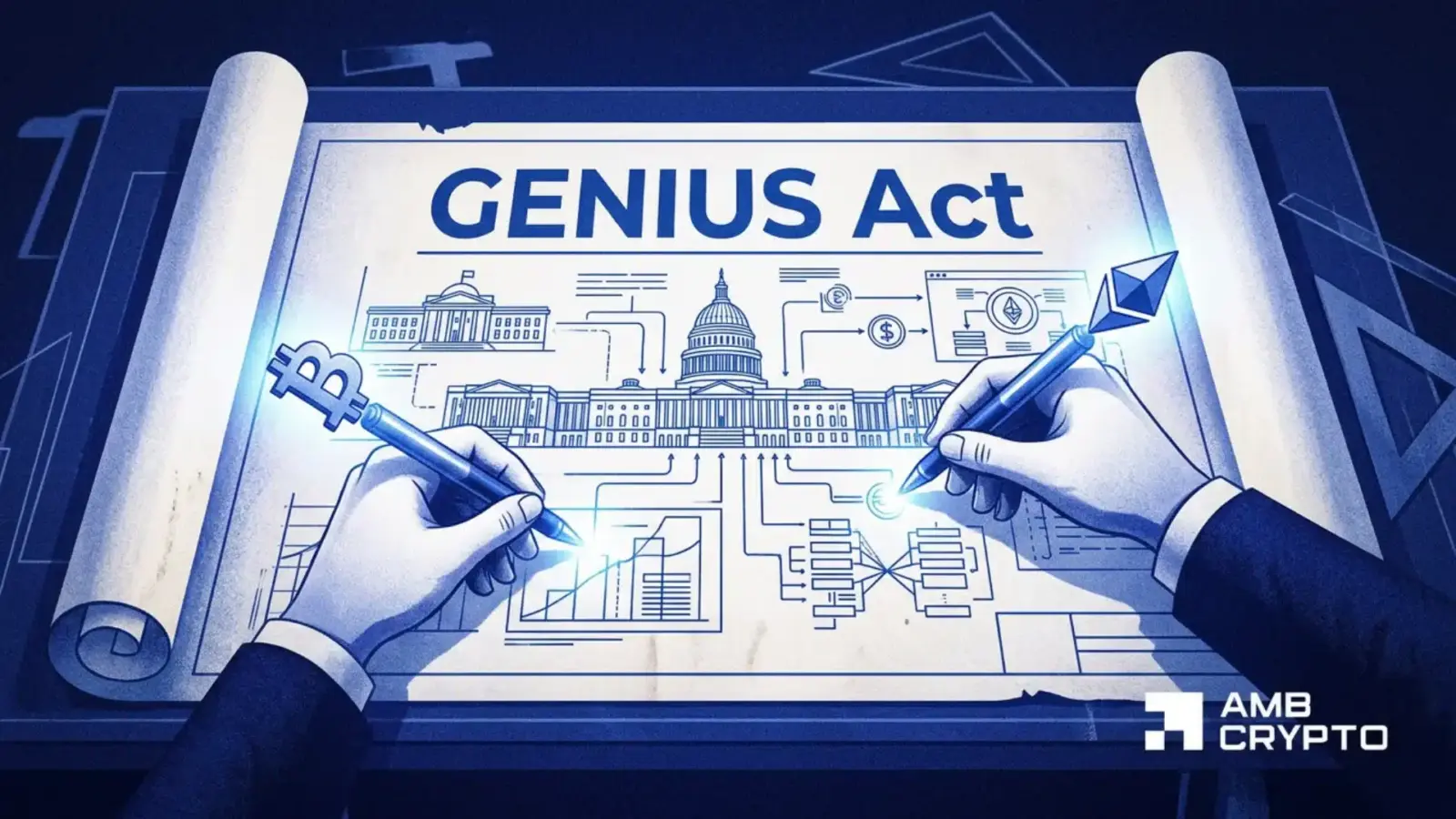
In a significant move that could reshape the regulatory landscape for decentralized finance (DeFi), the Hyperliquid Policy Center (HPC) and venture capital powerhouse Paradigm joined forces on June 9th to submit a formal comment letter to the U.S. Treasury Department. The correspondence addresses the Office of Foreign Assets Control (OFAC) and the Financial Crimes Enforcement Network (FinCEN), specifically targeting the proposed stablecoin compliance rules tethered to the legislative framework of the GENIUS Act.
As the digital asset industry enters a period of heightened scrutiny, the collaboration between a specialized policy group and a major VC firm highlights a growing consensus: while the industry recognizes the necessity of regulatory oversight, the current proposals risk imposing "one-size-fits-all" mandates that could stifle the permissionless nature of blockchain technology.
Main Facts: The Core of the Dispute
The comment letter from Paradigm and the HPC represents a strategic intervention in the rulemaking process. While the groups stated they "broadly support the proposed rule" and commended FinCEN’s decision to focus issuer obligations on the primary market—where stablecoins are first minted and redeemed—they raised alarms regarding secondary market provisions.
The central thesis of their argument is that applying traditional financial compliance models to decentralized networks is a category error. Specifically, the groups are concerned that without precise drafting, the GENIUS Act’s implementation could inadvertently force stablecoin issuers to take on responsibilities that are technically impossible to enforce in a permissionless, peer-to-peer environment.
The Six Pillars of Recommended Reform
To avoid these unintended consequences, the HPC and Paradigm outlined six critical areas where the Treasury must clarify or narrow its scope:
- Secondary Market Obligations: The groups demanded clear demarcations between the obligations of an issuer and the realities of trading on decentralized exchanges (DEXs), where the issuer has no control over the counterparty.
- Transaction Lifecycle Clarification: There is a pressing need for a precise definition of when an issuer is legally required to "block, freeze, or reject" a transaction. Without this, issuers may err on the side of over-blocking, harming legitimate users.
- Enhanced Safe Harbor for SARs: The groups requested stronger protections for firms filing Suspicious Activity Reports (SARs), ensuring that compliance efforts do not leave issuers vulnerable to lawsuits for simple technical discrepancies.
- Government Directive Compliance: They urged regulators to clarify the exact extent to which issuers must adhere to specific, potentially ambiguous, government mandates in a decentralized context.
- Customer Due Diligence (CDD) Evolution: The current CDD proposals are viewed as overly rigid. The groups argue for a more flexible framework that acknowledges the unique architecture of on-chain identity and verification.
- Sanctions Compliance Programs: Finally, they called for a standard definition of an "effective" sanctions program that is compatible with blockchain infrastructure, rather than one modeled solely on centralized banking.
Chronology: A Legislative and Regulatory Timeline
The current friction points are the culmination of a months-long push to modernize U.S. financial law.
- Early 2026: The GENIUS Act begins gaining momentum in Congress, aiming to bring stablecoin issuers under a strict federal supervisory umbrella. The bill is largely praised for providing legal certainty but criticized for its lack of technical nuance regarding DeFi.
- Spring 2026: Regulatory agencies, including FinCEN and OFAC, begin drafting the specific rules required to enforce the GENIUS Act. Industry insiders warn that the draft language seems to ignore the existence of secondary markets.
- May 2026: The New York State Department of Financial Services (NYDFS) releases its own framework, positioning itself as a "blueprint regulator." This increases the pressure on federal agencies to harmonize their rules with state-level mandates.
- June 9, 2026: The Hyperliquid Policy Center and Paradigm submit their joint comment letter, marking the first major organized industry response to the Treasury’s proposed rule.
- Present Day: The crypto community, led by legal experts and policy analysts, is actively debating the merits of the CLARITY Act, a proposed piece of legislation designed to fill the gaps left by the GENIUS Act, particularly concerning yield-bearing stablecoins.
Supporting Data: The Risk of Over-Regulation
The primary concern shared by developers and venture capitalists is the potential for "regulatory flight." If the compliance burden becomes too high, the economic incentive to build within the U.S. jurisdictional perimeter evaporates.
Data from recent industry surveys suggest that permissionless blockchains derive their value from their ability to function without intermediaries. If an issuer is required to track every downstream transaction on a DEX, they would effectively be forced to implement "permissioned" access controls. This would not only degrade the user experience but would fundamentally alter the product-market fit of stablecoins, which currently thrive on their ability to move across global, borderless protocols.
Furthermore, the "offshore migration" argument is gaining traction. Analysts point to historical patterns where restrictive financial regulations in one jurisdiction lead to the rapid growth of "shadow" or offshore markets. By forcing issuers to act as global police for every secondary transaction, regulators might inadvertently push the most innovative DeFi protocols into jurisdictions with lower standards, thereby reducing the Treasury’s ability to oversee these assets at all.
Official Responses and Stakeholder Sentiment
The reaction from the broader crypto community has been one of measured relief, as the Paradigm/HPC letter provides a cohesive argument for policymakers to consider.
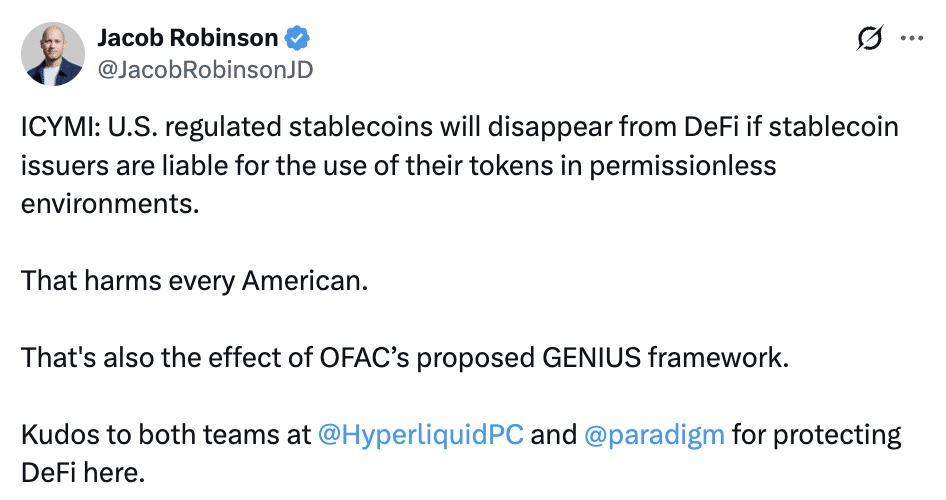
Jacob Robinson, host of the Law of Code, has been vocal about the importance of the CLARITY Act as a legislative salve for the issues created by the GENIUS Act. The GENIUS Act’s prohibition on paying yields to holders has been a major point of contention. The CLARITY Act proposes a more nuanced approach: allowing third-party entities, such as exchanges and decentralized protocols, to allocate yield to users, provided they adhere to activity-based standards.
Brad Bourque, Policy Counsel at HPC, has emphasized that the goal is not to avoid regulation, but to ensure that it is "technically feasible." In his view, the Treasury has an opportunity to set a global standard for digital asset oversight that is both robust and compatible with technological reality. If regulators ignore these recommendations, they risk creating a "compliance dead zone" where the rules are written for a centralized banking system that no longer accurately reflects the reality of the blockchain economy.
Implications: The Future of DeFi and Treasury Oversight
The implications of this standoff extend far beyond the technicalities of the GENIUS Act. At its core, this is a debate about the "architecture of authority" in the 21st century.
Impact on DeFi Innovation
If the Treasury adopts the recommendations put forth by Paradigm and the HPC, it would represent a landmark win for the DeFi ecosystem. It would signify that federal regulators are willing to engage with the technical nuances of blockchain protocols rather than attempting to force them into a legacy financial mold. This would provide the necessary regulatory certainty for institutional investors to enter the space, knowing that the "rules of the road" are designed for the vehicle they are driving.
Impact on Global Competitiveness
The U.S. is currently in a race to define the standards for the next iteration of the internet. By aligning regulatory frameworks with the realities of decentralized networks, the U.S. could foster an environment where developers feel comfortable innovating without the constant threat of regulatory enforcement actions based on impossible compliance standards.
The Path Forward
The path forward likely involves a period of intense negotiation between the Treasury and industry stakeholders. The comment letter is merely the first step in a long process of administrative rulemaking. The success of this effort will depend on whether regulators can move past the traditional "intermediary-centric" model of finance.
Ultimately, the goal of both the regulators and the industry players should be a stable, transparent, and secure digital asset market. If the Treasury can integrate the insights provided by the HPC and Paradigm, they will have taken a major step toward achieving that balance. The alternative—a rigid, disconnected regulatory framework—threatens not only to stifle innovation but to diminish the efficacy of the oversight mechanisms themselves.
In conclusion, the call for reform by the HPC and Paradigm is a signal that the digital asset industry is maturing. It is no longer just about pushing back against regulation, but about engaging with regulators to create a framework that is both effective in its enforcement goals and sustainable for the technological ecosystem it seeks to govern. As the clock ticks toward the finalization of these rules, all eyes remain on the Treasury to see if they will choose the path of technological compatibility or legislative inertia.
