

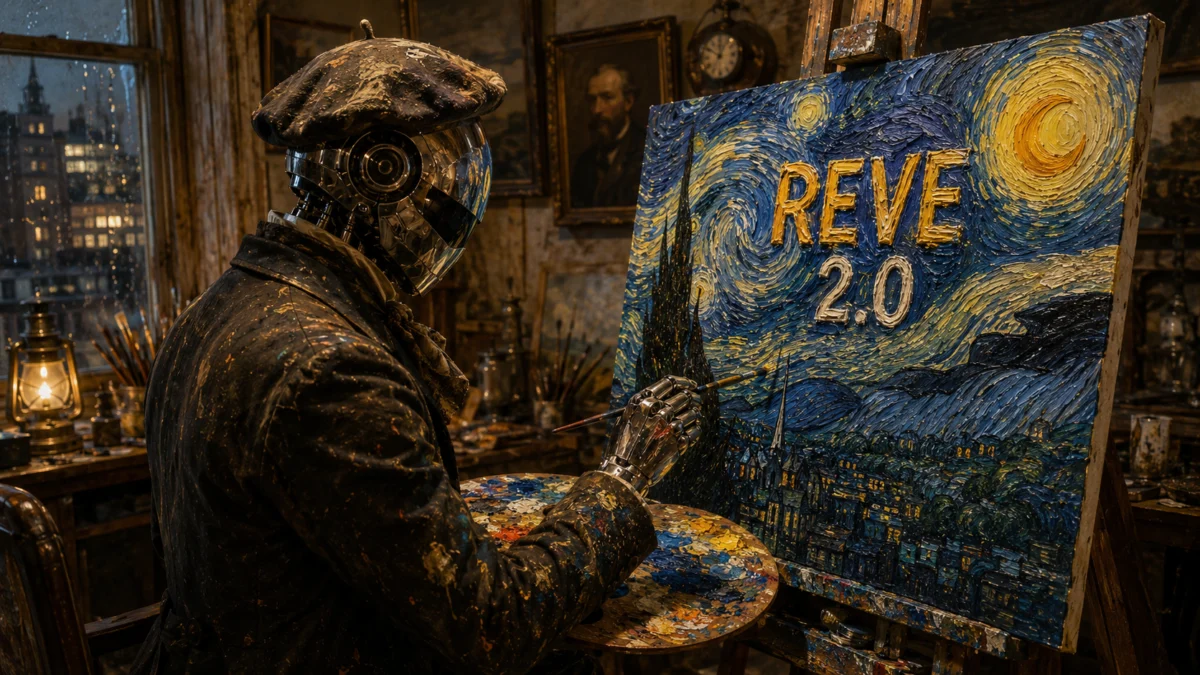
On June 3, the AI landscape shifted—not because of a trillion-dollar acquisition or a massive compute cluster reveal, but because a scrappy, lesser-known startup named Reve launched its version 2.0 image generation model. Almost immediately, the model made an audacious entry onto the industry-standard Arena text-to-image leaderboard, securing the #2 spot. It sits comfortably behind OpenAI’s GPT Image 2 and edges out Google’s Nano Banana 2, a feat that would be impressive for any established tech player. For a startup that was virtually anonymous a year ago, it is a historic disruption.
Reve’s entry is particularly stinging to the industry titans because it was achieved using 10x fewer GPUs than its competitors. By focusing on architectural efficiency rather than brute-force scaling, Reve has forced a conversation about the future of generative media: Is it better to have a model that "thinks" or a model that simply "guesses"?
The Technical Shift: From Diffusion to Layout
To understand why Reve 2.0 is performing so well, one must look at how it processes information. Standard image models in the current market function by taking a user’s prompt, expanding it into a lengthy paragraph of descriptive prose, and feeding it into a diffusion engine. The result is often a roll of the dice—beautiful, perhaps, but unpredictable.
Reve has abandoned this "black box" approach in favor of what it calls a "layout." This structure functions similarly to HTML for a webpage; it is a structured, editable description where every individual object is assigned a coordinate, a physical size, and a specific caption. The model engages in a "thinking trace" to analyze this layout before rendering the final pixels at a native 4K resolution (16 megapixels).
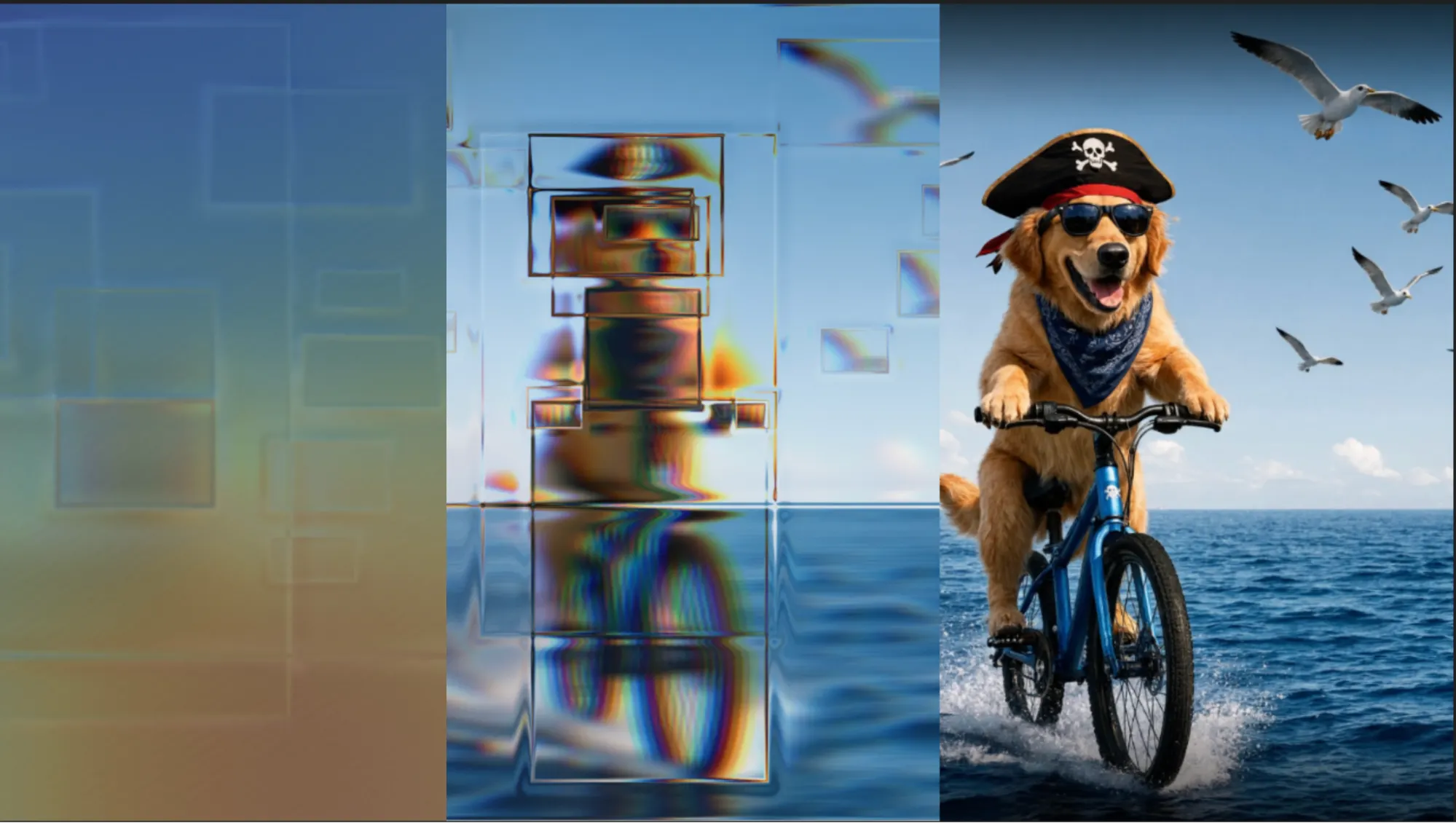
This design choice is the cornerstone of the company’s value proposition. Because the image is essentially coded, users can manipulate individual elements—moving a character, changing the text on a sign, or swapping a background—without needing to regenerate the entire composition. This is a game-changer for professional creative workflows where iterative control is paramount.
A Chronology of the Rise
The trajectory of Reve has been swift and focused.

- Early 2025: Reve enters the public consciousness, earning praise for its ability to outperform industry heavyweights like Midjourney and Flux at a cost of roughly one cent per image.
- May 2026: The startup begins teasing its 2.0 architecture, promising deeper agentic capabilities and improved resolution.
- June 3, 2026: Reve 2.0 officially launches, immediately hitting the #2 spot on the Arena leaderboard.
- Present Day: Industry analysts begin to take note of the model’s unique "layout-first" approach, noting its efficiency compared to the massive training costs of its rivals.
Benchmarking Performance: Eight Areas of Inquiry
To evaluate whether the hype holds up, we subjected Reve 2.0 to an eight-part "torture test," comparing it against the market leaders.
1. Photorealism
In a test featuring a woman in a trench coat on a Manhattan rooftop, Reve demonstrated a mature, filmic aesthetic. Unlike older AI models that suffered from "waxy" skin smoothing, Reve’s output maintained natural texture. While GPT Image 2 retains a slight edge in pure, out-of-the-box photorealism, Reve’s ability to handle dense, complex prompts without losing coherence often allows it to surpass the bigger models when the user demands high levels of detail.

2. Spatial Awareness
We tested the model’s grasp of physics and geometry with a "Renaissance Astronomer" prompt featuring three distinct light sources: a candle, moonlight, and a green glowing jar. Reve managed to correctly assign these light sources to their respective zones. While it struggled with the fine anatomy of a human hand and the accuracy of scientific instruments, the spatial organization was superior to most diffusion-based models.
3. Text Rendering
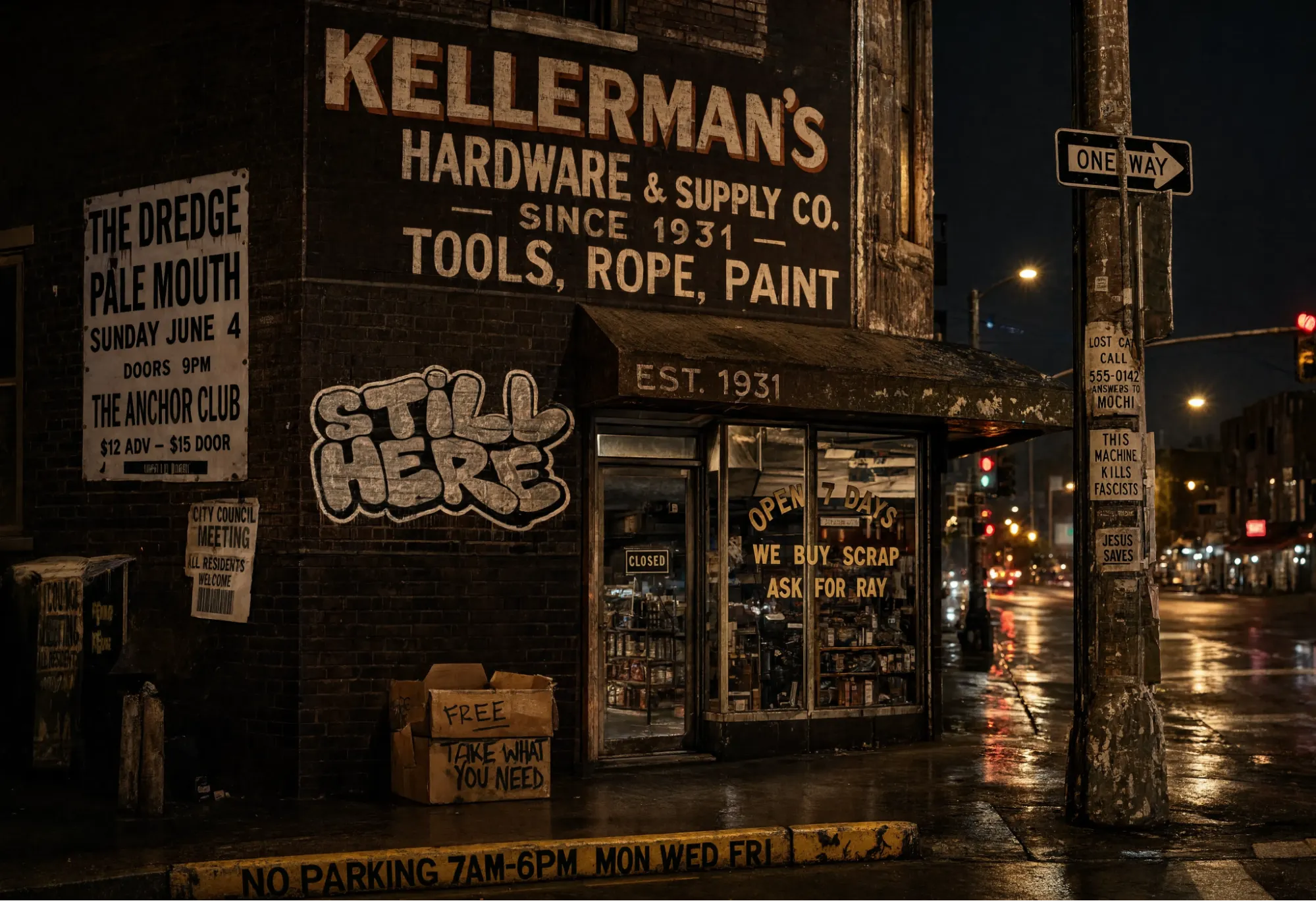
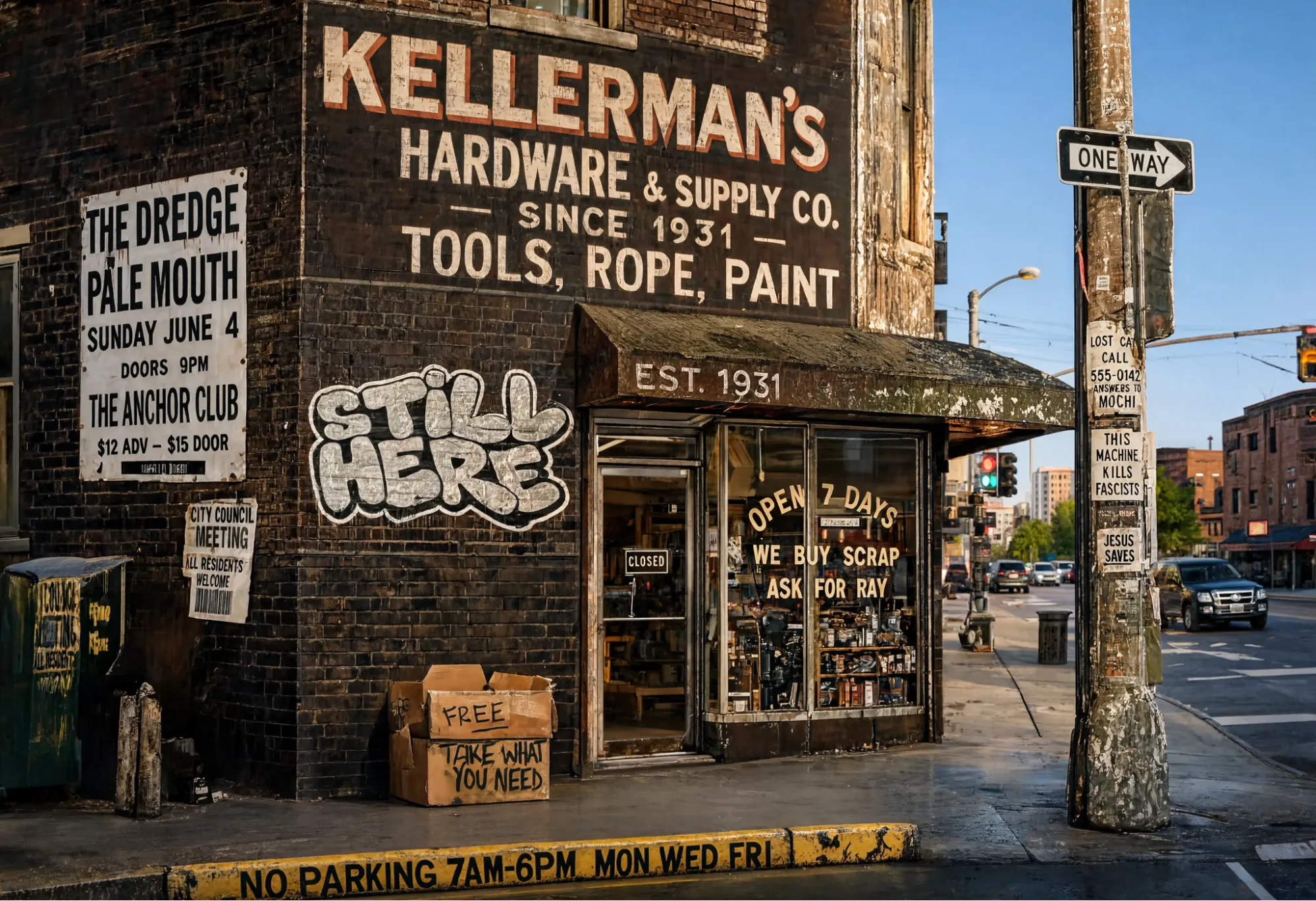
Signage is often the Achilles’ heel of AI, but Reve 2.0 excels here. In a "hardware store" stress test, it correctly rendered multiple signs, posters, and graffiti with near-perfect spelling. While GPT Image 2 arguably handled smaller, microscopic text better, Reve’s superior object-placement logic resulted in a cleaner, less "noisy" image overall.
4. Style Consistency
When asked to replicate a "Starry Night" aesthetic, Reve successfully integrated the brushwork of Van Gogh while keeping the brand text ("Decrypt") legible. The model displayed a degree of "self-awareness," even hanging a miniature, framed version of the famous painting on the wall behind the subject.
5. Agentic Generation
Perhaps the most impressive demonstration was the "Bitcoin Timeline" test. With only a vague prompt, the model acted as an autonomous agent, researching key milestones and plotting them sequentially from 2008 to 2025. While it struggled with math (adding an extra zero to "10,000 BTC"), the ability to synthesize, structure, and visualize a historical narrative in a consistent art style is a massive leap forward.

6. Multi-Subject Editing
When tasked with compositing two distinct photos of people into a single, cohesive scene on the moon, Reve maintained the identity of the subjects while managing complex lighting and environmental constraints. While not perfectly 1:1 in terms of facial preservation, it outperformed expectation for a generative task of this complexity.
7. Content Limits and Censorship
In a "Final Reckoning" battle scene, Reve was significantly less puritanical than its competitors. While GPT Image 2 and Nano Banana 2 either refused the prompt or demanded a "sanitized" version, Reve rendered the scene in a cinematic, non-gratuitous manner. For professional users who find current safety filters overly restrictive, this makes Reve a much more viable tool.
8. Economic Viability
The cost efficiency is staggering. With API generations running at a fraction of a cent per image, Reve is significantly cheaper than the 7 to 13-cent costs associated with premium tiers of competing services.
Official Responses and Industry Implications
While Reve has not yet released a public statement regarding their training methodology, the implications are clear. The industry is currently locked in an "arms race" of compute, where the company with the most H100s usually wins. Reve is proving that architecture-driven design—specifically the move toward structured, layout-based generation—can offer a significant shortcut.

The market response has been cautious but intrigued. Large enterprises, currently locked into the closed ecosystems of Google and OpenAI, are now eyeing Reve’s API for their internal "agentic pipelines." The ability to control the structure of an image is worth more to a developer than the raw, stochastic beauty of a standard diffusion model.
The Verdict: Who is it for?
Reve 2.0 is not a universal replacement for current tools. It requires a learning curve; the user must be willing to engage with the "layout" logic rather than just typing a prompt and hoping for the best. It also occasionally drops prompt elements, requiring the user to proofread the output.

However, for those who view generation as a process—designers, high-end content creators, and developers building automated workflows—Reve 2.0 is arguably the most powerful tool on the market. It offers a level of control that neither Google nor OpenAI currently provides, and it does so at a price point that makes large-scale, high-resolution production economically feasible.
As the AI industry matures, the "big giant" model approach may find itself increasingly challenged by these leaner, "smarter" architectures. Reve has proven that you don’t need a trillion-dollar valuation to produce world-class output; you just need a better way to organize the pixels.
