

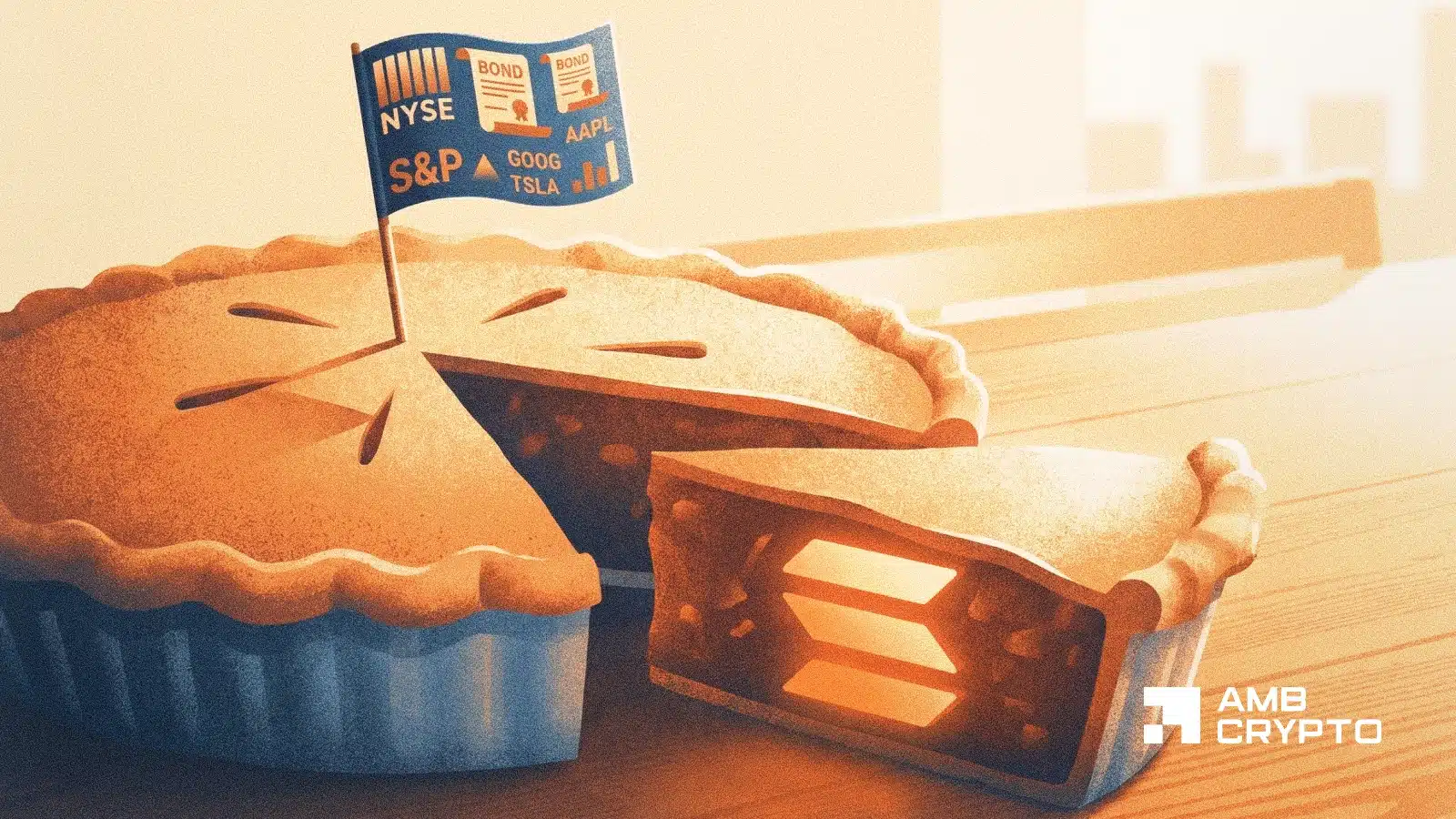
The intersection of traditional finance (TradFi) and decentralized ledger technology has reached a significant inflection point as of May 2026. Data from market analytics firm Token Terminal reveals a seismic shift in the landscape of tokenized stocks, with the Solana blockchain emerging as the clear market leader. As investors increasingly seek the efficiency of blockchain-based settlement, Solana has captured a commanding 64% of all tokenized equity wallets, leaving legacy networks struggling to keep pace.
This surge in adoption marks a transition from niche experimentation to a viable, high-speed alternative to conventional brokerage systems. By enabling 24/7 trading, near-instant settlement, and fractional ownership, tokenized equities are rapidly lowering the barriers to entry for global participants.
The Landscape of On-Chain Equity Ownership
The current ecosystem for tokenized stocks is characterized by a "flight to speed." Investors, driven by the desire to minimize latency and transaction costs, have flocked to platforms that leverage Solana’s high-throughput architecture.
As of May 2026, the number of unique wallets holding tokenized stocks on Solana has climbed to approximately 192,100. This figure represents an overwhelming 64% share of total cross-chain participation. In stark contrast, competing networks have seen significantly more modest engagement. The BNB Chain, for instance, maintains a foothold with roughly 63,200 holders, while the Ethereum [ETH] ecosystem—historically the bedrock of decentralized finance—has recorded approximately 36,800 holders.
This disparity in adoption is not merely a reflection of network preference; it is a direct consequence of user experience. During periods of high market volatility, where execution speed is paramount, the cost and time associated with Ethereum’s gas fees often discourage retail participants. Solana’s ability to offer friction-less transfers has made it the default "gateway" for those entering the tokenized assets market.
Chronology: The Path to Solana’s Market Lead
The trajectory toward this market dominance did not happen overnight. It is the result of a multi-year effort to refine the infrastructure of real-world asset (RWA) tokenization.

Phase 1: Early Adoption (Pre-2025)
Before the current explosion in volume, tokenized equities were primarily the domain of institutional pilot programs. During this period, the technology was viewed as a proof-of-concept for T+0 settlement. However, high entry barriers—both technical and regulatory—meant that retail adoption remained muted.
Phase 2: The November 2025 Inflection Point
The narrative changed drastically in late 2025. Following a series of upgrades to Solana’s network stability and the integration of compliant brokerage interfaces, adoption rates began to accelerate exponentially. November 2025 is now identified by analysts as the "breaking point," where the volume of new wallets on Solana began to detach from the broader market growth, signaling a clear shift in user sentiment.
Phase 3: Scaling into 2026
From the start of 2026 through May, growth has been consistent and aggressive. As global equity markets faced fluctuations, retail investors sought the flexibility of tokenized shares, which allow for global access outside of traditional market hours. By May 2026, Solana had solidified its lead, consistently onboarding thousands of new wallets per week as the platform became synonymous with the "tokenized stock" asset class.
Supporting Data: Why Solana Outperforms
The primary driver behind Solana’s market share is the economic and technical efficiency of the protocol. To understand the shift, one must analyze the "Cost of Participation" metric:
- Execution Speed: Solana’s proof-of-history consensus allows for sub-second block times. In the world of high-frequency stock trading, this is a distinct competitive advantage over the multi-second or minute-long confirmation times found on legacy blockchains.
- Transaction Costs: By maintaining transaction fees at a fraction of a cent, Solana has effectively eliminated the "dust" problem that plagues retail equity traders on more expensive networks. This makes fractional share trading—a key feature of tokenized equities—financially viable for the average user.
- User Retention: Data indicates that wallets established on Solana for tokenized stocks show higher activity levels compared to other chains. This suggests that the ecosystem is not just attracting "tourist" capital but is becoming a primary venue for active portfolio management.
The Institutional and Regulatory Perspective
While the growth in the retail sector is undeniable, the institutional response remains measured. Traditional financial institutions (TradFi) are observing these trends with intense interest.
Industry analysts from major investment firms have noted that the migration to on-chain equities is not merely a trend, but a response to the inefficiencies of the legacy T+2 (or even T+1) settlement cycle. "The demand for atomicity—the near-instantaneous exchange of assets for value—is the primary driver," says one senior financial analyst. "Solana has demonstrated that the plumbing of the global financial system can be rebuilt on-chain, but the regulatory framework remains the final gatekeeper."

Regulators in major jurisdictions are currently evaluating how to categorize these assets. The prevailing sentiment is that as the wallet count grows toward the hundreds of thousands, the demand for investor protection mechanisms—such as custodial insurance and anti-money laundering (AML) compliance—will intensify. The future of this sector likely lies in a hybrid model where public chains like Solana host the infrastructure, while regulated entities provide the "on-ramp" and compliance layers.
Implications: A New Financial Gateway
The current dominance of Solana is significant, yet it is important to contextualize this growth. Despite the impressive wallet counts and the rapid expansion of the ecosystem, tokenized equities represent only a minuscule fraction of the global multi-trillion-dollar traditional stock market.
1. The Potential for Mass Adoption
If the current adoption rate continues, Solana is poised to become the standard for retail-facing tokenized finance. The implications are profound: global access to U.S. and international stocks for populations currently underserved by traditional brokerage infrastructure.
2. The Competitive Response
The "Ethereum-versus-Solana" narrative is likely to evolve. Ethereum, through its growing Layer-2 ecosystem, may eventually offer similar speeds and costs. However, Solana’s current "first-mover" advantage in the RWA space gives it a sticky user base that may be difficult to displace.
3. The Future of Financial Infrastructure
The shift to on-chain stocks signals a broader trend toward the democratization of finance. By abstracting away the complexity of traditional clearinghouses, Solana is providing a template for how financial assets might be traded in the 21st century.
Conclusion
Solana’s capture of 64% of the tokenized equity market is a watershed moment for decentralized finance. It serves as evidence that the market prioritizes speed, cost-efficiency, and accessibility above all else. While traditional markets still hold the vast majority of capital, the migration to the blockchain is well underway. As Solana continues to scale and mature, it is increasingly positioning itself as the primary engine for the future of tokenized real-world assets. The road ahead will likely involve deeper regulatory integration and the entry of institutional capital, but the foundation has been laid: the future of stock ownership is digital, decentralized, and increasingly, it is on Solana.
