

In a move poised to reshape the architecture of Decentralized Finance (DeFi), Aave—the industry’s premier decentralized lending protocol—has unveiled a transformative proposal titled "Custodied Collateral Lending." This initiative represents a concerted effort to dismantle the rigid barrier between traditional institutional custody and the permissionless, on-chain liquidity markets that define DeFi. By integrating regulated custodians directly into the lending lifecycle, Aave is attempting to capture a massive, dormant segment of institutional capital that has, until now, remained on the sidelines due to security mandates and regulatory compliance constraints.
The Core Concept: Unlocking "Unreachable" Collateral
At its heart, Aave’s latest proposal seeks to solve a fundamental disconnect in modern finance: the inability of institutions to utilize assets held in regulated custody as collateral for on-chain lending.
For many hedge funds, asset managers, and corporate treasuries, "self-custody"—the process of managing private keys directly—is a non-starter. These entities are legally or operationally required to utilize qualified, regulated custodians, such as Anchorage Digital. Under the current paradigm, these assets exist in a silo, detached from the high-yield opportunities available on platforms like Aave.
To bridge this divide, Aave is proposing a system that enables these institutions to retain their assets within a regulated environment while simultaneously interacting with the Aave V4 protocol. This is achieved through the use of Chainlink’s CustodySync technology and the issuance of Custodied Collateral Tokens (CoCTs).
The mechanism is elegant in its simplicity:
- The Custody Phase: The institution deposits its native assets (such as Bitcoin) into a regulated custodian like Anchorage.
- On-Chain Representation: Anchorage, via Chainlink’s infrastructure, issues a CoCT that acts as a cryptographically verified "receipt" of the held asset.
- DeFi Integration: This CoCT is deposited into the Aave V4 protocol, serving as collateral.
- Liquidity Access: The institution then borrows stablecoins (such as USDC) against this collateral.
- Repayment and Redemption: Once the loan and interest are repaid, the CoCT is burned, triggering a signal to the custodian to unlock the underlying asset.
Crucially, the actual underlying collateral never leaves the custody of the regulated provider. This maintains the "institutional grade" security profile that traditional finance players demand, effectively bypassing the risks associated with wrapped assets like WBTC—which often carry complex smart contract and counterparty risks.
Chronology: From Governance Proposal to Market Integration
The path to this proposal has been paved by months of internal deliberation and community engagement within the Aave DAO.
- Initial Conceptualization (Q1-Q2 2026): As Aave V4 development gained momentum, the protocol’s core contributors identified a significant "Total Value Locked" (TVL) gap. Despite Aave controlling nearly 48% of the DeFi lending market, billions of dollars remained "idle" because institutions could not bridge their custodial assets to the protocol.
- The Governance Launch (September 2026): The proposal was officially brought to the Aave governance forum (ARFC – Aave Request for Comment). The proposal, titled "Custodied Collateral Lending: Aave V4 Isolated Hub-Spoke," laid out the technical framework for the integration.
- Community Deliberation: The community immediately began debating the risk parameters, specifically focusing on the centralization of the custodian. Discussions centered on how to ensure the "CoCT" receipts remain pegged to the underlying assets without introducing new points of failure.
- The Path Ahead: Following the current discussion phase, the proposal is slated to transition to a formal "Snapshot" vote. If the community reaches a consensus, the integration will move toward the engineering and execution phase, potentially setting a new standard for how DeFi protocols interact with the "TradFi" world.
Supporting Data: Why the Shift is Necessary
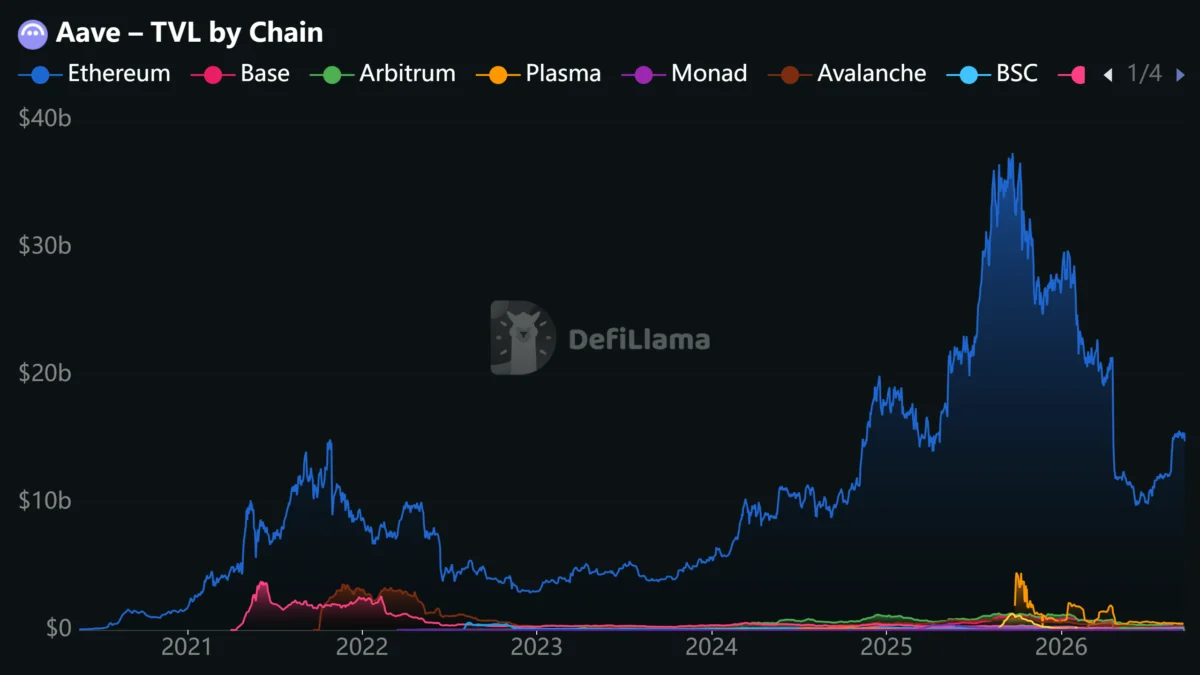
The urgency of this move is backed by compelling data. As of September 2026, Aave’s TVL has seen a robust recovery, rebounding from $12.5 billion in June to over $19 billion. This 52% surge in just three months signals a clear appetite for leverage and yield, yet the data also reveals a plateau in institutional adoption.
Current institutional workarounds—such as swapping assets for wrapped versions—are fraught with friction. They introduce smart contract risks (the potential for a vulnerability in the "wrapping" protocol) and compliance hurdles that discourage risk-averse institutional capital. By eliminating the need for wrapping and keeping the collateral in a qualified custody environment, Aave is aiming to capture a significant share of the $17 billion in idle institutional assets that currently sit outside the DeFi ecosystem.
The data suggests that the market is currently bifurcated: on one side, retail users who are comfortable with self-custody, and on the other, institutions with deep pockets but high regulatory requirements. Aave’s V4 is designed to be the "Hub" that connects these two worlds, transforming the protocol into an institutional-grade financial layer.

Official Responses and Strategic Vision
Stani Kulechov, the founder of Aave, has championed this proposal as a "first-of-its-kind" development. His commentary highlights the strategic intent: moving beyond merely being a DeFi lending market to becoming the infrastructure layer for institutional digital asset finance.
"The integration onboards a class of collateral that is currently unreachable for Aave," Kulechov stated in the proposal documentation. "By enabling institutions to borrow stablecoins against collateral held with a qualified custodian, we are unlocking liquidity directly from Aave V4 markets."
The response from the broader DeFi community has been cautiously optimistic. While some purists argue that introducing centralized custodians contradicts the ethos of "code is law," the prevailing sentiment among Aave stakeholders is that institutional adoption is the final frontier for DeFi. Without such bridges, DeFi risks remaining a closed loop of speculative activity rather than a functional global financial market.
Implications: The Competitive Landscape
If Aave succeeds in implementing this custodied collateral model, the implications for the broader DeFi ecosystem will be profound.
1. Pressure on Competitors
Protocols like Morpho and Kamino, which also compete for institutional liquidity, will face immense pressure to adapt. Aave is setting a new benchmark for "institutional-friendly" DeFi. If Aave captures the lion’s share of this institutional segment, competitors will likely need to follow suit by integrating with similar custody partners to remain relevant.
2. A Paradigm Shift in DeFi Risk
The move effectively shifts the risk profile of DeFi lending. Instead of relying solely on the safety of smart contracts, the system begins to rely on the safety of the custodian. This creates a "hybrid" model where the protocol provides the efficiency of DeFi, and the custodian provides the regulatory compliance of TradFi.
3. Regulatory Legitimacy
By working directly with regulated entities like Anchorage, Aave is implicitly signaling a move toward greater regulatory alignment. This could be a "Trojan horse" for institutional adoption, as it allows Aave to operate within the frameworks that regulators understand and trust, potentially mitigating the risk of future legal crackdowns.
4. Expansion of the Stablecoin Economy
As institutions gain the ability to borrow stablecoins (like USDC) against their BTC holdings, the demand for stablecoin liquidity will skyrocket. This could lead to a tighter integration between centralized stablecoin issuers (like Circle) and decentralized lending protocols, creating a more robust and liquid financial ecosystem.
Conclusion: A New Era for Aave V4
Aave’s "Custodied Collateral Lending" proposal is not just another feature update; it is a fundamental shift in the protocol’s business model. By addressing the "unreachable" capital held by institutions, Aave is positioning itself to be the primary gateway for institutional entry into decentralized finance.
As the proposal moves through the governance process, the eyes of the entire DeFi sector will be on the Aave DAO. The success of this initiative could determine whether DeFi becomes a standalone, experimental sector or the foundational layer of the future global financial system. For now, the protocol stands at a crossroads, prepared to trade a degree of "pure" decentralization for a massive increase in scale, utility, and institutional relevance. The coming months will be critical, as the technical execution of the CoCTs and the formalization of the partnerships will dictate whether Aave can successfully execute its vision for an institutional-grade DeFi future.
