

In a move that has sent shockwaves through the decentralized finance (DeFi) ecosystem, Robinhood CEO Vlad Tenev has publicly signaled an embrace of memecoin activity on the newly launched Ethereum Layer 2 (L2) network, "Robinhood Chain." While the network was initially marketed as a sophisticated infrastructure for the tokenization of Real-World Assets (RWA)—a sector often championed for its institutional utility—Tenev’s recent pivot toward the volatile world of speculative tokens has ignited a firestorm of controversy among developers, venture capitalists, and retail investors alike.
The Strategic Pivot: From RWA to "Meme-Ready"
The inception of Robinhood Chain was rooted in the premise of bridging traditional finance (TradFi) with blockchain technology through RWA. By tokenizing assets such as real estate, bonds, and equities, Robinhood aimed to position its L2 as a bridge for institutional players seeking regulatory compliance and operational efficiency.
However, in a recent public statement, Tenev expanded the scope of the chain’s utility, stating:
"While we’re building Robinhood Chain to be the best chain for RWA… it works great for memes too."
This brief remark has effectively reframed the narrative around the chain. By inviting the high-frequency, high-risk, and high-reward world of memecoins into the ecosystem, Tenev is signaling a departure from a purely institutional focus toward a broader, retail-centric growth strategy.
Chronology: The Road to the "Meme-Chain" Controversy
The current volatility surrounding Robinhood Chain did not manifest in a vacuum. To understand the gravity of the situation, one must look at the recent timeline of events:
- Pre-Launch Phase: Robinhood emphasized the technical architecture of its L2, specifically highlighting how its design would facilitate the secure and transparent movement of traditional financial assets on-chain.
- The Launch: Following the mainnet debut, the network began to gain traction among institutional testers.
- The "Meme" Declaration: During a high-profile industry engagement, CEO Vlad Tenev dropped his now-infamous comment about the chain’s suitability for memecoin trading.
- The Immediate Aftermath: Within 48 hours of the statement, the chain saw a parabolic increase in activity. New, highly speculative assets like Cash Cat [CASHCAT] and 4663 began appearing on the network, seeing valuation spikes of 1,100% and 800%, respectively.
- Market Reaction: As volume spiked, so did the vitriol from established industry voices, leading to a public debate on the maturity of blockchain infrastructure.
Data Analysis: The "Meme Effect" on TVL and Volume
The data underscores a fundamental truth in the current crypto cycle: regardless of a network’s intended "noble" purpose, memecoins remain the most effective catalyst for retail liquidity.

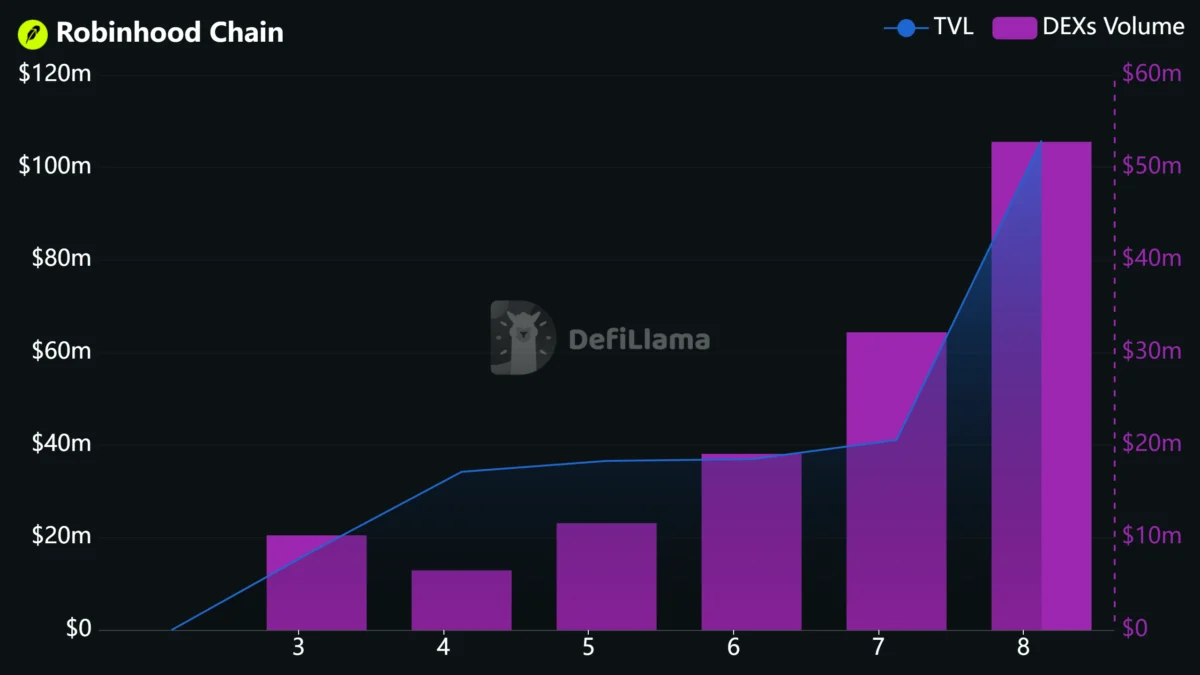
Before Tenev’s pivot, Robinhood Chain was experiencing moderate growth, primarily driven by institutional testing of RWA protocols. However, the subsequent "meme-rush" resulted in a 10x explosion in Total Value Locked (TVL), climbing from a modest $10 million to an impressive $105 million in under a week.
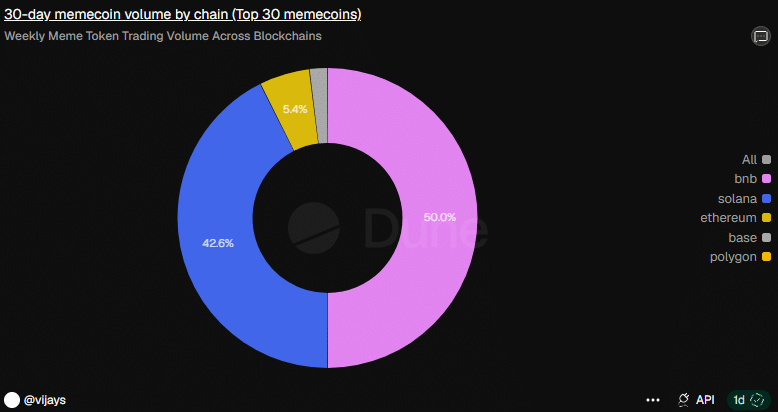
Simultaneously, Decentralized Exchange (DEX) volumes—the lifeblood of any L2—surged from $10 million to $52 million. This shift highlights a critical, albeit uncomfortable, reality: speculative retail activity often generates more immediate on-chain volume than long-term utility-focused applications. For comparison, on established networks like Solana and the BNB Chain, memecoin activity constitutes between 40% and 50% of total trading volume, cementing their position as top-tier chains by TVL.
The Industry Backlash: Is This "Institutional" or "Irrational"?
The pivot has not been met with universal acclaim. Critics argue that by catering to the memecoin crowd, Robinhood risks alienating the very institutional partners it initially courted.
Simon Dedic, a prominent investor at Moonrock Capital, expressed a sentiment shared by many in the venture capital space:
"Just another L2 that offers no real value over the existing ones is exactly what we were missing. But hey, you can trade memes on it too. Someone tell Vlad it’s not 2024 anymore."
This criticism touches on the "L2 fatigue" currently plaguing the Ethereum ecosystem. With hundreds of L2s already live, skeptics argue that the market does not need another infrastructure provider unless it offers a genuine technological breakthrough. By leaning into the "meme casino" narrative, critics argue that Robinhood is lowering the perceived prestige of its chain, reducing it from an institutional bridge to just another playground for "degens."
The "Base" Comparison: A Lesson in Governance
Comparisons to Coinbase’s Base network are inevitable. While Base has become a primary hub for activity, CEO Brian Armstrong has maintained a more cautious, albeit evolving, stance on memecoins. Base has benefited from the "network effect" of Coinbase’s massive user base, but it has not explicitly marketed itself as a memecoin-first chain.
For many, the distinction is vital. There is a palpable concern that by welcoming the inherent volatility and frequent rug-pulls associated with memecoins, Robinhood Chain could inadvertently become a hotbed for scams, potentially inviting regulatory scrutiny that could jeopardize the entire project.
The Risks of the Retail Mania
The history of the current market cycle serves as a cautionary tale. While the Solana-based PumpFun phenomenon brought millions of users to the ecosystem, it also left a trail of heavy losses for retail participants.
Recent history, such as the controversy surrounding the Trump-affiliated World Liberty Financial (WLFI), illustrates that in the memecoin economy, gains are often concentrated at the top, while the "exit liquidity"—the retail investors—often bears the brunt of the losses. By aggressively pursuing this demographic, Robinhood is not only chasing volume but also inheriting the reputation risks associated with a high-risk, high-scam environment.
Implications for the Future
The long-term success of Robinhood Chain now hangs in a delicate balance.
- For Institutional Adoption: If the chain becomes too heavily associated with memecoin "pump and dump" schemes, legitimate financial institutions may deem the environment too risky for the deployment of RWA protocols.
- For Retail Growth: Conversely, the strategy is objectively working as a user-acquisition tool. The influx of $95 million in new TVL in a single week is a metric that cannot be ignored by shareholders.
- For Decentralized Infrastructure: The situation asks a broader question: Can a blockchain successfully serve both masters? Can a network be a professional, compliant, RWA-focused ledger by day and a high-octane meme trading hub by night?
Conclusion
Vlad Tenev’s gamble is representative of the broader identity crisis within the blockchain industry. As the line between traditional financial institutions and the "crypto-native" world blurs, leaders are forced to choose between the slow, deliberate pace of institutional adoption and the fast, chaotic, and highly profitable pace of retail speculation.
While the immediate numbers favor the latter, the sustainability of this model remains to be seen. If Robinhood Chain can provide the technical stability to prevent the worst of the memecoin-related scams while capturing the volume, it may yet prove the critics wrong. However, if the network becomes synonymous with the next wave of retail wipeouts, it may find that the cost of short-term growth is a long-term loss of institutional credibility.
For now, the world is watching to see if Robinhood will continue to lean into the meme-fueled fire, or if this was merely a tactical maneuver to jumpstart network activity before pivoting back to its original, more serious, mission.
