

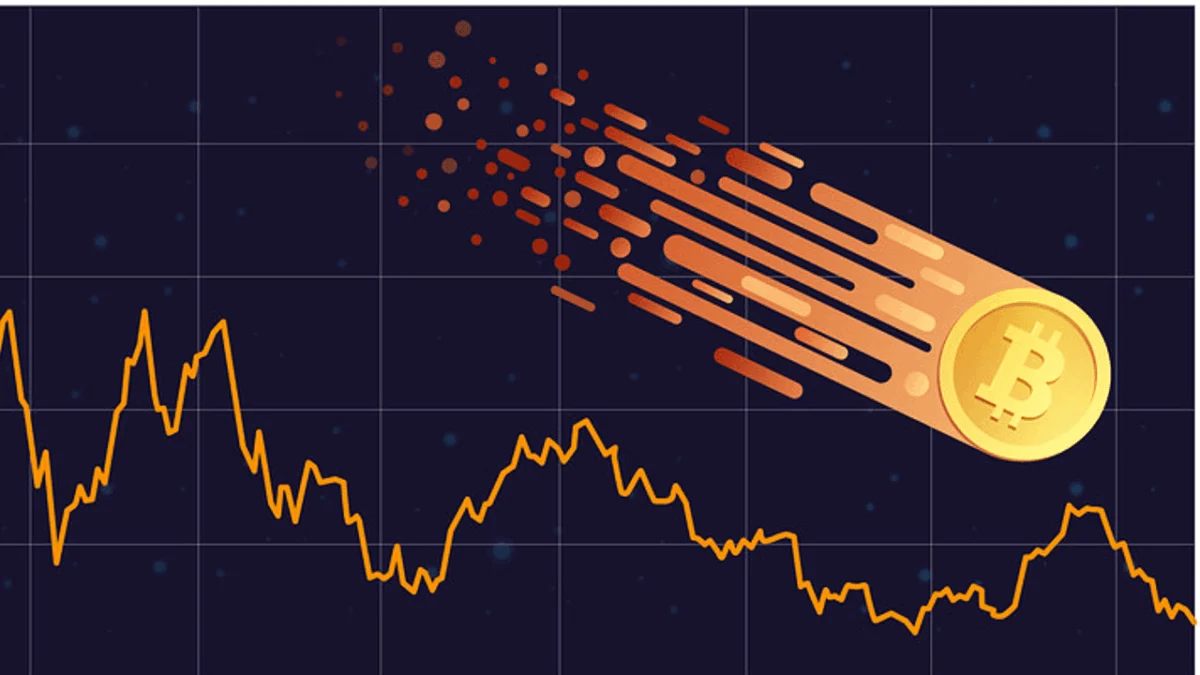
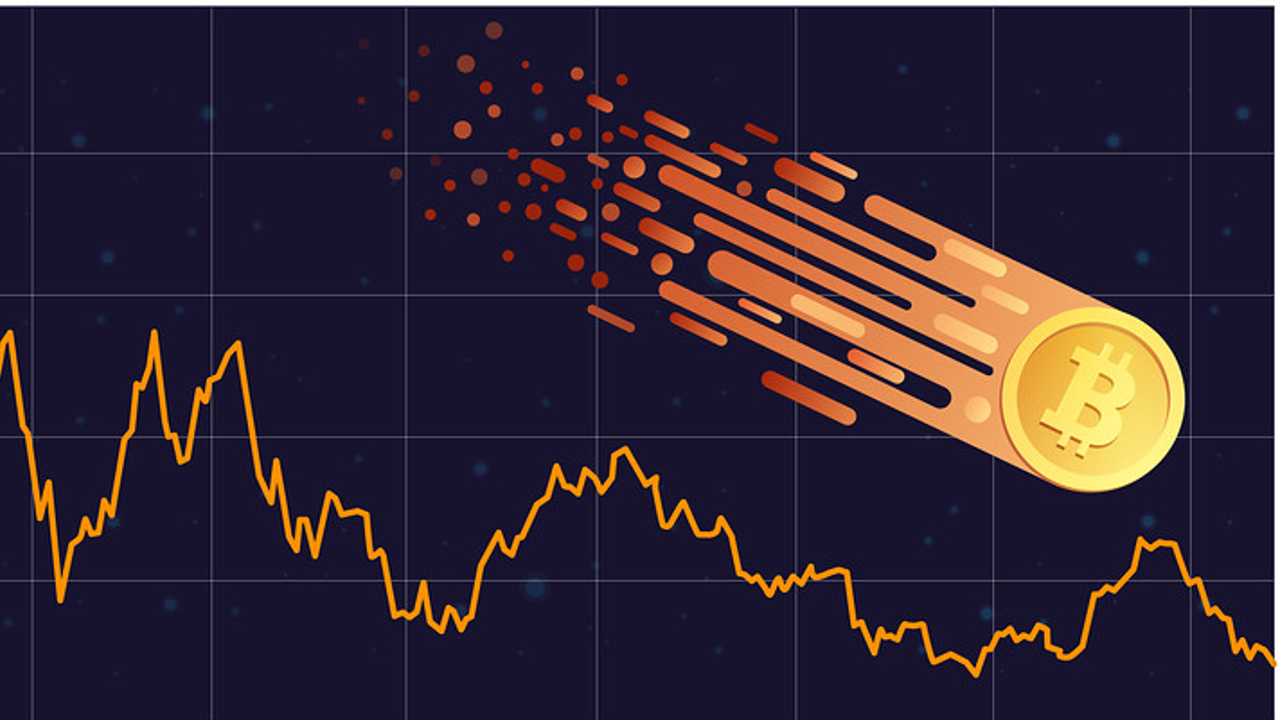
The global cryptocurrency market is currently navigating one of its most challenging weeks of the year, as a confluence of macroeconomic anxiety, geopolitical instability, and waning investor demand drags valuations downward. Bitcoin (BTC), the market’s bellwether, has extended its losing streak to six consecutive days, with prices retreating approximately 12% over the past week. As the world’s leading digital asset tests critical support levels, the broader market is witnessing a mass exodus from risk-on assets, signaling a period of deep-seated uncertainty for retail and institutional participants alike.
The Chronology of the Downturn
The current slide began as market participants retreated from the modest gains observed during the previous weekend. After hitting a local high of $39,394.44 on Sunday, Bitcoin failed to sustain momentum, suffering a sharp reversal as the new trading week commenced. By Tuesday, the asset had plummeted to an intraday low of $37,358.00—a level not seen since February 4.
The volatility was not confined to a steady decline; it was punctuated by aggressive liquidation events. Monday night saw a fleeting, surprise bounce that briefly lifted BTC to $38,607, providing a momentary glimmer of hope for bulls. However, this recovery proved ephemeral. By Tuesday, the selling pressure resumed, pushing the coin down 1.57% to trade around the $37,792 mark.
This downward trajectory has been mirrored by Ethereum (ETH), which has mirrored Bitcoin’s bearish trend. Having hit an intraday low of $2,585.95—the lowest point for the second-largest cryptocurrency since February 3—Ethereum is currently trading over 9% lower than its Monday position. This price action has effectively neutralized the bullish momentum that had been building around Ethereum’s 10-day and 25-day moving averages, pushing the prospect of a near-term "golden cross" further into the future.
Geopolitical Pressure: The Ukraine-Russia Conflict
At the heart of the current market rout lies the rapidly deteriorating situation between Russia and Ukraine. The escalation of hostilities has sent shockwaves through traditional and digital asset markets, forcing a "flight to safety" among global investors.
On Tuesday, the atmosphere of fear intensified when Russian President Vladimir Putin formally recognized two separatist-held regions in Ukraine and authorized the deployment of Russian forces. This move, which drew swift and sharp condemnation from Western leaders, acted as a catalyst for a massive sell-off. As investors moved to insulate their portfolios from the volatility inherent in conflict-driven markets, they liquidated "risky" holdings, including cryptocurrencies.
The crypto market’s reaction highlights a growing correlation between high-risk digital assets and traditional equity markets, both of which have been hit by the uncertainty of potential sanctions, energy supply disruptions, and the broader economic impact of an armed conflict in Eastern Europe. For many market participants, the priority has shifted from capital appreciation to capital preservation.
Supporting Data: Technicals and On-Chain Activity
The technical outlook for Bitcoin is currently painting a grim picture. With the asset hovering near the long-term support level of $37,200, traders are closely monitoring whether this floor will hold. Should it fail, analysts fear a further slide toward the $35,000 range, a level highlighted in recent technical analysis reports as a primary target for bearish sentiment.
Oversold Conditions and RSI
The 14-day Relative Strength Index (RSI), a key indicator of momentum, is currently tracking at 39. This figure confirms that Bitcoin is entering "fully oversold" territory, having reached its lowest point in more than three weeks. While an oversold RSI can sometimes precede a technical bounce, it also underscores the intensity of the current selling pressure.
The Liquidation Cascade
One of the most concerning indicators this week has been the volume of liquidations on centralized exchanges. In a single hour on Tuesday, over $30 million in long positions were wiped out. This represents the third-highest hourly liquidation amount in nearly a month, highlighting the vulnerability of leveraged traders in a volatile environment. These forced liquidations create a feedback loop: as long positions are liquidated, the resulting sell orders drive the price lower, triggering further liquidations.
Waning Network Demand
On-chain metrics are providing further evidence of a cooling market. As of Tuesday, daily active entities on the Bitcoin network stood at approximately 275,000. This level of activity is significantly lower than the peaks observed during the height of the bull market, suggesting a decrease in interest from new retail participants and a lack of fresh capital flowing into the ecosystem. Currently, Bitcoin is trading approximately 44.97% below its all-time high, with the market characterized by what analysts describe as "tepid demand."
Implications for the Future
The current market environment poses several significant questions regarding the maturation of the cryptocurrency sector.
1. The Decoupling Myth
For years, proponents have touted Bitcoin as a "digital gold" or a hedge against geopolitical instability. However, the current price action suggests that in times of extreme global crisis, Bitcoin is still largely treated as a speculative growth asset rather than a safe-haven store of value. The market’s reaction to the Ukraine crisis demonstrates that until Bitcoin achieves wider adoption and deeper liquidity, it remains highly sensitive to macroeconomic shifts.
2. Resistance and Recovery Thresholds
For Bitcoin to reclaim its bullish posture, it must overcome a series of stiff resistance levels. Analysts suggest that the immediate hurdle lies at $37,800. Clearing this would open the path to the $38,200 resistance zone. A sustained breakout above this level would be required to shift the narrative back toward a potential rally, with $39,500 serving as the next significant ceiling.
Similarly, for Ethereum, any recovery wave will face immediate resistance at $2,680. If that is breached, the market will look toward the $2,750 level, with an eye on the $2,880 mark as the next key objective for bulls.
3. Long-term Macro Risks
The market is not only contending with the war in Ukraine but also with shifting monetary policies. With inflation remaining high in major economies, the prospect of interest rate hikes from central banks remains a constant shadow over the crypto market. Reports from financial firms like Stifel have even suggested that if specific macroeconomic factors align—such as further aggressive tightening by the Federal Reserve and sustained geopolitical instability—Bitcoin could potentially face even deeper drawdowns.
Conclusion
The cryptocurrency market is currently in a "wait-and-see" mode. While the technical indicators show that the market is stretched to the downside, the fundamental drivers of the current crash—namely geopolitical instability and the resulting fear among investors—are largely outside the control of the crypto ecosystem.
For investors, the coming days will be critical. The ability of Bitcoin to maintain the $37,000 support level will likely dictate the market’s sentiment for the remainder of the month. As the world watches the unfolding situation in Europe, the crypto market serves as a stark reflection of global anxiety, proving once again that despite its digital nature, the asset class remains deeply tethered to the realities of the physical world. Whether this period of consolidation serves as a base for a long-term recovery or a precursor to further losses remains the defining question for the industry at this juncture.
