

In a significant milestone for the decentralized finance (DeFi) ecosystem, KelpDAO has officially concluded the operational phase of its recovery plan for rsETH. This development, confirmed on May 25, marks the successful replenishment of the protocol’s Omnichain Fungible Token (OFT) adapter, effectively stabilizing the cross-chain backing infrastructure of its flagship liquid restaking asset.
By transferring the final tranche of 20,373.72 rsETH into the system, the protocol has effectively signaled to the market that the liquidity issues surrounding its cross-chain operations have been addressed. This maneuver concludes a rigorous two-week recovery cycle during which approximately 116,000 rsETH was moved back into the OFT adapter, supported by a strategic collaboration with the Aave lending protocol.
The Chronology of the Recovery Effort
The recent stabilization of the rsETH ecosystem did not happen in a vacuum. It was the result of a coordinated response to an operational disruption that had previously triggered anxiety among liquidity providers and restakers.
Phase 1: Identifying the Disruption
The challenges began when inconsistencies in the cross-chain backing infrastructure prompted KelpDAO to pause certain operations. In the modern DeFi landscape, where protocols rely on complex bridge mechanisms and OFT adapters to facilitate the movement of assets across disparate blockchains, any latency or imbalance in these mechanisms is met with swift market caution.
Phase 2: The Replenishment Strategy
Recognizing the criticality of the situation, KelpDAO initiated an aggressive refill program. Over a fourteen-day period, the protocol worked to ensure that the OFT adapter—which serves as the backbone for rsETH movement across multiple chains—was adequately collateralized. This process required the systematic relocation of assets to ensure that every minted rsETH token had a corresponding underlying asset backing it, irrespective of the network on which it resided.
Phase 3: The Aave Partnership
A defining characteristic of this recovery was the involvement of Aave. As one of the largest lending protocols in the industry, Aave’s role in the liquidity refill process highlights the "interconnected" reality of modern DeFi. By leveraging existing liquidity pools and systemic support, KelpDAO was able to accelerate the restoration process, preventing a prolonged liquidity crunch that could have otherwise undermined the stability of rsETH.
Phase 4: Full Resumption of Services
As of late May, KelpDAO confirmed that minting, redemption, and reward distribution functions are operating at full capacity. This restoration of normalcy is the primary indicator that the "operational recovery" is complete, allowing the protocol to pivot from crisis management toward long-term confidence building.
Supporting Data: Proof of Solvency
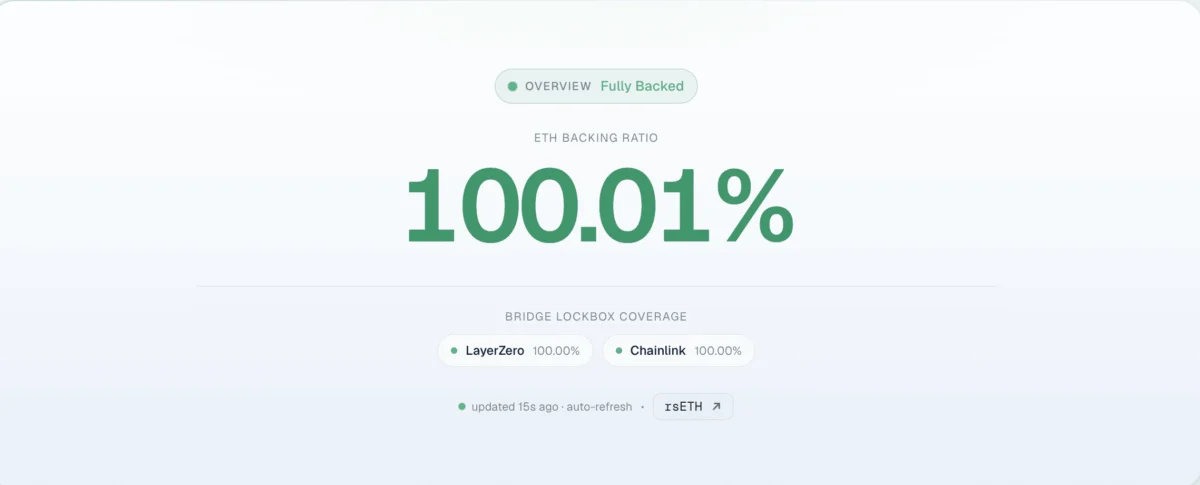
In the wake of various DeFi exploits and infrastructure failures observed over the past twelve months, the community has demanded higher standards of transparency. KelpDAO has responded by directing users to a real-time, live dashboard that provides an unvarnished look at the protocol’s backing ratios.
The Dashboard Metrics
The current dashboard displays a backing ratio firmly above 100%, a metric intentionally designed to reassure stakeholders that the protocol is over-collateralized. This transparency is not merely a feature but a strategic necessity. By providing public, verifiable, and real-time data, KelpDAO is attempting to shift the narrative from one of "risk" to one of "resilience."
The dashboard tracks the total supply of rsETH against the underlying restaked ETH assets. The data serves as a mathematical guarantee of the protocol’s solvency, effectively nullifying concerns about a "de-pegging" event or a shortfall in redemption capacity.
Official Stance and Governance Response
KelpDAO’s leadership has maintained a posture of radical transparency throughout the recovery. In their official communications, they emphasized that the completion of the transfer was not just a technical requirement, but a psychological one.

"The operational phase is closed," the protocol stated in its May 25 update. "Our focus now turns to the maintenance of this high-integrity architecture."
The protocol has consistently argued that the robustness of its cross-chain infrastructure is a testament to the design of the rsETH token itself. By utilizing an OFT (Omnichain Fungible Token) standard, the protocol claims to have a more secure method of cross-chain transfer compared to traditional lock-and-mint bridges, which have historically been the primary targets of DeFi hacks.
Implications for the DeFi Sector
The incident at KelpDAO serves as a microcosm for the broader challenges facing liquid restaking protocols. As the total value locked (TVL) in restaking continues to climb, the industry is witnessing a "maturity test."
The Scrutiny of Cross-Chain Collateral
The central issue that KelpDAO had to address is the integrity of cross-chain collateral. In the current DeFi environment, users are increasingly sensitive to the "bridge risk." If a user holds rsETH on a secondary chain, they must be certain that the assets are not only backed on the mainnet but are also liquid and accessible via the bridge. The failure of a bridge or an adapter is not just a technical glitch; it is an existential threat to the token’s value.
Heightened Sensitivity to Custody and Infrastructure
Investors are no longer satisfied with "trust us" models. The recent year has seen a surge in security audits, bug bounty programs, and the emergence of "proof-of-reserve" dashboards. KelpDAO’s recovery plan demonstrates that the path to market trust is now paved with:
- Real-time Transparency: Public dashboards that show 1:1 or better backing.
- Collaborative Recovery: Utilizing partnerships with larger DeFi "blue-chip" protocols to stabilize liquidity.
- Communication Frequency: Rapid, clear updates that mitigate FUD (Fear, Uncertainty, and Doubt) during operational pauses.
A New Standard for Crisis Management?
Is the KelpDAO recovery a blueprint for others? It certainly sets a high bar for operational transparency. By successfully navigating a complex cross-chain issue and emerging with a public, verifiable balance sheet, KelpDAO has demonstrated that DeFi protocols can survive systemic shocks if they prioritize the following:
- Auditability: Every transaction involved in the recovery was traceable on-chain.
- Asset Segregation: The clear distinction between the OFT adapter’s assets and the rest of the protocol’s holdings allowed for a surgical fix.
- Proactive Engagement: By engaging with users through multiple channels (dashboard updates, social media announcements), the protocol managed to prevent a "bank run" scenario that might have otherwise occurred.
The Road Ahead: Rebuilding Trust
While the operational phase is complete, the "confidence-building" phase has only just begun. The challenge for KelpDAO now is to sustain this momentum. In the fast-paced world of DeFi, memory can be short, but the reputational impact of a technical issue can be long-lasting.
To maintain their standing, the protocol must continue to demonstrate:
- Security Audits: Ongoing, third-party audits of the OFT adapter code to ensure that the vulnerability which necessitated the refill does not reoccur.
- Governance Engagement: Involving the DAO community in future infrastructure decisions to decentralize the decision-making process.
- Cross-chain Diversification: Ensuring that the protocol’s dependency on any single bridge or adapter is minimized over time.
Conclusion
The successful replenishment of 116,000 rsETH into the KelpDAO ecosystem is a victory for the protocol and a relief for its users. It highlights the importance of robust infrastructure in an era where liquid restaking is becoming a pillar of the Ethereum economy.
As DeFi matures, the focus will continue to shift away from pure yield generation toward the security of the underlying infrastructure. KelpDAO’s recovery stands as a case study in how to handle institutional-level operational stress: with transparency, collaborative support, and an unwavering commitment to proving the protocol’s solvency on-chain.
For the rest of the DeFi ecosystem, the lesson is clear: in an age of skepticism, the best way to regain trust is through the cold, hard numbers of a live, immutable, and fully backed balance sheet. Whether this marks the end of the volatility for rsETH remains to be seen, but for now, the protocol has cleared the most significant hurdle in its history.
