


The landscape of decentralized finance (DeFi) is undergoing a structural transformation as major protocols shift from hyper-growth incentives toward sustainable, long-term value accrual models. At the forefront of this evolution is Lido, the industry’s leading liquid staking protocol. Lido has officially activated its long-awaited automatic LDO token buyback program, a strategic initiative dubbed NEST (Network Economic Support Token). This move, initially proposed and debated throughout the previous year, marks a significant milestone for the DAO’s treasury management policy.
While the activation of NEST represents a milestone in governance maturity, it has simultaneously ignited a fierce debate regarding the efficacy of buybacks in the crypto ecosystem. With rigid revenue triggers and a cautious annual cap, the program reflects the delicate balance Lido must strike between rewarding token holders and maintaining sufficient capital reserves for protocol development.
The Mechanics of NEST: A Data-Driven Approach
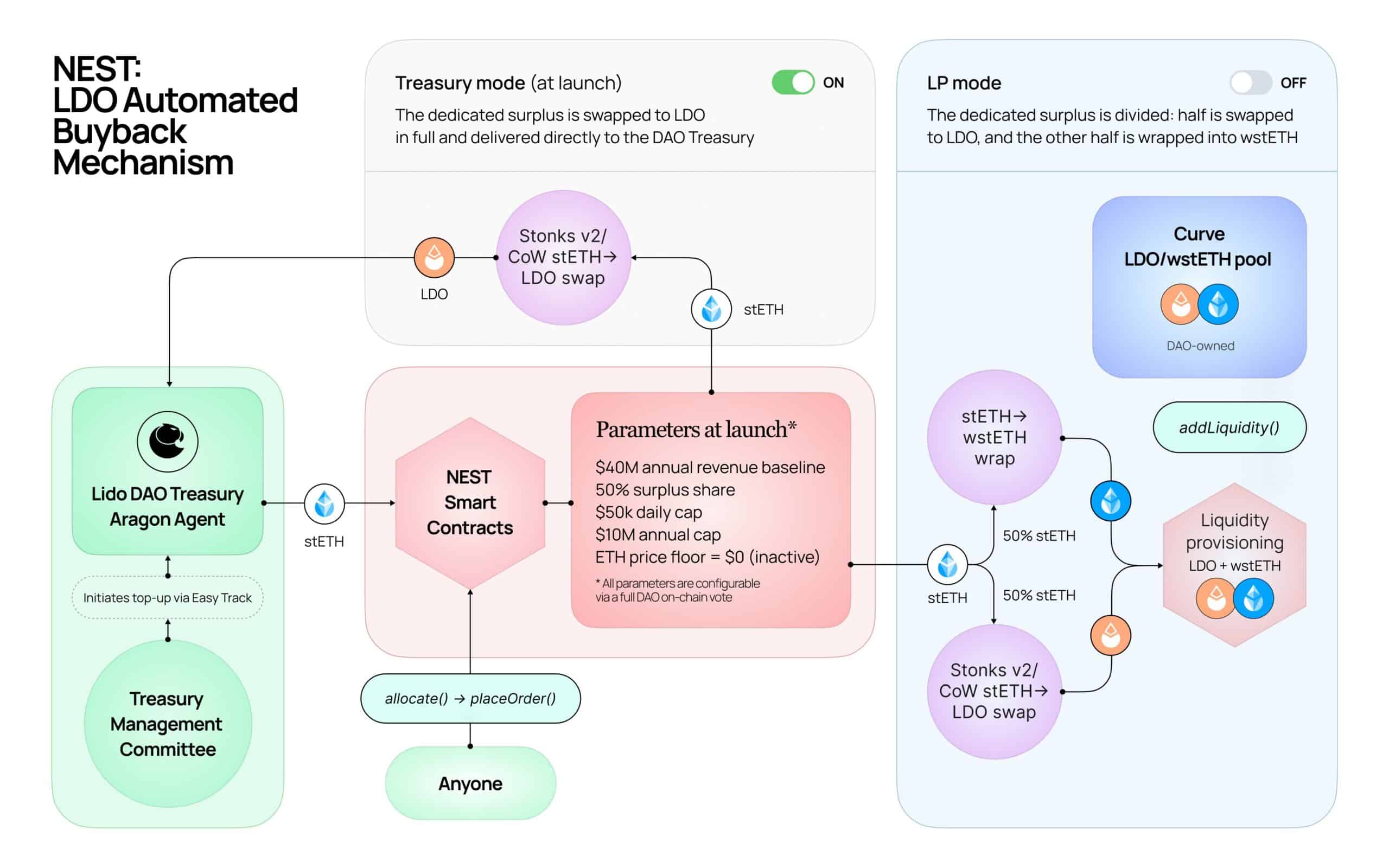
The NEST program is designed as a dynamic, automated mechanism intended to support the LDO token’s economic health. Rather than relying on sporadic, manual interventions, the protocol now employs a programmatic system that responds to market conditions in real-time.
Under the current configuration, the program imposes a strict daily limit of $50,000 for token purchases, with an annual ceiling capped at $10 million. This conservative structure is rooted in a specific revenue-sharing formula: the protocol only initiates buybacks when daily staking revenue exceeds a $109,000 threshold. When this baseline is surpassed, exactly 50% of the revenue generated above that amount is funneled into the buyback mechanism.
This translates to a mandatory annual revenue baseline of approximately $40 million. If the protocol generates less than $109,000 in a single day, the buyback mechanism remains dormant. This "safety valve" ensures that the DAO does not deplete its treasury during periods of market stagnation or reduced protocol activity, prioritizing operational runway over artificial market support. Notably, the tokens acquired through this program are not burned; instead, they are held by the DAO treasury, effectively increasing the DAO’s stake in its own governance asset.

Chronology: From Concept to Mainnet Activation
The journey to the activation of NEST was characterized by extensive community deliberation.
- Initial Proposal (Late 2025): The concept of a formal buyback program was first floated by governance contributors as a way to utilize surplus treasury revenue. The proposal aimed to address concerns regarding the lack of utility for the LDO token beyond basic governance participation.
- Refinement and Debate (Early 2026): Throughout the first half of 2026, the community engaged in rigorous debate regarding the optimal "trigger" thresholds. Critics argued that a $10 million annual cap was insufficient, citing other protocols with significantly more aggressive buyback schedules.
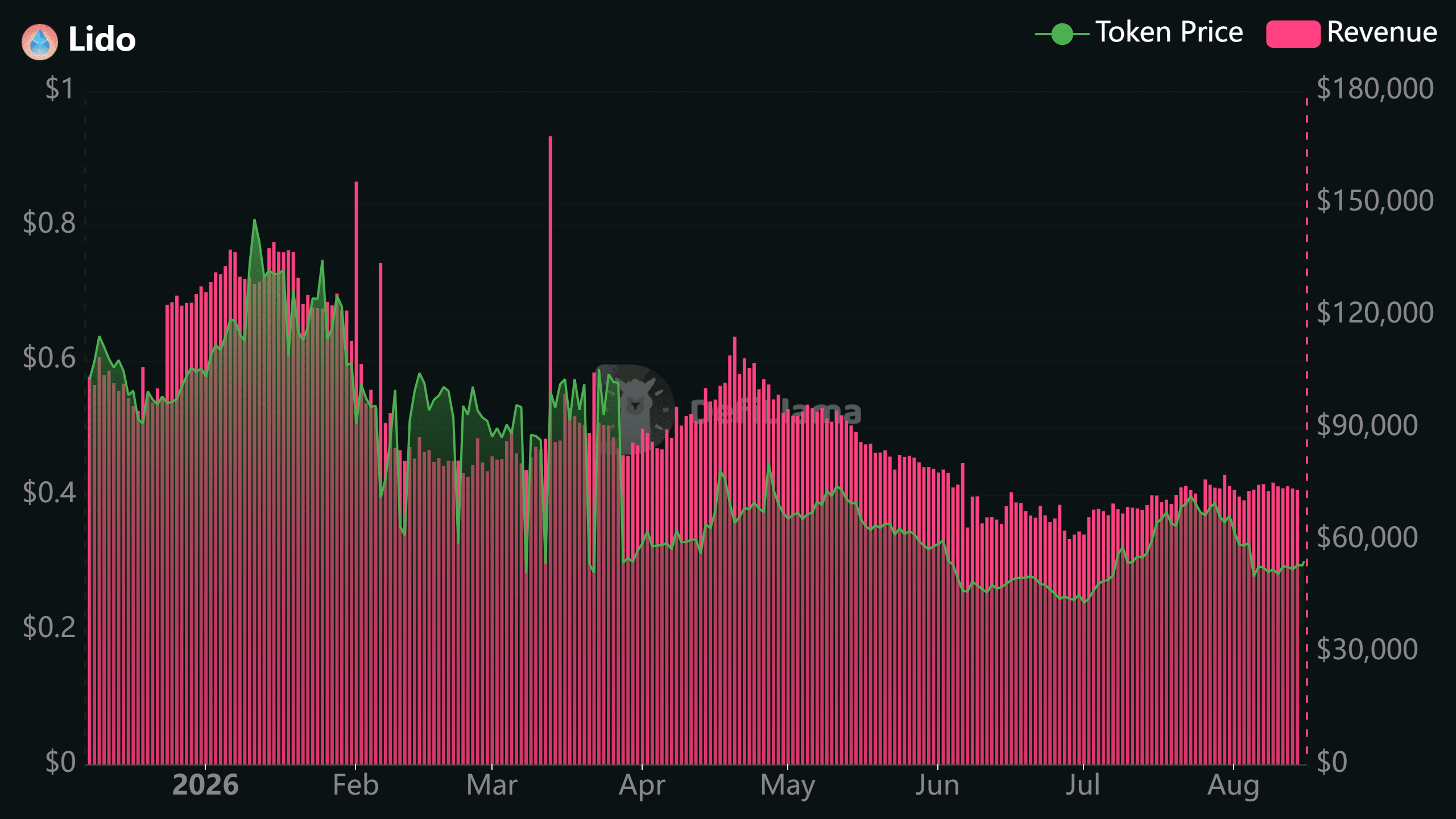
- Market Fluctuations (Q2 2026): During the market recovery in April 2026, Lido’s revenues briefly climbed, fueling optimism that the protocol would hit the $109,000 daily target consistently.
- Mainnet Launch (August 2026): Following a successful audit of the smart contracts governing the program, the NEST initiative was officially deployed to the Ethereum mainnet, marking the transition from a theoretical governance proposal to an operational reality.
Comparative Analysis: How Lido Stacks Up
Lido’s decision to limit its buyback program to $10 million annually has drawn sharp criticism from market participants who compare it to other major DeFi protocols. A quick analysis of the competitive landscape reveals that Lido is being exceptionally conservative:
- Hyperliquid: The platform currently facilitates approximately $100 million in annual buybacks, positioning itself as a leader in aggressive capital return strategies.
- Uniswap & Aster: Both protocols maintain a $40 million annual commitment, signaling a higher prioritization of token supply management.
- PUMP: This project has projected a $35 million annual buyback, further eclipsing the scale of Lido’s initiative.
When placed against these benchmarks, Lido’s $10 million program is roughly 3 to 10 times smaller. Critics argue that such a low target may fail to provide the intended psychological or market-depth support for the LDO token. However, proponents argue that Lido is prioritizing the "long game"—maintaining a war chest that can be deployed for security audits, developer grants, and protocol upgrades—rather than engaging in a short-term "price pumping" exercise that could be viewed as manipulative by regulators.
Current Hurdles: The Revenue Gap
Despite the excitement surrounding the launch, the reality of current market conditions has left the NEST program in a state of hibernation. Data from analytics provider DeFiLlama indicates that Lido’s daily revenue throughout August 2026 has hovered around the $75,000 mark.
This remains significantly below the $109,000 trigger required to initiate the first buyback. To cross this threshold, the protocol would need to see a substantial increase in staked volume or a shift in the underlying yield structure of the Ethereum network. Consequently, while the code is live, the economic impact is currently zero. The protocol is effectively waiting for a broader market upturn—a "bull run" catalyst—before the NEST engine can begin to churn.
Implications for Governance and Ecosystem Development
The introduction of NEST has catalyzed a broader discussion regarding the purpose of DAOs in the current regulatory environment.
The Pro-Buyback Stance
Supporters, including prominent industry voices like attorney Gabriel Shapiro, have praised the move for its transparency and programmatic nature. Shapiro noted, "This is how buybacks should be," implying that an automated, revenue-linked system is far superior to opaque, discretionary buybacks that can be perceived as insider-driven or manipulative. For proponents, buybacks represent a way to capture the success of the protocol and redistribute it to the community, fostering a sense of shared ownership.
The Skeptics’ View
Conversely, the "anti-buyback" camp, which includes many protocol developers and long-term ecosystem builders, warns against the "financialization" of governance tokens. Critics point to the experience of projects like Helium, which opted to terminate its buyback program entirely. The argument is that if a protocol is generating $40 million in revenue, that capital is better spent on:
- Security: Expanding bug bounties and conducting more frequent, in-depth audits.
- Innovation: Funding research into Layer 2 scaling solutions or cross-chain interoperability.
- Growth: Providing liquidity incentives to deepen the market for stETH (Lido’s staked Ether token).
For these critics, spending $10 million to buy back LDO is a "sunk cost" that does little to improve the protocol’s fundamental utility, potentially sacrificing future innovation at the altar of current token price.
Technical Analysis: LDO’s Price Trajectory
From a market perspective, LDO has struggled to find a definitive trend. In August 2026, the token successfully defended the $0.28 support level, preventing a catastrophic slide following the July market sell-off. However, the price remains trapped below key technical indicators, specifically the 50-day and 200-day Exponential Moving Averages (EMA).
The lack of a sustained recovery suggests that market participants are currently indifferent to the NEST announcement, likely because the program has yet to execute a single buyback. For traders, the technical setup is clear: a breakout above the $0.33 resistance level is required to signal a change in momentum. Should the broader crypto market recover and push Lido’s daily revenue above the $109,000 mark, the resultant "buy pressure" from the NEST program could act as a psychological catalyst, helping the asset reclaim its moving averages and re-establish a bullish trend.
The Road Ahead: What’s Next for Lido?
The activation of NEST is more than just a line of code; it is a signal of Lido’s intent to professionalize its treasury management. As the protocol navigates the remainder of 2026, the success of this program will be judged not by the volume of tokens bought, but by the protocol’s ability to scale its revenue sustainably.
If Lido can successfully bridge the gap from $75,000 to over $109,000 in daily revenue, the NEST program will prove its worth as a resilient, automated economic tool. If it fails, the community will likely be forced to revisit the proposal, perhaps opting to lower the threshold or shift the capital toward more aggressive development grants.
Ultimately, Lido stands at a crossroads. As it continues to dominate the liquid staking sector, the pressure to deliver value to its governance token holders will only increase. Whether through NEST or future iterations of treasury management, the protocol’s path forward remains tied to the underlying health of the Ethereum network and its own ability to maintain its status as the "staking layer" of the internet. For now, the DAO watches the revenue charts, waiting for the market to signal that the time for "buying back" has finally arrived.
