

The cryptocurrency market is currently navigating a period of profound uncertainty. While asset volatility is a inherent feature of the digital asset space, the sudden and dramatic collapse of the Humanity Protocol [H] token on June 8th—which saw a valuation drawdown exceeding 85%—has acted as a catalyst for a broader, more ominous correction across the altcoin landscape. This localized crisis has collided with a fragile macro environment, raising urgent questions about market conviction, the failure of traditional rotation playbooks, and the true state of liquidity in the current cycle.
Main Facts: The Anatomy of a Market Correction
The collapse of the Humanity Protocol (H) serves as the primary focal point for the current market malaise. After a period of aggressive, high-velocity growth that saw the token rally by over 150% in late May, the reversal on June 8th was swift and unforgiving.
This crash did not occur in a vacuum. It struck an altcoin sector already reeling from persistent macro-economic headwinds. With large-cap assets testing critical support levels and failing to reclaim previous highs, investor sentiment has shifted from guarded optimism to active risk-aversion. The H token’s precipitous fall has effectively drained the remaining speculative enthusiasm from the sector, forcing a reassessment of market positioning for the remainder of the quarter.
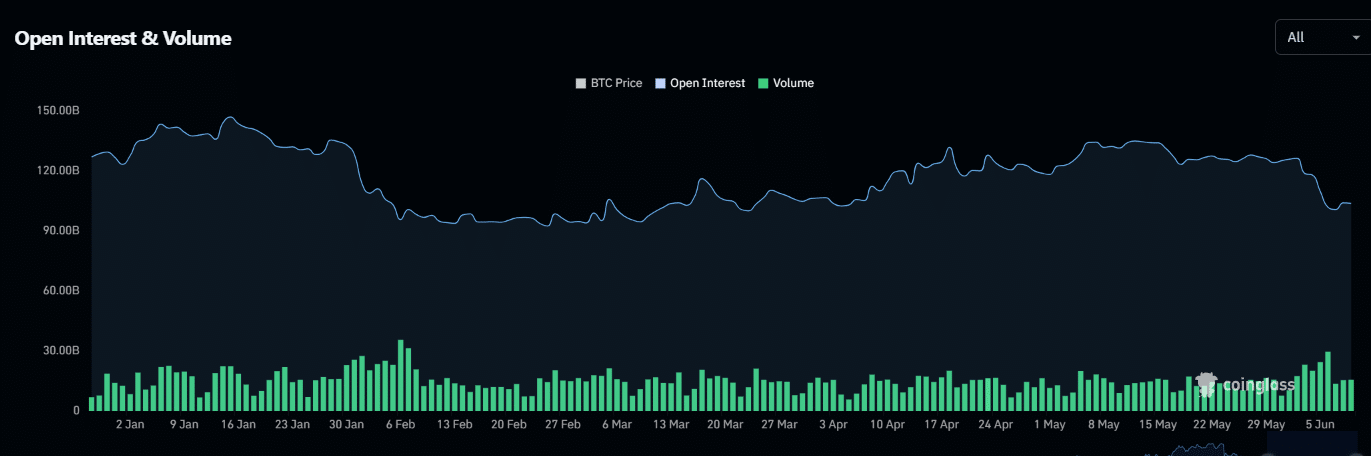
The data confirms this cooling effect. Altcoin Open Interest (OI), a primary indicator of speculative leverage, has retreated to levels not seen since mid-March. Having peaked near $150 billion in early January, OI has slumped to approximately $115 billion—a contraction of over 25%. This mass exodus of leverage suggests that market participants are no longer willing to bet on a rapid rebound, preferring to deleverage in the face of sustained downside pressure.
Chronology of the Decline
The current market environment is defined by a series of failed expectations. To understand the gravity of the situation, one must look at the progression of the 2026 cycle:
- Q1 2026: The market began the year with high expectations for a "DeFi-led renaissance," with Open Interest in altcoins hitting a high-water mark of $150 billion.
- Early May 2026: Market leaders began testing multi-month support levels. While Bitcoin maintained relative stability, Ethereum (ETH) began to exhibit signs of weakness, trailing BTC significantly in performance.
- Late May 2026: Humanity Protocol (H) bucked the trend, experiencing a speculative surge of 150%. This rally provided a false sense of security for altcoin bulls, suggesting that liquidity might be rotating into high-beta assets.
- June 8, 2026: The H token experienced a catastrophic 85% drawdown. The sudden evaporation of value triggered margin calls and a wider flight from altcoin positions.
- Current State: The market is currently experiencing a "liquidity paradox," where capital is flowing into stable assets, but refusing to commit to risk-on digital assets, signaling a deepening corrective phase.
Supporting Data: Analyzing the Liquidity Shifts
One of the most concerning aspects of the current downturn is the failure of the "rotation playbook." Historically, when Bitcoin runs into stiff resistance, capital traditionally flows into altcoins as investors seek higher yields. This cycle, however, that mechanism has remained dormant.

Ethereum (ETH), often the bellwether for altcoin health, has been a notable laggard. With a drawdown of over 40% this cycle, ETH has performed roughly twice as poorly as Bitcoin. This divergence highlights a lack of fundamentals-driven momentum. Despite the promise of a recovery following the 2025 bearish phase, the expected DeFi growth has failed to materialize in any meaningful way.
The Rise of Non-USD Stablecoins
Data from Arkham Intelligence reveals a fascinating, if contradictory, trend in liquidity. While risk assets are suffering, the circulating supply of non-USD stablecoins—such as EURC, BRZ, and A7A5—has surged to an all-time high of $2 billion, representing a 43% increase since the beginning of 2026.
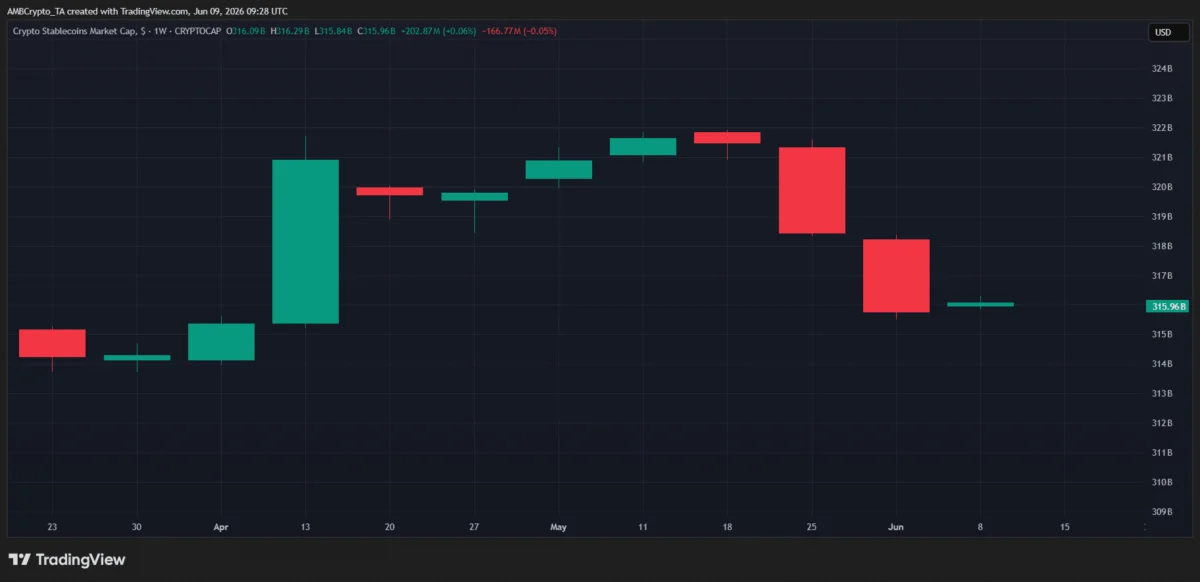
Simultaneously, the total market cap of the stablecoin sector has reclaimed the $316 billion mark after suffering two weeks of steady outflows. Ordinarily, such liquidity inflows would be interpreted as a bullish signal—capital entering the ecosystem to buy the dip. However, in the current "Fear, Uncertainty, and Doubt" (FUD) environment, this movement is better categorized as a defensive hedge. Investors are keeping their "dry powder" in stablecoins, refusing to deploy it into volatile spot markets. This suggests that the current liquidity is not a reservoir of future buying power, but rather a bunker for capital waiting to flee further, should the correction deepen.
Official Responses and Institutional Sentiment
While there has been no centralized "official response" from the Humanity Protocol team regarding the technical specifics of the June 8th crash, the broader institutional sentiment has been characterized by a sharp pivot toward risk mitigation.
Prominent analysts and market makers have noted that the 25% correction in Bitcoin has effectively broken the "buy the dip" psychology that characterized the early months of the year. Financial institutions are increasingly opting for hedging strategies, utilizing derivatives to protect their portfolios against further downside in the altcoin sector. The lack of institutional appetite for risk is perhaps the most telling indicator that the market is currently in a state of consolidation—or worse, a transition into a longer-term bearish phase.
Implications: The Road Ahead
The crash of the Humanity Protocol serves as a stark reminder of the extreme sensitivity of the current market. Several key implications emerge from the current data:
1. The Death of Speculative Rotation
The traditional cycle of capital moving from Bitcoin to altcoins has been broken. Until there is a fundamental catalyst—such as a significant upgrade to DeFi utility or a major change in macro-economic policy—speculative interest in smaller-cap assets is likely to remain suppressed.
2. Heightened Downside Risk for Altcoins
The current "risk-off" environment is particularly punishing for altcoins. Because these assets are highly sensitive to liquidity flows, the absence of new capital means that even moderate sell-side pressure can lead to outsized price drops. As seen with the H token, the speed of the decline is amplified by the lack of depth in the current order books.
3. The Stablecoin "Bunker"
The record-high supply of non-USD stablecoins confirms that there is money on the sidelines, but it is not "investor money" in the traditional sense. It is "fear money." This capital will only return to the market when there is a clear signal that the bottom has been established. Until then, the presence of these stablecoins acts as a ceiling for the market, as they represent capital that is prepared to exit the crypto ecosystem entirely at the first sign of sustained negative volatility.
4. Macro-Economic Sensitivity
The correlation between Bitcoin’s performance and the broader market remains the primary driver. If Bitcoin cannot find a stable base and continues to test lower support levels, the chances of a systemic collapse in the altcoin market increase significantly. The current environment is one of extreme caution, where the "liquidity flow" narrative is being used to disguise a broader lack of market confidence.
In conclusion, the Humanity Protocol collapse was not merely an isolated incident of token failure; it was a symptom of a systemic weakness in the altcoin market. With Open Interest in decline, speculative fervor at a low ebb, and capital hiding in stablecoin bunkers, the market is currently ill-equipped to handle further volatility. Investors should prepare for a period of extended consolidation, where capital preservation is likely to be the primary objective for both retail and institutional participants. The dream of a 2026 DeFi-led rally remains, for now, exactly that—a dream—while the reality remains firmly anchored in the harsh, corrective phase of the current cycle.
