

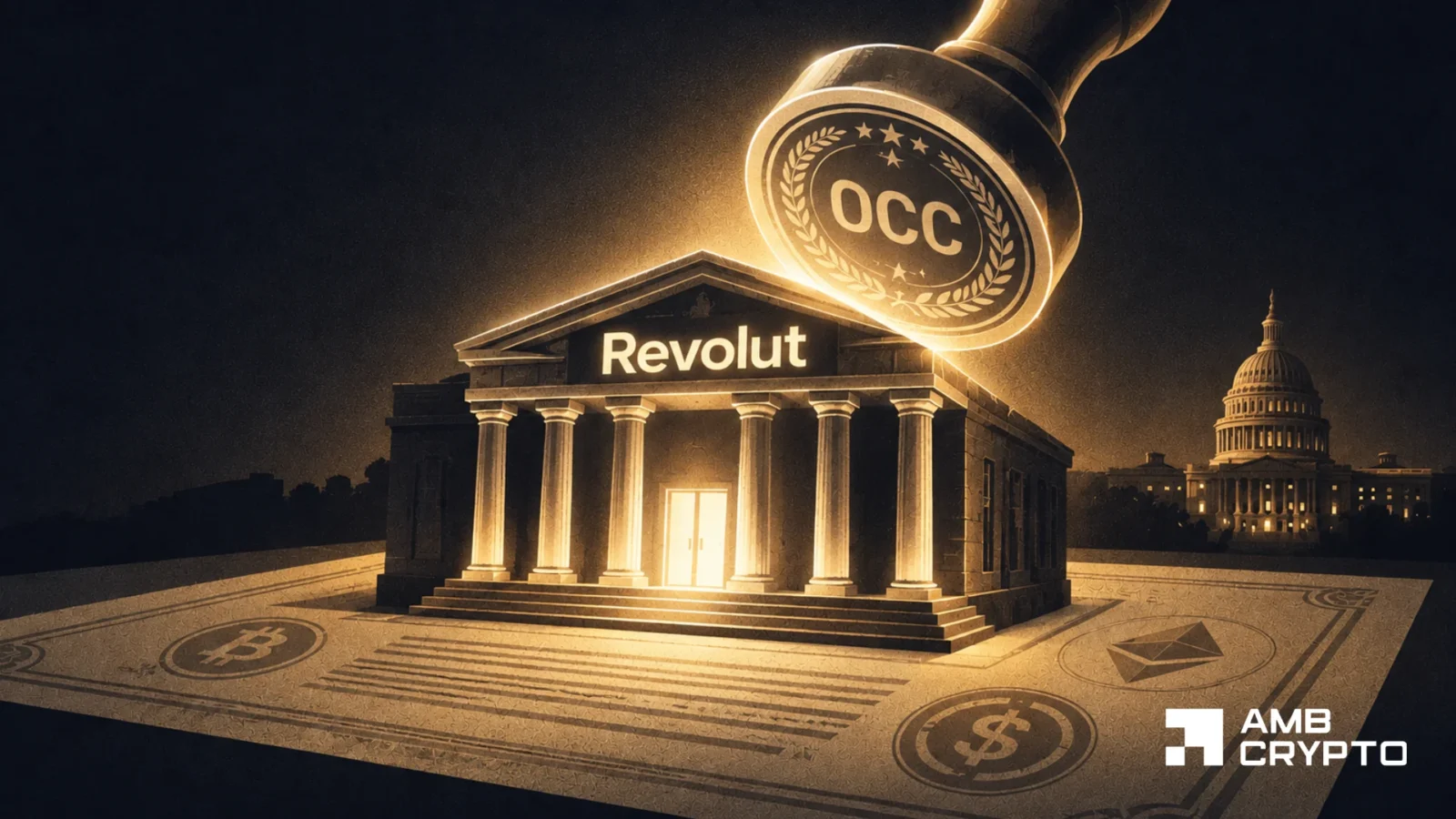
WASHINGTON, D.C. — In a landmark development bridging the gap between traditional finance and financial technology, global super-app Revolut has received a preliminary green light from the Office of the Comptroller of the Currency (OCC) to establish a national bank. The conditional approval brings the London-headquartered fintech closer to building and operating its own proprietary banking infrastructure directly under U.S. federal supervision.
While the announcement marks a monumental stride in Revolut’s aggressive international expansion strategy, it also underscores a broader, highly nuanced regulatory shift happening across the United States. As federal regulators increasingly open the door to digital asset-native firms and tech-driven financial platforms, the intersection of traditional banking and blockchain technology is entering an unprecedented era of scrutiny, institutionalization, and debate.
Main Facts: The Anatomy of Revolut’s U.S. Banking Ambitions
Under the preliminary approval granted by the OCC, Revolut is permitted to move forward with the complex process of organizing a national bank, to be provisionally known as Revolut Bank US.
- The Scope of the Charter: If fully realized, the national bank charter will allow Revolut to bypass relying exclusively on partner banks to service its U.S. user base. Instead, the firm will be able to issue deposits, offer loans, and provide core banking services under direct federal oversight.
- Remaining Regulatory Hurdles: Industry observers note that a conditional green light is far from a final operating license. Revolut must still satisfy a stringent checklist of conditions outlined by the OCC. Furthermore, the company must successfully navigate and secure separate, rigorous approvals from the Federal Deposit Insurance Corporation (FDIC) for deposit insurance, as well as clearance from the Federal Reserve.
- Leadership Perspective: Acknowledging the weight of the milestone, Revolut Founder and Chief Executive Officer Nik Storonsky emphasized the strategic necessity of the move. "Conditional OCC approval is an important first step towards establishing the proposed Revolut Bank US," Storonsky said. "It gives us the foundation to build in the world’s largest financial market and bring the full Revolut experience to millions of Americans."
For Revolut, which has built a massive global user base by offering multi-currency accounts, stock trading, and crypto services under a single roof, securing a U.S. banking charter is viewed as the ultimate linchpin for domestic profitability and long-term viability.
Chronology: The Escalating Race for Federal Charters
Revolut’s conditional nod does not happen in a vacuum. Over the past twenty-four months, the OCC has seen a dramatic uptick in charter applications from companies deeply embedded in the digital asset and modern fintech ecosystems.
The Trust Bank Wave
Throughout the preceding year, the OCC progressively opened its doors to the digital asset sector by conditionally approving national trust bank charters for a roster of heavyweight crypto infrastructure companies.
- Coinbase: The crypto exchange giant secured conditional approval to operate a national trust bank, signaling a move to anchor its custody and institutional services within federal oversight.
- Paxos & BitGo: Both digital asset custody and infrastructure providers pursued similar pathways to solidify their regulatory standing.
- Ripple: Despite ongoing legal and regulatory friction with various government bodies, Ripple secured a U.S. trust bank charter, a move that CEO Brad Garlinghouse defended fiercely against traditional banking lobby pushback.
- Circle: The issuer of USD Coin (USDC) successfully secured final OCC approval for a national trust bank charter, explicitly designed to strengthen the underlying operational and regulatory infrastructure of its flagship stablecoin.
The Political and Regulatory Crossroads
The inclusion of politically sensitive entities—such as World Liberty Financial receiving a conditional OCC nod—has complicated the public perception of these approvals, introducing acute concerns regarding potential conflicts of interest at the highest levels of government.
Despite these controversies, the regulatory philosophy at the OCC appears to be shifting toward integration rather than exclusion.
Supporting Data: Market Dynamics and Regulatory Stalled Legislation
The regulatory milestone for Revolut and its industry peers arrives amid a turbulent legislative backdrop in Washington, D.C., contrasting sharply with a resilient and surging global cryptocurrency market.
Legislative Delays and the CLARITY Act
While financial regulators are carving out pathways for digital asset firms via administrative charters, legislative efforts in Congress continue to face significant friction.
The highly anticipated CLARITY Act, designed to establish a comprehensive federal regulatory framework for digital assets, has suffered multiple setbacks. Initially targeted for action in August, the bill’s timeline was pushed to September 15th. Compounding the delay, the U.S. House of Representatives subsequently canceled a substantial portion of its September voting calendar.
This legislative bottleneck has left lawmakers with an extraordinarily narrow window to debate, draft, and pass meaningful cryptocurrency legislation ahead of the upcoming midterm elections. Consequently, regulatory clarity in the U.S. remains heavily dependent on administrative agencies like the OCC and SEC rather than statutory law.
Macroeconomic and Market Resilience
Despite the legislative gridlock, the broader digital asset market has displayed remarkable strength. In the wake of the OCC announcements and shifting monetary policy expectations, the global cryptocurrency market capitalization surged by over 4% within a single 24-hour window, firmly holding territory around the $2.8 trillion mark.
Market analysts point to this robust recovery as a sign that institutional demand and fintech maturation are overriding short-term political delays, setting a potentially bullish tone for the fourth quarter and beyond.
Official Responses: The Philosophy of Technological Inclusion
The acceleration of fintech and crypto charters under the current regulatory administration has sparked intense debate among lawmakers, traditional banking lobbyists, and industry leaders. At the heart of this debate is the question of whether tech companies and crypto native firms should enjoy the same privileges as legacy financial institutions.
OCC Leadership Defends the Pathway
Weighing in on the controversy, OCC Chief Jonathan Gould has offered a clear and pragmatic defense of the agency’s stance. Gould firmly believes that companies leveraging blockchain technology, digital assets, and other novel financial innovations should not be forced into regulatory gray areas or exiled from the traditional banking system. Instead, they require a legitimate, transparent regulatory route to federal supervision.
Articulating this vision, Gould stated:
"That is why entities that engage in activities involving digital assets and other novel technologies should have a pathway to become federally supervised banks if they so desire and if they meet the requirements to receive an OCC charter."
This perspective represents a pivot from historical regulatory hostility, suggesting that federal oversight is the most effective tool to mitigate systemic risk while fostering financial innovation.
The Crypto Angle: Stablecoins and the EURR Experiment
For the broader cryptocurrency and blockchain sector, Revolut’s banking ambitions carry profound implications. Revolut has increasingly leaned into crypto product offerings, notably launching its euro-backed stablecoin, EURR.
While EURR has elicited a mixed reception from market analysts—with some questioning whether global digital asset markets genuinely demand euro-denominated pegged tokens—the underlying infrastructure is telling. With the OCC’s preliminary green light, Revolut gains the regulatory foundation required to roll out more complex, integrated crypto initiatives within the United States. If Revolut successfully transitions from a fintech app to a federally supervised bank, it could serve as a powerful proof-of-concept for other digital asset issuers seeking to bridge the gap between decentralized finance and traditional banking rails.
Implications: What Revolut’s Charter Means for the Future of Finance
The conditional approval of Revolut Bank US is more than a corporate milestone for a single European unicorn; it is a bellwether for the future evolution of global financial services.
1. The Death of the "Fintech vs. Bank" Dichotomy
For years, fintech disruptors attempted to bypass the cumbersome regulatory burdens of traditional banking by partnering with chartered institutions. However, reliance on "banking-as-a-service" (BaaS) middlemen has proven fraught with operational and regulatory risks. By pursuing its own national bank charter, Revolut is signaling that long-term dominance in the financial sector requires direct integration into the central banking plumbing. Other major fintech players are expected to follow suit, initiating a wave of applications to bring charter-level stability to digital-first wallets.
2. Deepening Institutionalization of Digital Assets
As firms like Revolut, Circle, and Coinbase secure direct federal charters, the line separating traditional finance from crypto native infrastructure continues to blur. While this integration introduces digital assets deeper into the heart of the U.S. banking system, it also subjects crypto products to unprecedented levels of federal compliance, anti-money laundering (AML) checks, and consumer protection mandates.
3. The Ongoing Battle for Regulatory Clarity
Despite the positive momentum generated by administrative approvals, the reliance on agency-level discretion rather than Congressional legislation leaves the industry vulnerable to political shifts. Until Congress manages to pass comprehensive statutory frameworks—such as the delayed CLARITY Act—the long-term permanence of these crypto-friendly banking pathways will remain dependent on the shifting priorities of federal regulators and presidential administrations.
Conclusion
Revolut’s preliminary OCC approval marks a defining chapter in the maturation of financial technology. As Nik Storonsky and his team set their sights on satisfying FDIC and Federal Reserve requirements, the eyes of the global financial community remain fixed on Washington. Whether this regulatory opening heralds a golden age of secure financial innovation or sets the stage for new systemic vulnerabilities will largely depend on how rigorously federal regulators manage the integration of digital assets into the world’s largest financial market.
