

The decentralized finance (DeFi) ecosystem was rocked this week as Taiko, a prominent Ethereum Layer 2 (L2) scaling solution, fell victim to a sophisticated security exploit. The breach, which resulted in the theft of approximately $1.7 million in assets, has sent shockwaves through the developer community, forcing a critical re-evaluation of infrastructure security assumptions in the ZK-rollup space. By bypassing essential chain-state verification mechanisms, the attacker successfully drained funds from the protocol’s core vaults, marking a significant setback for the project.
Main Facts: A Failure in Verification
At the heart of the exploit lies a critical vulnerability in Taiko’s chain-state verification mechanism. In a properly functioning L2 environment, the verification process acts as the "gatekeeper," ensuring that state transitions—essentially the record of who owns what—are valid before they are finalized on the Ethereum mainnet.
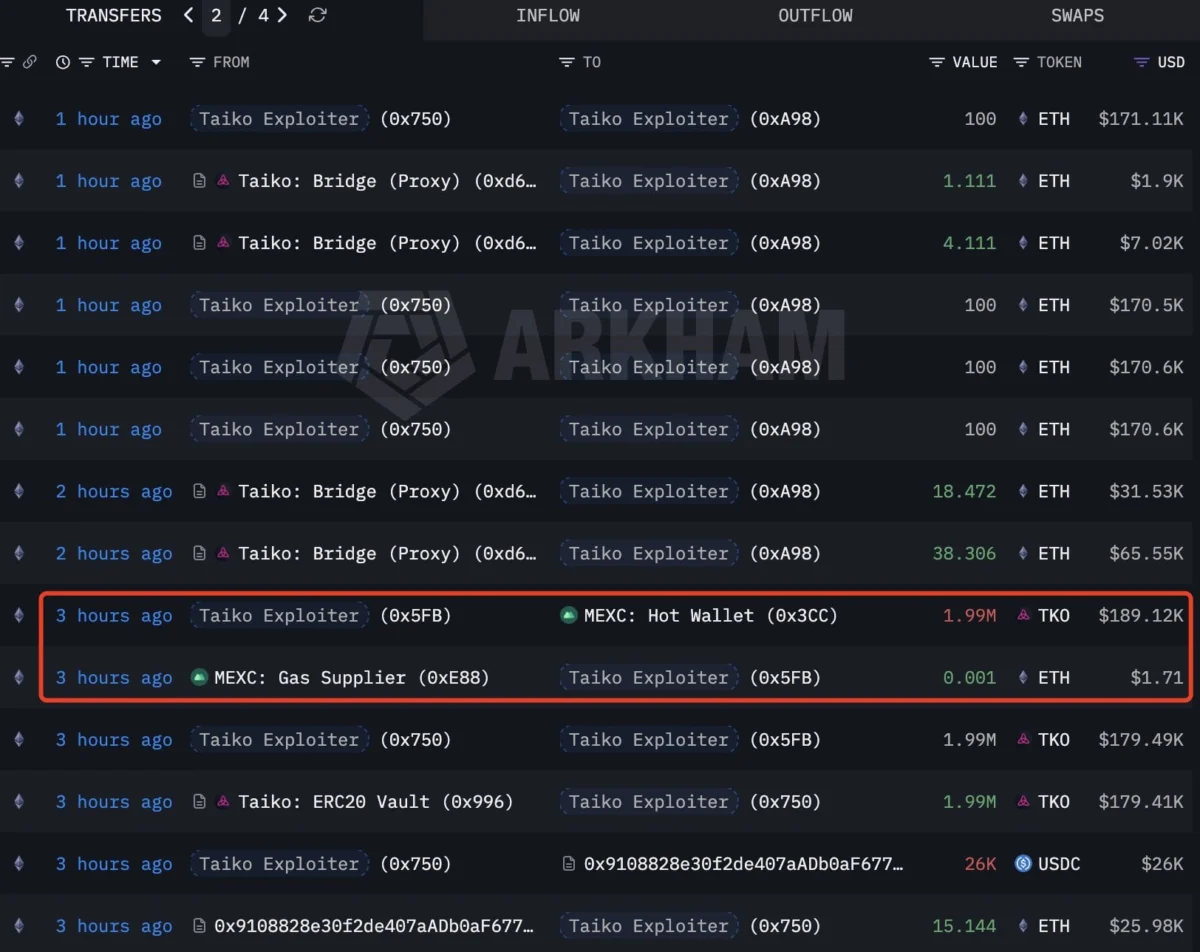
In this incident, the attacker successfully bypassed these validation checks, effectively tricking the protocol into authorizing fraudulent withdrawals. The funds were siphoned directly from the ERC20 Vault and the Taiko Bridge Proxy Contracts. This was not a social engineering attack or a user-side phishing attempt; it was a deep-layer infrastructure breach, which is significantly more alarming to investors and developers alike.
The total damage is estimated at $1.7 million. As of the most recent blockchain analytics, the majority of these funds remain in the attacker’s possession, though a portion has already been moved to centralized exchanges in an attempt to monetize the stolen assets.
Chronology of the Exploit
The timeline of the attack suggests a high degree of preparation and technical proficiency.

- The Breach: The attacker identified and exploited a weakness in the chain-state verification logic, allowing for the unauthorized extraction of assets from the bridge and vault systems.
- Consolidation: Immediately following the breach, the attacker moved to aggregate the disparate stolen assets into a centralized set of wallet addresses, likely to facilitate easier movement or obfuscation.
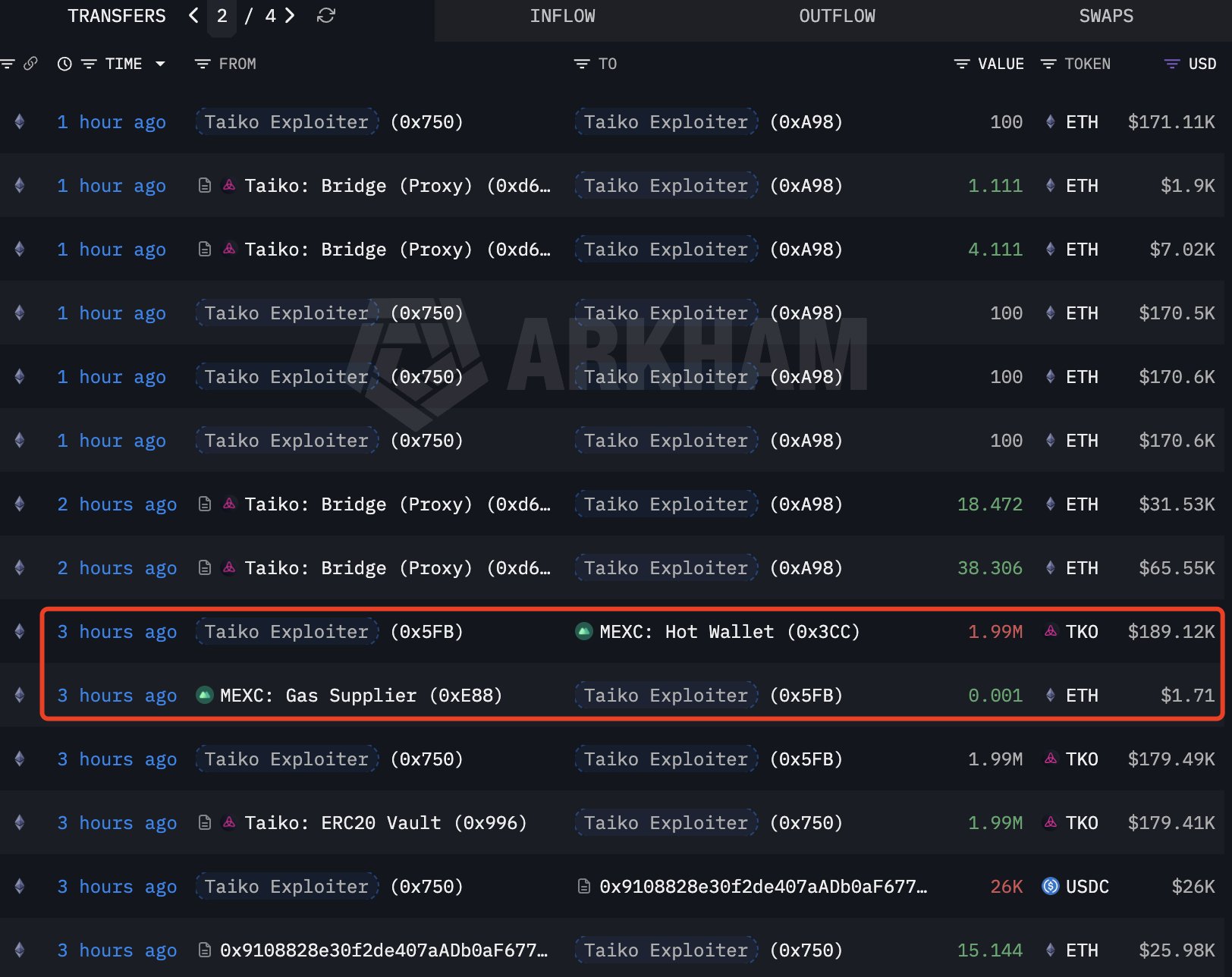
- Monetization Phase: The attacker quickly moved into a "cashing out" phase. Notably, 1.99 million TKO tokens—valued at approximately $189,000—were transferred to a hot wallet associated with the MEXC exchange. This move signals a clear intent to convert digital assets into liquidity rapidly, potentially to evade further on-chain tracing.
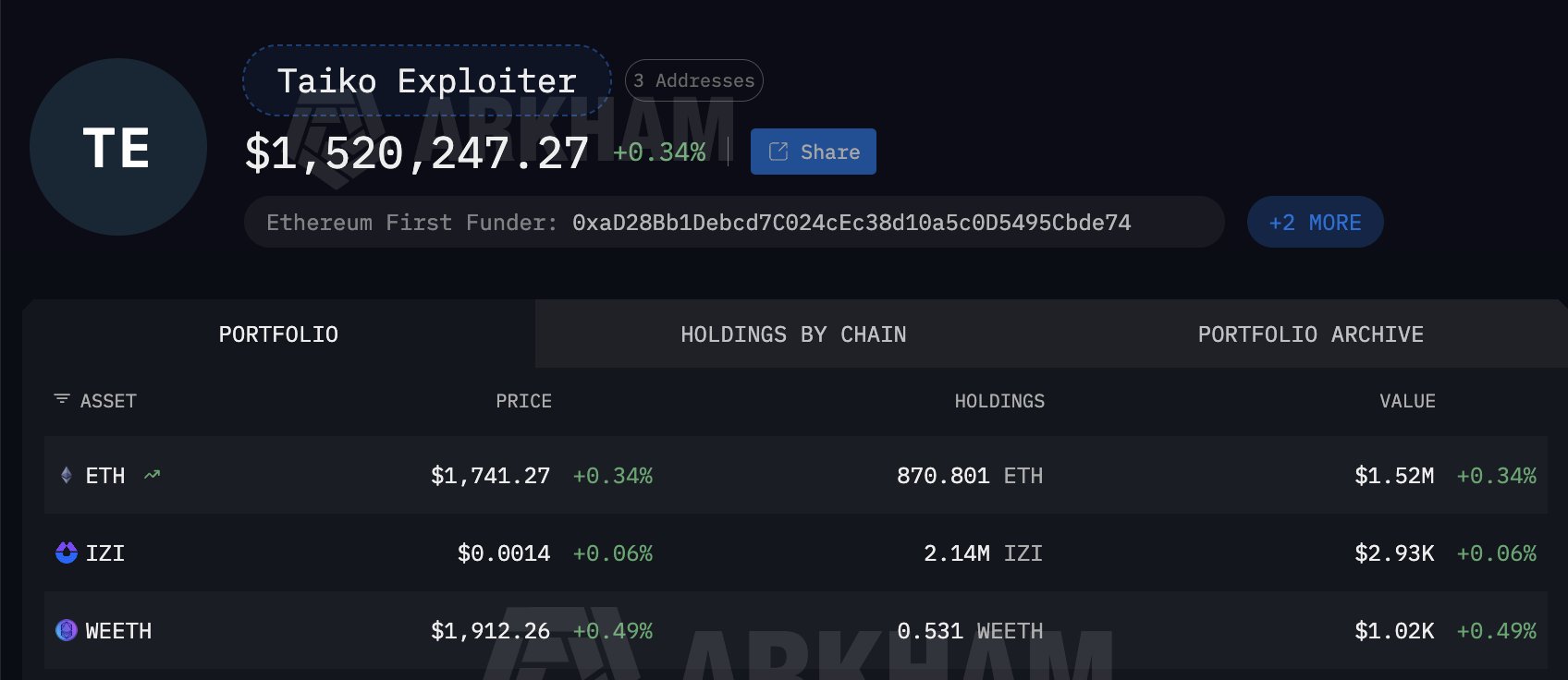
- The Holding Pattern: Despite the initial move to exchange, the lion’s share of the stolen loot remains on-chain. Arkham Intelligence data indicates that the exploiter still holds roughly 870.8 ETH, valued at approximately $1.52 million. This concentration of funds creates a vulnerability for the attacker, as it keeps a large, traceable footprint on the Ethereum ledger.
Supporting Data and Market Impact
The market reaction was swift and unforgiving. Following the disclosure of the hack, the native TKO token experienced a sharp downward trend. Prices fell from $0.1279 to a low of $0.07499, representing a nearly 10% decline in value.
While the token price took a hit, the broader ecosystem data provides a nuanced picture of the network’s resilience. According to DeFi Llama, Taiko’s total value locked (TVL) in DeFi protocols actually saw a marginal increase, rising to $3.84 million—a 3.64% bump. Meanwhile, the bridged TVL has held steady at approximately $12.85 million. These figures suggest that while the protocol suffered a blow, the majority of the user base has remained committed, or at least has not yet exited the ecosystem in a panic.
However, network activity shows signs of a cooling-off period. Weekly transaction counts were recorded at 324,630, reflecting a 3.37% decrease over the previous week. This drop is likely attributable to the temporary suspension of block production as a security measure.
Official Responses and Containment Strategy
Taiko’s response to the incident was immediate and decisive. Once the security team identified that the integrity of the chain-state verification was compromised, they initiated a "circuit breaker" protocol.
Halting Operations
To prevent further siphoning of assets, the Taiko development team directed all block proposers to cease the production of new blocks. By pausing the network, they effectively stopped the attacker from executing any further state-change transactions. This move, while disruptive to normal network operations, was essential to prevent a total drainage of the vault.
Cooperation with Centralized Exchanges
Recognizing that the attacker was attempting to off-ramp stolen funds via centralized platforms, Taiko reached out to major exchanges, including MEXC, to flag the malicious wallet addresses. By urging these exchanges to freeze TAIKO deposits associated with the attacker, the project team aimed to trap the stolen funds and prevent them from being converted into fiat or other stablecoins.
Implications: The Infrastructure Security Crisis
This attack is distinct from typical DeFi exploits. Most incidents in the past year have focused on application-layer vulnerabilities—such as flawed smart contract logic in a lending protocol or an automated market maker (AMM). Taiko’s incident, however, targeted the infrastructure level.
Questioning Security Assumptions
The breach raises uncomfortable questions about the security of ZK-rollups and optimistic rollups. When a bridge—a component intended to be the most secure bridge between L1 and L2—fails due to a verification logic error, it suggests that the "trustless" nature of these systems still relies heavily on the underlying code’s perfection.
The Future of L2 Verification
For the broader L2 industry, the Taiko exploit acts as a "canary in the coal mine." It highlights that as these networks grow in complexity, the attack surface for bad actors expands proportionally. The reliance on chain-state verification means that even a minor bug in the mathematical or logical proof process can result in a total collapse of asset integrity.
Moving forward, we can expect a renewed emphasis on:
- Formal Verification: More projects will likely move toward using formal verification methods to mathematically prove the correctness of their bridging and verification logic before deployment.
- Decentralized Sequencers: A shift toward more decentralized sequencers to reduce the single point of failure that a centralized or semi-centralized bridge infrastructure represents.
- Transparency and Audits: The industry will demand higher levels of transparency regarding the audit processes for core infrastructure components, moving beyond "audited by X" to providing public access to the specific security frameworks used.
Conclusion
The Taiko exploit is a sobering reminder that innovation in the Ethereum scaling space comes with significant risk. While the project team’s rapid response prevented a worse outcome and they continue to work toward restoring full network functionality, the incident has left a scar on the project’s reputation.
As the dust settles, the focus for the Taiko team and the wider crypto community will shift toward recovery, security hardening, and restoring user confidence. The ability of the protocol to transparently address the root cause of the verification failure will be the primary factor in determining whether it can regain its momentum in the competitive Layer 2 landscape. Investors and users alike will be watching closely as the team releases its post-mortem analysis and implements the necessary structural upgrades to ensure that such a failure cannot occur again.
