

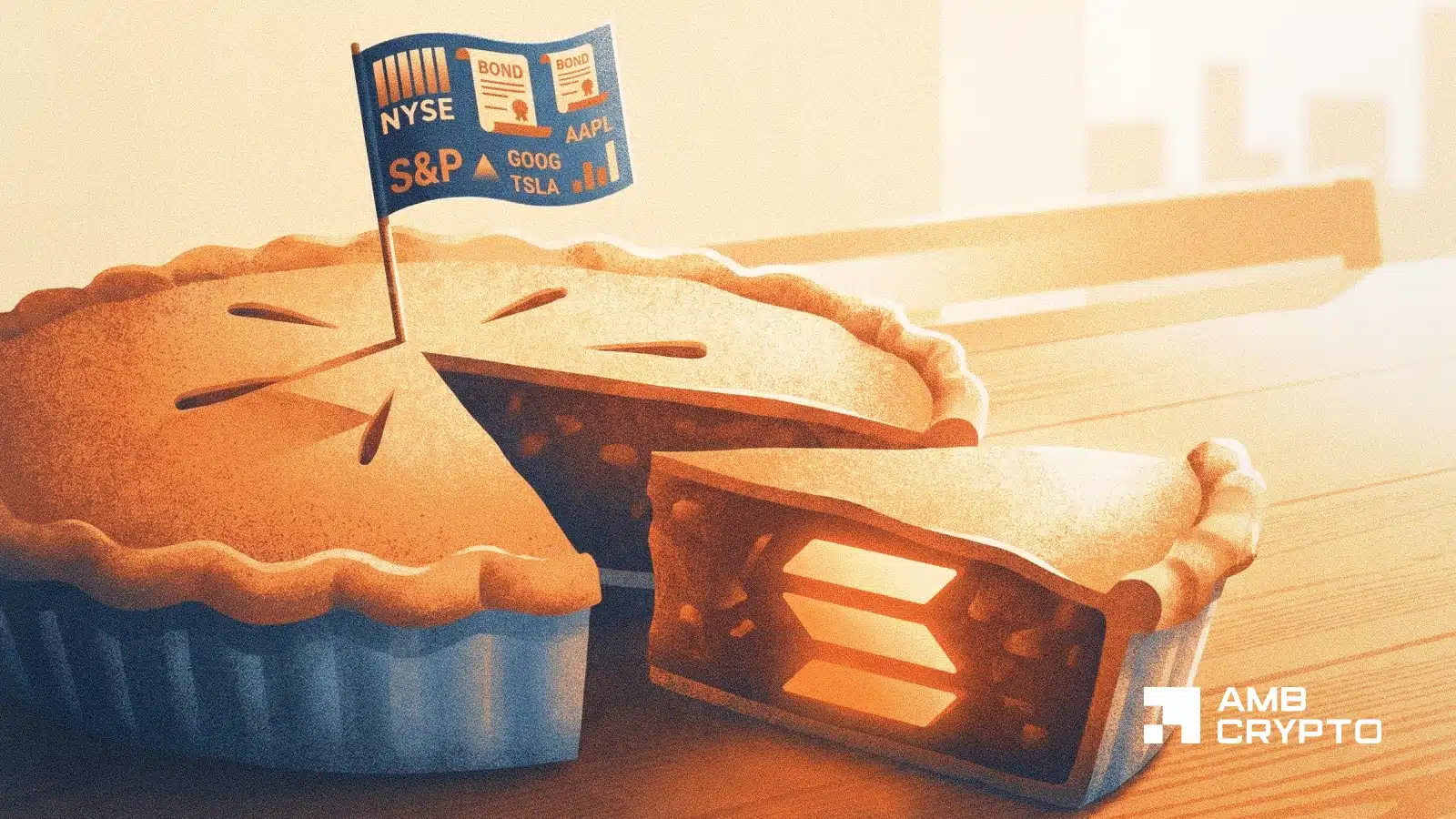
The landscape of traditional finance is undergoing a tectonic shift. As of May 2026, the convergence of blockchain technology and legacy equity markets has moved from a theoretical experiment to a tangible, high-velocity reality. At the forefront of this transformation is the Solana (SOL) network, which has effectively cemented its position as the preferred infrastructure for tokenized stock ownership. With a staggering 64% market share of tokenized equity wallets, Solana is setting the pace for how global retail and institutional investors interact with traditional financial assets on the blockchain.
The State of Play: Solana’s Market Dominance
The latest data from Token Terminal underscores a decisive trend in the digital asset space: users are voting with their wallets, and they are choosing speed and cost-efficiency. Currently, Solana-based tokenized stock portfolios have climbed to approximately 192,100 active wallets.
This figure is not merely a number; it represents a broader structural change in the way equity access is democratized. By leveraging Solana’s high-throughput architecture, investors are bypassing the archaic settlement times and high-fee environments characteristic of legacy brokerage systems. While other ecosystems struggle with network congestion and premium transaction costs, Solana’s ability to maintain high-speed execution has made it the primary hub for those seeking to tokenize real-world assets (RWAs).
A Chronology of Adoption: From Niche to Necessity
To understand how Solana captured the lion’s share of this market, one must look at the trajectory of adoption over the past eighteen months.
The Foundation (Pre-2025)
Before the current explosion in popularity, tokenized equities were largely confined to niche decentralized finance (DeFi) circles. Early adopters experimented with fractionalized shares, but the lack of institutional-grade infrastructure and high barriers to entry kept the concept on the periphery of the broader financial world.
The Inflection Point (November 2025)
The narrative shifted dramatically in late 2025. Following a series of network upgrades and the maturing of Solana’s RWA-focused protocols, the platform began to experience an exponential uptick in user activity. The "November Surge" marked the transition where tokenized equities moved from a novelty to a viable alternative for retail traders. During this period, the reduction in transaction fees—facilitated by Solana’s unique consensus mechanism—made it economically feasible for small-scale investors to maintain diverse portfolios of tokenized stocks.

Reaching New Heights (May 2026)
As of May 2026, the growth has continued unabated. The ecosystem has reached fresh highs, bolstered by increased institutional interest in on-chain compliance and the ease of cross-border capital movement. The current dominance of Solana reflects a market that has matured significantly, valuing the platform’s reliability under high-load conditions.
Comparative Analysis: The Competitive Landscape
While Solana holds the lead, the broader ecosystem remains competitive. However, the disparity in wallet growth across different blockchains provides a clear signal regarding user priorities.
BNB Chain: Maintaining a Foothold
The BNB Chain currently holds approximately 63,200 holders of tokenized equities. While this represents a solid presence in the market, it lags significantly behind Solana’s 192,100 wallets. The BNB Chain remains a viable option for users already deeply integrated into the Binance ecosystem, yet it has not captured the same velocity of new user acquisition as its competitor.
Ethereum [ETH]: The "Slow and Steady" Approach
Ethereum, the pioneer of smart contract technology, sits at approximately 36,800 wallets for tokenized stocks. This lower figure, relative to the network’s massive total value locked (TVL) in other sectors, highlights a specific challenge: high network fees. Despite Layer 2 scaling solutions, Ethereum’s base-layer costs remain a deterrent for the high-frequency trading often associated with retail stock tokenization. Users seeking to rebalance portfolios frequently find that the "gas" costs on Ethereum can erode the margins of equity trading, leading to a migration of users toward lower-cost, high-speed alternatives like Solana.
The Economic Implications of On-Chain Equities
The transition to tokenized stocks is not merely a technological upgrade; it is an economic liberation. By moving assets on-chain, investors benefit from:
- Instant Settlement: The T+2 settlement cycle, a hallmark of traditional stock markets, is effectively rendered obsolete by blockchain-based atomic settlement.
- Global Accessibility: Barriers to entry that previously prevented international investors from accessing US-listed equities are being dissolved. A user in a developing economy can now gain exposure to global market movements with the same ease as an investor on Wall Street.
- Fractionalization: Through tokenization, high-priced blue-chip stocks are divisible into minute fractions, allowing for granular portfolio diversification that was previously impossible for smaller retail accounts.
The "Micro" vs. "Macro" Reality
Despite the optimism surrounding these figures, it is essential to maintain a balanced perspective. Even with hundreds of thousands of wallets, tokenized equities still represent a fraction of a percent of the total global equity market, which is valued in the tens of trillions of dollars. We are currently in the "adoption phase," where the infrastructure is being battle-tested. For tokenized assets to achieve mainstream parity, regulatory clarity regarding the legal standing of these tokens must continue to evolve alongside the technology.

Official Responses and Market Sentiment
Market analysts and developers have noted that the migration to Solana is largely driven by "frictionless user experience." Developers building RWA platforms have highlighted that Solana’s developer-friendly environment and robust API support make it the natural choice for bridging traditional finance (TradFi) with decentralized finance (DeFi).
"The data is clear," notes one analyst from Token Terminal. "Users prefer faster execution and cheaper transfers. When you combine the familiarity of stock market instruments with the speed of a high-performance blockchain, you create an unbeatable value proposition for the modern trader."
Future Outlook: Solana as the Gateway?
If the growth trajectory observed from late 2025 through May 2026 continues, Solana is well-positioned to become the default gateway for the tokenization of all manner of real-world assets. The implications extend beyond just stocks; if the infrastructure can handle equities at this scale, it stands to reason that debt instruments, real estate, and commodities will follow.
The "Solana Advantage"—a combination of low latency, high throughput, and increasing developer adoption—is creating a virtuous cycle. As more users flock to the platform, more liquidity providers and protocol developers move their services to Solana, further entrenching its lead.
Conclusion: A New Frontier
The dominance of Solana in the tokenized stock market is a microcosm of the larger trend toward the digitization of all financial assets. We are witnessing the early stages of a fundamental shift in the global financial architecture. While traditional financial institutions may be hesitant to fully embrace public blockchains, the demand from retail participants for efficient, transparent, and fast access to global markets is forcing the hand of the industry.
As we look toward the remainder of 2026, the question is no longer if traditional assets will be tokenized, but how fast that process will accelerate. With Solana currently holding the mandate from the retail market, the platform has set a high bar for performance, accessibility, and utility. For investors, traders, and regulators alike, the "Solana experiment" has proven that the future of finance is not just digital—it is on-chain, and it is moving faster than ever before.
