

Main Facts
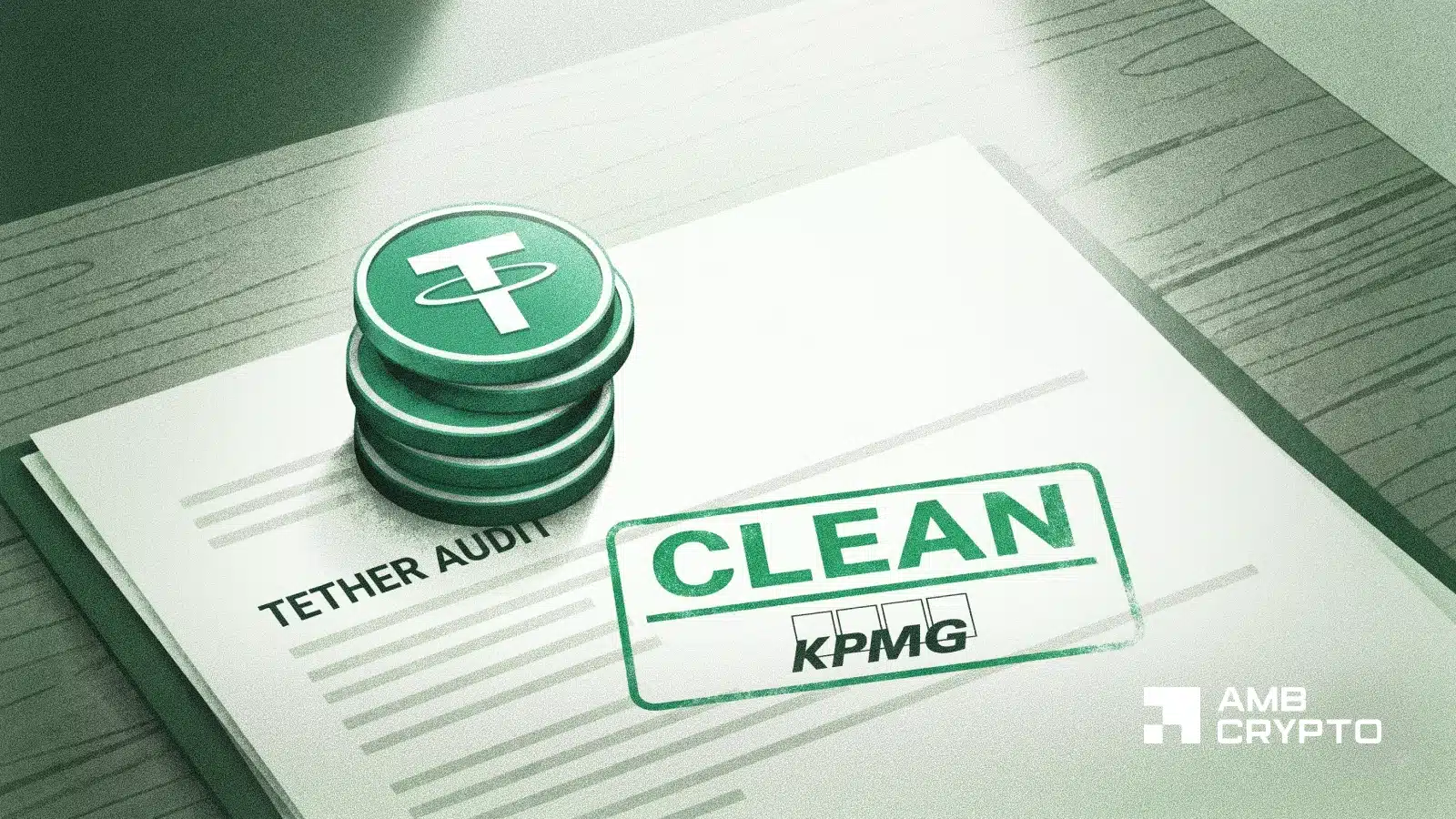
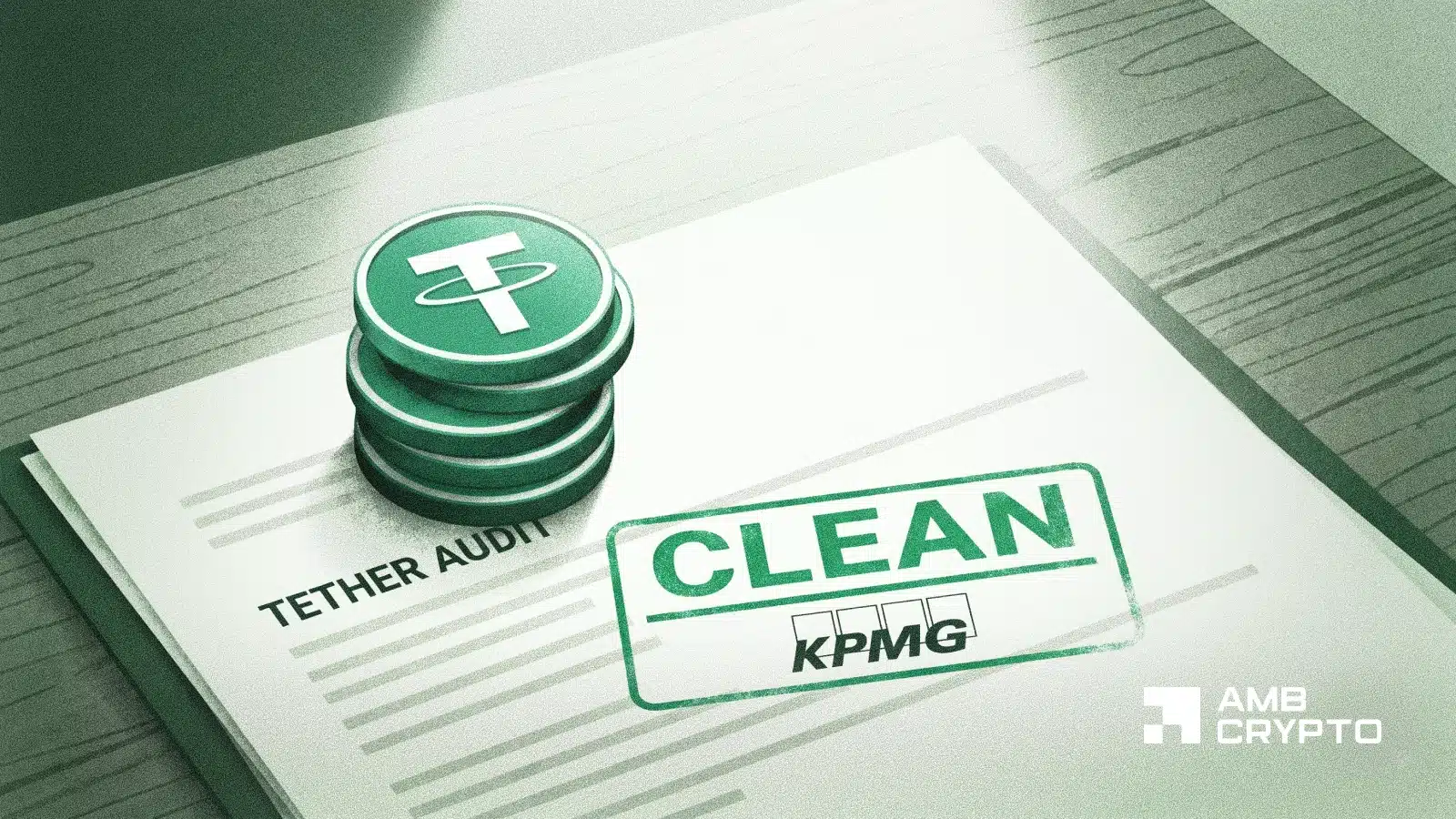
In a milestone development for the digital asset ecosystem, Tether has successfully finalized a comprehensive full-year audit by KPMG, marking the first time a major stablecoin issuer has been audited by one of the prestigious "Big Four" accounting and auditing firms. The USDT issuer announced that KPMG delivered a "clean" opinion on its 2025 financial statements—representing the highest level of assurance an independent auditor can confer upon a corporate entity.
The announcement has sent ripples through traditional finance and the cryptocurrency markets alike. For years, the lack of a traditional, Big Four-backed audit has been the primary weapon for Tether’s detractors, who frequently questioned the validity, liquidity, and composition of the reserves backing the world’s largest stablecoin.
While Tether executives have hailed the audit as an ultimate vindication, the crypto community remains sharply divided. Industry veterans, rating agencies, and market commentators have begun dissecting the nuances of the audit, weighing its monumental scale against ongoing questions regarding corporate structure, reserve transparency, and the distinction between offshore and domestic products.
Chronology of Scrutiny: From Doubt to Delivery
The journey toward this landmark audit has been fraught with intense regulatory pressure, public skepticism, and adversarial reports from traditional financial institutions.
The Years of Speculation
Since its inception, Tether’s operational transparency has been a lightning rod for criticism. Skeptics repeatedly argued that the company could not—or would not—subject itself to the rigorous standards demanded by tier-one global auditing firms. While Tether historically relied on quarterly attestation reports prepared by mid-tier accounting firms to verify that its tokens were fully backed, these attestations fell short of the exhaustive, deep-dive nature of a full financial audit.
The S&P Global Downgrade
The pressure reached a boiling point in late 2025. Major credit rating agency S&P Global dealt a significant blow to the issuer by downgrading USDT from a "constrained" rating to a "weak" rating. S&P cited perceived risks in Tether’s reserve portfolio, pointing out that only roughly 77% of USDT reserves were held in ultra-safe U.S. Treasury bills and cash equivalents. The remainder of the portfolio featured exposure to alternative assets, including Bitcoin (BTC) and physical gold, which the rating agency deemed volatile and illiquid relative to a standard 1:1 cash-equivalent mandate. Furthermore, S&P explicitly flagged a perceived lack of overarching corporate transparency as a key driver behind the downgrade.
The KPMG Breakthrough
Despite these headwinds, Tether continued to expand its market dominance throughout 2025 and into 2026. Behind the scenes, the company engaged KPMG to perform a comprehensive financial audit of its 2025 fiscal year. The culmination of this process in mid-2026 shatters the long-standing narrative that top-tier accounting firms would refuse to touch cryptocurrency issuers due to compliance and reputational risks. By securing a clean opinion from KPMG, Tether has effectively rewritten the compliance playbook for the entire stablecoin sector.
Supporting Data: Inside Tether’s Balance Sheet and Financial Might
To understand the weight of the KPMG audit, one must examine the actual composition of Tether’s reserves and its staggering financial performance.
Reserve Breakdown
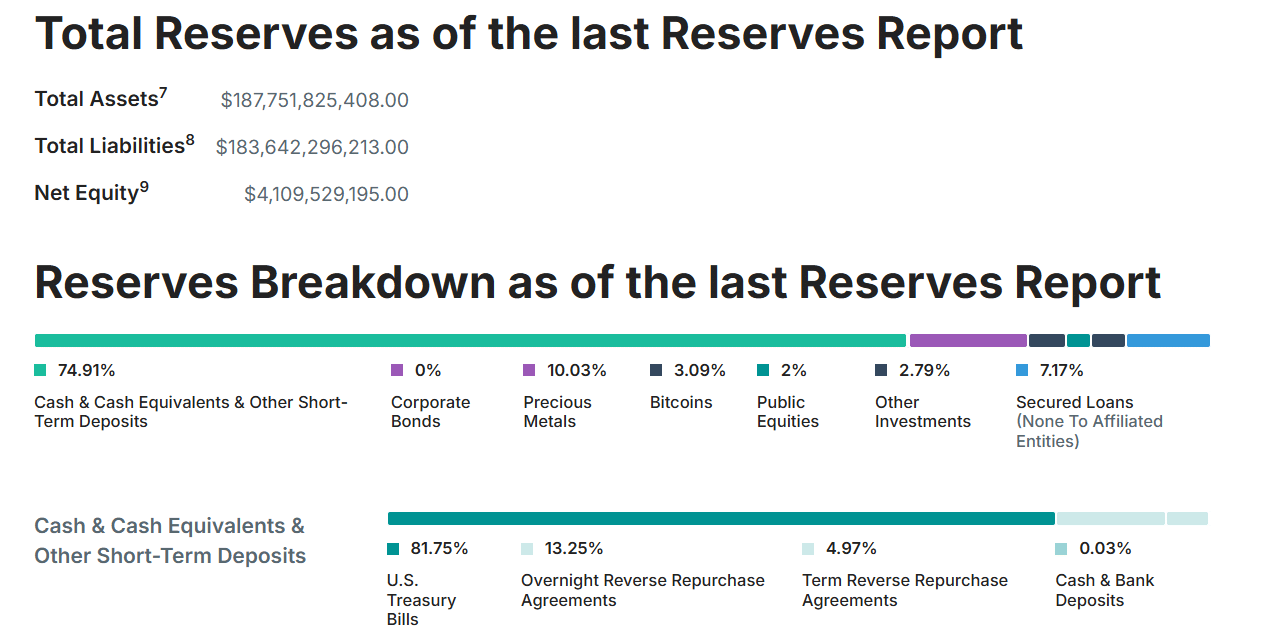
Data released by Tether regarding its offshore USDT product indicates that for the period ending in June, reserve allocations were structured as follows:
- U.S. Treasury Bills and Cash Equivalents: Approximately 75% to 77% of the total reserve backing.
- Gold and Precious Metals: Roughly 10% of the portfolio.
- Bitcoin (BTC) and Other Digital Assets: Approximately 3%.
- Other Investments and Secured Loans: Making up the remaining balance.
While critics historically pointed to the non-cash components (such as Bitcoin and gold) as vulnerabilities, Tether’s management has consistently defended these assets as a strategic hedge that strengthens the company’s equity buffer well beyond the 100% backing threshold for the circulating tokens.
Conversely, Tether’s U.S.-focused product, USAT, adheres to a stricter regulatory framework designed to maintain a strict 1:1 backing utilizing nearly 100% U.S. Treasury bills and cash equivalents, catering specifically to domestic compliance expectations.
Profitability and Scale
Beyond its reserves, Tether operates as a financial juggernaut. The company reported a massive $1.5 billion in net profits during the second quarter alone, driven heavily by high interest yields on its massive holdings of U.S. Treasury bills. At the same time, the user base for USDT shattered records, crossing the 650 million milestone globally and continuing to climb in emerging markets where stablecoins serve as a vital lifeline against hyperinflation and currency devaluation.
Official Responses and Industry Reactions
The completion of the KPMG audit provoked fierce, polarized reactions from industry leaders, critics, and market analysts alike.
Tether Leadership Fights Back
Tether CEO Paolo Ardoino seized the moment to deliver a sharp rebuke to the company’s long-standing critics, framing the audit as an undeniable triumph of resilience over misinformation. In a public statement, Ardoino noted:
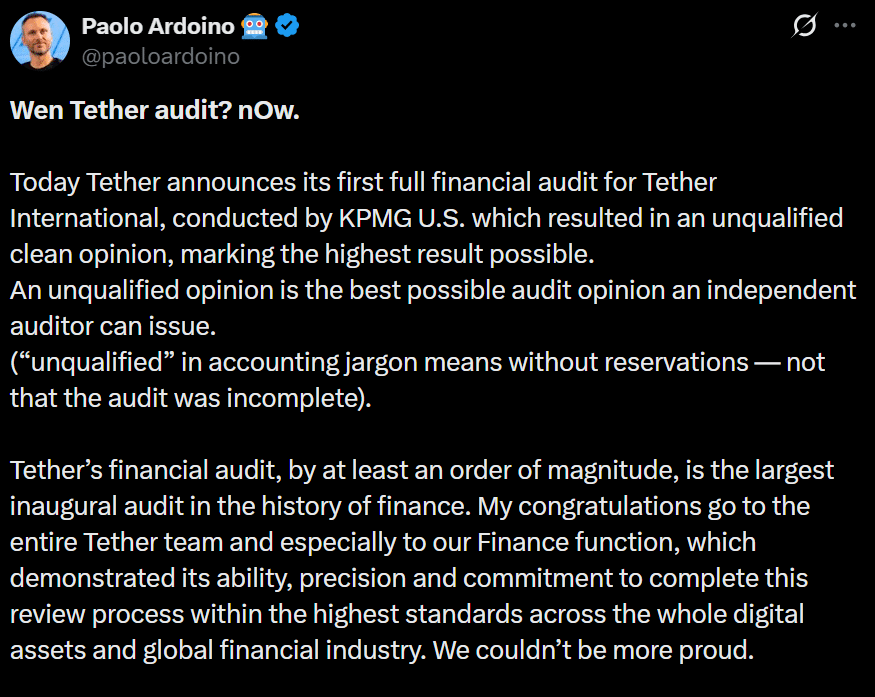
"This is a defining moment for the stablecoin industry. For years, some detractors said an audit of Tether could not be completed. They said the Company refused to subject itself to the most rigorous scrutiny. We have once again proven them wrong."
Ardoino’s camp views the clean opinion as definitive proof that the company’s financial controls, balance sheet integrity, and reserve management systems meet the highest global standards.
Nuanced Industry Perspectives
While proponents celebrated the news, prominent voices within the financial and crypto ecosystem urged a balanced perspective.
ETF expert Nate Geraci pointed out that structural competitive dynamics in the stablecoin market extend beyond mere auditing. Geraci remarked:
"Until that problem is solved (sharing stablecoin yield), Tether will never face any real competitive pressure given its scale IMO."
Geraci’s comments underscore a broader debate regarding whether stablecoin issuers should pass underlying U.S. Treasury yields directly to token holders rather than retaining billions in corporate profits.
Meanwhile, hardened skeptics remain unconvinced. Swan CEO Cory Klippsten voiced skepticism regarding the scope of the audit, pointing out that Tether’s ultimate corporate ownership structure remains opaque and noting that the audit was restricted to Tether International (a subsidiary entity) rather than the entire corporate web.
Implications for the Global Stablecoin Industry
The successful completion of a Big Four audit for Tether carries profound implications that will shape the trajectory of digital assets for years to come.
1. Raising the Regulatory Bar
For years, regulators across the globe—from the U.S. Securities and Exchange Commission (SEC) to the European Union’s MiCA framework—have targeted stablecoins for opacity. By clearing a KPMG audit, Tether has effectively raised the compliance bar. Competitors, particularly smaller or regional stablecoin issuers, will now face immense pressure from regulators and institutional clients to match this standard of transparency.
2. Institutional Adoption Acceleration
Traditional financial institutions, asset managers, and payment networks have historically hesitated to integrate USDT into mainstream corporate treasuries due to lingering fears over reserve insolvency. A clean opinion from KPMG removes a major institutional roadblock, potentially paving the way for deeper integration of USDT into traditional banking rails, global trade settlement, and institutional investment portfolios.
3. Redefining the Crypto-TradFi Relationship
The involvement of KPMG signals a broader institutional thawing toward the digital asset space. It demonstrates that traditional professional services firms are increasingly capable—and willing—to audit complex, crypto-native balance sheets, provided the underlying data meets rigorous verification standards.
As Tether marches forward past the 650-million-user mark, the KPMG audit effectively closes one chapter of the stablecoin wars—the debate over whether the money is truly there—while opening a new era of mainstream financial accountability.
