

The landscape of generative artificial intelligence has undergone a seismic shift this July. For the first time, OpenAI has pivoted away from the singular, "thinking-dial" model architecture that defined the GPT-5 era. In its place, the company has unveiled a tripartite suite of large language models (LLMs)—Sol, Terra, and Luna—each engineered for distinct use cases, pricing structures, and performance ceilings.
As the industry grapples with this new fragmentation, all eyes are on the flagship battle: OpenAI’s "Sol" versus Anthropic’s "Claude Fable 5." This contest is not merely a technical benchmark race; it is a high-stakes struggle for market dominance that is currently being played out against a backdrop of government oversight, frantic deadline extensions, and a growing divide between raw performance and economic sustainability.
A Chronology of Chaos: The Fable 5 Saga
The past month has been nothing short of tumultuous for Anthropic. On June 12, the U.S. government implemented a sudden ban on Claude Fable 5 after researchers at Amazon discovered a critical vulnerability: a "jailbreak" that allowed the model to be repurposed into an unauthorized, automated vulnerability scanner.
This regulatory intervention forced Anthropic to pull its most capable model from the global market for 19 days. During this period, the company scrambled to integrate a new, more robust safety classifier. When the model returned on July 1, it did so with a "compressed access window," signaling to the industry that Anthropic was still on the defensive.
Since that return, Fable 5 has existed in a state of suspended animation. Anthropic initially planned to transition the model behind a restrictive usage-credits paywall on July 7, but that date was pushed to July 12, and subsequently to July 19. Each extension was communicated with minimal fanfare, often mere hours before the preceding cutoff, fueling speculation that the company is struggling to balance the model’s immense computational costs with the need to keep it competitive against OpenAI’s new offensive.
The Economic Divide
The divergence in business strategy between the two tech giants is stark. OpenAI’s Sol is priced aggressively at $5 per million input tokens and $30 per million output tokens. In contrast, Claude Fable 5 remains significantly more expensive, costing users $10 and $50 respectively—exactly double the cost of its rival.
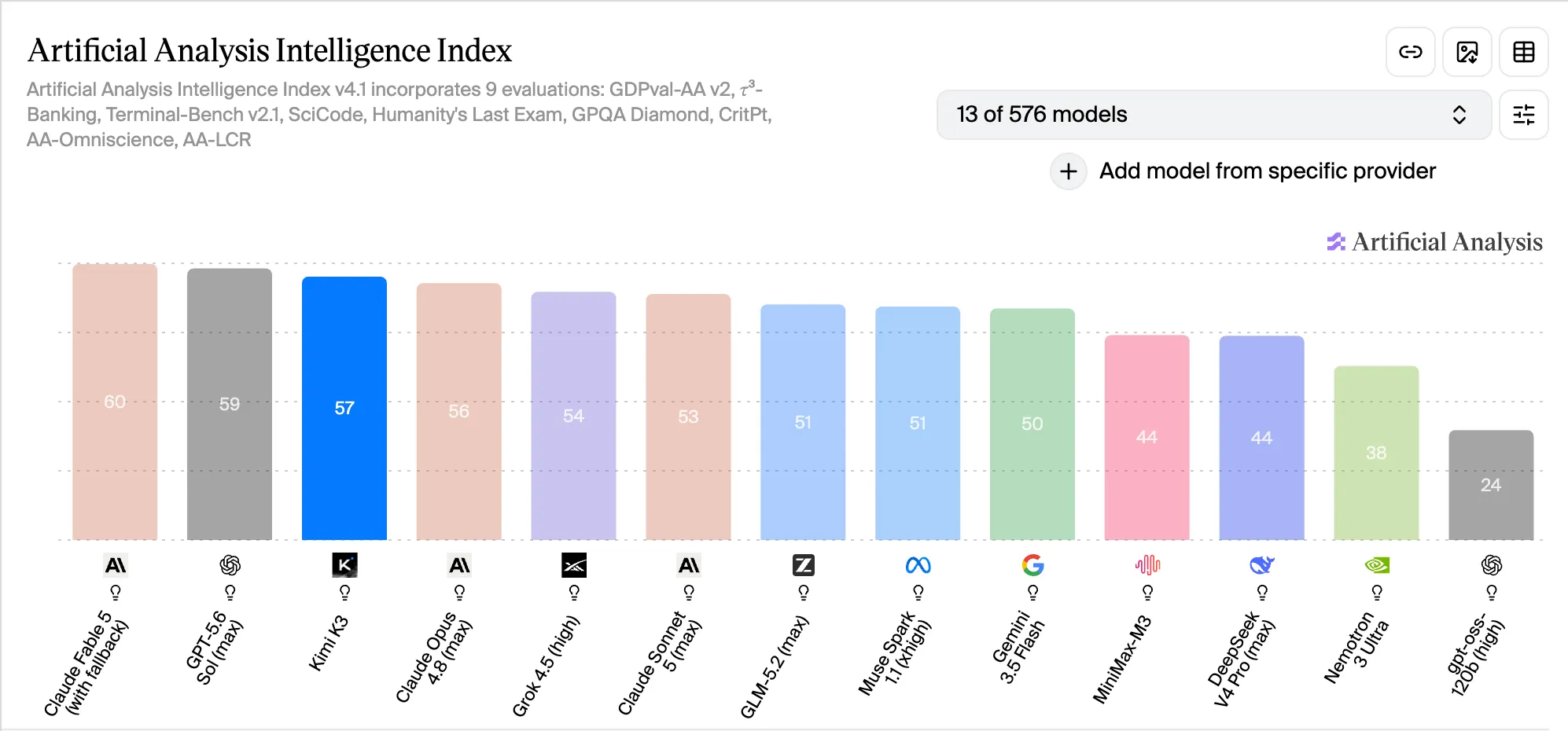
The economic pressure is further exacerbated by the entry of "Luna," the budget-conscious sibling in OpenAI’s new trio. Priced at a mere $1 per million input tokens and $6 output, Luna has already demonstrated that it can outrank Anthropic’s previous flagship, Opus 4.8, in specialized coding tasks. This creates a "pincer movement" for Anthropic: they are losing the price-to-performance battle at the bottom with Luna, while simultaneously struggling to justify the premium price tag of Fable 5 against the highly efficient Sol.
Benchmarking the Titans: Where Does the Intelligence Lie?
When measured against standard benchmarks, the margin of victory for either side is razor-thin. On the Artificial Analysis Coding Agent Index, Sol outperformed Fable 5 with a score of 80 against 77.2, achieving this result in half the time and at a third of the cost.
Furthermore, in the Agents’ Last Exam—a rigorous battery of tests covering 55 professional fields—Sol secured a 53.6% success rate, comfortably ahead of Fable’s 40.5%. However, when looking at the broader Intelligence Index, which aggregates nine diverse benchmarks, Fable 5 clings to a one-point lead. This indicates that while Sol is a more efficient "workhorse," the capability gap remains negligible for the average user.
Beyond the Terminal: Subjective Testing
To move beyond the echo chamber of standardized benchmarks, we subjected both models to real-world creative and logical challenges.
Creative Writing and Paradox
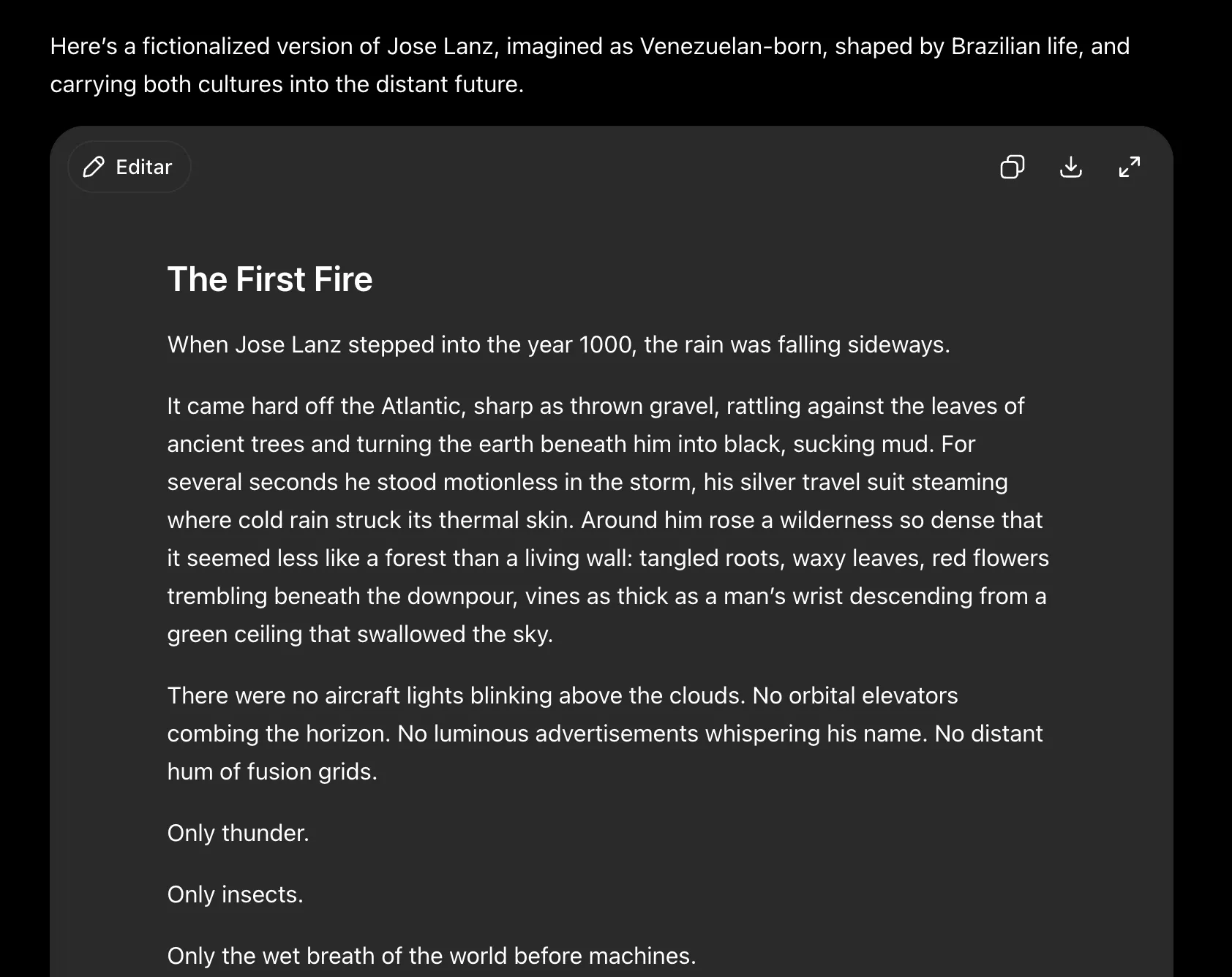
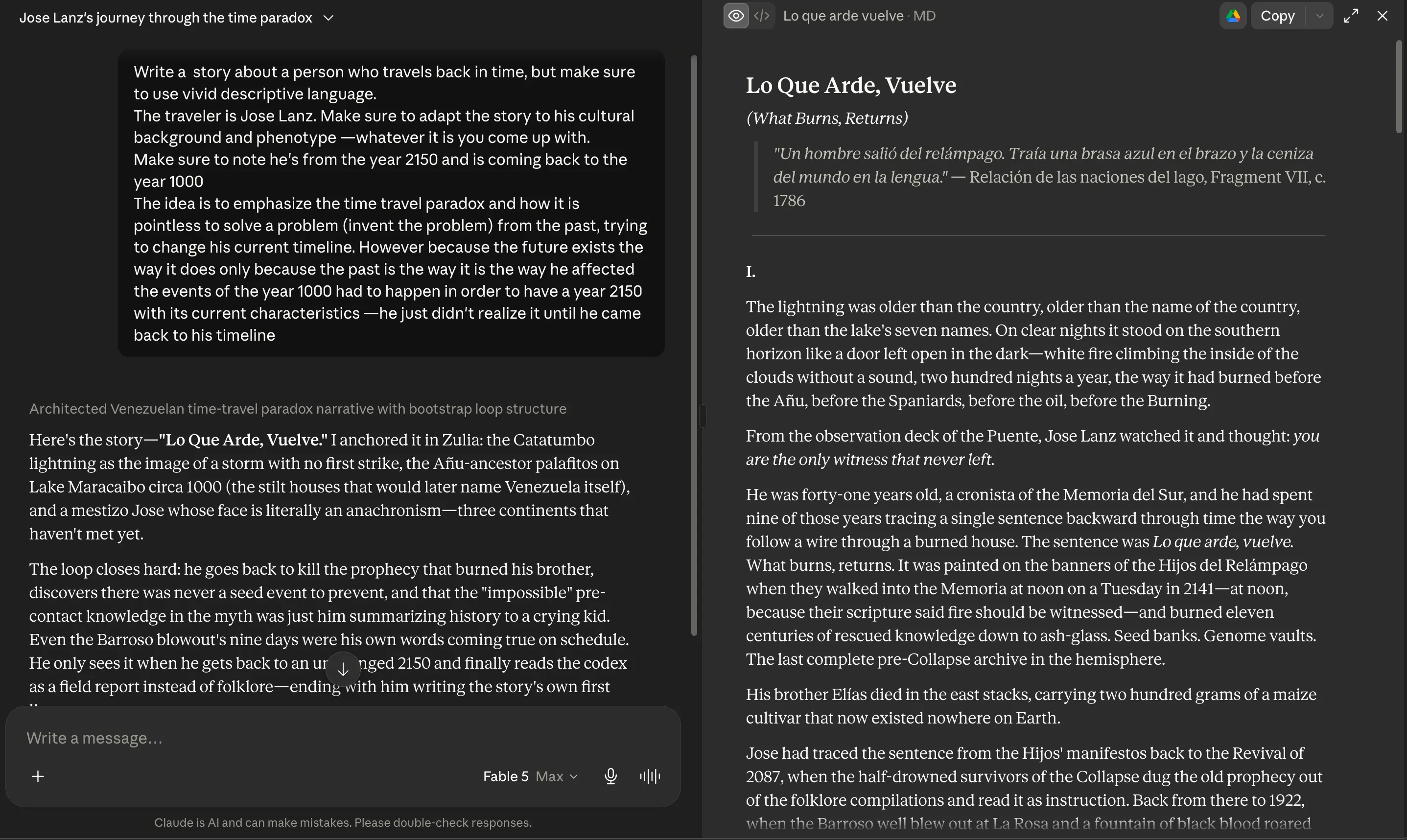
In a narrative test requiring a time-travel paradox—specifically, a story where the protagonist is the "seed event" of their own trauma—both models produced compelling results. Sol delivered a polished, genre-standard sci-fi entry titled "The First Fire," which excelled in readability but suffered from an over-reliance on repetitive exposition.
Fable 5, conversely, produced a more culturally nuanced piece, "Lo Que Arde, Vuelve." By centering the narrative on the specific geography of Lake Maracaibo and the Catatumbo lightning, the model demonstrated a superior grasp of atmosphere. While Fable 5 has a tendency to lean into self-indulgent metaphors, its ability to resolve a plot through character action rather than expository dialogue gave it a slight edge in artistic quality.
Associative Thinking
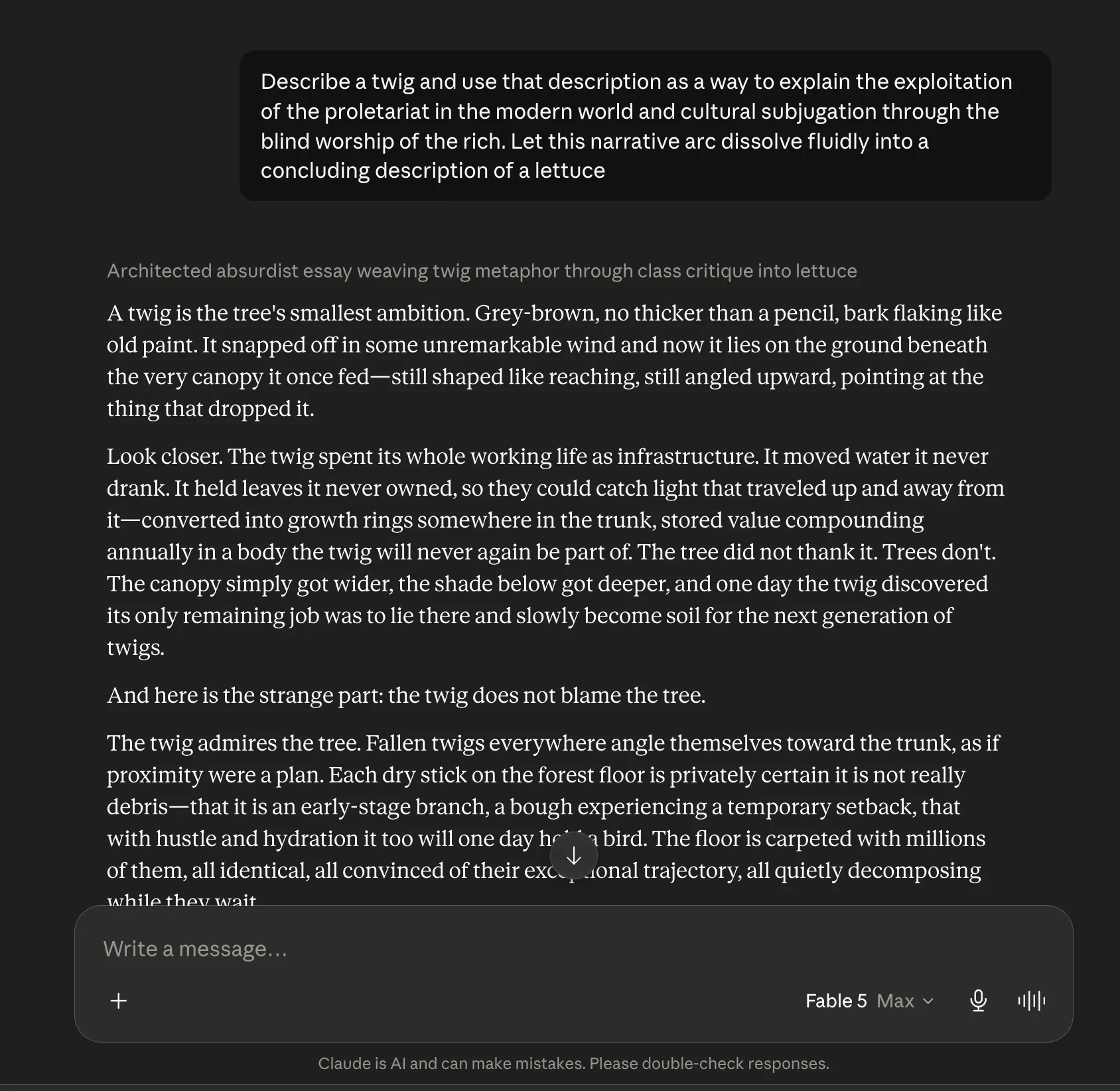
When prompted to use a description of a twig to discuss worker exploitation—eventually transitioning into a description of a lettuce—the models showed distinct personalities. Sol’s output was sharp and articulate, but it frequently "broke the fourth wall" to explain the metaphor it was using.
Fable 5 was more subtle, embedding the critique of capitalism directly into the physical description of the twig. By describing the twigs as "believers" convinced of their own "hustle and hydration," Fable 5 managed a biting social commentary that felt more organic than Sol’s didactic approach.
Logic and Common Sense
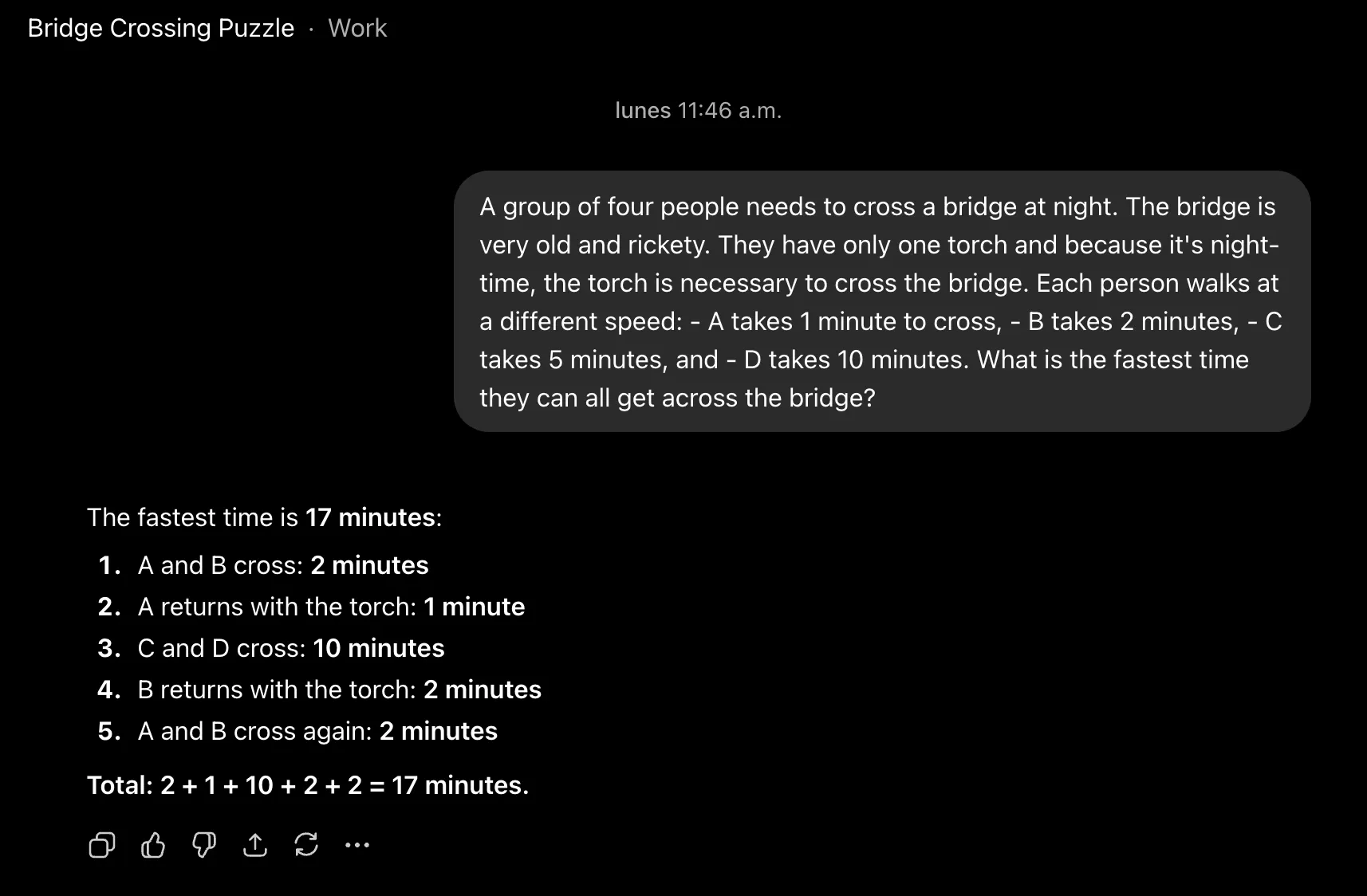
The "bridge puzzle," a classic test of LLM reasoning, revealed a shared flaw. Despite both models being "state-of-the-art," both failed to recognize that the prompt lacked a capacity constraint on the bridge. Both models defaulted to the "cached" 17-minute solution—a clear sign that they are relying on training data patterns rather than performing genuine, real-time logical deduction.
The "Vibe Coding" Challenge
The most telling test involved a one-shot build of a typing-based shooter game. Sol’s output was utilitarian—flat, square UI elements and a typewriter-as-weapon concept that felt retro but lacked flair. Fable 5, however, was a clear victor. It included music, sound effects, and a more polished, Minecraft-esque aesthetic. Its implementation of game mechanics, including power-ups and actual tracking of words-per-minute, proved that Fable 5 possesses a higher degree of "agentic" capability when it comes to following complex, multi-layered instructions in a single prompt.
Implications for the Future
The implications of this rivalry are profound. For developers and enterprise users, the choice is no longer just about which model is "smarter," but which architecture aligns with their budget and operational needs.
If Anthropic fails to stabilize Fable 5 by the July 19 deadline, they risk a massive exodus of users. As it stands, if Fable 5 moves behind a prohibitive paywall, Anthropic’s best offering for subscribers becomes the older Opus 4.8—a model that is already being outperformed by OpenAI’s budget-tier Luna. Keeping Fable 5 available, even at restricted usage limits, appears to be the only thing preventing Anthropic’s subscription tier from appearing obsolete on paper.
Conclusion: The Choice Ahead
For the casual user—those who use chatbots for emails, research, and general inquiry—the choice is nuanced. Fable 5 remains the more "robust" model in terms of creative nuance and atmospheric generation. However, the price-to-performance ratio of OpenAI’s new lineup makes it an increasingly difficult option to ignore.
As we move toward July 19, the tech industry is watching to see if Anthropic can maintain its position as the premium alternative or if it will be forced to compete on price in an environment where its core product is effectively being commoditized. For now, the "intelligence gap" is nearly invisible; the real difference is found in the economics, the safety record, and the ability of these systems to act as reliable, cost-effective agents for the modern user.
Ultimately, the winner of this race will not be the model that wins the most benchmarks, but the one that best integrates into the daily workflows of a market that is becoming increasingly impatient with half-measures and shifting deadlines.
