

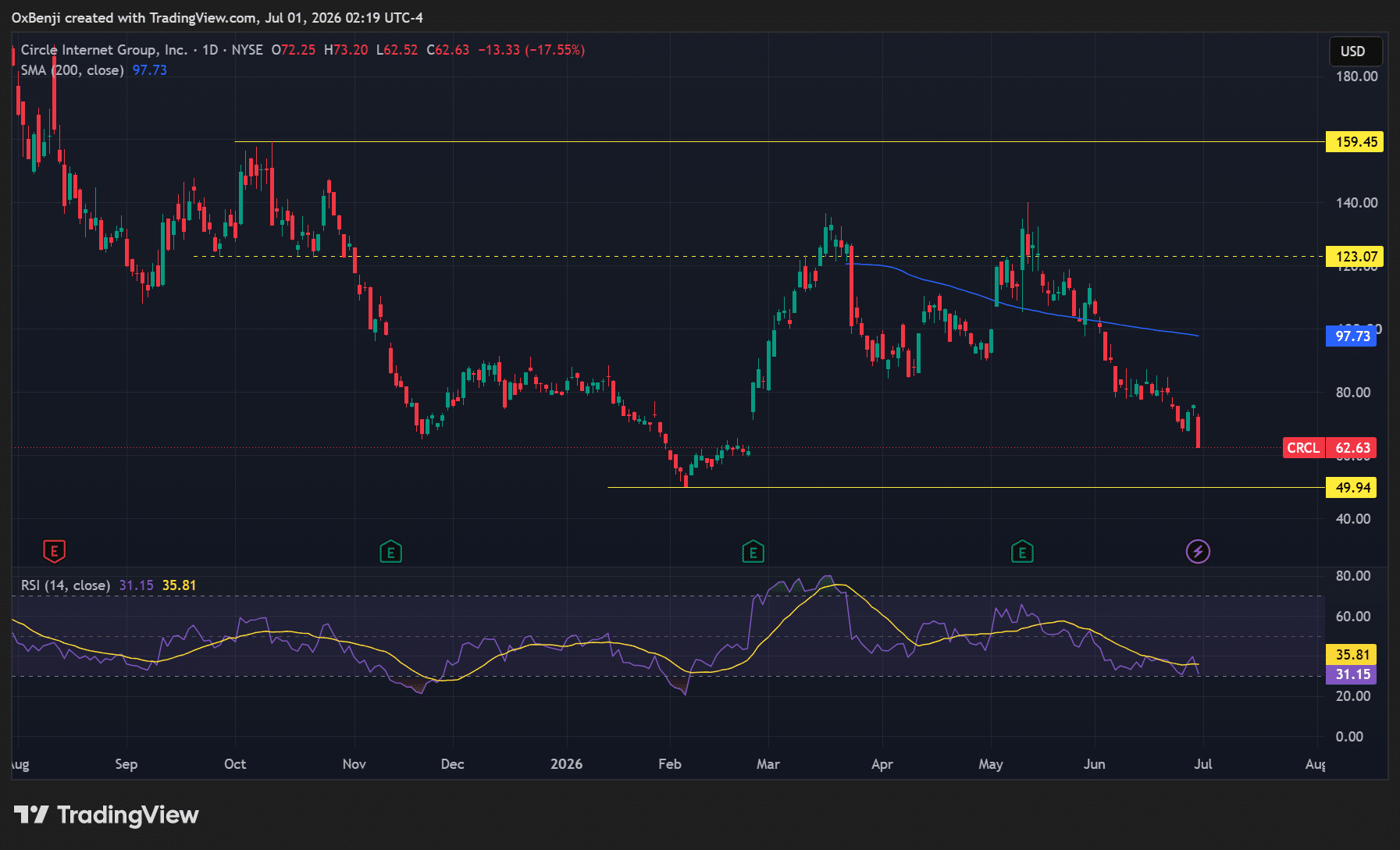
The landscape of the stablecoin market—once a relatively stable duopoly dominated by Tether’s USDT and Circle’s USDC—is undergoing a seismic shift. On June 30, 2026, Circle Internet Financial’s stock (CRCL) experienced a brutal market correction, plummeting 17.5% to close at $62.63. This sharp decline represents the company’s most significant single-day loss since March, signaling a growing investor anxiety regarding the firm’s future dominance in an increasingly crowded ecosystem.
While the previous market downturn in March was largely triggered by regulatory fears surrounding potential bans on stablecoin yield, the most recent slump is fundamentally different. This time, the market is reacting to the emergence of a formidable new challenger: Open USD (OUSD).
The Main Facts: A New Titan Enters the Fray
The catalyst for the mid-year sell-off is the launch of Open USD (OUSD), a new stablecoin backed by an unprecedented coalition of 140 industry giants. The consortium includes heavyweights from the traditional financial and technological sectors, such as Visa, Mastercard, BlackRock, and Google. Unlike independent projects, OUSD is positioned as a collaborative financial infrastructure designed for high-volume enterprise treasury management and merchant-level payments.
The value proposition offered by the OUSD coalition is aggressive: the stablecoin operates with zero transfer fees, and reserve earnings are distributed among the consortium partners. This model directly targets the revenue streams that have historically sustained incumbents like Circle. By leveraging the existing distribution networks of global payments processors and the institutional trust of firms like BlackRock, OUSD is not merely launching a product; it is attempting to capture the institutional plumbing of the global economy.
A Chronology of Conflict: From Regulatory Clouds to Competitive Storms
To understand the current volatility of CRCL stock, one must view it through the lens of a challenging 2026 for the firm.

The March Regulatory Scare
In March 2026, Circle’s valuation took a 20% hit following the circulation of a draft regulatory proposal aimed at banning stablecoin yield on idle balances. The market interpreted this as a direct threat to the core business model of the second-largest stablecoin issuer, as it raised significant concerns regarding the long-term adoption of USDC and its potential revenue outlook. Investors feared that if the regulatory environment turned hostile, Circle would lose its competitive edge.
The Legislative Context: The GENIUS Act of 2025
The competitive pressure in the stablecoin sector has been building steadily since the passage of the GENIUS Act in 2025. This legislation created a more standardized framework for stablecoin issuance, which, while providing clarity, also lowered the barrier to entry for large-scale institutional consortia. The Act paved the way for traditional financial players to move beyond "blockchain tourism" and into active infrastructure development, ultimately culminating in the formation of the OUSD group.
The June 30th Sell-off
The dramatic 17.5% decline at the end of June marks a psychological turning point. Unlike the March decline, which was fueled by legislative uncertainty, the June dip is purely market-driven. It represents a fundamental repricing of risk as investors calculate the probability that Circle will lose significant market share to the OUSD coalition in the enterprise sector.
Supporting Data: The Shifting Market Share
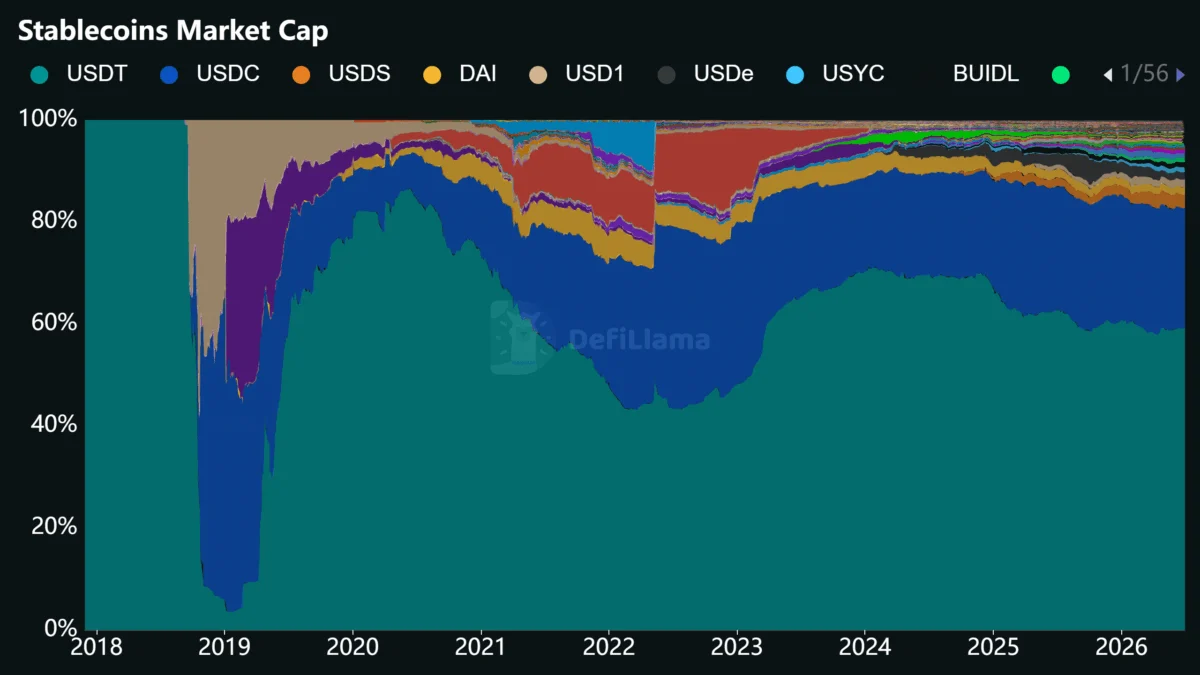
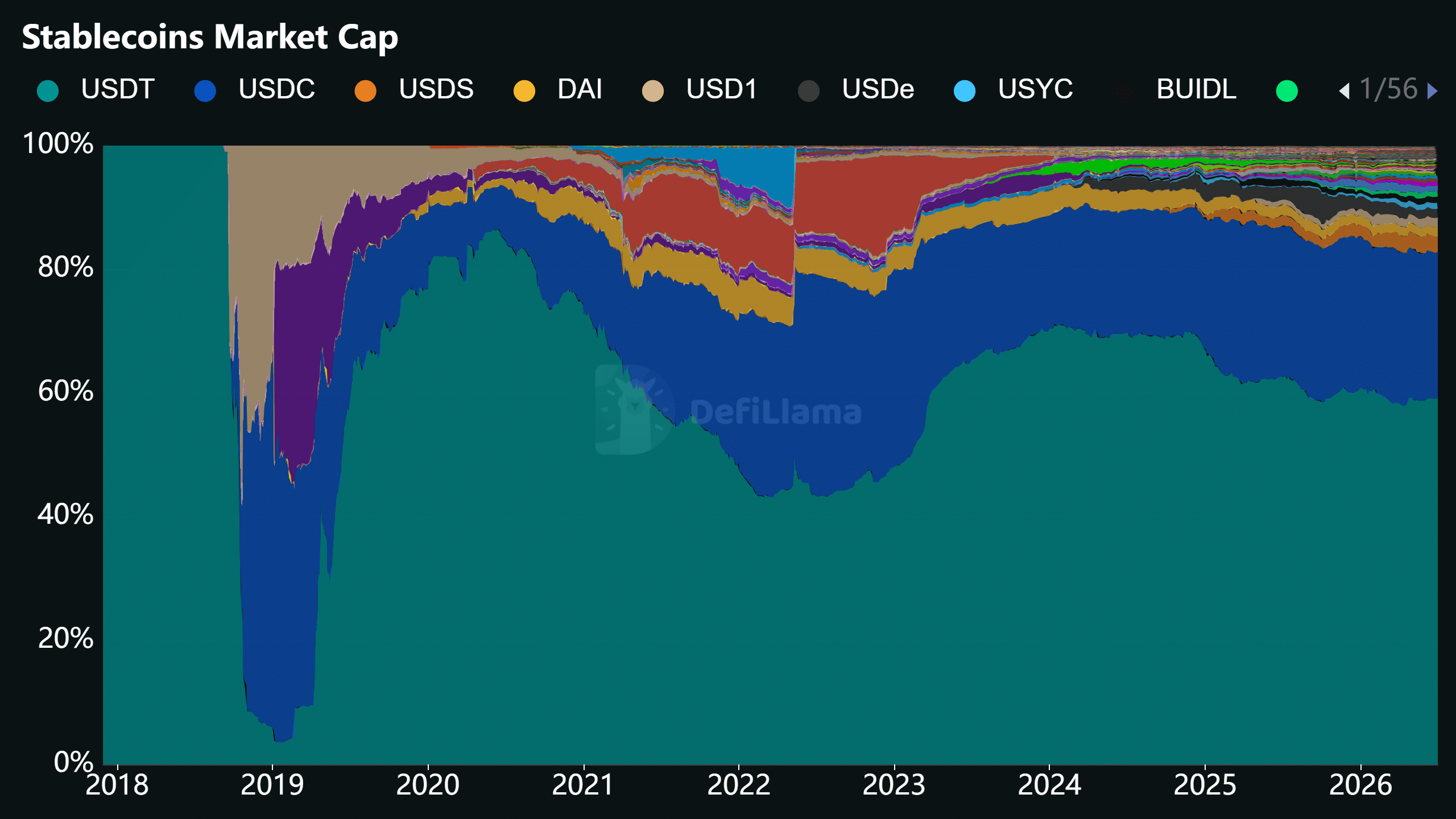
The stablecoin hierarchy is currently in a state of flux. Data from platforms like DeFiLlama illustrates a clear trend of fragmentation:
- Tether (USDT) Resilience: Despite its long-standing dominance, Tether’s market share has seen a slow, steady erosion, declining from 62% to 59% over the past year.
- Circle’s Trajectory: Circle’s USDC saw a promising rise in market share, climbing from 19% to 25% by early 2026, before experiencing a slight contraction to 24% as the news of OUSD reached the market.
- The Competitive Vacuum: While Tether and Circle have spent years fighting for retail and crypto-native users, the entry of OUSD into enterprise treasury management creates a new frontier. If OUSD successfully captures the merchant payment segment, it could render the current market share data obsolete.
Analysts remain divided on the outlook. While the immediate market reaction has been bearish, the consensus price target for CRCL remains at $120. This suggests that some market participants believe the current sell-off is an overreaction, implying a potential 91% upside from current levels if Circle can successfully pivot or defend its existing moat.
Official Responses and Expert Analysis
The reaction from the investment community has been swift and unforgiving. Matthew Sigel, the head of digital research at VanEck, was one of the first to highlight the gravity of the situation, posting on social media that the 13% intraday drop (which later deepened) was a direct reflection of the market’s realization that Stripe, Coinbase, and BlackRock—all pivotal players in the crypto space—had thrown their weight behind a competitor.
Sam Ruskin, an investment associate at the venture firm Reciprocal Ventures, offered a more granular, albeit pessimistic, view for current Circle shareholders. "This will either force Circle to continue their revenue share agreements or force them to find new, untapped distributors for USDC," Ruskin noted. "However, the reality is that nearly everyone currently interested in stablecoin infrastructure is already backing OUSD. Whatever way you cut it, this is a bearish signal for Circle."
The sentiment is clear: the era of Circle and Tether dictating the terms of stablecoin adoption is coming to an end, replaced by an era of deep-pocketed institutional alliances.
The Implications: What Does This Mean for the Future?
The emergence of OUSD carries three primary implications for the digital asset ecosystem:
1. The Death of the "Retail-First" Strategy
For years, Circle’s growth was driven by the retail crypto boom and decentralized finance (DeFi). The success of OUSD suggests that the next phase of stablecoin growth will be dominated by enterprise-to-enterprise (B2B) payments. If Circle cannot secure enterprise-level partnerships that match the scale of the OUSD consortium, its growth ceiling will be significantly lowered.
2. Compression of Revenue Margins
The "zero transfer fee" model of OUSD is a direct challenge to the profitability of existing stablecoin issuers. If the market shifts toward a standard of zero fees, Circle may be forced to lower its own pricing to remain competitive, which would lead to margin compression and necessitate a more diversified business model beyond simply holding reserves.
3. Increased Regulatory Scrutiny
The involvement of entities like Visa, Mastercard, and BlackRock brings a level of regulatory scrutiny that is vastly different from the crypto-native era. While this provides legitimacy, it also means that the stablecoin market will likely be subjected to traditional banking oversight, which may favor large, established players over smaller, decentralized ones.
Conclusion: A Pivot Point for Circle
Circle currently finds itself at a critical crossroads. The stock market’s reaction on June 30th was not merely a panic sell; it was a rational response to a fundamental change in the competitive landscape. While the firm remains a pillar of the digital asset economy, its path to the $120 price target predicted by analysts now requires more than just technical superiority—it requires a strategic pivot that addresses the massive, institutional-backed wall of competition represented by Open USD.
Investors should watch for upcoming quarterly earnings reports to see if Circle announces new, high-profile partnerships or a change in its distribution strategy. For now, the "stablecoin war" has entered its most intense phase yet, and the outcome will dictate which digital dollar becomes the standard for the global economy.
