

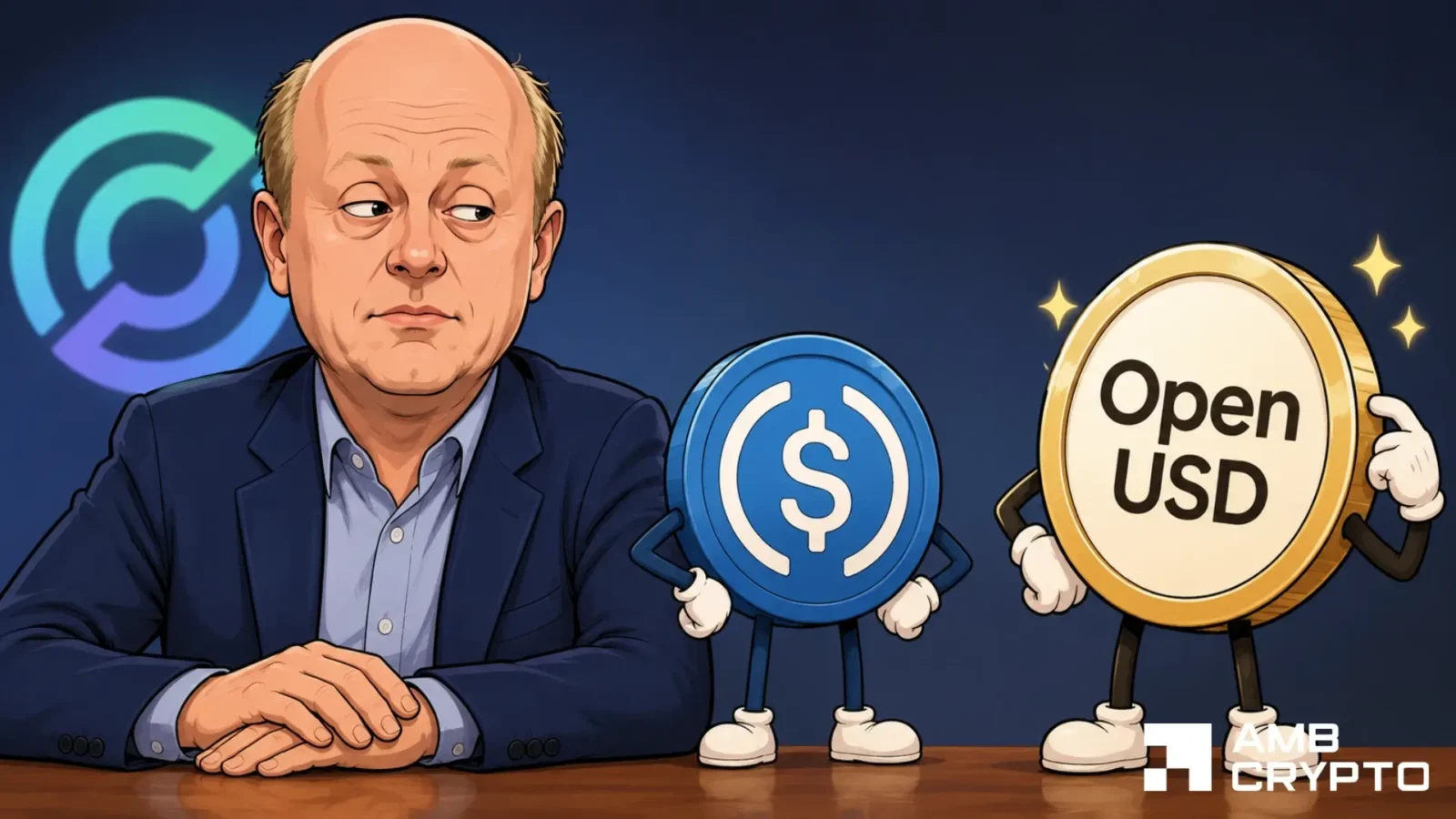
In the rapidly evolving landscape of digital finance, the battle for stablecoin dominance has entered a new, high-stakes chapter. Following the high-profile launch of the Open USD consortium—a collaborative project backed by major industry incumbents including Visa, Stripe, and Coinbase—Circle CEO Jeremy Allaire has stepped into the fray. In a comprehensive defense of USDC’s market position, Allaire argued that the future of stablecoins will not be decided by fee structures or headline-grabbing governance models, but by the deep-seated "network effects" that Circle has spent nearly a decade cultivating.
The Core Thesis: Network Effects as the Ultimate Moat
The central tension in the current stablecoin market lies between the "consortium-led" approach favored by new entrants and the "platform-centric" strategy employed by Circle. Allaire, writing in an extensive post on X, framed the stablecoin market not as a traditional commodity-based financial sector, but as an internet-native platform economy.
According to Allaire, the value of a stablecoin is inherently derived from its utility within a vast, interconnected ecosystem. "Stablecoin networks function more like internet platforms than traditional financial products," Allaire noted. In this framework, the value proposition scales exponentially with the number of developers, businesses, and institutional participants that integrate the asset into their stack. By fostering thousands of integrations over the last ten years, Circle has transformed USDC from a simple token into a foundational piece of global financial infrastructure.
Allaire contends that for newcomers, replicating this level of ubiquity is not merely a matter of capital or technology; it is a matter of time, regulatory trust, and the organic accumulation of liquidity that only a decade of continuous operation can provide.
Chronology of a Market Leader: A Decade of Infrastructure Investment
To understand Allaire’s confidence, one must look at the timeline of Circle’s development. Since its inception, Circle has focused on building a "full-stack" approach to stablecoins, prioritizing regulatory compliance and cross-chain functionality over short-term marketing wins.
2015–2018: The Regulatory Foundation
In its early years, Circle prioritized securing money transmitter licenses across the United States and international jurisdictions. While competitors focused on rapid growth through speculative trading, Circle invested heavily in institutional-grade reserve management and banking partnerships, establishing USDC as a "regulatory-first" asset.
2019–2022: Expanding the Ecosystem
During this period, Circle focused on developer experience. The launch of various APIs allowed fintech companies and traditional financial institutions to integrate USDC directly into their payment flows, bridging the gap between legacy banking and blockchain rails.
2023–2026: Interoperability and the CCTP Era
The most significant shift in recent years has been the development of the Cross-Chain Transfer Protocol (CCTP). By enabling the native burning and minting of USDC across various blockchain networks, Circle effectively eliminated the risks associated with third-party "wrapped" assets. This move, combined with the launch of "Gateway" services, solidified USDC’s position as the primary settlement layer for decentralized finance (DeFi) and global cross-border payments.
Supporting Data: The Dominance of USDC in 2026
Allaire’s defense is bolstered by significant quantitative data, specifically citing insights from the blockchain analytics firm Artemis. The data for the first quarter of 2026 paints a picture of a market where the gap between the top two players and the rest of the field is widening into a chasm.
- Transaction Volume: In Q1 2026, USDC processed a staggering $30 trillion in on-chain transactions.
- Market Share: This figure represents roughly 80% of all dollar-denominated stablecoin transaction volume.
- The USDT Factor: Tether (USDT) continues to hold its ground, accounting for approximately 20% of the transaction volume.
- The Long Tail: Perhaps most tellingly, all other dollar-pegged stablecoins combined—including the newly launched initiatives and various algorithmic variants—accounted for less than 0.5% of total on-chain transaction activity.
This data suggests that while new consortia may offer innovative governance or fee structures, they are struggling to capture meaningful liquidity from the market leaders. The "network effect" is creating a winner-take-most environment where merchants, protocols, and financial institutions prefer the asset with the deepest liquidity and the longest track record of stability.
Official Responses and the Consortium Challenge
The launch of Open USD has prompted a necessary industry conversation about the "cost" of stablecoin usage. Open USD has marketed itself on the basis of fee-free minting, shared reserve economics, and a decentralized consortium governance model.
The Fallacy of Fee Structures
Allaire challenged the premise that fee structures are the primary driver of adoption. He pointed out that Circle already employs a highly efficient distribution model, sharing the majority of its income with partners while retaining just enough to fund ongoing research, development, and operational security. "Redemption policies are shaped by broader market realities rather than headline fee structures," Allaire asserted. He argues that users prioritize the ability to exit into fiat instantly and reliably, a service that requires the robust infrastructure Circle has already built.
The Perils of Committee-Led Innovation
Perhaps the most biting portion of Allaire’s commentary was his critique of the "consortium governance" model. Drawing on historical experience, Allaire noted that in the early days of USDC, Circle experimented with broader industry alliances. The result, he claimed, was inefficiency.
"Organizations composed of numerous large companies often struggle to innovate due to competing incentives and slower decision-making," Allaire wrote. He posits that in the high-velocity world of blockchain, a unified vision—or "benevolent dictatorship" of the product roadmap—is far more effective than a committee of stakeholders with divergent strategic goals. He maintains that smaller, high-alignment partnerships are the secret sauce that allowed Circle to pivot quickly when the market demanded new features like CCTP.
The Coinbase Relationship
Addressing the elephant in the room—Coinbase’s participation in the Open USD initiative—Allaire was quick to play down fears of a rift. He characterized the partnership between Circle and Coinbase as "strong as ever," expressing confidence that many of the founding members of the Open USD consortium would continue to utilize USDC as their primary liquidity source.
Implications for the Future of Finance
What does this standoff mean for the broader digital economy? Several key implications emerge:
- The Professionalization of Stablecoins: The market is moving past the era of experimental stablecoins. The dominance of USDC and USDT suggests that the market is consolidating around assets that provide enterprise-grade reliability and regulatory certainty.
- Infrastructure as a Moat: The "moat" around successful stablecoins is no longer just the underlying currency; it is the developer tools, the regulatory licenses, and the cross-chain protocols that make the asset usable in the real world.
- The Governance Dilemma: The industry is testing two competing theories of governance: the "Platform" model (Circle) versus the "Consortium" model (Open USD). If the consortium model fails to gain traction, it may lead to a permanent shift toward corporate-led, platform-based stablecoin ecosystems.
- Regulatory Scrutiny: As stablecoins handle tens of trillions of dollars in volume, regulators are watching closely. The "network effect" of USDC also serves as a regulatory signal—the more integrated an asset is, the more likely it is to be viewed as systemic infrastructure, necessitating stricter oversight and higher transparency standards.
Conclusion
Jeremy Allaire’s defense of USDC is a calculated move to reinforce the idea that in the world of money, trust and utility are the ultimate commodities. By positioning Circle’s decade of investment against the "newness" of the Open USD consortium, Allaire is effectively framing the current stablecoin market as a mature industry rather than a speculative frontier.
While he welcomed Open USD into the fold, his message was clear: stablecoin success is not a gift that can be granted by a consortium of large companies; it is a hard-won position earned through the daily grind of building, regulating, and scaling infrastructure. As the industry moves into the second half of the decade, the $30 trillion in Q1 volume serves as a high bar for any newcomer hoping to challenge the status quo. For now, the "network effect" remains the most powerful force in crypto finance, and Circle appears determined to maintain its grip on the center of that network.
