

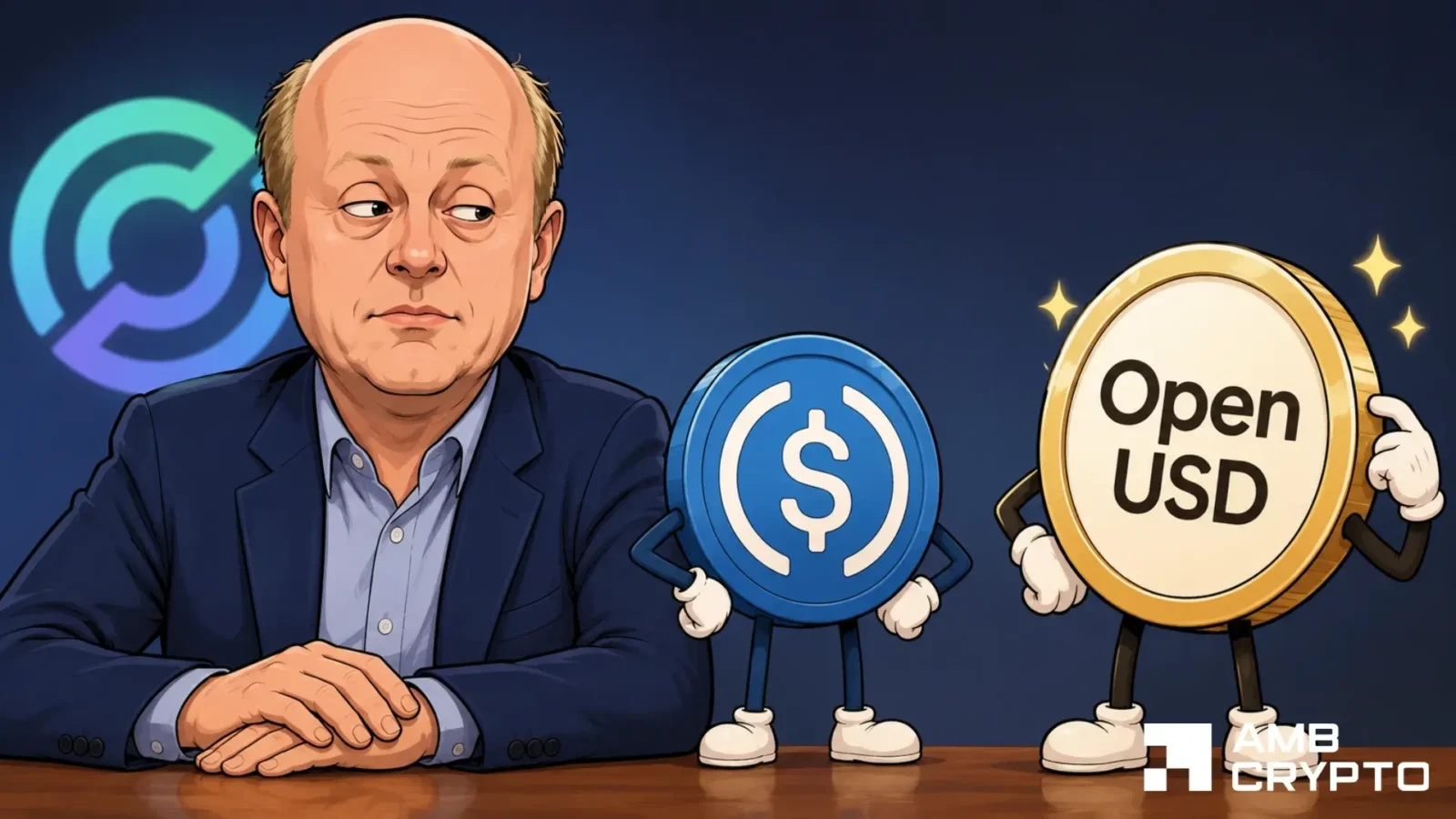
In the rapidly evolving landscape of digital finance, the supremacy of stablecoins has become the new frontier of global commerce. As the competition for dominance in the dollar-pegged asset market intensifies, Circle CEO Jeremy Allaire has stepped into the fray to defend the competitive moat built around USDC. Following the high-profile launch of the Open USD consortium—a collective initiative backed by industry giants like Visa, Stripe, and Coinbase—Allaire has articulated a robust defense of his firm’s strategy, emphasizing that the future of stablecoins will be determined not by headline-grabbing fee structures, but by deep-seated network effects and institutional-grade infrastructure.
The Core Thesis: Network Effects Over Governance
In a comprehensive manifesto shared via X (formerly Twitter), Allaire addressed investor concerns regarding the emergence of Open USD. He positioned USDC not merely as a currency, but as a fundamental internet platform. According to Allaire, the value of a stablecoin network is strictly proportional to its utility, which is derived from the breadth of its ecosystem.
"Stablecoin networks function more like internet platforms than traditional financial products," Allaire noted. The value accrues as a virtuous cycle: as more developers, merchants, and global financial institutions integrate USDC into their stacks, the liquidity deepens, the utility increases, and the demand for the asset becomes more resilient. Allaire argues that this "network effect" is a structural advantage that new entrants, regardless of their backing, cannot replicate overnight.
Chronology of a Market Leader
To understand Circle’s current stance, one must look at the trajectory of USDC since its inception.
- The Early Years (2018–2020): Circle initially experimented with consortium-based models, working closely with various industry players to build the early architecture of USDC. However, the firm quickly pivoted, discovering that broad, multi-company governance often led to bureaucratic inertia and misaligned incentives.
- The Infrastructure Era (2021–2023): Realizing that a stablecoin is only as good as its rails, Circle invested heavily in proprietary technology. This period saw the launch of the Cross-Chain Transfer Protocol (CCTP) and the Gateway platform, which facilitated seamless liquidity movement across diverse blockchain environments.
- The Regulatory Push (2024–2025): Circle solidified its position by prioritizing regulatory compliance and banking partnerships, ensuring that USDC could serve as a trusted bridge between legacy finance and the burgeoning world of decentralized finance (DeFi).
- The 2026 Milestone: By the first quarter of 2026, Circle’s efforts culminated in a dominant market position, with USDC processing a staggering $30 trillion in on-chain transaction volume, effectively setting the standard for institutional stablecoin usage.
Supporting Data: The Quantitative Dominance of USDC
Allaire’s defense is anchored in hard data provided by blockchain analytics firm Artemis. The figures for the first quarter of 2026 paint a stark picture of the current market hierarchy:
- USDC Market Share: With $30 trillion in processed volume, USDC accounted for approximately 80% of all dollar-denominated stablecoin activity.
- USDT Performance: Tether (USDT) held the remaining 20% of the market volume, maintaining its role as a key player in the ecosystem.
- The "Other" Category: Notably, the sum total of all other dollar-pegged stablecoins currently in circulation accounts for less than 0.5% of total transaction activity.
These metrics support Allaire’s contention that the "network effect" is already deeply entrenched. For a new competitor, even one supported by industry heavyweights, capturing significant market share requires more than just offering fee-free minting; it requires the displacement of an infrastructure that is already woven into the daily operations of thousands of enterprises.
Challenging the Consortium Model
Much of the discourse surrounding the launch of Open USD centers on its promise of "fee-free" minting and redemption, alongside shared reserve economics and decentralized governance. Allaire, however, remains skeptical of these value propositions.
The Fallacy of "Fee-Free"
Allaire argues that headline fee structures are often a marketing distraction. He contends that redemption policies are ultimately dictated by market realities and the cost of capital. Furthermore, he noted that Circle already employs a model that shares the majority of its income with its distribution partners, ensuring that the network is incentivized to grow while simultaneously retaining enough capital to invest in the robust, high-availability infrastructure required by institutional users.
The Problem with "Governance by Committee"
Perhaps the most biting critique leveled by Allaire concerns the consortium governance model itself. Having attempted similar structures in the early days of USDC, Circle found that large organizations often struggle with decision-making speed.
"Organizations composed of numerous large companies often struggle to innovate due to competing incentives and slower decision-making," Allaire stated. In his view, agility is a requirement in the crypto-asset space. A decentralized, multi-corporate board may provide the appearance of neutrality, but it often sacrifices the operational speed necessary to respond to market crises, regulatory changes, or technological advancements.
Official Responses and Strategic Implications
The announcement of the Open USD consortium—which includes industry titans like Visa and Stripe—naturally raised questions about the status of Circle’s long-standing partnership with Coinbase. Allaire was quick to dispel any rumors of a rift, affirming that the relationship with Coinbase "remains as strong as ever."
He further suggested that the existence of multiple stablecoin networks is not necessarily a zero-sum game. Many of the founding members of the Open USD consortium are likely to continue utilizing USDC for their core operations, viewing the new network as a secondary or specialized tool rather than a wholesale replacement.
Implications for the Industry
The friction between the "incumbent platform" model represented by Circle and the "consortium-led" model of Open USD carries significant implications for the future of digital finance:
- Regulatory Scrutiny: As stablecoins become integral to global payment systems, the debate over who controls the underlying reserves and governance protocols will attract intense attention from regulators.
- Institutional Adoption: Financial institutions are watching this rivalry closely. Their choice of stablecoin will likely depend on the stability, liquidity, and compliance history of the issuer, rather than the fee structure of the minting process.
- The "Platformization" of Money: Allaire’s argument suggests that we are witnessing the "platformization" of the dollar. In this view, stablecoins are moving away from being simple tokens and toward becoming foundational layers of a new global financial stack, similar to the transition from physical servers to cloud computing.
Conclusion: A Welcome to the Ecosystem
Despite his criticism of the consortium approach, Allaire ended his public commentary on a note of professional diplomacy. He welcomed Open USD to the stablecoin ecosystem, noting that the growth of the entire sector is a net positive for the adoption of blockchain technology.
However, his message to the market remains clear: Circle is not resting on its laurels. By continuing to focus on CCTP, global banking relationships, and institutional-grade infrastructure, Circle intends to maintain its lead. As the industry matures, the debate between the efficiency of a centralized, highly optimized platform and the collaborative potential of a decentralized consortium will likely define the next decade of digital finance. For now, the numbers suggest that the market still favors the proven reliability and liquidity of the USDC network.
