

Introduction: A Digital Haven in Economic Turbulence
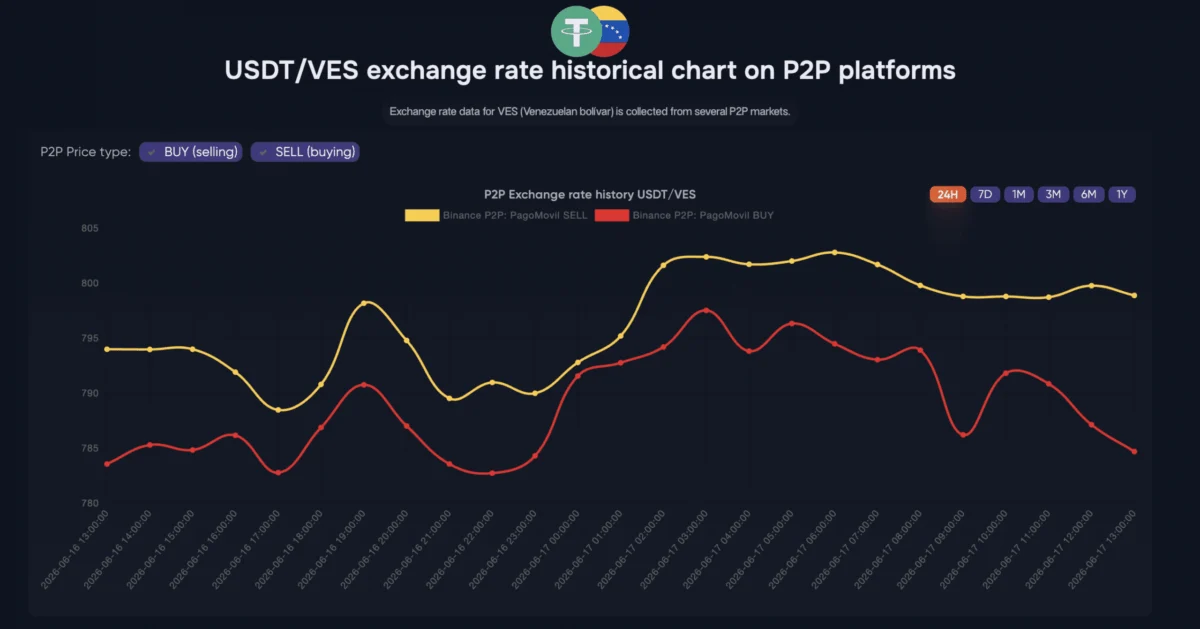
In the complex landscape of the global stablecoin market, Tether (USDT) continues to cement its status as the de facto "digital dollar" for economies grappling with hyperinflation and currency devaluation. Nowhere is this phenomenon more pronounced than in Venezuela, where the persistent depreciation of the bolivar has forced citizens to seek refuge in digital assets. Over the past 30 days, data from the P2P analytics platform P2P.Army has underscored a dramatic shift in market dynamics: the USDT has surged by 16% against the Venezuelan bolivar (VES), a clear indicator of the growing distrust in the local fiat currency and a flight toward stable assets.
This article examines the underlying catalysts behind this surge, the broader implications for the Venezuelan financial ecosystem, and the global regulatory context currently shaping the future of the world’s most dominant stablecoin.
Main Facts: The 800 Bolivar Threshold
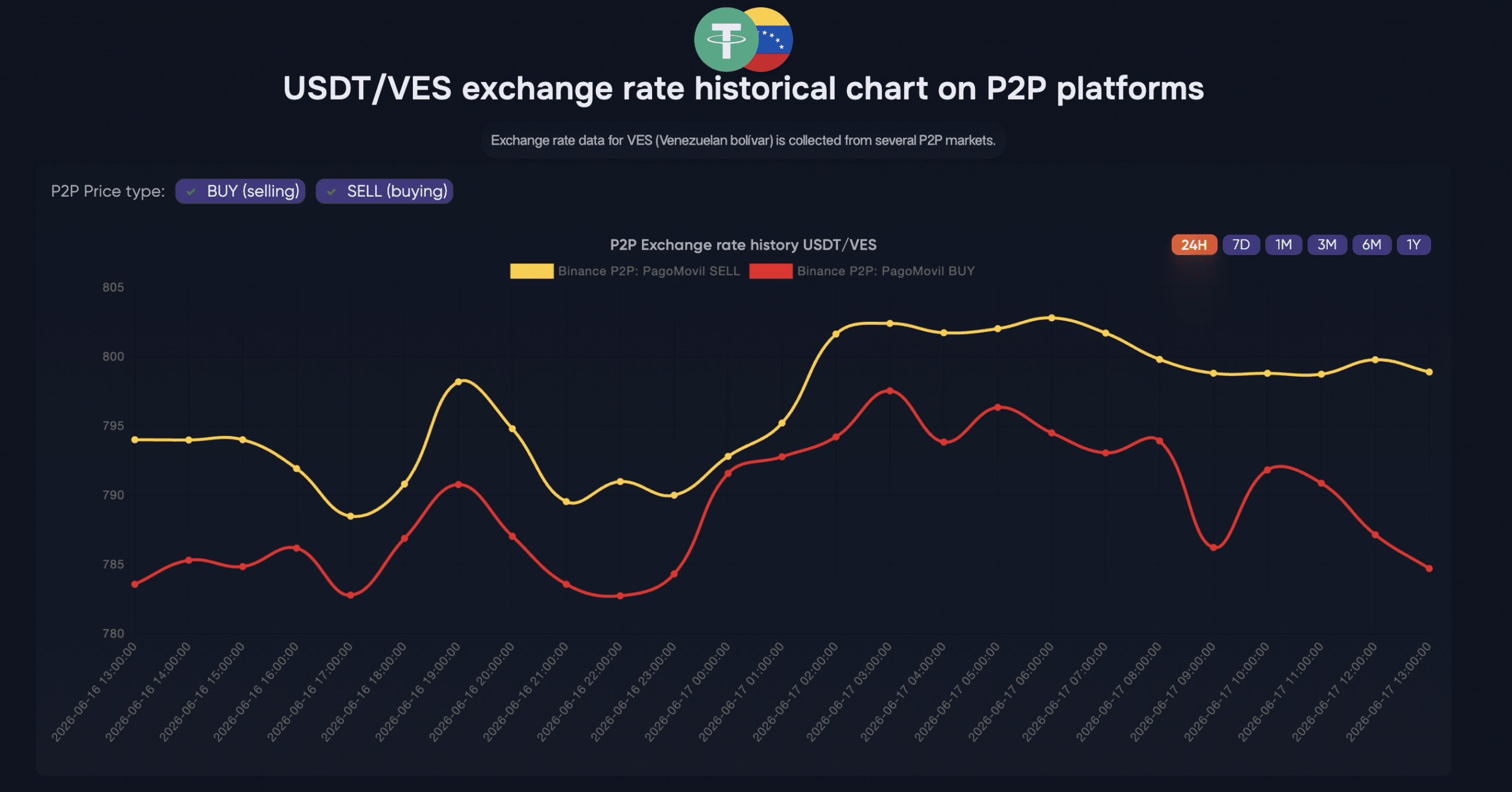
Between mid-May and mid-June 2026, the exchange rate for USDT/VES on peer-to-peer (P2P) platforms—most notably Binance, the largest liquidity provider in the region—witnessed a sharp upward trajectory. For the first time in this period, the cost of a single unit of USDT pierced the 800 bolivar barrier, reaching a peak of 810 bolivars before settling into a slight consolidation phase around 794 bolivars.
This is not merely a fluctuation in exchange rates; it is a barometer of national economic health. When the local currency loses value at such an accelerated rate, the P2P market becomes the primary mechanism for price discovery, often outpacing official banking channels. The surge reflects a systemic disconnect between the supply of foreign currency offered by traditional banks and the overwhelming demand from citizens desperate to protect their purchasing power.
Chronology: The Liquidity Expansion
To understand the current volatility, one must analyze the recent actions of the Central Bank of Venezuela (BCV). The following timeline illustrates the aggressive expansion of the monetary base that has fueled the current flight to USDT:
- January 2, 2026: Total monetary liquidity in the Venezuelan economy stood at approximately 0.93 trillion bolivars.
- May 8, 2026: Monetary liquidity reached 1.76 trillion bolivars, marking a significant inflationary trend early in the year.
- June 5, 2026: The BCV reported total liquidity at 2.17 trillion bolivars.
In just over five months, the monetary liquidity in circulation skyrocketed by 131.17%. The jump between May 8 and June 5 alone—a 23.26% increase in less than 30 days—directly correlates with the rapid devaluation of the bolivar and the corresponding spike in USDT demand on P2P exchanges. As the supply of bolivars flooded the market, the purchasing power of each unit diminished, driving users toward the relative stability of the dollar-pegged USDT.
Supporting Data: Why USDT Dominates
The dominance of USDT in Venezuela is supported by broader, global data. Recent on-chain analysis by Visa regarding the average supply of stablecoins in circulation confirms that USDT remains the undisputed leader in transaction volume and user adoption.
The preference for USDT in Venezuela is driven by three primary factors:
- Liquidity: On platforms like Binance, the depth of the order book for USDT/VES is significantly higher than for other stablecoins like USDC or DAI. This liquidity ensures that citizens can enter and exit positions with minimal slippage, a critical requirement in a volatile economy.
- Accessibility: The user interface of major P2P platforms is tailored to the Venezuelan market, allowing for seamless integration with local bank accounts and mobile payment systems (such as Pago Móvil).
- Preservation of Wealth: For the average Venezuelan worker, holding bolivars is a guaranteed loss of value. Converting wages into USDT allows for a "store of value" function that the local banking system currently fails to provide.
Expert Perspectives: The Gap in the Financial System
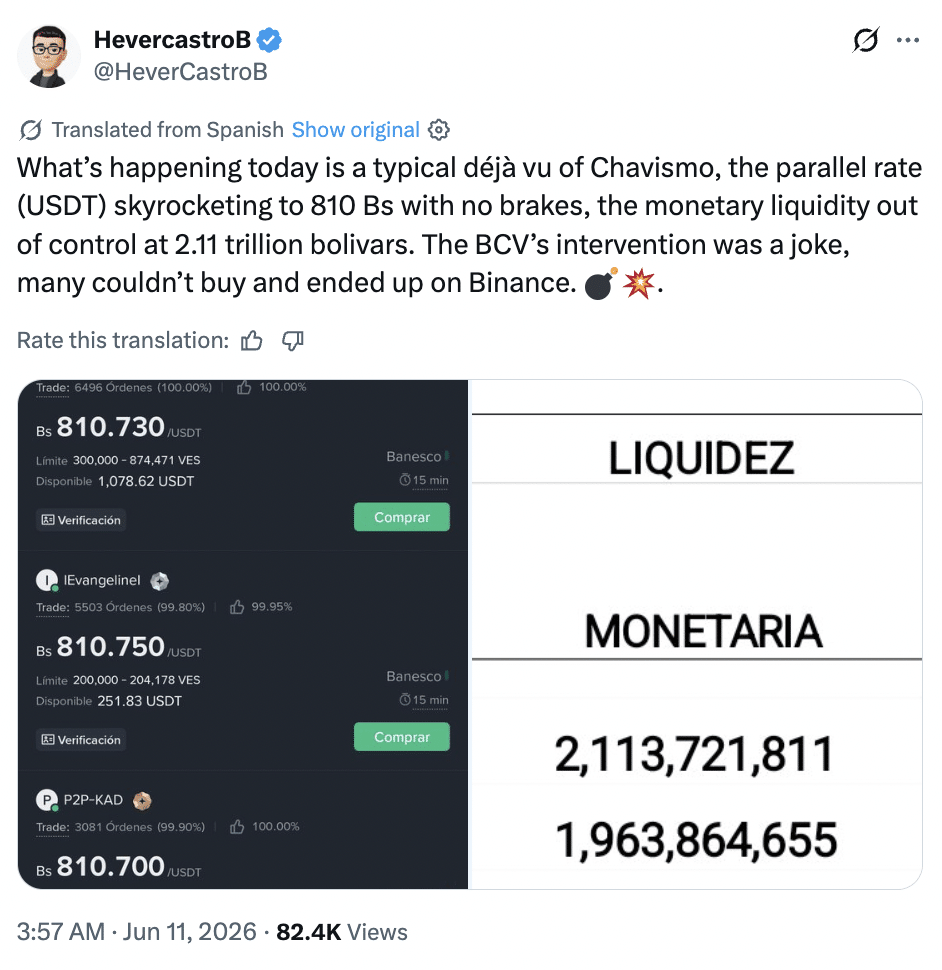
Analyst Hever Castro has highlighted that the disparity between the supply of traditional foreign currency in the formal banking sector and the actual market demand is now the primary driver of daily business decisions in Venezuela.
"The national exchange market has been hit with a massive infusion of local currency," Castro noted. "When you increase the supply of bolivars without a corresponding increase in the productivity of the economy or the availability of hard currency in banks, the immediate result is a shift toward the only available alternatives. People are not just buying USDT for speculation; they are buying it for survival."
This "gap" between the official exchange rate offered by the state and the real-world market rate (as seen on P2P platforms) creates a dual-economy structure. Small businesses and individuals alike are increasingly using USDT as a unit of account, effectively bypassing the constraints of the traditional, state-controlled financial system.
Implications: The Regulatory Shadow
While the rise of USDT provides a lifeline for many, the ecosystem is not without its risks. The surge in usage comes at a time when Tether is facing increased global scrutiny.

The EU Regulatory Backdrop
Recent regulatory developments in the European Union, specifically the implementation of the Markets in Crypto-Assets (MiCA) regulation, have created ripples across the global market. Certain major exchanges have begun delisting USDT in European jurisdictions to comply with these stringent requirements.
This creates a paradox: while USDT is being restricted in highly regulated markets, it is becoming an indispensable infrastructure for citizens in hyperinflationary regimes like Venezuela.
Long-Term Risks
- Regulatory Exposure: If major global exchanges continue to limit access to Tether, the liquidity that Venezuelans rely on could be disrupted. A sudden restriction on USDT access would create a significant vacuum in the Venezuelan P2P market.
- Counterparty Risk: As users move away from traditional banks, they are trading institutional banking risk for digital counterparty risk. While USDT is pegged to the dollar, it is still a centralized, private asset managed by Tether Holdings Ltd.
- Economic Disenfranchisement: The reliance on a foreign, digital stablecoin further dollarizes the economy, potentially eroding the government’s ability to conduct independent monetary policy. However, as the data shows, the market has already "voted with its feet," and the trend toward digital dollarization appears irreversible under current economic conditions.
Conclusion: The Digital Future of the Bolivar
The current situation in Venezuela serves as a case study for the global role of stablecoins. The 16% rise in USDT’s value against the bolivar is not merely a statistical anomaly; it is a manifestation of a population reacting to a 131% increase in monetary liquidity.
As we look toward the remainder of 2026, the reliance on USDT in Venezuela will likely intensify if the BCV continues its current fiscal trajectory. While global regulatory bodies continue to debate the future of stablecoins, for the average Venezuelan, the choice is clear. In an environment where the local currency cannot fulfill its basic function as a store of value, the digital dollar has become the most important tool for economic stability.
Whether the regulatory headwinds in Europe will ultimately affect the availability of this liquidity remains a critical question. For now, however, the P2P market remains the primary arena where the battle for financial survival is being fought, with USDT standing as the frontline asset for millions of people.
