

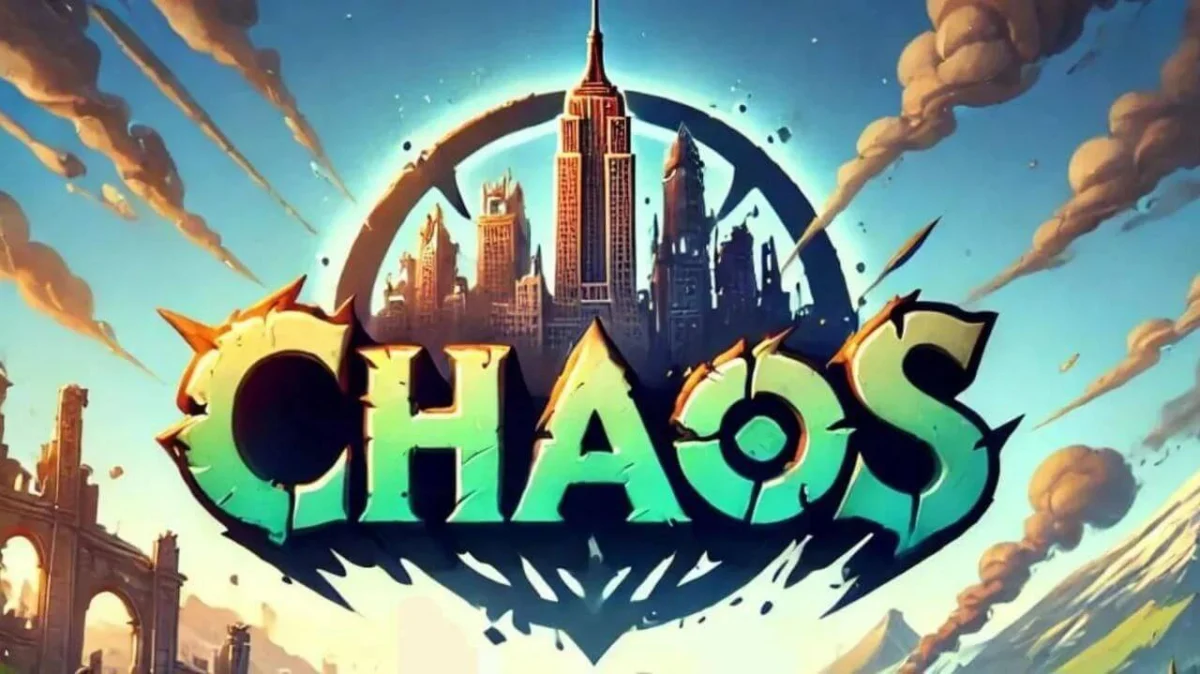
In the rapidly evolving landscape of mobile gaming, few projects manage to bridge the gap between digital immersion and physical reality with the ambition demonstrated by Chaos on the Chains. As the development team enters the final, high-stakes phase of a three-year production cycle, the industry is bracing for a title that promises to synthesize Augmented Reality (AR), Artificial Intelligence (AI), GPS-based navigation, and blockchain-integrated economics into a singular, genre-defining experience.
With a planned launch scheduled for later this year, Chaos on the Chains is not merely introducing another mobile game; it is attempting to pioneer a new category of "Geospatial Meta-Gaming," where the boundaries of one’s neighborhood become the frontlines of an interdimensional conflict.
The Core Concept: Where History Meets the Future
At its narrative foundation, Chaos on the Chains centers on a cataclysmic event: a celestial meteorite strike that has shattered the fabric of reality. This event has forced a collision of distinct temporal and planetary realms, merging ancient legends, medieval knights, and futuristic warriors into a single, cohesive, and highly volatile map.
The game utilizes sophisticated GPS and AR technology to map this narrative onto the player’s actual surroundings. By stepping outside, players essentially expand their digital empire. This creates a compelling "play-to-earn" incentive structure where physical mobility directly translates to strategic growth. Whether one is scouting for resources or defending a virtual fortress in their local park, the physical world acts as the game’s board.
Chronology: Three Years in the Making
The project, which has been in stealth development for three years, represents a significant investment in software architecture and community building.
- Year 1: Conceptualization and Prototyping: The team focused on the technical feasibility of layering a complex MMORPG engine over global mapping data. This phase was dedicated to building the "low-poly" aesthetic that ensures the game remains performant across a wide range of mobile hardware.
- Year 2: Technology Integration: Developers focused on the integration of AI-driven Non-Player Characters (NPCs). Unlike static entities found in traditional MMOs, these NPCs are designed to react dynamically to the environment and player behavior, creating a "living" world.
- Year 3: Economic Modeling and Community Growth: The current phase involves refining the multi-crypto chain economy and preparing for the Token Generation Event (TGE). This year serves as the final sprint, with the team engaging in rigorous stress testing and community expansion to ensure a stable launch.
Strategic Depth and AI-Driven Gameplay
One of the primary criticisms of early mobile MMORPGs has been their lack of true strategic depth. Chaos on the Chains attempts to rectify this by offering an ever-evolving narrative that reacts to player choices.
The Role of AI in Player Experience
The use of AI is perhaps the most innovative aspect of the game’s design. Beyond simple automated behaviors, the AI NPCs are programmed to maintain the game’s "chaos" narrative. Players may encounter historical figures or futuristic soldiers, each with unique questlines and combat styles. Furthermore, the development team has announced plans for "Developer-Led Events," where staff members—including the CEO—will participate in-game as unique, high-difficulty encounters, offering rare rewards to those who can overcome them.
Multi-Chain Economic Infrastructure
The game is built upon a multi-crypto chain economy, a deliberate design choice aimed at ensuring high liquidity and interoperability for players. By allowing assets to move across various chains, the developers are creating a robust marketplace where players can trade, earn, and stake their way to dominance. This economy is the engine of the "play-to-earn" loop, where the value of a territory is tied to the strength and activity of the community occupying it.
Supporting Data and Technical Architecture
While the gaming industry is saturated with mobile titles, Chaos on the Chains stands out due to its technical stack. By leveraging low-poly graphics, the game minimizes latency, which is crucial for a real-time, GPS-enabled experience.
Industry analysts point out that the integration of blockchain into a mobile MMORPG typically faces hurdles regarding app store policies. However, the team behind Chaos on the Chains has reportedly designed their economy to be compliant and accessible, focusing on long-term sustainability rather than short-term hype. The game’s design supports both "stealthy raids" and "head-on invasions," ensuring that the game caters to a wide spectrum of player types—from the casual explorer to the competitive strategist.
The Token Generation Event (TGE): A Gateway for Early Adopters
As the launch date approaches, the excitement surrounding the TGE has reached a fever pitch. The TGE represents more than just a financial milestone; it is the formal introduction of the game’s governance and utility tokens to the broader market.
Early participants in the TGE are being incentivized with "Founding Member" status, which includes:
- Limited-Edition Gear: Exclusive in-game items that will not be available through standard gameplay post-launch.
- Priority Access: Early entry to future expansions and testing phases for upcoming features.
- Governance Rights: An opportunity to vote on future narrative arcs and development priorities.
For those interested in participating, the developers maintain active channels on X.com and Telegram, which serve as the primary hubs for technical updates, TGE schedules, and community events.
Implications: The Future of Geo-Located Gaming
The success of Chaos on the Chains could have profound implications for the mobile gaming industry. If the developers can successfully maintain a balanced economy while providing a high-fidelity AR experience, it may set a new standard for how developers utilize geolocation.
Sociological Impact
There is a growing trend toward "gamifying" the real world. By incentivizing movement and real-world social interaction (through the formation of alliances), the game acts as a catalyst for community building. The developers have emphasized that the "chaos" is not just digital; it is a collaborative endeavor that requires players to coordinate, strategize, and build real-world networks to succeed.
Challenges Ahead
Despite the optimism, the developers face significant hurdles. Maintaining an AI-driven, GPS-synced world requires massive server power and constant data optimization. Furthermore, the volatility of the crypto market requires a stable and well-thought-out economic model to ensure that in-game assets retain value for the long-term player base. The final months of development will be critical in ironing out these technical wrinkles and ensuring the server infrastructure can handle a global player base.
Conclusion
Chaos on the Chains is positioning itself to be a landmark title in the intersection of Web3 and mobile gaming. By blending the immersive storytelling of an MMORPG with the tactical, real-world application of AR and GPS, it offers a vision of the future where the game is never truly "turned off."
As the team enters the final phase of development, the message to the gaming community is clear: the chaos is coming, and the world is the board. For those looking to be at the forefront of this shift, the upcoming TGE and the official launch later this year represent a unique opportunity to shape a digital landscape that is as expansive as the physical world itself.
Official Resources:
- Website: www.chaosonthechains.com
- X (formerly Twitter): Follow on X.com
- Telegram: Join the Community
Disclaimer: This article is for informational purposes only and does not constitute financial advice. Readers are encouraged to conduct their own research before participating in token generation events or cryptocurrency-related projects.
