

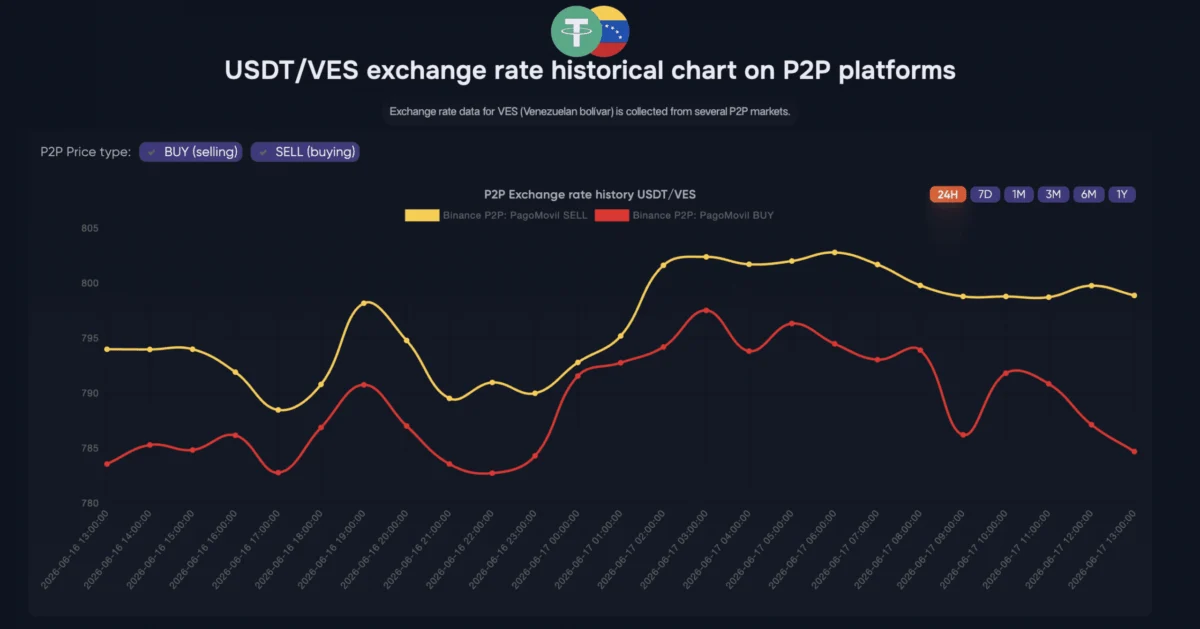
In the landscape of emerging markets, few regions exhibit a relationship with digital assets as symbiotic and essential as Venezuela. As the nation grapples with complex macroeconomic volatility, Tether’s USDT has solidified its status not merely as a speculative asset, but as a critical financial instrument for the average citizen. Recent data reveals that between mid-May and mid-June 2026, the demand for USDT in Venezuela surged significantly, highlighting a growing reliance on stablecoins as a hedge against the rapid expansion of the local monetary base.
Main Facts: The 800-Bolivar Threshold
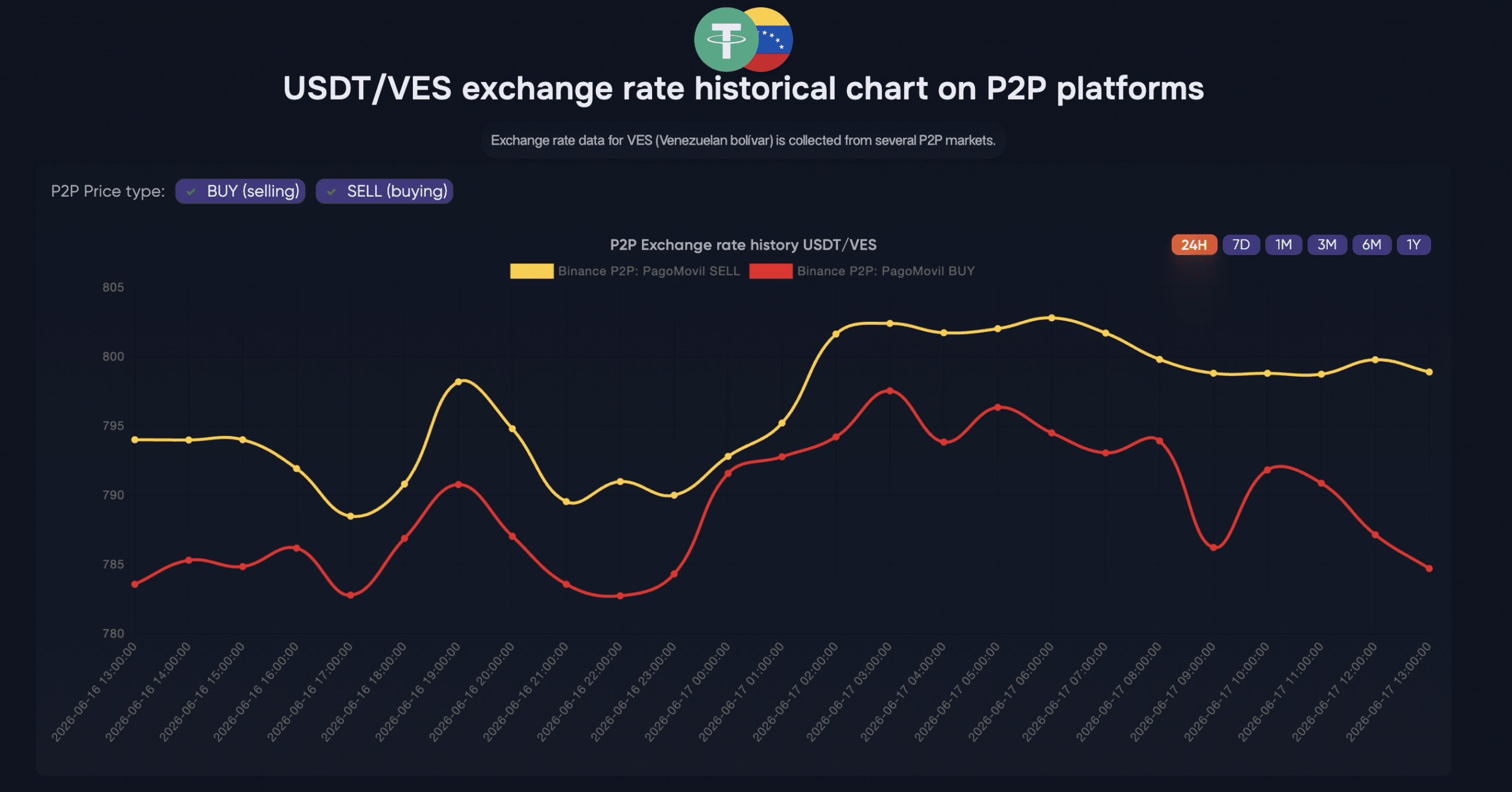
The past 30 days have served as a litmus test for the resilience of the Venezuelan P2P (peer-to-peer) market. According to tracking data from P2P.Army, the USDT-to-bolivar (VES) exchange rate saw an aggressive 16% increase, a move that pushed the valuation of the stablecoin past the psychological barrier of 800 bolivars per unit. At the height of this recent activity, prices on major P2P platforms—most notably Binance, which serves as the primary gateway for Venezuelan crypto-traders—peaked at 810 bolivars.
This surge is not an isolated market anomaly; it is a direct reflection of the scarcity of traditional foreign currency within the domestic banking system. As citizens seek to preserve their purchasing power, the accessibility and liquidity of USDT have made it the preferred vehicle for savings and daily cross-border commerce, effectively bypassing the friction associated with traditional exchange desks.
Chronology of the Monetary Surge
The current financial environment in Venezuela is defined by a rapid influx of local currency. To understand the recent spike in USDT value, one must look at the timeline of the Central Bank of Venezuela’s (BCV) recent monetary policies.
- January 2, 2026: Total monetary liquidity in the Venezuelan economy stood at approximately 0.93 trillion bolivars.
- May 8, 2026: Monetary liquidity reached 1.76 trillion bolivars, marking a period of steady growth.
- June 5, 2026: In a rapid acceleration, liquidity hit 2.17 trillion bolivars.
This represents a staggering 131.17% increase in total liquidity in just over five months. The jump from May 8 to June 5 alone—a 23.26% increase in less than 30 days—directly correlates with the downward pressure on the bolivar and the subsequent climb in USDT pricing. As the volume of local currency in circulation ballooned, the value of the bolivar diluted, driving a flight to the safety of USD-pegged assets.
Supporting Data: The P2P Ecosystem and Market Dynamics
The role of Binance as a barometer for the Venezuelan economy cannot be overstated. As the most liquid P2P marketplace in the ecosystem, its order books provide a real-time reflection of the average citizen’s economic anxiety.
Visa’s recent on-chain analytics suggest that Tether remains the undisputed titan of the stablecoin market in terms of both aggregate supply and transaction volume. While the broader global market has been distracted by debates regarding regulatory frameworks—such as the recent European Union MiCA-related developments that forced some exchanges to rethink their stablecoin offerings—the Venezuelan market remains singularly focused on utility.
For the Venezuelan user, the "regulatory scrutiny" often discussed in Western financial journals is secondary to the immediate, practical need for a stable unit of account. The P2P market acts as a decentralized exchange that operates 24/7, immune to the banking hours and restrictive protocols that often hinder the acquisition of physical dollars in the country.
Expert Perspectives: The Gap in the Financial System
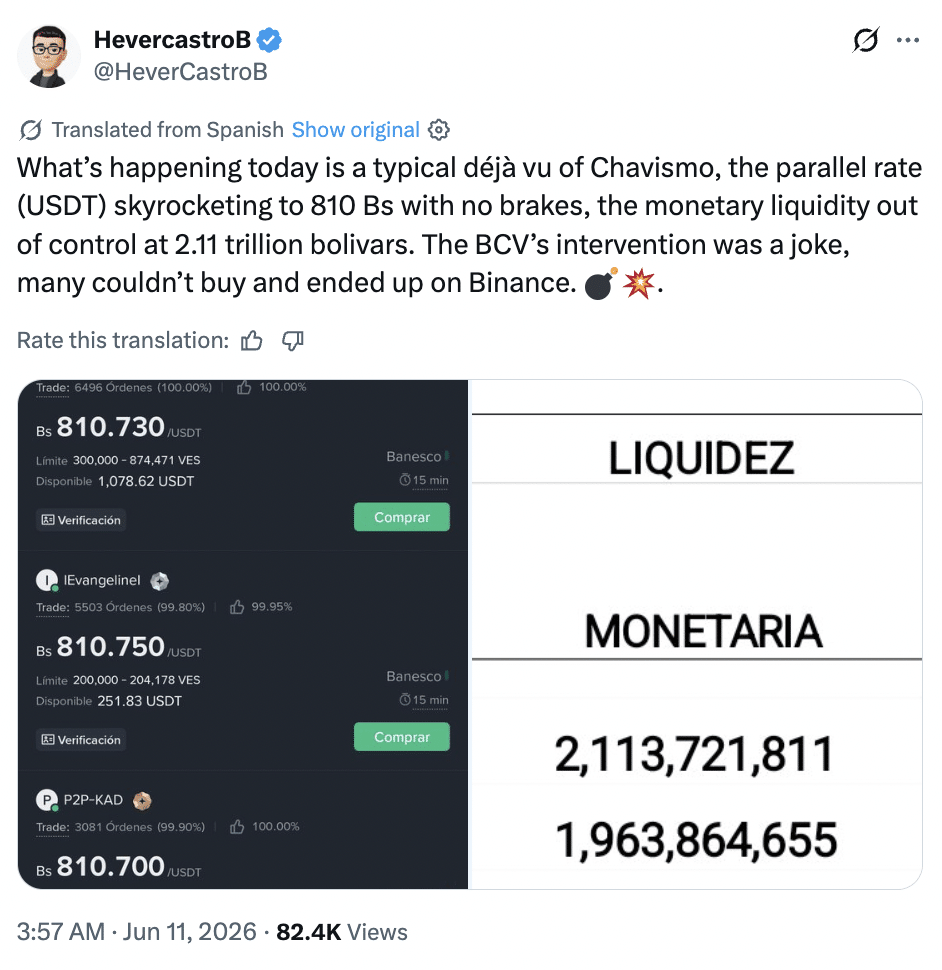
Analyst Hever Castro has pointed to a fundamental structural failure in the current exchange mechanism. The issue is not merely the influx of local currency, but the widening chasm between the demand for foreign currency and the supply made available through formal financial institutions.
"The national exchange market has been hit with a shockwave," Castro noted in his recent assessment. "When you have a sudden, massive infusion of local currency, and that currency has nowhere to go, it flows into the most liquid asset available. People are not necessarily choosing crypto out of ideological preference; they are choosing it because the traditional financial system is failing to provide the stability they need to feed their families and run their businesses."
The consequence of this, according to Castro, is a daily business reality where the "official" rate and the "P2P" rate often diverge, forcing small-to-medium enterprises (SMEs) to price their goods in USDT to avoid the rapid erosion of their margins.
Implications: The Future of Sovereign Currency and Stablecoins
The situation in Venezuela presents several long-term implications for the future of finance:

1. The Normalization of Crypto-Commerce
We are witnessing the "de-facto" dollarization of the Venezuelan economy via stablecoins. This is a transformation that has bypassed government decree. When a significant portion of a nation’s population uses a digital token to set prices, save for the future, and conduct cross-border settlements, the token ceases to be an "alternative" and becomes the primary financial infrastructure.
2. The Limits of Centralized Monetary Policy
The 131% increase in liquidity over five months demonstrates the limitations of a central bank attempting to manage an economy with a highly volatile currency. As the BCV continues to print or release more bolivars, the velocity of money into digital assets will likely continue to accelerate. The central bank is effectively fighting a losing battle against a decentralized, global asset class that offers an escape hatch from inflationary pressure.
3. Regulatory Paradoxes
While the EU and other Western jurisdictions tighten their grip on stablecoin issuers like Tether, regions like Venezuela highlight why these assets are necessary. The regulatory "setbacks" seen in the West—often cited by institutional investors as a reason for caution—are viewed through a completely different lens in the Global South. For millions, Tether is not a high-risk asset, but the most stable asset they have ever had access to.
Conclusion: A Persistent Dominance
Tether’s USDT has cemented its position as the bedrock of the Venezuelan digital economy. Despite the volatility of the bolivar and the looming specter of global regulatory shifts, the data is clear: demand for USDT is intrinsically tied to the macroeconomic health of the nation.
As long as the disparity between the supply of traditional foreign currency and the monetary liquidity of the bolivar continues to grow, the adoption of stablecoins is likely to remain the most significant trend in the region. The transition from physical cash to digital stablecoins in Venezuela is not merely a technological upgrade—it is a survival mechanism. Moving forward, observers should monitor whether the BCV attempts to implement further restrictions on P2P platforms or if the state will eventually be forced to integrate digital assets into the formal economy to regain control over the nation’s monetary flow.
For now, the digital bolivar hedge remains the primary shield for the Venezuelan public, reinforcing the status of USDT as an indispensable pillar of modern, decentralized finance in emerging markets.
