

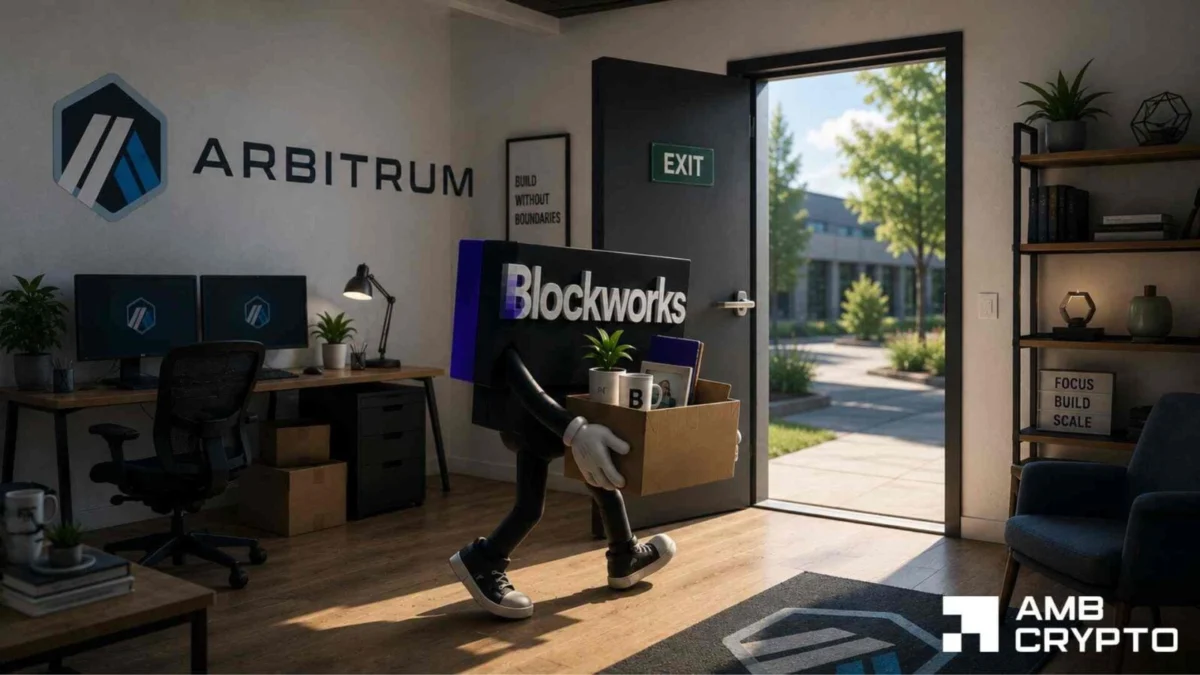
In a move that has sent ripples through the decentralized finance (DeFi) ecosystem, Blockworks Advisory—the research and consulting arm of the prominent media and data firm—has announced it will wind down its governance participation in the Arbitrum DAO. As the second-largest delegate on the network, trailing only Entropy Advisors, Blockworks’ departure marks a significant turning point in how professional entities engage with decentralized governance structures.
This decision, announced on June 1st, is not merely an operational pivot; it is a signal of a broader structural transformation occurring within the blockchain industry. As the traditional "three-layered" model of DAO governance faces increasing scrutiny and internal friction, the industry is grappling with whether the dream of pure decentralization can withstand the pressures of institutional control and evolving regulatory landscapes.
The Facts: A Strategic Realignment
Blockworks Advisory clarified in its official statement that the decision to step back from active delegation on the Arbitrum network is a strategic realignment rather than a lack of faith in the protocol.
"Stepping back from active delegation is, for Blockworks, a way to align with the current business goals of our organization, and should not be read as a lack of appreciation for Arbitrum nor a bet against the Arbitrum DAO itself," the firm stated.
The exit of such a significant governance participant necessitates a reshuffling of voting power within the Arbitrum DAO. As one of the most influential voices on the network, Blockworks’ departure leaves a vacuum that other delegates must fill. The firm has actively encouraged its current delegators to seek out other contributors, signaling a desire to ensure that the network’s governance does not stagnate during this transition.
Chronology: The Evolution of DAO Governance
To understand the gravity of this exit, one must look at the historical trajectory of DAO governance.
- The Inception of the Three-Layered Model: Historically, blockchain protocols were built on a tripartite structure. First, "Labs" companies (e.g., Offchain Labs for Arbitrum, Aave Labs for Aave) were established to raise venture capital and build the technical infrastructure. Second, a "Foundation" was created to serve as a legal bridge between the protocol and the traditional world, managing treasury reserves. Third, the "DAO" was tasked with community governance, ostensibly giving token holders the power to direct the protocol’s future.
- The Era of Professional Delegation: As protocols matured, it became clear that average token holders rarely had the time or expertise to vote on complex technical and financial proposals. This gave rise to "professional delegates"—firms like Blockworks Advisory—who were paid or incentivized to provide informed, active governance.
- The Friction Period (2023–2024): Conflict began to emerge as "Labs" companies increasingly sought to reclaim control over the protocols they helped build. Disputes in major DAOs, including Aave, highlighted the tension between the community-led DAO model and the desire of original founders to influence the direction of their projects.
- The Regulatory Shift (2025–2026): With the easing of aggressive SEC enforcement actions and the emergence of frameworks like the CLARITY Act, the legal risks of running a DAO have shifted. This has provided companies with more clarity on how to operate, leading them to prioritize corporate stability over pure decentralization.
- The Current Inflection Point (June 2026): Blockworks Advisory’s announcement crystallizes the trend, as professional delegates begin to view the current DAO structure as either redundant or inherently conflicted.
Supporting Data and Industry Context
The decline of the "decentralized ideal" is supported by recent data. A study conducted by the European Central Bank (ECB) earlier this year cast a long shadow over the DeFi sector, revealing that in many prominent DAOs, power is highly concentrated. The report noted that in several instances, as few as 100 wallets control up to 96% of delegated voting power.
This centralization contradicts the initial premise of DAOs as democratic, community-owned entities. When such a small group holds the keys to the treasury, the "DAO" becomes, in practice, a closed-door boardroom.
Furthermore, the economic impact of these governance disputes is tangible. When the Aave DAO faced a high-profile governance conflict, the resulting uncertainty led to a notable dip in the value of the AAVE token. Similarly, following the news of Blockworks’ departure, the Arbitrum (ARB) token experienced a 6% decline. While this was partially exacerbated by a wider pullback in the price of Bitcoin, market analysts suggest that governance instability remains a key factor in investor sentiment for L2 tokens.

Official Responses and Expert Analysis
Industry experts have been quick to weigh in on the implications of the shift. Joseph Axisa, a specialist in legal advisory and managing partner at Axis Group, posits that the "death" of the traditional DAO is an inevitable consequence of professionalization.
"As DAOs continue to die—or, more accurately, get killed by the Labs companies that want their control back—this is a decision that will become more common amongst several professional delegates," Axisa noted. He suggests that the professional delegate model is becoming untenable in an environment where the original creators of the technology are no longer content with a consultative role.
From the perspective of the Arbitrum DAO, the departure is being framed as an opportunity for new blood. However, the loss of an entity with the analytical reach of Blockworks is undeniable. The firm acted as a filter for complex proposals, providing the necessary due diligence that individual delegators often lack.
Implications: The Future of Protocol Governance
1. The Rise of "Corporate-Led" Governance
We are witnessing a migration away from the "DAO-first" approach. As regulatory frameworks like the CLARITY Act become more entrenched, companies are finding it easier to operate under a centralized, corporate-governance model than through the amorphous, often chaotic, structure of a DAO. We may see more protocols move toward a hybrid model where the Foundation and the Labs company hold permanent veto powers, effectively ending the era of "code as law."
2. The Professional Delegate Crisis
If firms like Blockworks Advisory, which have the resources and reputation to effectively represent stakeholders, are stepping away, it suggests that the cost of governance—both reputational and financial—is outweighing the benefits. If professional delegates continue to exit, protocols risk falling into a state of "governance apathy," where the only people voting are the protocol insiders, further centralizing power.
3. The Impact on Token Valuation
The market is increasingly pricing in "governance risk." Investors are becoming more wary of protocols where the relationship between the community and the builders is fractured. As seen with both Aave and Arbitrum, internal governance turmoil directly impacts liquidity and price action. Future projects will likely need to establish much clearer, more transparent governance contracts at launch to prevent these mid-lifecycle disputes.
4. Regulatory Adaptation
The regulatory environment is no longer the "wild west" it once was. With the SEC backing off and new legislation providing clear definitions for "mature blockchains," the legal impetus to hide behind a DAO structure is diminishing. Firms are now comfortable taking more direct, centralized roles because the legal risk of doing so has been mitigated by clearer compliance pathways.
Conclusion
The decision by Blockworks Advisory to exit Arbitrum governance is more than a simple business update; it is a bellwether for the maturation of the blockchain industry. The dream of the autonomous, decentralized organization is colliding with the reality of economic incentives, legal requirements, and the desire for control by protocol builders.
As we move into the latter half of 2026, the question is not whether DAOs will survive, but what they will evolve into. The current trend suggests a move toward more professionalized, perhaps more centralized, governance structures that trade the idealism of decentralization for the stability and efficiency of corporate oversight. For token holders and investors, the era of "blindly trusting the DAO" is over; the new era requires a much closer examination of who is actually steering the ship.
