

The cryptocurrency market is currently navigating a period of profound instability. In financial markets, an asset crash rarely occurs in a vacuum; it acts as a catalyst, sending ripples through the broader ecosystem and exposing existing structural vulnerabilities. The recent collapse of the Humanity Protocol [H] token—which saw a staggering drawdown of over 85% on June 8, 2026—has served as a stark reminder of how fragile current market sentiment truly is.
As large-cap assets hover near multi-month lows, the crypto market is facing a confluence of negative indicators. Investor conviction is being tested as major support levels fail, and the sudden wipeout in specific altcoin projects has exacerbated an already tense environment. This article explores the anatomy of the recent sell-off, the failure of traditional rotation playbooks, and what shifting liquidity patterns reveal about the future of the altcoin market.
The Anatomy of the Collapse: A Chronology of the Humanity Protocol [H] Crash
The descent of Humanity Protocol [H] was not merely a localized event; it was a symptom of a broader exhaustion in the altcoin sector. To understand the gravity of the situation, we must look at the timeline of events leading up to the June 8th collapse.
The Euphoria Phase (Late May 2026)
In late May, Humanity Protocol was the darling of the altcoin space. Fuelled by aggressive marketing and speculative fervor, the token staged an impressive rally, surging over 150%. During this period, liquidity flooded into the ecosystem as retail and institutional participants sought high-beta assets to outpace the stagnant performance of Bitcoin and Ethereum.
The Turning Point (Early June 2026)
By the first week of June, the macro environment began to darken. Bitcoin, the market’s primary barometer, failed to reclaim critical resistance levels, triggering a 25% correction. As capital began to exit the primary crypto-assets, the high-risk, high-reward nature of altcoins like H became a liability.
The Capitulation (June 8, 2026)
On June 8, the "fragile cycle" snapped. A massive sell-off triggered a cascade of liquidations in the H token. Within a single trading session, the asset shed 85% of its value. This event did not just impact H holders; it served as a wake-up call for the broader altcoin market, highlighting the lack of deep liquidity and the absence of a fundamental floor for speculative tokens.
Supporting Data: Why the Playbook Has Failed
In previous market cycles, a specific "playbook" was understood by traders: when Bitcoin hits a wall of resistance, capital naturally rotates into Ethereum and subsequently into higher-beta altcoins. This rotation is traditionally driven by the pursuit of yield and the belief that speculative assets can outperform during stagnant periods for major coins.

The Divergence of Ethereum
This cycle, however, that playbook has been rendered obsolete. Ethereum [ETH] has faced significant downward pressure, down more than 40% this cycle—a performance roughly twice as weak as Bitcoin. This divergence is alarming. It signals that the anticipated "DeFi-led momentum" that many analysts expected following the 2025 bearish phase has failed to materialize. The lack of a fundamentals-driven rally in Ethereum suggests that the market is currently devoid of the institutional appetite required to sustain a broader altcoin bull run.
Declining Open Interest (OI)
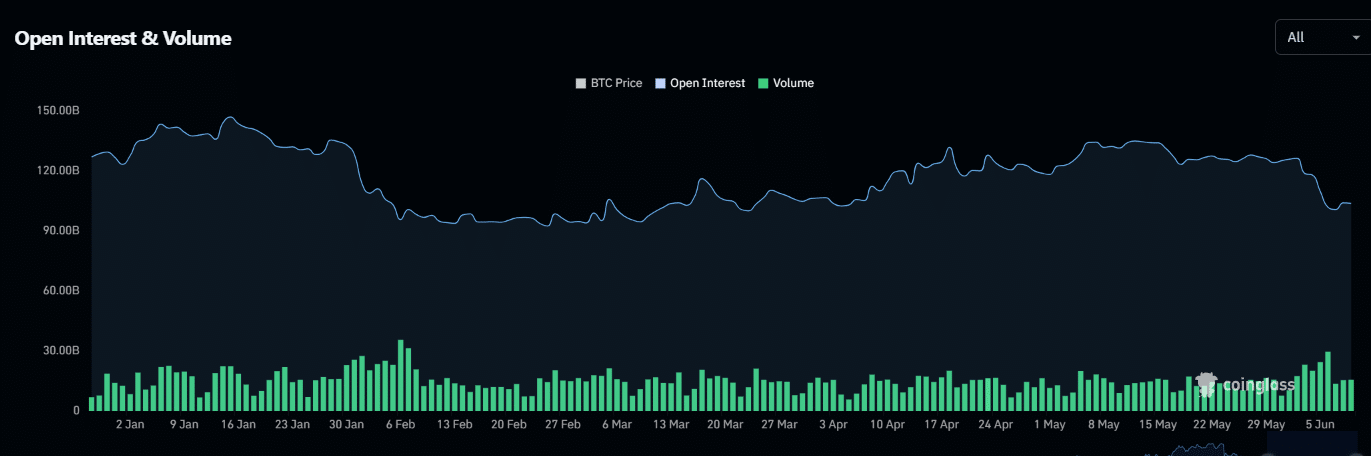
Data provided by CoinGlass paints a grim picture of speculative interest. Total altcoin Open Interest (OI) has plummeted back to mid-March levels, resting at approximately $115 billion. This represents a decline of over 25% from the January peak of $150 billion. When OI drops in such a rapid fashion, it indicates that traders are not just rotating out of specific assets—they are exiting the market entirely. The "risk-on" sentiment that characterized the early months of 2026 has been replaced by a "risk-off" defensive posture.
Liquidity Flows: A Shift Toward Caution
A common misconception in market analysis is that any inflow of liquidity is inherently bullish. However, in the current macroeconomic climate, dominated by "Fear, Uncertainty, and Doubt" (FUD), the nature of liquidity is just as important as the volume.
The Stablecoin Paradox
Recent reports from Arkham Intelligence reveal that the circulating supply of non-USD stablecoins has reached an all-time high of $2 billion, representing a 43% increase in 2026 alone. Assets such as EURC, BRZ, and A7A5 now constitute a significant portion of the stablecoin market. While an increase in stablecoin supply is often viewed as "dry powder" waiting to be deployed, the current data suggests otherwise.
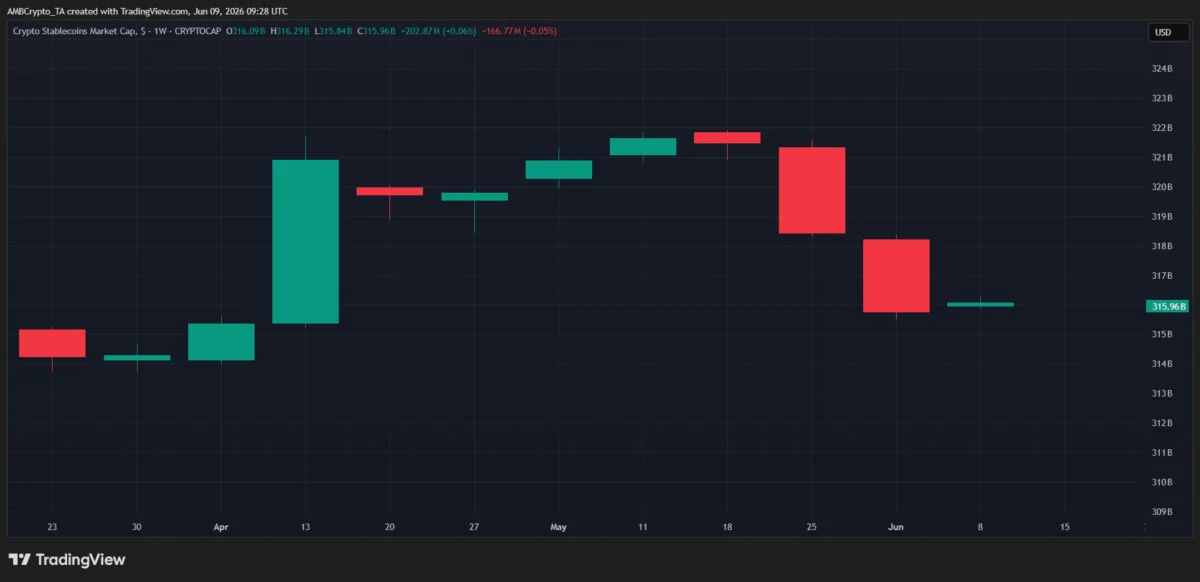
Instead of being used to buy the dip in altcoins, this capital is acting as a hedge. The market is witnessing a flight to safety. Investors are not looking for entry points into volatile altcoins; they are rotating into stablecoins to preserve capital. As the total market cap of stablecoins rebounds to $316 billion after two weeks of outflows, it is clear that the market is favoring liquidity preservation over speculative exposure.
The Lack of Spot Demand
The most concerning indicator for market health is the lack of robust spot demand for Bitcoin. Without a recovery in Bitcoin spot volume, there is no engine to pull the rest of the market upward. When Bitcoin struggles, altcoins—which rely on BTC as a pricing pair and a market leader—suffer exponentially more. The current environment is one where investors are de-risking, and the collapse of the Humanity Protocol has only accelerated the speed at which capital is retreating from the ecosystem.
Implications for the Broader Crypto Ecosystem
The fallout from the Humanity Protocol crash and the concurrent macroeconomic headwinds have several long-term implications for the cryptocurrency market.
1. Increased Regulatory and Investor Scrutiny
Events like the 85% drawdown in a single day attract significant negative attention from regulators. When projects fail to maintain liquidity or exhibit extreme price volatility, it reinforces the narrative that the altcoin market is a "casino" rather than a legitimate financial ecosystem. This will likely lead to further calls for oversight, which, in the short term, will further dampen investor enthusiasm.
2. The Death of "High-Beta" Speculation
For years, the crypto market thrived on the narrative of the "altcoin season." However, as we move through 2026, it is becoming clear that the market is becoming more selective. Projects without clear utility or those that rely purely on speculative hype are being systematically purged. Investors are moving toward a "flight to quality," where only projects with proven revenue models and tangible use cases will survive the current contraction.
3. A Longer Path to Recovery
The current structural weakness suggests that the path to a sustainable bull market will be longer and more difficult than previously projected. The failure of DeFi-led momentum implies that the market is waiting for a new catalyst—perhaps institutional adoption of real-world assets (RWAs) or a shift in global monetary policy that favors risk assets. Until then, the market remains in a state of consolidation and potential further correction.
Conclusion: Navigating the Bearish Phase
The Humanity Protocol crash is not an isolated incident; it is a manifestation of a market in transition. The combination of declining Open Interest, the breakdown of the altcoin rotation playbook, and a defensive shift into stablecoins indicates that the market is currently in a deeper corrective phase than many traders are willing to admit.
For participants, the current landscape requires extreme caution. The "buy the dip" mentality that served investors well in previous years is currently fraught with danger, as the lack of spot demand and the prevalence of risk-off sentiment make it difficult for any asset—regardless of its fundamentals—to find a stable floor. As liquidity remains trapped in hedging instruments and stablecoins, the altcoin sector will likely remain under pressure.
In this environment, the most prudent strategy is to monitor the macroeconomic indicators—specifically the return of spot demand for major assets—and to avoid the temptation of chasing volatility in low-cap, high-risk tokens. The market is currently resetting, and until that process is complete, confidence will remain in short supply.
