

The cryptocurrency landscape is undergoing a profound structural metamorphosis. For years, stablecoins—digital assets pegged to fiat currencies—were viewed primarily as the "fuel" for crypto-native trading, providing the necessary liquidity to move in and out of volatile assets like Bitcoin and Ethereum. However, recent data from June 2026 suggests a paradigm shift: stablecoins are shedding their identity as mere liquidity mechanisms and are rapidly evolving into a foundational utility layer for the global financial system.
This transformation is characterized by a significant divergence between transaction volume and total market capitalization, a phenomenon that has caught the attention of institutional analysts and macroeconomic observers alike.
Main Facts: The Record-Breaking Disconnect
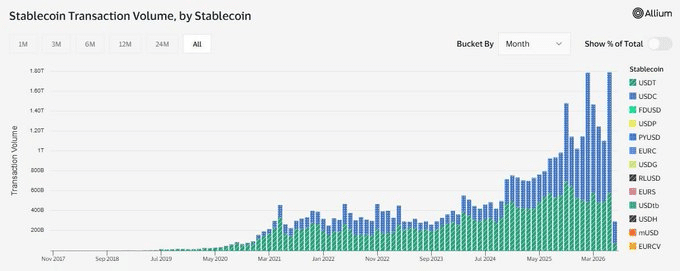
The core narrative driving the current market sentiment is a stark disconnect between utility and liquidity. In June, adjusted stablecoin transaction volumes soared to a staggering $1.79 trillion, representing a 63% increase from May and a 125% surge year-over-year. This record-breaking throughput confirms that stablecoins are being actively utilized for high-velocity operations, such as cross-border settlements, institutional treasury management, and complex decentralized finance (DeFi) interactions.
Conversely, the aggregate market capitalization of the two industry titans—Tether (USDT) and USD Coin (USDC)—has contracted by approximately $11 billion over the last two months. This contraction signals that while users are moving money through the rails more frequently than ever, the total "idle" capital stored within these stablecoin protocols is shrinking. We are witnessing a transition from a "store-of-value" model to a "conduit-of-value" model.
Chronology: A Month of Volatility and Throughput
To understand the significance of these movements, we must look at the timeline of the second quarter of 2026:
- Early May: The market began to show signs of a "risk-off" environment. Stablecoin liquidity remained stagnant, and institutional appetite for speculative crypto assets cooled.
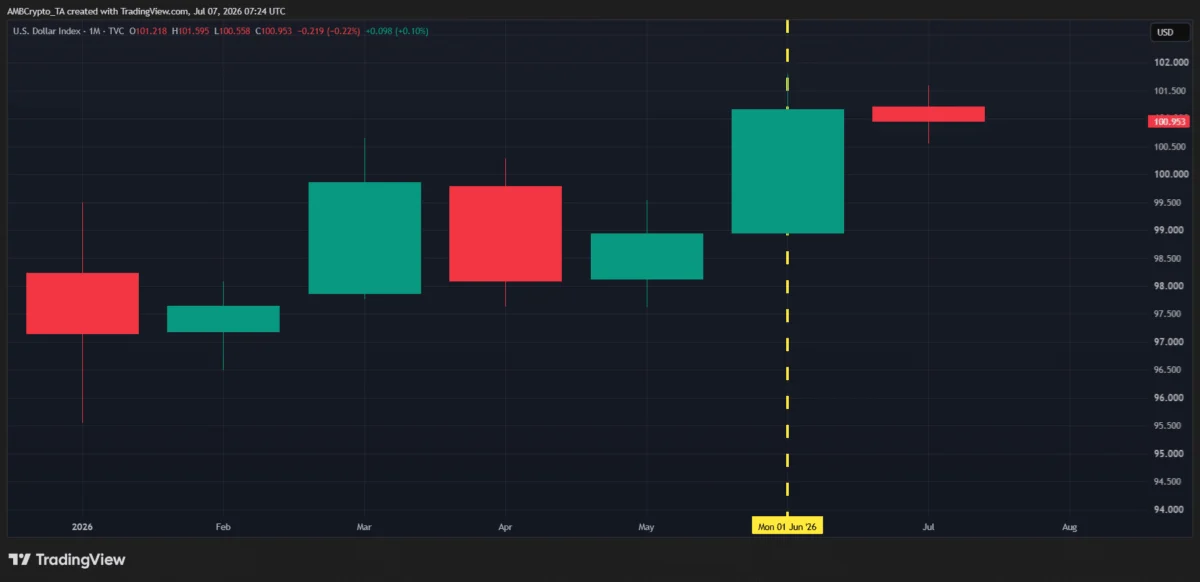
- Late May: The U.S. Dollar Index (DXY) began a sustained ascent, putting upward pressure on global fiat currencies, most notably the Japanese Yen, which touched multi-decade lows.
- Early June: Despite a broader crypto market drawdown of over 18%—the most significant monthly outflow since February—stablecoin transaction volumes began an explosive climb.
- Late June: The divergence intensified. While crypto markets suffered from the largest monthly capital outflow in four months (totaling nearly $8 billion), the utility of stablecoins as a settlement layer hit its historical peak.
- Early July: Current data confirms that Layer 1 networks are aggressively competing to host this stablecoin traffic, with networks like The Open Network (TON) seeing native stablecoin supply increases of 8% in a single week.
Supporting Data: The Macro-Micro Intersection
The divergence between transaction volume and market cap is not occurring in a vacuum. It is heavily influenced by the strengthening of the U.S. Dollar.

The DXY, a gauge of the dollar’s value against a basket of foreign currencies, posted consecutive monthly gains through June, rising over 2.25%. This macro-environment suggests that while investors are hesitant to hold volatile crypto assets, the demand for "dollar-denominated" utility remains insatiable.
Layer 1 Competition
The competition to become the preferred "settlement layer" for these stablecoins is fierce. Networks are realizing that volume drives network fees and ecosystem stickiness. The Open Network (TON), for instance, has surged to over $810 million in native stablecoin supply. This growth is indicative of a broader trend: Layer 1 blockchains are no longer just competing on "TPS" (transactions per second) or "TVL" (total value locked); they are now competing on their ability to facilitate the world’s most efficient dollar-based settlement rails.
Official Responses and Institutional Perspectives
While no single "official" body governs the entirety of the stablecoin market, industry leaders and analysts from firms like Allium have highlighted the shift.
Market analysts have pointed out that the $8 billion outflow from stablecoins is not necessarily a sign of a "dying" market, but rather a "rationalizing" one. Institutions are increasingly using stablecoins for what they were originally promised to be: a bridge between legacy finance and the blockchain. When an institution needs to settle a multi-million dollar transaction across borders on a Saturday night, they are not looking for speculative gains; they are looking for finality, speed, and low cost. Stablecoins are currently the only asset class providing that utility at scale.
Conversely, some regulators have expressed concern over the "shadow banking" implications of this usage. As stablecoins move from trading platforms into real-world payment systems, the regulatory scrutiny regarding reserve transparency and auditability is expected to intensify throughout the second half of 2026.
Implications for H2 2026: The "Bearish" Divergence
The implications of this shift are twofold and carry significant weight for investors heading into the second half of the year.
1. The Bullish Case for Utility
The sustained usage of stablecoins despite a "risk-off" market environment proves that the underlying technology has achieved product-market fit. Even when crypto prices are falling, the infrastructure is being used. This suggests that the next bull cycle may be driven less by retail speculation and more by institutional infrastructure integration.
2. The Bearish Case for Liquidity
The "bearish" risk lies in the shrinking market cap. If stablecoin market cap continues to contract, it implies that the "on-ramps" are drying up. When liquidity leaves the stablecoin sector, it removes the "dry powder" necessary for a market rally. Without a replenishment of liquidity, the crypto market may remain range-bound, struggling to find the capital required to break through previous resistance levels.
Conclusion: A Strategic Inflection Point
We are at a strategic inflection point. The market is witnessing a fundamental change in the role of stablecoins. No longer just a sidecar for the crypto-trading engine, they are becoming the engine itself.
The divergence between high transaction volume and shrinking liquidity is a signal that the market is becoming more efficient, yet more sensitive to macro-economic forces. As we move into the second half of 2026, the key metric to watch is not just the price of Bitcoin, but the growth of stablecoin supply on Layer 1 networks. If the supply begins to climb alongside the volume, it will indicate that capital is returning to the ecosystem. If the contraction continues, the market will likely face prolonged volatility.
In the long run, this transition toward utility is the "coming of age" moment for the stablecoin industry. It marks the shift from a speculative experiment to a legitimate pillar of the global financial architecture. For those watching the charts, the message is clear: watch the rails, not just the road.
