

The decentralized finance (DeFi) ecosystem, a cornerstone of the modern blockchain economy, finds itself at a philosophical and technical crossroads. A high-profile controversy has erupted, pitting the cautionary warnings of a veteran security pioneer against the optimistic resilience of industry leaders. At the heart of this storm is Manuel Aráoz, founder of OpenZeppelin, whose recent assertion that "all of DeFi is unsafe" has sent shockwaves through the community, prompting a heated debate over the future of financial sovereignty, the role of artificial intelligence, and the reality of systemic risk.
The Catalyst: A Controversial Declaration
The friction began earlier this week when Manuel Aráoz, a widely respected figure in the blockchain security space, publicly advised his inner circle—including friends and family—to liquidate all DeFi positions. His warning was not directed at a single protocol, but rather at the entire architecture of decentralized finance.
Aráoz’s core argument centers on the rapid advancement of artificial intelligence. He contends that we have entered an era where AI-powered "offensive" cybersecurity agents possess superhuman capabilities. These agents, he posits, are now capable of auditing, stress-testing, and identifying exploits in smart contracts at speeds and complexities that far outpace human defenders. By Aráoz’s logic, the traditional security model of DeFi—relying on manual audits and time-locked upgrades—is effectively obsolete in the face of machine-speed adversarial attacks.
The Industry Rebuttal: Resilience and Evolution
The response from the DeFi establishment was swift and largely dismissive. Stani Kulechov, the founder of the prominent lending protocol Aave, led the counter-offensive. Kulechov characterized Aráoz’s assessment as a "bad take," arguing that it fundamentally overlooks the maturation of the industry.
"DeFi infrastructure today is materially more resilient than in prior cycles," Kulechov stated. He emphasized that the same AI technologies Aráoz fears are simultaneously acting as a force multiplier for security. Modern DeFi protocols now leverage AI-driven risk engines, automated monitoring tools, and real-time anomaly detection, which have significantly hardened the sector against conventional attack vectors.
Kulechov’s sentiment was echoed by Sam MacPherson, co-founder of Sky (formerly MakerDAO). MacPherson challenged the notion that smart contract vulnerabilities are the primary danger, pointing instead to human-centric risks. "Most of the recent major hacks have been operational security (opsec) issues," MacPherson noted. "Smart contracts of blue-chip protocols are quite safe these days."

Chronology of the Debate
To understand the gravity of this discourse, one must look at the recent timeline of events:
- Early Week: Manuel Aráoz issues his public warning, explicitly naming major protocols like Aave, MakerDAO, and Compound as unsafe.
- Mid-Week: The DeFi community reacts with confusion and criticism. Social media platforms, particularly X (formerly Twitter), become battlegrounds for security researchers.
- Late Week: OpenZeppelin, the firm founded by Aráoz, issues a statement distancing itself from its founder’s personal comments, signaling a clear divide between corporate messaging and individual opinion.
- Current Status: The debate has expanded to include broader macroeconomic discussions regarding the $45 billion in capital outflows seen in 2026, forcing a re-evaluation of how much of that liquidity flight is due to security fears versus market volatility.
Analyzing the Data: Where Does the Risk Actually Lie?
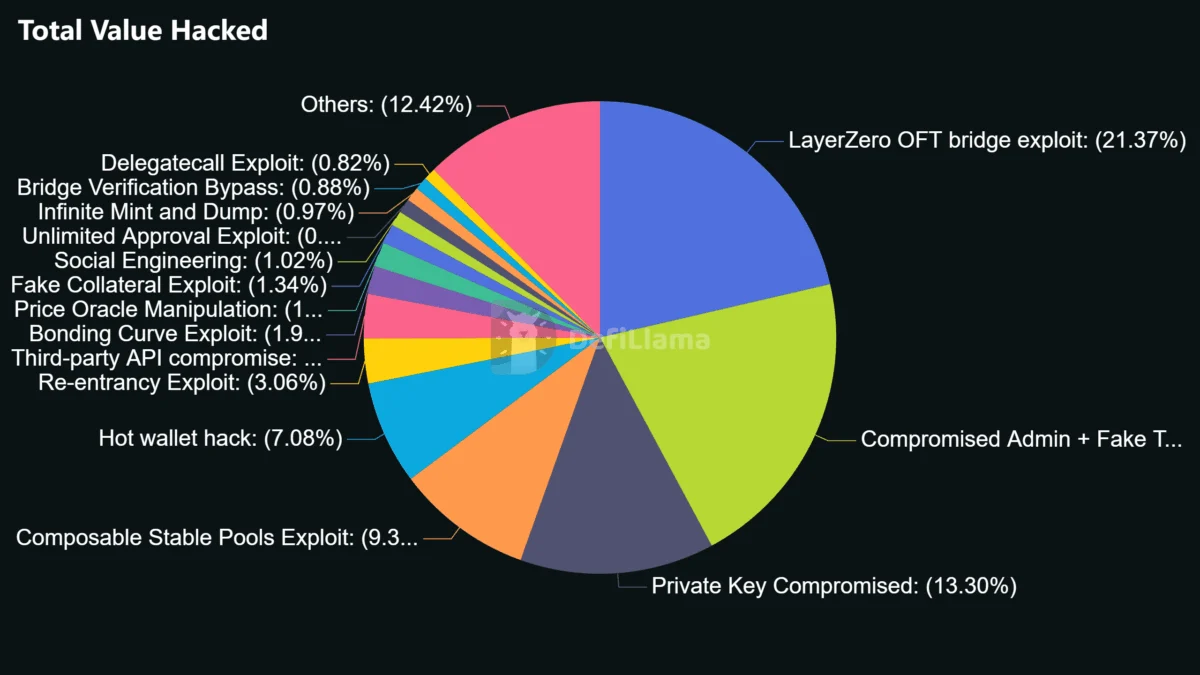
The core of the disagreement between Aráoz and his peers lies in the interpretation of security data. Proponents of the "DeFi is maturing" narrative point to the fact that less than 10% of DeFi hacks in 2025 were directly attributable to flaws in the underlying codebase. Instead, data suggests that the vast majority of exploits are linked to:
- Bad Parameter Configuration: Mistakes in how protocols are initialized or managed by decentralized autonomous organizations (DAOs).
- Operational Security (Opsec): Compromised private keys, stolen administrative credentials, and social engineering attacks against team members.
- Bridge Exploits: The persistent weakness of cross-chain interoperability, which continues to account for a massive share of total value lost.
Conversely, Aráoz’s warning holds weight when considering the sheer volume of capital lost. On a year-on-year basis, approximately $1.45 billion has been siphoned from the sector. When over 50% of these exploits are tied to administrative access and compromised keys, the distinction between "code risk" and "human risk" becomes blurred. If an AI agent can identify the human weakness in an admin multi-sig wallet, the result is the same as if the code itself were broken: a catastrophic drain of liquidity.
OpenZeppelin: A Firm Caught in the Middle
The involvement of OpenZeppelin adds a layer of professional irony. As a industry leader in smart contract auditing and library development, the firm is the bedrock upon which much of the DeFi sector is built. When its founder suggests that the entire ecosystem is unsafe, it raises an uncomfortable question: If the world’s leading security firm’s founder believes the system is fundamentally broken, what does that say about the products the firm sells?
Recognizing the potential for reputational damage, OpenZeppelin acted quickly to distance itself from Aráoz’s remarks. This public distancing highlights the tension between the "security-first" ideology—which often leans toward extreme skepticism—and the "growth-first" commercial reality of the DeFi industry.
Macro Implications: The $45 Billion Question
The security debate is occurring against a backdrop of severe industry contraction. In 2026 alone, the DeFi sector has witnessed $45 billion in capital outflows. Total Value Locked (TVL), once the primary metric for DeFi success, has plummeted by 35%, settling at $80 billion.

While macro factors like the "crypto winter" and general market downturns are undoubtedly responsible for a large portion of this flight, the narrative of "DeFi is unsafe" has provided a psychological justification for capital to exit. If institutional investors and retail users begin to view DeFi as a high-risk, uninsurable frontier, the liquidity required to sustain the ecosystem may not return, even when market conditions improve.
The Future of Defensive AI
The ultimate resolution of this debate may not lie in rhetoric, but in a technological arms race. If, as Aráoz claims, offensive AI is becoming "superhuman," then the only viable path forward is the development of "superhuman" defensive AI.
The industry is currently moving toward:
- Formal Verification: Using mathematical proofs to verify that smart contracts behave as intended, effectively removing the human error component.
- AI-Native Security Layers: Real-time, autonomous protocols that can detect and "pause" a contract if an exploit is in progress, neutralizing the threat before funds are drained.
- Decentralized Custody Solutions: Moving away from reliance on individual admin keys toward more robust, multi-party computation (MPC) systems that are harder for AI agents to compromise.
Conclusion: A Necessary Reckoning
Whether Manuel Aráoz is a prophet of doom or simply overestimating the threat of AI, his intervention has served a vital purpose. It has forced the DeFi community to stop resting on the laurels of "blue-chip status" and confront the uncomfortable reality that security is a dynamic, not static, endeavor.
The industry is clearly in a period of intense, often painful, maturation. While leaders like Kulechov and MacPherson are correct that the infrastructure is stronger than it has ever been, Aráoz’s warning serves as a sobering reminder that in a decentralized, automated world, the margin for error is razor-thin.
Ultimately, the future of DeFi will be defined by its ability to synthesize these perspectives. It must marry the operational rigor of traditional finance with the innovative, machine-speed security required to defend against the next generation of digital threats. The "Great Divide" is not just a disagreement between two prominent figures; it is the growing pains of a sector that is attempting to prove it can be the foundation of a new, secure global financial system.
