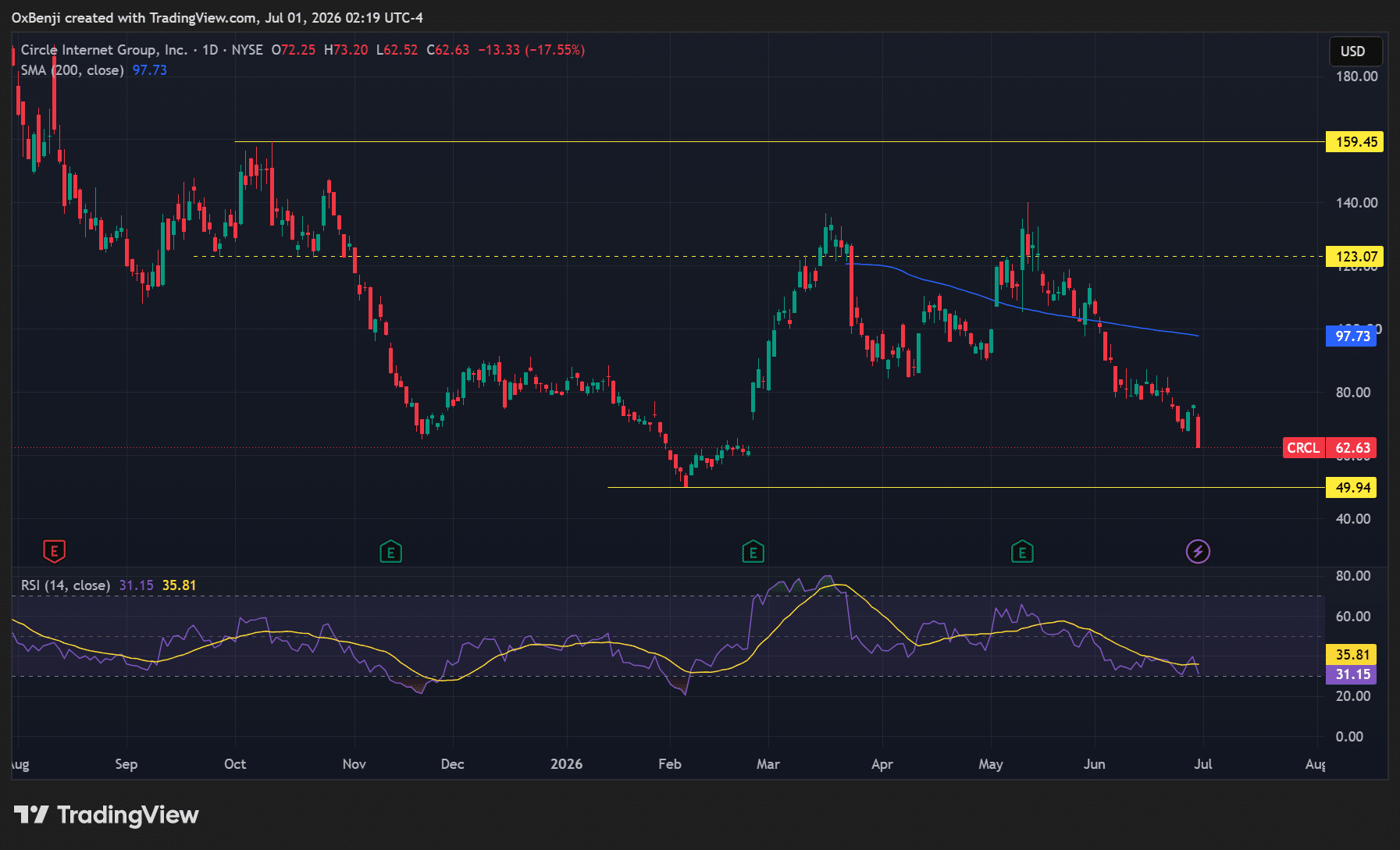
The landscape of the digital asset market underwent a seismic shift on June 30, 2026, as Circle (CRCL) saw its stock price plummet by 17.5%, closing at $62.63. This sharp decline represented the most significant single-day sell-off for the issuer of USDC since March, when regulatory jitters regarding stablecoin yield models triggered a 20% drop. While the March downturn was rooted in fears over legislative interference, the latest market reaction tells a different story: the emergence of a formidable, institutional-grade challenger in the form of "Open USD" (OUSD).
Main Facts: The Emergence of Open USD
The catalyst for the recent market turbulence is the announcement of Open USD (OUSD), a collaborative stablecoin project spearheaded by a powerhouse consortium of 140 firms. This coalition reads like a "who’s who" of global finance and technology, including industry titans such as Visa, Mastercard, BlackRock, and Google.
The primary value proposition of OUSD is twofold: it promises zero-fee transfers and a transparent model where reserve earnings are shared directly among its ecosystem partners. By targeting the high-stakes sectors of enterprise treasury management and cross-border merchant payments, OUSD is positioning itself to disrupt the dominance currently held by Tether’s USDT and Circle’s USDC. The market’s reaction to the news—a double-digit percentage decline in CRCL—highlights the perceived fragility of the current stablecoin hierarchy in the face of such massive institutional backing.
Chronology of Market Turbulence
To understand the current volatility surrounding Circle, one must examine the timeline of its recent struggles:
March 2026: Circle’s stock suffered a 20% correction following the circulation of a draft regulatory proposal aimed at banning yield generation on idle stablecoin balances. The market feared this would severely hamper USDC’s adoption and revenue model.
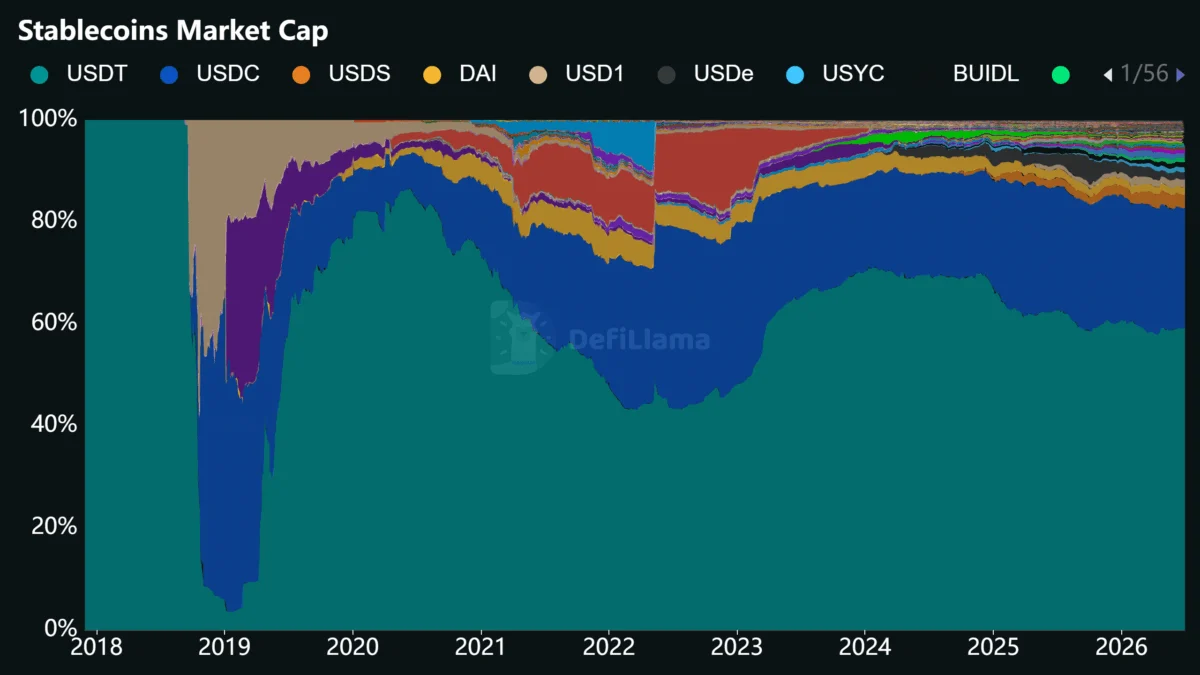
2025–Early 2026: Following the passage of the GENIUS Act in 2025, the stablecoin sector experienced a period of intensified competition. During this window, Tether’s market dominance saw a slight contraction, falling from 62% to 59%, while Circle successfully expanded its market share from 19% to 25%.
June 30, 2026: The announcement of the Open USD consortium triggered a rapid sell-off, with CRCL shedding 17.5% of its value in a single trading session.
July 1, 2026: Market analysts began re-evaluating long-term projections for Circle as the reality of the OUSD threat set in, leading to a broader discussion about the sustainability of current stablecoin business models.
Supporting Data: A Shifting Market Landscape
The data paints a complex picture for investors. While Circle has been a clear beneficiary of the post-2025 regulatory climate, the entry of the OUSD coalition introduces a variable that could fundamentally alter the distribution of liquidity.
Current market data from platforms like DeFiLlama confirms that while Tether remains the leader in total market capitalization, its grip on the market is slipping. Conversely, Circle’s rise to a 25% market share in early 2026 was seen as a sign of institutional trust. However, that share has already begun to soften, currently hovering around 24%.
The most telling metric, however, is the disparity between market performance and analyst sentiment. Despite the recent price volatility, the consensus price target for CRCL remains fixed at approximately $120. This target suggests that Wall Street analysts see roughly 91% upside potential from the current, post-dump price levels. This indicates that while the market is currently pricing in the "OUSD threat," the fundamental valuation of Circle’s infrastructure and regulatory compliance remains highly regarded by the investment community.
Professional Perspectives and Industry Analysis
The reaction from the professional investment community has been swift and largely cautious. Matthew Sigel, the head of digital research at the asset management giant VanEck, captured the prevailing sentiment on social media, highlighting the gravity of the news: "$CRCL -13% as Stripe, Coinbase and BlackRock back rival stablecoin ‘Open USD’."
This sentiment was echoed by Sam Ruskin, an investment associate at the crypto-focused venture firm Reciprocal Ventures. Ruskin provided a more granular breakdown of the challenge ahead for Circle, stating:
"This will either force Circle to continue their revenue share agreements, find new distributors for USDC (although nearly everyone interested in stablecoins today is backing OUSD). Whatever way you cut it, this seems bearish for Circle."
The inclusion of major players like Coinbase—which has historically been a critical partner for USDC—in the OUSD coalition is particularly damaging for Circle’s narrative. If key distributors pivot their loyalty toward the new consortium, Circle faces an uphill battle to maintain its current market share.
Implications for the Stablecoin Economy
The launch of OUSD signifies a transition in the stablecoin market from retail-centric utility to enterprise-grade financial infrastructure.
1. The Death of Revenue-Share Monopolies
For years, stablecoin issuers relied on holding reserves and keeping the interest generated. The OUSD model, which shares these earnings among 140 partners, effectively turns the stablecoin into a shared utility rather than a proprietary product. This puts extreme pressure on Circle to potentially lower its fees or increase its own profit-sharing incentives, which would, in turn, compress its margins.
2. Regulatory Compliance as the New Standard
The passage of the GENIUS Act in 2025 created a framework that made it safer for traditional finance (TradFi) firms like BlackRock and Visa to enter the space. OUSD is the first major product born from this "regulatory safety" era. By operating within a consortium that likely adheres to strict, pre-approved compliance standards, OUSD may become the preferred choice for central banks and large-scale enterprises, potentially relegating older, independent stablecoins to a secondary tier.
3. The Future of Circle (CRCL)
Is the "bearish" sentiment justified? While the short-term market reaction is undeniably negative, the long-term outlook depends on Circle’s ability to pivot. If Circle can successfully differentiate its service through superior liquidity, broader chain integration, or unique value-added services that OUSD cannot easily replicate, it may weather the storm. However, the current consensus price target of $120 serves as a reminder that institutional investors still see value in the underlying technology and brand equity Circle has built.
Conclusion: A New Era of Competition
The 17.5% drop in CRCL stock on June 30 is more than just a market correction; it is a signal that the "Wild West" era of stablecoins is reaching its sunset. With 140 firms throwing their weight behind Open USD, the market is signaling a preference for institutional, collaborative, and fee-efficient solutions.
For Circle, the coming months will be critical. The company must navigate a landscape where its former allies are becoming its fiercest competitors. Investors will be watching closely to see if management can hold its ground against the OUSD juggernaut or if the stablecoin market is destined for a consolidation that leaves little room for individual, non-consortium-backed players. As it stands, the battle for the $120 billion stablecoin market has officially entered its most aggressive phase yet.