

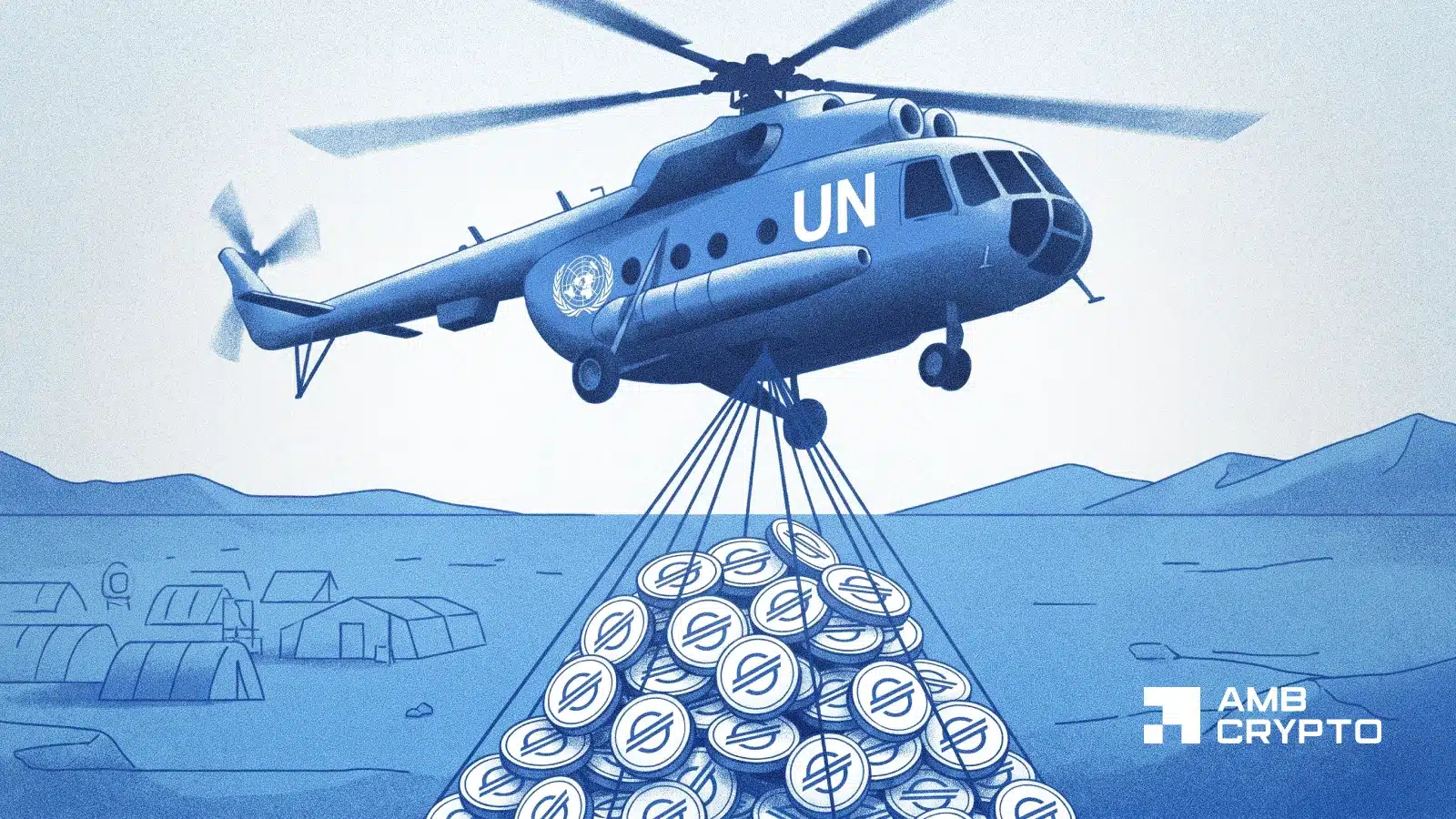
In an era defined by geopolitical instability, climate-induced disasters, and crumbling local banking infrastructures, the global humanitarian sector is undergoing a quiet but profound technological metamorphosis. Stablecoins and blockchain-based payment rails are transitioning from experimental concepts to essential tools for aid distribution. The recent decision by the United Nations Development Programme (UNDP) to scale its partnership with the Stellar Development Foundation marks a watershed moment in the intersection of decentralized finance (DeFi) and international development.
The Evolution of Aid: Moving Beyond Traditional Rails
For decades, humanitarian aid has been hampered by the "last-mile" problem—the complex challenge of delivering resources to the most remote and underserved populations. Traditional banking systems, often characterized by sluggish transaction speeds, high intermediary fees, and a reliance on stable electricity and internet connectivity, have frequently failed those who need help the most.
The partnership between the UNDP and the Stellar Development Foundation represents a strategic pivot toward efficiency. By leveraging Stellar’s public blockchain, the UNDP is creating a streamlined, transparent, and low-cost alternative to the antiquated SWIFT-based wire transfers that have dominated international aid for half a century.
A Chronology of the Stellar-UNDP Pilot
The success of this scaling phase is built upon 16 months of rigorous testing across diverse and challenging environments.
- Phase 1 (Initial Integration): The UNDP’s Alternative Finance Lab began exploring how blockchain could track digital payments to ensure transparency in stipend distribution.
- Phase 2 (Deployment in High-Risk Zones): Testing moved to Haiti, Syria, Guatemala, and Kenya. These regions were selected specifically for their volatility and the lack of robust financial infrastructure.
- Phase 3 (Operational Stress Testing): The organizations tested "cash-for-work" stipend transfers, specifically targeting areas with intermittent or low cellular network coverage to ensure the system was "real-world ready."
- Phase 4 (The Scaling Phase): Following the successful reduction of transaction costs and a 100% success rate in transfer completion, the partnership has now entered a permanent scaling phase to expand these services globally.
Supporting Data: The Economics of Efficiency
The primary driver behind this shift is the undeniable fiscal advantage of blockchain technology. Humanitarian budgets are perpetually under pressure, and the overhead costs associated with traditional banking—often reaching 10% of the total transfer value—are effectively a "tax" on the poor.
According to data released by the UNDP and corroborated by the Market Impact report, the integration of blockchain rails has reduced transaction costs from 10% to just 2%. In the context of global aid, where billions of dollars are moved annually, an 80% reduction in transfer costs represents a monumental shift. If applied at scale, these savings could equate to hundreds of millions of dollars in additional resources reaching the pockets of beneficiaries rather than being absorbed by intermediary banks and currency exchangers.
Furthermore, the "last-mile" reliability has been a standout metric. In environments where power grids are unreliable and internet connectivity is sporadic, the Stellar network proved capable of executing transfers with a 100% success rate, outperforming centralized systems that require constant server uptime and extensive verification queues.
Official Responses and Strategic Vision
The leadership behind this initiative views the project not merely as a technical upgrade, but as a moral imperative for financial inclusion.
Robert Pasicko, lead of the UNDP’s Alternative Finance Lab, has been vocal about the necessity of this transition. "We have shown that digital payments can reach the people that conventional systems miss, and in some of the hardest places to operate," Pasicko stated. His perspective underscores a core tenet of modern development: that technology should be an equalizer, not a barrier.
Candace Kelly, Chief Legal Officer at the Stellar Development Foundation, emphasized the design philosophy that made the project successful. "These pilots showed what open, public blockchain infrastructure can do when it is built around the realities of the last mile," Kelly noted. By moving away from proprietary, "walled-garden" payment systems, the UNDP is utilizing an infrastructure that is inherently accessible and auditable.
The Geopolitical Context: Crypto as a Double-Edged Sword
While the humanitarian benefits are clear, the rise of crypto-based aid exists within a complex geopolitical landscape. In conflict zones such as Sudan and Afghanistan, local banking systems have effectively collapsed or been sanctioned, leaving citizens in a financial vacuum. In these scenarios, stablecoins—digital assets pegged to fiat currencies like the USD—have become the only viable way to facilitate the flow of essential goods.
However, this democratization of finance brings inherent risks. The same decentralized rails that allow a charity to send money to a flood victim in the Philippines can, in theory, be utilized by sanctioned entities to bypass capital controls or fund illicit operations.
Global regulators are acutely aware of this tension. The U.S. Treasury’s recent seizure of over $1 billion in Iranian crypto funds, allegedly linked to terrorism financing, serves as a stark reminder that blockchain is a neutral technology. The challenge for the UNDP and other international bodies is to create a "compliant-by-design" framework that preserves the benefits of speed and low cost while preventing the weaponization of these rails by bad actors.
Implications for Future Humanitarian Operations
The implications of this shift are profound and suggest a permanent change in how humanitarian aid will be delivered over the next decade.
1. The Death of the Middleman
Traditional international aid is plagued by a "chain of custody" problem. By using public, immutable ledgers, the UNDP can ensure that funds move directly from the donor to the beneficiary. This transparency is likely to become the gold standard, as donors increasingly demand to see exactly where their contributions are going.
2. Resilience Against Sovereign Failure
When a government collapses or a central bank loses the ability to manage currency, the local population is often left with worthless cash. Blockchain-based stablecoins provide a hedge against hyperinflation and currency devaluation, allowing aid to maintain its purchasing power even when the local economy is in tatters.
3. The Need for Regulatory Harmonization
As the UNDP scales, it will inevitably collide with national regulatory frameworks. The future of this technology depends on the ability of blockchain developers to work with, rather than against, international anti-money laundering (AML) and know-your-customer (KYC) requirements. If these humanitarian rails can prove they are more transparent than the current "black box" of international wire transfers, they may actually lead to a safer global financial system.
4. Shrinking Budgets and Increased Pressure
With reports suggesting that major donors—including the United States—have significantly reduced humanitarian aid budgets in recent years, the pressure to "do more with less" has never been higher. Blockchain represents one of the few viable pathways to maintaining current aid levels while facing a 88% cut in donor support in some sectors. The efficiency gains are no longer just a "nice-to-have"; they are a fiscal necessity for the continued survival of international relief efforts.
Conclusion: A New Frontier for Global Good
The integration of stablecoins into humanitarian aid delivery is more than just a trend; it is a fundamental restructuring of how the world manages crisis response. By stripping away the inefficiencies of legacy banking, organizations like the UNDP are not only cutting costs but are also empowering individuals in the most marginalized regions of the globe.
As the Stellar-UNDP partnership scales, the world will be watching to see how this model addresses the inevitable challenges of regulation and security. If successful, it will set a precedent for a future where technology acts as a bridge rather than a barrier, ensuring that when disaster strikes, the help arrives faster, cheaper, and more reliably than ever before. The digital revolution in aid is here, and it is proving that in the quest to save lives, the most effective tool may well be the code itself.
