

For years, the relationship between traditional finance (TradFi) and the decentralized cryptocurrency ecosystem was defined by skepticism, regulatory friction, and outright hostility. Wall Street institutions routinely dismissed digital assets as a speculative fad, plagued by volatility and devoid of intrinsic value.
Today, that defensive wall has officially crumbled. In what may be remembered as one of the most significant structural alignments between legacy banking and the digital economy, Citigroup—one of the world’s largest and most influential global banks—is opening its doors to cryptocurrency. Through a high-profile strategic partnership with crypto exchange giant Coinbase, Citi is cementing a bridge that could forever alter how global capital moves across borders.
Main Facts: The Citi-Coinbase Alliance
At its core, the collaboration between Citigroup and Coinbase is designed to revolutionize digital asset payment capabilities for institutional and global clients. By marrying Citi’s formidable global banking infrastructure with Coinbase’s advanced crypto-native rails, the partnership aims to streamline the movement of capital between traditional fiat currencies and digital assets.
- The Integration Framework: The initial phase of the partnership focuses on seamless fiat-to-crypto and crypto-to-fiat conversion. Coinbase already maintains robust infrastructure capable of translating traditional currencies into digital tokens and vice versa. By integrating this system, Citi will allow its vast network of corporate and global clients to interact with digital assets as easily as they would execute a standard domestic bank transfer.
- Breaking the Weekend Barrier: Unlike traditional wire transfers and legacy banking systems that freeze or slow down over weekends and bank holidays—forcing businesses to wait for Monday morning settlement windows—this new pipeline is engineered to operate continuously, aligning with the 24/7/365 nature of blockchain networks.
- The Stablecoin Frontier: While the full architecture is still being finalized, both institutions are actively developing mechanisms to enable seamless stablecoin transactions. The ultimate goal is to allow a client to initiate a payment in traditional fiat currency from one end of the globe, only for it to settle instantly as stablecoins on the receiving end.
- Unprecedented Scale: Citigroup is uniquely positioned to drive this adoption. The banking titan already operates a 24/7 dollar movement network, manages its own proprietary token service for institutional players, and reportedly provides banking services to an astounding 90% of the world’s top e-commerce corporations. Coinbase is providing the digital gateway to this massive existing financial pipe.
Chronology: The Evolution of TradFi’s Crypto Embrace
To understand the magnitude of the Citi-Coinbase partnership, it is necessary to examine the gradual erosion of resistance from traditional financial institutions over the past decade.
Phase 1: Outright Rejection (2013–2017)
During the early years of Bitcoin’s public prominence, legacy financial institutions viewed crypto as a reputational and operational hazard. Major banks frequently closed the accounts of cryptocurrency startups and exchanges, citing anti-money laundering (AML) concerns and a lack of regulatory clarity. Public statements from Wall Street executives routinely characterized Bitcoin as a bubble or a tool for illicit actors.
Phase 2: Curiosity and Custody (2018–2021)
As blockchain technology matured and institutional demand from hedge funds and family offices intensified, banks could no longer afford to look away. Financial institutions began exploring blockchain for internal efficiencies, cross-border settlements, and asset tokenization. Custody solutions were the first major concession; banks realized that if they didn’t offer secure storage for digital assets, institutional clients would take their business elsewhere.

Phase 3: Tokenization and 24/7 Infrastructure (2022–2025)
By the mid-2020s, major banks began developing their own private permissioned blockchains and tokenized deposit services. Citi rolled out proprietary token services to facilitate instant cross-border liquidity for its institutional clients. Concurrently, global regulators began providing clearer frameworks for stablecoins and digital assets, laying the groundwork for public-private interoperability.
Phase 4: The Direct Integration Era (2025–Present)
The partnership between Citi and Coinbase represents the current pinnacle of this evolution. Rather than building competing walled gardens or treating crypto as an isolated asset class, a top-tier global bank is directly integrating with a native cryptocurrency exchange. This move signals a shift from experimentation to core operational integration.
Supporting Data: The Explosive Growth of Stablecoins
Why are legacy institutions like Citigroup suddenly rushing to integrate with cryptocurrency firms? The answer lies in the undeniable momentum and sheer volume of the stablecoin economy.
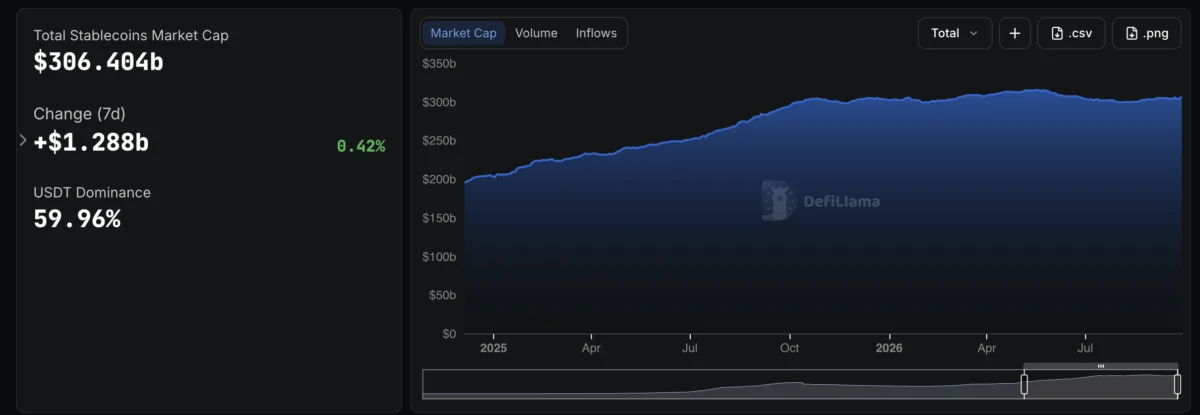
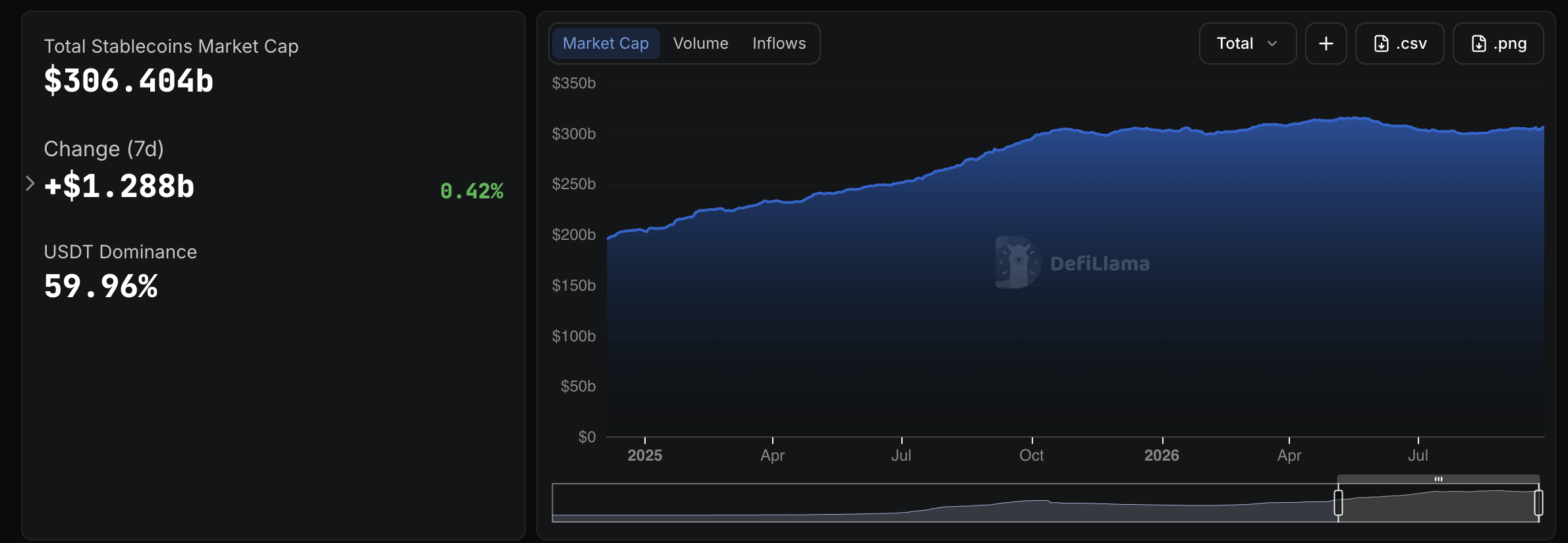
According to comprehensive data compiled by DeFiLlama, the total market capitalization of stablecoins has surged past $306 billion. More importantly, this capital is far from dormant; it serves as the primary liquidity layer for the digital asset economy and cross-border commercial settlements.
Recent disclosures from asset management giant BlackRock highlighted the staggering scale of stablecoin adoption. Stablecoin networks processed $11.2 trillion in transaction volume over the course of the previous year. To put that figure into perspective, it eclipses the annual payment volume handled by credit card titan Mastercard, which stood at $10.6 trillion. The momentum continued unabated into the first half of the year, with stablecoin networks recording an additional $8.5 trillion in volume.
While financial analysts note that this is not a strict "apples-to-apples" comparison—as stablecoin metrics also encompass decentralized finance (DeFi) trading activity, yield generation, and speculative transfers—the macroeconomic trajectory is clear. Stablecoins have evolved from niche crypto-trading tools into high-speed, low-cost global settlement networks that rival legacy credit and wire systems.

Official Responses and Industry Reactions
The announcement of the Citi-Coinbase collaboration has sent ripples through both the traditional banking sector and the Web3 community, prompting statements from industry leaders on both sides of the aisle.
Executives from Citigroup emphasized that the move is driven by client demand. As global e-commerce companies, multinational corporations, and institutional investors increasingly operate across borders, their expectations for payment speed and efficiency have outpaced what legacy banking infrastructure can independently provide. By partnering with Coinbase, Citi is positioning itself at the forefront of modern treasury management.
Coinbase leadership echoed these sentiments, framing the collaboration as a monumental leap toward mainstream adoption. Company spokespeople highlighted that bringing "bank-grade fiat and stablecoin payments" to global enterprises bridges the gap between the safety of traditional banking and the unparalleled efficiency of blockchain networks.
Independent fintech analysts and crypto advocates have widely praised the development, noting that institutional validation of this scale removes the lingering stigma associated with digital assets. However, traditional market observers have also raised questions regarding how compliance, counterparty risk, and regulatory oversight will be managed as the pipeline expands to broader global markets. Both Citi and Coinbase have announced that comprehensive architectural and compliance details will be rolled out in the coming months.
Implications: What This Means for the Future of Finance
The partnership between Citigroup and Coinbase is far more than a simple corporate alliance; it serves as a bellwether for the future of global finance. Several key implications emerge from this convergence:
1. The Blurring Lines Between TradFi and DeFi
For years, the financial world was segregated into two distinct camps: traditional banking (slow, compliant, centralized) and decentralized finance (fast, borderless, autonomous). Partnerships like this one suggest a hybrid future. Traditional institutions will provide the regulatory compliance, institutional trust, and fiat gateways, while blockchain infrastructure and stablecoins will provide the speed, programmability, and global reach.
2. Pressure on Competitors
With Citi making a definitive play into crypto-native payment rails, rival global banks—including JPMorgan Chase, Bank of America, and HSBC—will face mounting pressure to accelerate their own digital asset strategies. Financial institutions that fail to offer integrated stablecoin and crypto-payment solutions risk losing high-volume corporate and e-commerce clients to more agile competitors.
3. Redefining Cross-Border Payments
Traditional cross-border B2B payments have historically been plagued by high FX fees, intermediary bank friction, and multi-day settlement delays. By leveraging stablecoins and 24/7 banking rails, the Citi-Coinbase framework points toward a future where international business payments settle as instantly and cheaply as sending an email.
4. Regulatory Scrutiny and Standardization
As mainstream financial giants deepen their integration with crypto infrastructure, regulatory oversight is guaranteed to intensify. The success of the Citi-Coinbase model will likely serve as a blueprint for policymakers, establishing precedents for how traditional banks can safely custody, convert, and settle digital assets without violating anti-money laundering (AML) or know-your-customer (KYC) mandates.
Conclusion
The wall that once separated traditional banking from the digital asset ecosystem has officially been breached. When a global banking institution responsible for a massive share of the world’s e-commerce flow actively partners with a premier crypto exchange to build a 24/7 stablecoin and digital asset payment bridge, it signals a permanent paradigm shift. The financial system of tomorrow is being built today, and the boundary lines between TradFi and crypto are vanishing before our eyes.
