

For years, traditional finance (TradFi) stood as a fortress guarding the legacy monetary system, keeping the disruptive, borderless world of cryptocurrency at a cautious—and often hostile—arm’s length. Banking behemoths dismissed decentralized finance (DeFi) as a volatile playground, warning clients away from digital tokens.
Today, that fortress is opening its gates. In one of the most striking developments of the financial convergence era, Citigroup—one of the largest and most globally entrenched banking institutions on Earth—is making official room for cryptocurrency.
In a landmark collaboration, Citi and Coinbase have joined forces to revolutionize digital asset payment capabilities for global institutional and corporate clients. This alliance represents far more than a simple corporate partnership; it serves as a critical bridge uniting the heavily regulated, traditional banking apparatus with the lightning-fast, 24/7 liquidity of the blockchain economy.
1. Main Facts: Bridging TradFi and DeFi
At its core, the Citi-Coinbase partnership is designed to streamline the friction-heavy process of moving capital between fiat currency systems and the digital asset ecosystem.

- The Core Objective: The initial phase of the collaboration focuses heavily on seamless capital migration. Coinbase already boasts an enterprise-grade infrastructure capable of converting fiat currency into digital assets and vice versa. By integrating with this system, Citi will connect its vast network of corporate clients directly to Coinbase’s liquidity and conversion rails.
- Instantaneous Settlement: Unlike conventional international wire transfers that remain bound by banking hours, traditional clearinghouses, and the dreaded "Monday morning wait," transactions routed through this new framework will operate without traditional banking calendar constraints.
- The Stablecoin Pipeline: While the finer technical details are still being finalized, both institutions are engineering pathways that will allow a client to dispatch traditional fiat currency from one end of the globe and have it instantly manifest as stablecoins on the receiving end.
- Unmatched Scale: Citi is uniquely positioned to spearhead this integration. The bank already moves billions of dollars globally on a 24/7 basis, manages its own proprietary token service for institutional players, and reportedly banks roughly 90% of the world’s top e-commerce companies. Coinbase is supplying the cryptographic highway to bring this immense volume of commercial flow directly into the crypto sphere.
2. Chronology: The Evolution Toward Institutional Integration
The road to the Citi-Coinbase alliance was not paved overnight. It is the culmination of a decade-long ideological and infrastructural evolution.
- The Rejection Era (2013–2017): During Bitcoin’s early mainstream ascendance, Wall Street executives famously labeled cryptocurrency a "fraud," a "bubble," or a speculative toy for illicit actors. Traditional banks routinely closed accounts associated with crypto exchanges and startups.
- The Digital Asset Exploration (2018–2021): As blockchain technology matured, institutional curiosity began to outweigh skepticism. Major banks quietly launched internal blockchain labs and custody explorations. Simultaneously, Coinbase evolved from a retail-focused crypto app into a regulated, publicly traded corporate giant capable of meeting strict Wall Street compliance standards.
- The Tokenization Pivot (2022–2024): Traditional financial institutions began experimenting with permissioned blockchains. Citi introduced its own token services to facilitate instant cross-border liquidity for institutional clients, proving that banks saw the utility of distributed ledger technology, even if they were hesitant to embrace open-access networks.
- The Convergence Phase (2025–2026): Regulatory clarity improved globally, and corporate demand for blockchain-based settlement exploded. Recognizing that clients wanted faster, cheaper, and more programmable payments, Citi pivoted from internal isolationism to external integration, culminating in the formal agreement with Coinbase.
3. Supporting Data: The Staggering Scale of the Stablecoin Economy
To understand why a global banking titan like Citi is aligning with a crypto native exchange, one only needs to look at the numbers. The digital asset economy is no longer a niche internet subculture; it is a macroeconomic force.
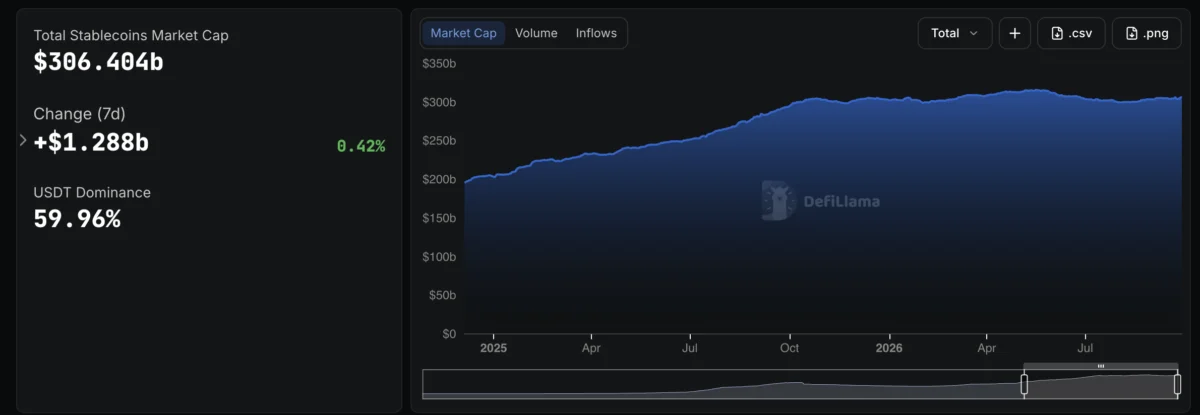
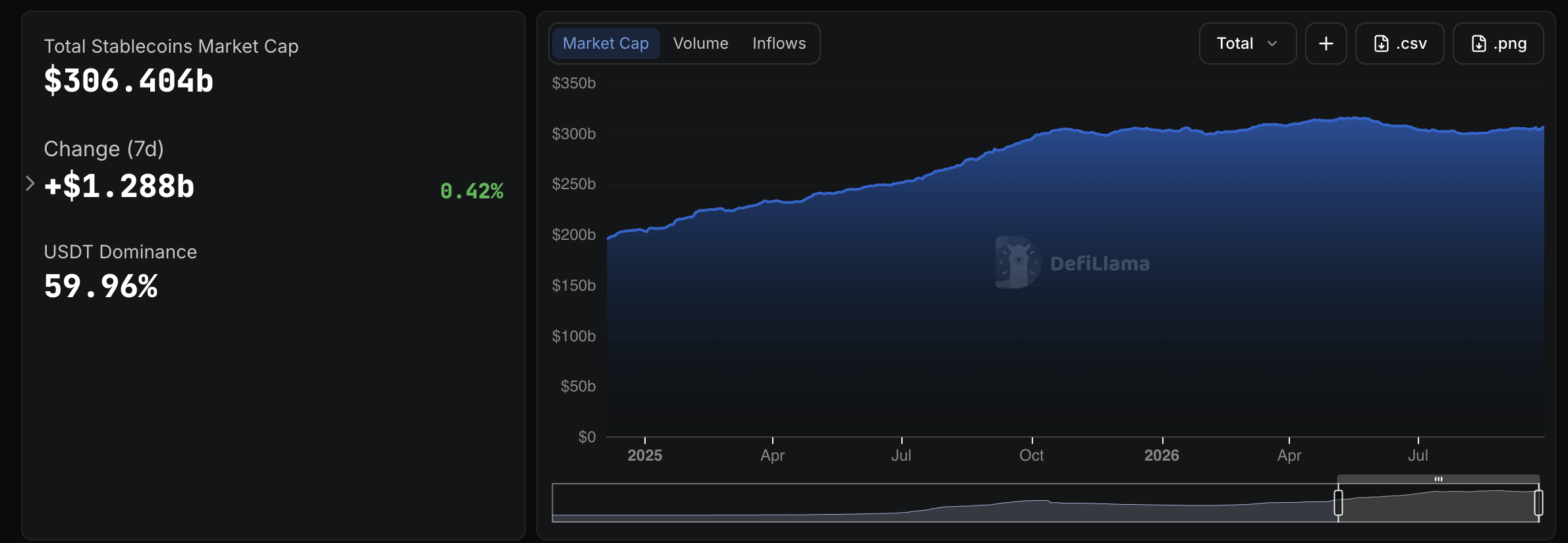
According to data compiled by DeFiLlama, the total market capitalization of stablecoins has surpassed $306 billion. More importantly, this capital is not sitting idle—it is driving an unprecedented volume of global financial transactions.
+-------------------------------------------------------------+
|          ANNUAL TRANSACTION VOLUME (COMPARATIVE)            |
+-------------------------------------------------------------+
| Stablecoins (Previous Year)  | $11.2 Trillion               |
| Mastercard (Previous Year)   | $10.6 Trillion               |
| Stablecoins (H1 2026 Alone)  | $8.5 Trillion                |
+-------------------------------------------------------------+
Data revealed by asset management giant BlackRock highlighted that stablecoins processed a jaw-dropping $11.2 trillion in transactions over the course of a single recent year. To put that figure into perspective, it outpaces the annual transaction volume of Mastercard, which stood at $10.6 trillion.

The momentum has only accelerated. The first half of 2026 alone injected an additional $8.5 trillion in stablecoin settlement volume into the ecosystem. While financial analysts note that this is not a pure "apples-to-apples" comparison—as stablecoin metrics often capture decentralized finance (DeFi) trading loops, yield-farming activities, and speculative transfers alongside commercial payments—the macroeconomic trajectory is undeniable. Legacy finance cannot afford to ignore a payment rail scaling at the speed of stablecoins.
4. Official Responses and Industry Reactions
As of now, both Citigroup and Coinbase have played their cards close to their chests regarding the exhaustive technical architecture of the partnership. Executives from both firms have confirmed the broad strokes of the integration but have noted that comprehensive details, regional rollouts, and specific enterprise software integrations will be officially unveiled in the coming months.
Industry analysts have viewed the partnership through a lens of inevitability.
- The Crypto Advocate Perspective: Web3 proponents view the move as the ultimate validation of decentralized technology. By partnering with a top-tier global bank, Coinbase has helped normalize crypto rails as standard financial infrastructure rather than alternative finance.
- The TradFi Pragmatist Perspective: Institutional commentators view the alliance as a defensive yet progressive survival strategy. Banks realize that corporate treasuries and global e-commerce merchants are demanding instantaneous, low-cost settlements. If Citi does not offer crypto and stablecoin rails, its corporate clients will simply migrate to fintech competitors or blockchain-native solutions that do.
5. Implications: What This Means for the Future of Finance
The marriage of Citi’s institutional banking network with Coinbase’s digital asset infrastructure carries profound implications for the global financial ecosystem.
For Global Corporate Treasuries
Multinational corporations often lose billions of dollars annually to foreign exchange fees, slow settlement times, and weekend banking gridlock. By leveraging a Citi-Coinbase pipeline, a multinational firm could theoretically settle international invoices in real time on a Saturday night using stablecoins, bypassing correspondent banking networks entirely.
For the Future of Retail and E-Commerce
Given that Citi provides banking services to an overwhelming majority of the world’s leading e-commerce platforms, this partnership could quietly pave the way for mainstream online merchants to accept crypto-backed stablecoin payments natively at checkout. Consumers may soon spend digital assets seamlessly without ever realizing that the backend settlement is utilizing blockchain infrastructure.
The Ultimate TradFi and DeFi Convergence
For years, the narrative was framed as a zero-sum game: either traditional banks would crush crypto through regulation, or decentralized finance would render banks obsolete. The Citi-Coinbase partnership writes a different script—one of synthesis.
As traditional finance and decentralized finance continue to merge, the boundary lines separating Wall Street from the blockchain are dissolving. For global clients, the future of money is fast, borderless, and available 24/7/365.
