

The decentralized finance (DeFi) ecosystem is currently locked in a profound ideological and technical debate that threatens to redefine how users perceive risk in the blockchain era. The firestorm was ignited by none other than Manuel Aráoz, the founder of OpenZeppelin—a cornerstone institution in blockchain security—who recently declared that the entire DeFi sector is "unsafe."
This provocative assertion has sent shockwaves through the industry, drawing sharp rebukes from high-profile leaders who view the assessment as an alarmist misreading of the industry’s maturation. As capital continues to flow out of decentralized protocols amid a volatile 2026, the question of whether DeFi is inherently broken or merely evolving has become the most pressing narrative in the crypto-asset space.
The Catalyst: Aráoz’s Warning and the Exit Call
The controversy began when Manuel Aráoz publicly voiced his profound skepticism regarding the current state of DeFi. His argument hinges on the rapid evolution of artificial intelligence. According to Aráoz, we have entered an era where offensive AI-powered cybersecurity agents possess "superhuman" capabilities, allowing them to scan, identify, and exploit vulnerabilities in smart contracts and DeFi protocols at speeds far exceeding human capability.
Aráoz’s stance is not merely theoretical; it is actionable. He has gone as far as advising his inner circle, including friends and family, to liquidate all DeFi positions. This "get out" signal was aimed at even the most established, "blue-chip" protocols, including Aave, MakerDAO, and Compound. For a figure whose firm is synonymous with the security standards that underpin much of the industry, this public vote of no confidence was perceived as a significant betrayal of the "code is law" ethos.
A Clash of Titans: The Industry Pushes Back
The response from the DeFi leadership was immediate and stinging. Stani Kulechov, founder of the Aave protocol, led the charge against the narrative that DeFi is inherently insecure.
"Not a good take," Kulechov stated in a widely circulated response. He argued that the infrastructure of DeFi today is "materially more resilient" than in previous cycles, a transformation he attributes in part to the same technology Aráoz fears: AI. According to Kulechov, AI has not only empowered attackers but has significantly bolstered the defensive arsenal of developers, enabling better auditing tools, real-time risk engines, and more sophisticated formal verification methods.
Kulechov’s rebuttal suggests that the industry has undergone a paradigm shift. "DeFi is constantly evolving, but pretending the industry hasn’t matured significantly or that AI is only a net negative for DeFi security is simply not true," he added.

Chronology of the Debate: From Warning to Distance
The intensity of the discourse forced OpenZeppelin, the firm founded by Aráoz, into an uncomfortable position. Given that OpenZeppelin’s primary mandate is the creation of secure, automated on-chain financial infrastructure, the founder’s comments created a direct conflict of interest. Following mounting pressure from developers and stakeholders who feared that the comments could undermine the credibility of the firm’s auditing and security products, OpenZeppelin issued a statement distancing itself from Aráoz’s personal views.
This tension highlights a critical nuance in the sector: the distinction between the security of the underlying smart contract code and the operational security of the entities managing them.
Sam MacPherson, co-founder of Sky (formerly MakerDAO), provided a vital perspective that bridged the gap between the two sides. "Most of the recent major hacks have been opsec [operational security] issues," MacPherson noted. He argued that the smart contracts of established, blue-chip protocols are now effectively battle-tested and secure, shifting the primary point of failure away from the code itself and toward human error, private key management, and administrative control.
Analyzing the Data: Where Does the Risk Actually Lie?
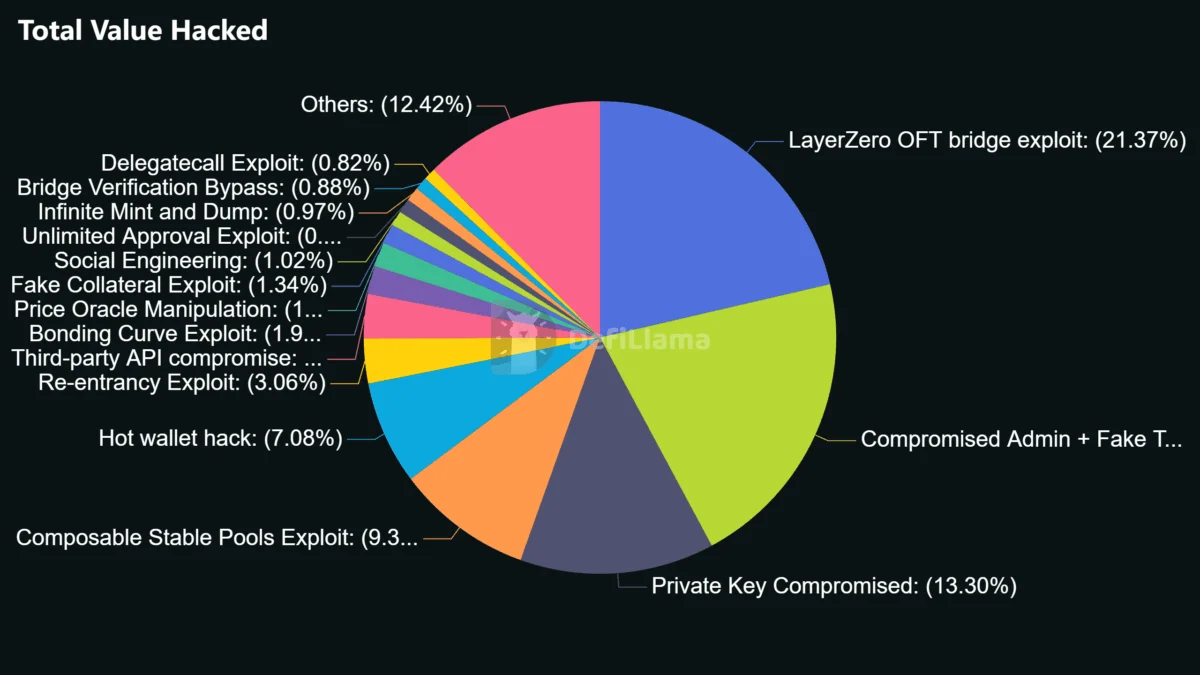
To understand the validity of these arguments, one must look at the data. Analysts have pointed out that in 2025, less than 10% of total DeFi hacks were attributable to flaws in the codebase. Instead, the overwhelming majority of successful exploits were traced to:
- Bad Parameter Configuration: Incorrectly set interest rates, liquidation thresholds, or collateralization ratios.
- Poor Operational Security (Opsec): Compromised private keys, phishing attacks on administrators, and lax multi-sig governance practices.
- Bridge Exploits: The failure of cross-chain bridges, which remain the most common point of systemic failure in the current ecosystem.
However, Aráoz’s counter-argument remains potent: if coding agents are becoming "superhuman," they will eventually be able to identify "zero-day" vulnerabilities in even the most complex, audited codebases that human auditors currently miss.
The statistics underscore the gravity of the situation. On a year-on-year basis, approximately $1.45 billion has been siphoned from the DeFi sector. Crucially, over 50% of these exploits were linked to bridged assets and compromised administrative keys, suggesting that while the "smart contract" layer is hardening, the "human/bridge" layer remains the primary vector for catastrophe.
The Macro Implications: A Cooling Market
The timing of this debate could not be more sensitive. The broader crypto market is grappling with a difficult 2026, characterized by high-profile hacks, contagion fears, and the lingering effects of a prolonged "crypto winter."

According to data from DeFiLlama, the sector has seen a staggering $45 billion in capital outflows this year. The Total Value Locked (TVL) in DeFi protocols has plummeted by 35%, resting at roughly $80 billion. This decline is not solely due to price action; it reflects a systemic loss of confidence among retail and institutional liquidity providers who are increasingly wary of the risks inherent in decentralized finance.
Implications for the Future of DeFi
The "Aráoz vs. Kulechov" debate serves as a mirror for the current state of the blockchain industry.
1. The Shift to Institutional-Grade Security
The argument that "opsec" is the primary weakness suggests that the next phase of DeFi will not be about writing better code, but about creating better institutional safeguards. This includes the widespread adoption of Hardware Security Modules (HSMs), multi-party computation (MPC) for key management, and decentralized oracle networks that are less susceptible to manipulation.
2. The AI Arms Race
The industry must accept that AI is an "adversarial technology." If AI is used to find bugs, it must also be used to write defensive code. We are likely to see a shift toward automated, continuous monitoring and real-time circuit breakers that pause protocols when anomalous activity—detected by AI—is identified.
3. The "Blue Chip" Consolidation
As the industry matures, capital is likely to consolidate into a smaller number of "blue-chip" protocols that have survived multiple cycles and possess the resources to maintain top-tier, round-the-clock security operations. The "wild west" era of experimental protocols may be coming to a close, as users demand higher standards of safety.
Conclusion
Is DeFi unsafe? The answer depends on one’s definition of the term. If one defines safety as an environment free of risk, then no financial system—centralized or decentralized—is truly safe. If one defines safety as the presence of robust, evolving, and resilient mechanisms for asset protection, then the industry is clearly in a period of intense, necessary, and productive growth.
The disagreement between Manuel Aráoz and Stani Kulechov is not just a personality clash; it is a vital dialectic. Aráoz represents the necessary paranoia of the security engineer, while Kulechov represents the necessary optimism of the protocol builder. Both are required for the survival of the ecosystem. As DeFi navigates this $45 billion outflow and the looming threat of AI-driven exploitation, the winners will be those who can bridge the gap between technical rigor and operational maturity. The "unsafe" label may be an exaggeration, but it is a warning that the industry ignores at its own peril.
