

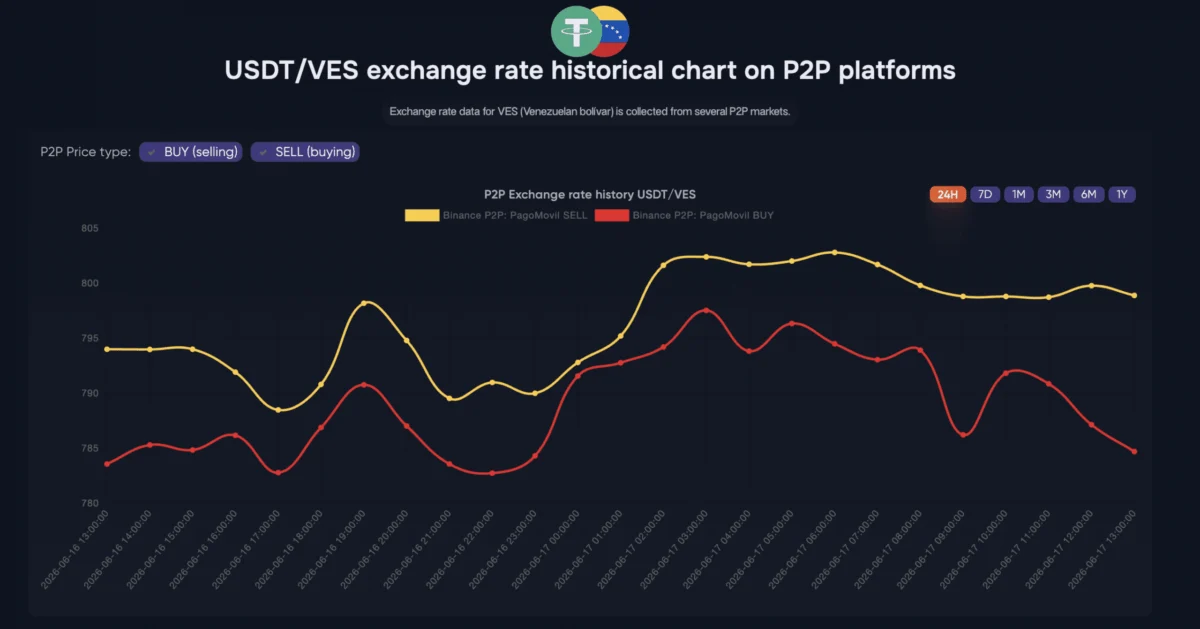
In the turbulent landscape of the Venezuelan economy, where hyperinflation and currency volatility have long been the status quo, the Tether (USDT) stablecoin has cemented its role as the primary financial life raft for the citizenry. As of June 2026, the digital asset’s dominance in the region has reached a fever pitch, serving as both a store of value and a medium of exchange for those looking to escape the relentless erosion of the bolivar. Recent data from P2P.Army reveals a staggering 16% increase in USDT market activity in Venezuela over the past 30 days, a trend that mirrors the broader, systemic instability of the nation’s fiat currency.
Main Facts: The Digital Currency Shift
The core of this trend lies in the widening gap between the local supply of foreign currency and the escalating demand from Venezuelans seeking to protect their purchasing power. Between mid-May and mid-June 2026, the USDT/VES (bolivar) exchange rate experienced a persistent upward trajectory. On Binance, the most widely utilized peer-to-peer (P2P) marketplace in the country, the price of a single unit of USDT breached the 800-bolivar threshold, climbing as high as 810 bolivars before undergoing a marginal correction to 794 bolivars.
This price action is not merely a result of market speculation; it is a direct reflection of the Central Bank of Venezuela’s (BCV) aggressive monetary expansion. As the state increases the supply of bolivars in circulation, the local currency loses value against stable, dollar-pegged assets like Tether. For the average Venezuelan, the P2P market has become the most accessible gateway to convert devaluing bolivars into a digital asset that holds its value, effectively bypassing the limitations and inefficiencies of the formal, state-controlled banking system.
A Chronology of Monetary Expansion (January – June 2026)
To understand the current state of the Venezuelan crypto market, one must analyze the rapid acceleration of the nation’s monetary liquidity. The timeline of this year has been marked by a relentless injection of capital into the economy, which has served as the primary catalyst for the current surge in stablecoin demand.
- January 2, 2026: The year began with a monetary liquidity baseline of approximately 0.93 trillion bolivars.
- May 8, 2026: By early May, the liquidity had surged to 1.76 trillion bolivars, setting a significant benchmark for the fiscal year.
- June 5, 2026: Within less than a month, liquidity hit an alarming 2.17 trillion bolivars. This represents a 23.26% increase in just under 30 days and a staggering 131.17% increase in total liquidity since the beginning of the year.
This rapid expansion has effectively flooded the market with local currency, putting immense pressure on the availability of official foreign currency at bank exchange desks. As the BCV continues its policy of liquidity injection, the scarcity of traditional US dollars has forced the population to turn to the digital alternative, Tether, causing the observed price spikes on P2P exchanges.
Supporting Data: Why USDT Rules the Landscape
The preference for USDT in Venezuela is not a matter of chance but a consequence of market utility. According to recent on-chain analysis by Visa, USDT continues to dominate the global stablecoin market in both total supply and transaction volume. This liquidity makes it the preferred instrument for P2P traders, as it offers near-instant settlement and global interoperability.
In the Venezuelan context, the P2P market acts as a pressure valve for the economy. When formal banking institutions cannot meet the demand for foreign currency, the P2P ecosystem steps in to bridge the gap. The data provided by P2P.Army underscores this, showing that despite broader global regulatory pressures—such as the recent European Union’s MiCA (Markets in Crypto-Assets) framework, which has led to some delistings—Tether’s utility in emerging markets remains resilient. While some international exchanges have distanced themselves from Tether due to regulatory headwinds, the demand in Venezuela has remained decoupled from these external pressures, focusing instead on the immediate, practical need for inflation-resistant assets.
The Analyst Perspective: Hever Castro’s Assessment
The structural shift in how Venezuelans interact with their finances has not gone unnoticed by economic observers. Analyst Hever Castro has highlighted that the disparity between the official foreign currency supply and private sector demand is now a fundamental factor influencing daily business operations across the country.
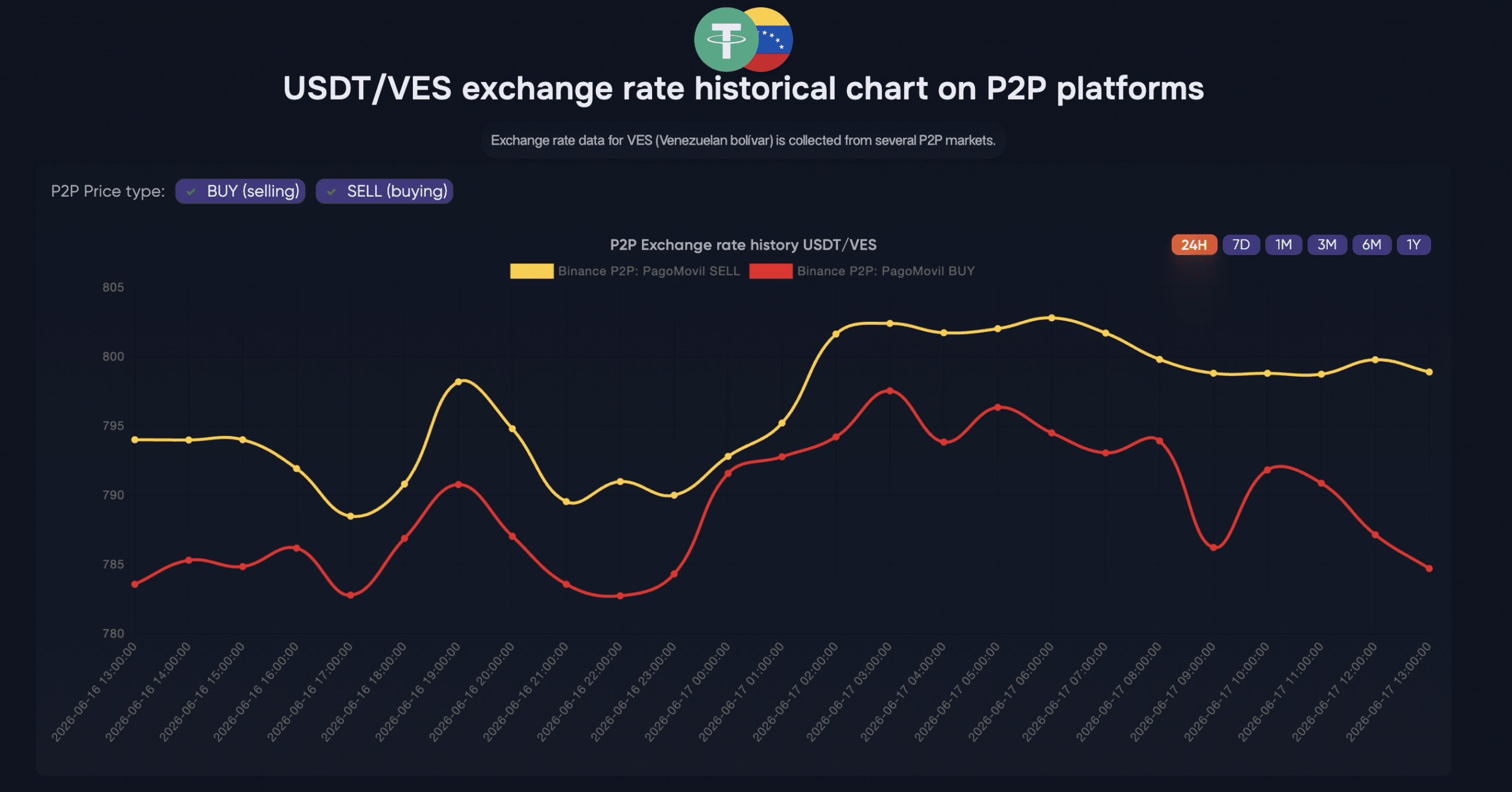
According to Castro, the current economic environment is characterized by a "scarcity trap." Because the local financial system is unable to provide sufficient foreign currency to meet the needs of businesses and individuals, the market creates its own solutions. The influx of local currency does not stimulate growth in a traditional sense; rather, it accelerates the flight to digital assets. As more bolivars enter the market, the velocity of their conversion into USDT increases, which in turn drives up the price of the stablecoin on the open market. This cycle has effectively made the USDT/VES exchange rate the "shadow" benchmark for the true cost of goods and services in Venezuela.
Implications for the Future
The implications of this trend are multifaceted, affecting everything from individual savings to national economic policy.
1. The Erosion of Fiat Trust
The continued reliance on USDT signals a profound, long-term erosion of trust in the bolivar. When a significant portion of a nation’s commerce shifts to a non-sovereign digital asset, the government loses a degree of control over monetary policy. The "dollarization" of the economy, now accelerated through digital stablecoins, means that the BCV’s attempts to manage inflation through monetary expansion are increasingly ineffective and potentially counterproductive.
2. The Regulatory Dilemma
While the Venezuelan government has shown varying levels of tolerance for cryptocurrency, the sheer volume of P2P activity creates a complex regulatory dilemma. On one hand, the digital asset market provides essential liquidity that keeps the economy functioning; on the other, it creates an untaxed, decentralized financial sector that exists outside the purview of the state. As international regulatory bodies like the EU continue to scrutinize Tether, Venezuela may eventually face pressure to integrate or restrict these activities, which would have severe consequences for the local population.

3. Financial Inclusion vs. Risk
For the individual, USDT offers a degree of financial sovereignty that was previously unavailable. However, this comes with significant risks. Users are exposed to the volatility of the P2P platforms themselves, the cybersecurity risks inherent in managing digital wallets, and the regulatory uncertainty surrounding Tether’s future. Despite these risks, the alternative—holding cash that loses value by the day—is viewed by most as a much greater danger.
Conclusion: A Paradigm Shift in Value Storage
The rise of USDT in Venezuela serves as a quintessential case study in the role of stablecoins within failing or hyperinflationary economies. By providing a stable unit of account that is accessible via smartphone, Tether has fundamentally altered the Venezuelan financial landscape.
The recent 16% spike in activity and the breach of the 800-bolivar mark are symptoms of a larger, systemic shift. As long as the monetary policy of the Central Bank of Venezuela remains tied to aggressive liquidity expansion, and as long as the demand for a stable hedge remains unsatisfied by the formal banking sector, the adoption of USDT will likely continue to grow.
The digital asset is no longer just a speculative tool for the crypto-savvy; it has become a necessary instrument for economic survival. Looking ahead, the tension between the state’s desire for monetary control and the population’s need for digital stability will remain a defining feature of the Venezuelan economic experience. Whether this leads to a new form of "crypto-dollarization" or a government-led crackdown remains to be seen, but one thing is clear: the digital stablecoin has firmly established its position as the de facto currency of choice in the face of persistent economic instability.
