

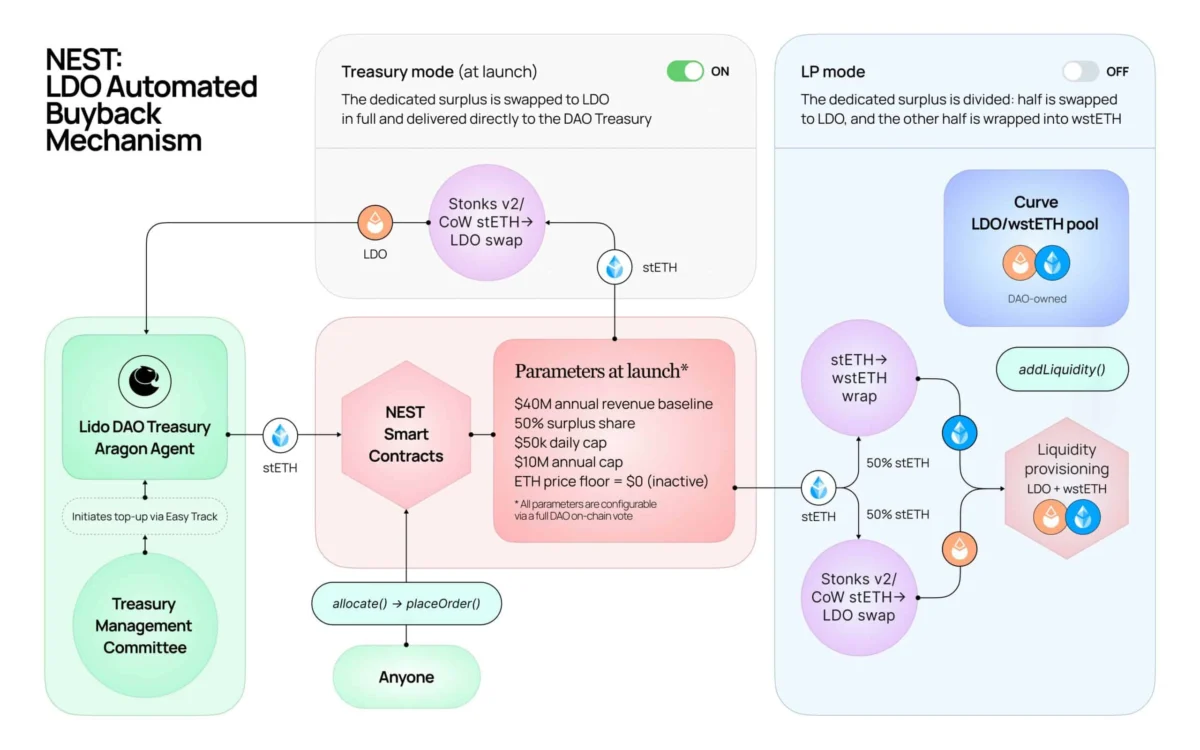
The decentralized finance (DeFi) landscape is witnessing a significant shift in how protocols manage their native assets. Lido Finance, the dominant liquid staking protocol, has officially activated its long-awaited automatic LDO token buyback program. Known as the Network Economic Support Token (NEST) initiative, this mechanism represents a sophisticated, data-driven approach to treasury management, signaling a maturation of Lido’s governance and fiscal strategy.
While the program is now live on the mainnet, its implementation serves as a case study in the complexities of balancing protocol revenue, market sentiment, and long-term sustainability. As the crypto industry continues to grapple with questions surrounding token utility and value accrual, Lido’s decision to move toward automated buybacks positions it as a leader in evolving DAO economic models.
The Mechanics of NEST: Balancing Growth and Sustainability
The NEST program is designed with a specific, rigid architecture to ensure that treasury spending remains tethered to actual protocol performance. Rather than executing arbitrary market buys, the protocol has instituted a dynamic threshold system.
Key Operational Parameters
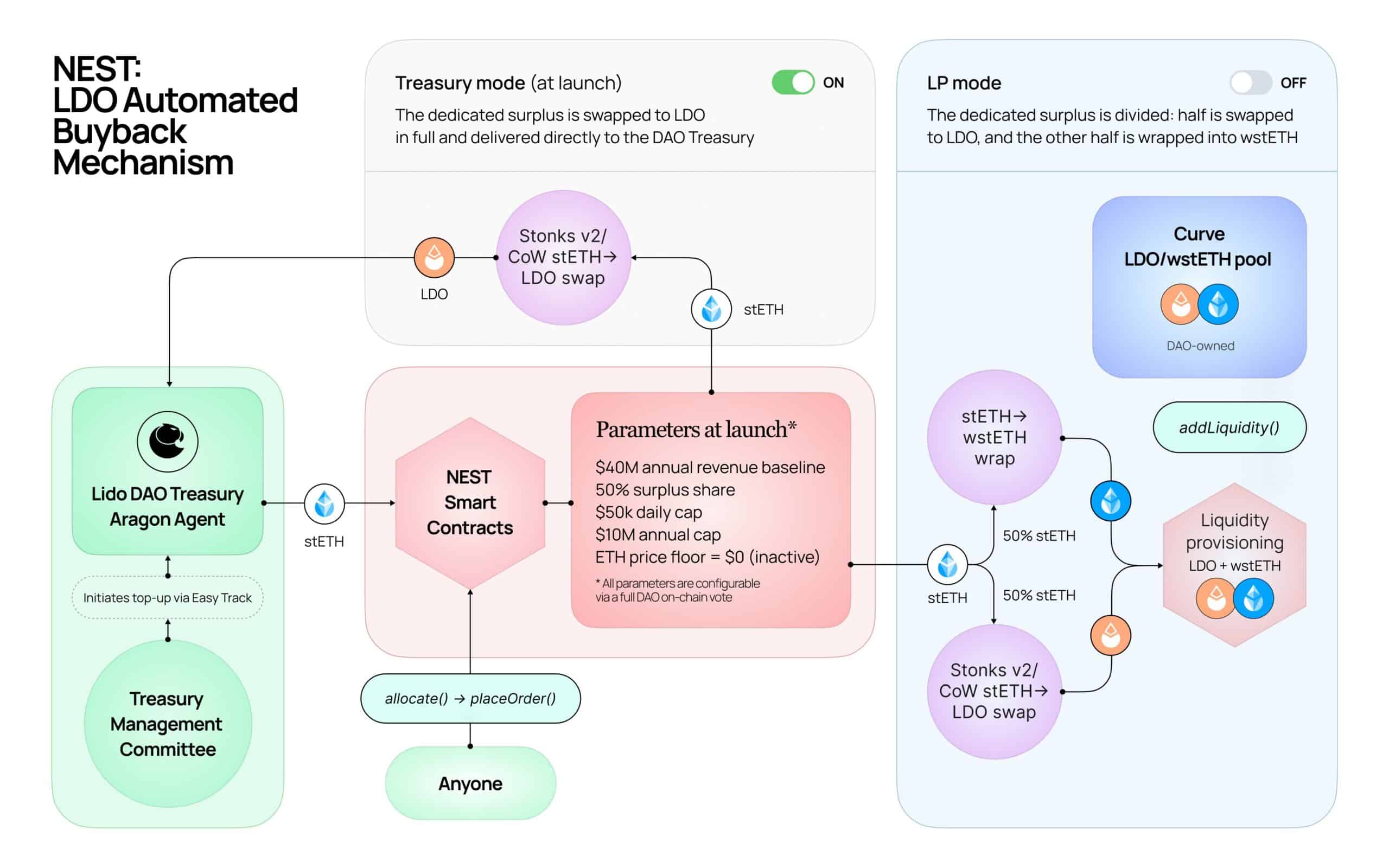
- The Revenue Trigger: The program only activates when the protocol’s daily staking revenue exceeds $109,000. This threshold is calculated to represent a $40 million annual revenue baseline.
- The Buyback Allocation: When revenue surpasses this baseline, 50% of the daily excess revenue is directed toward the LDO buyback program.
- The Guardrails: To prevent market volatility or excessive depletion of the treasury, the program enforces a hard cap. Daily buybacks are limited to $50,000, and annual purchases are strictly capped at $10 million.
These parameters demonstrate a conservative, risk-adjusted approach. By setting a revenue floor, Lido ensures that the buyback program does not cannibalize funds needed for essential operations, security audits, or ongoing ecosystem development during periods of market contraction.
A Chronology of the NEST Initiative
The road to the activation of NEST has been marked by extensive community deliberation and iterative design.
Early 2025: Conceptualization
The concept of a formalized buyback program was first floated in the Lido governance forums. As the protocol’s treasury grew, community members began to question the most efficient way to utilize accumulated fees. The goal was to provide a mechanism that could support the LDO token’s value proposition while simultaneously building a robust DAO treasury.

Late 2025: The Debate
Throughout the latter half of 2025, the proposal underwent intense scrutiny. Critics argued that a $10 million annual cap was insufficient for a protocol of Lido’s size, noting that competitors and other major DeFi projects were engaging in significantly larger buyback or distribution programs.
August 2026: Official Mainnet Activation
After months of development and testing, the NEST smart contracts were deployed to the mainnet. The launch coincided with a period of market consolidation, providing a testbed for the protocol’s ability to navigate lower-revenue environments.
Supporting Data: Why the "Wait and See" Approach?
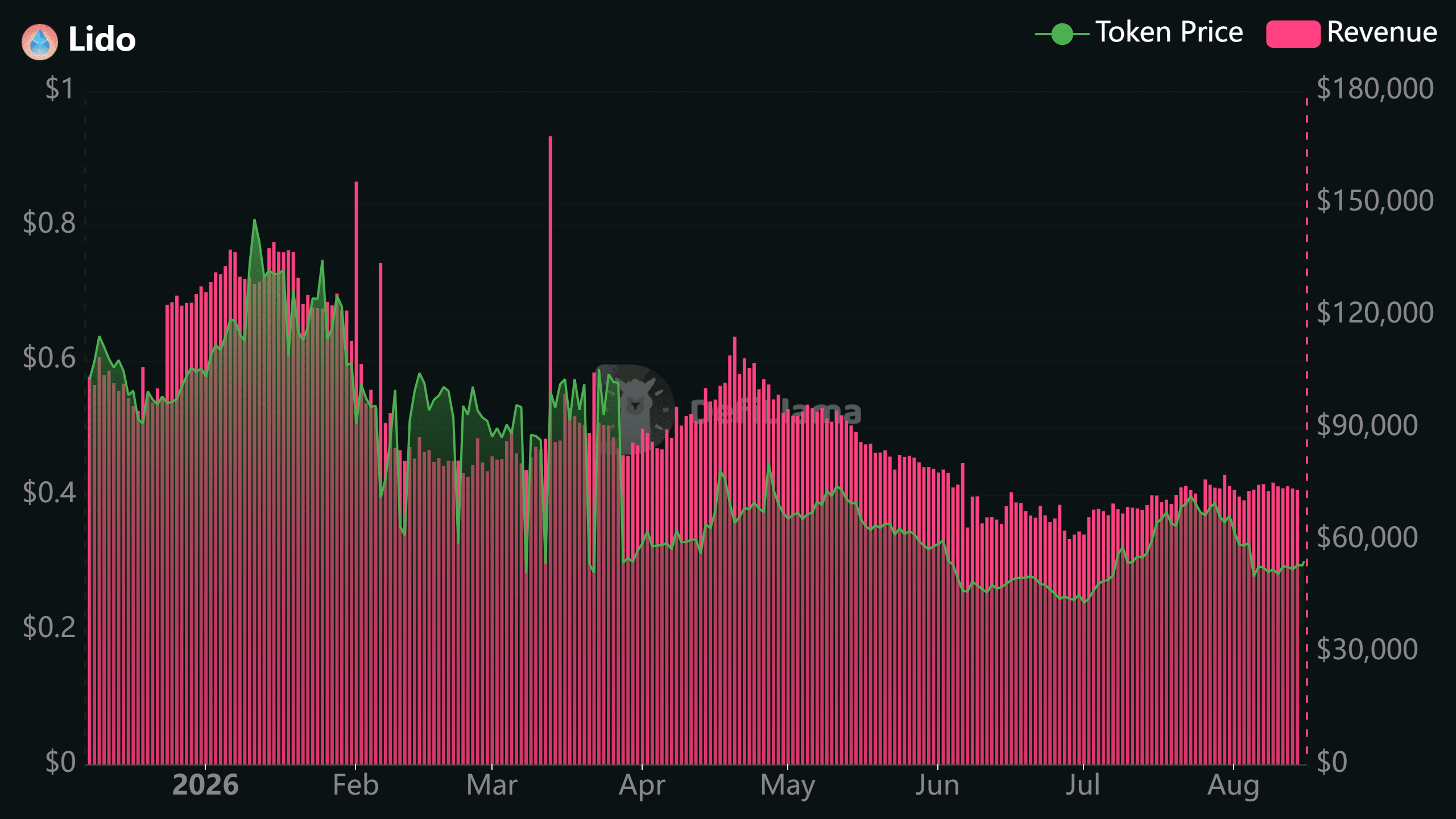
The activation of NEST has arrived during a challenging revenue period for the entire staking sector. According to data from DeFiLlama, Lido’s daily revenue for August 2026 has been hovering around the $75,000 mark.
Because this figure sits below the $109,000 activation threshold, the NEST program remains in a dormant, standby state. This creates a fascinating paradox: the tool is ready, but the market conditions required to trigger it are currently unmet. The last time the protocol consistently exceeded this threshold was in April 2026, a period defined by a robust recovery in the broader cryptocurrency market.
Competitive Benchmarking
Critics of the $10 million cap often point to the aggressive strategies employed by other protocols:
- Hyperliquid: Leading the pack with an estimated $100 million in annual buyback activity.
- Uniswap & Aster: Both maintaining programs in the range of $40 million annually.
- PUMP: Targeting a $35 million annual expenditure.
When viewed against these figures, Lido’s $10 million plan appears modest, if not conservative. However, proponents argue that Lido’s model is not intended to "pump" the price of LDO through massive market manipulation, but rather to establish a sustainable, long-term mechanism that grows with the protocol’s success.
Official and Industry Responses: The Debate Over Buybacks
The introduction of NEST has sparked a broader conversation regarding the efficacy of buybacks in the decentralized ecosystem.
The "Pro-Buyback" Perspective
Proponents of the program, including prominent legal and DeFi analysts, view it as a necessary step toward professionalizing DAO treasuries. Gabriel Shapiro, a well-known attorney in the crypto space, lauded the move, stating, "This is how buybacks should be done." The argument here is that by automating the process, the DAO removes human bias and emotional decision-making, ensuring that the treasury acts only when the underlying business is generating excess profit.
The Critique of Capital Allocation
Conversely, there is a vocal contingent that opposes buybacks entirely. Critics argue that capital, especially in the early stages of a protocol’s lifecycle, should be reinvested into research, development, and user acquisition rather than being used to purchase the protocol’s own governance token.
This sentiment is not without precedent. Projects like Helium have previously experimented with buyback models only to discontinue them, citing a lack of tangible impact on token utility or ecosystem health. The concern is that if the revenue is insufficient to move the needle, the funds are better spent elsewhere.
Market Implications: Analyzing LDO Price Action
The LDO token has faced a tumultuous year. In July 2026, the asset experienced a significant price correction, testing the patience of long-term holders.
Technical Analysis
Throughout August, LDO has struggled to regain momentum, repeatedly finding support at the $0.28 level. While this has effectively halted the downward slide, the path to recovery remains obstructed. The asset is currently trading below its 50-day Exponential Moving Average (EMA) and its 200-day Moving Average (MA), which act as significant resistance zones.
For traders and investors, the activation of NEST serves as a potential psychological catalyst. However, market experts caution that the buyback program will only influence price action once it becomes active. A breakout above the $0.33 resistance level, coinciding with a sustained increase in network revenue, could signal a change in the technical structure, potentially ushering in a new, more bullish phase for the token.
The Future of Lido and NEST
The launch of NEST is more than just a tokenomics update; it is a signal that Lido is preparing for the next phase of its lifecycle—one characterized by fiscal maturity and disciplined treasury management.
Strategic Outlook
- Revenue Sensitivity: The protocol’s dependency on market cycles means that the success of NEST is inextricably linked to the broader health of the Ethereum ecosystem. If Ethereum staking demand increases, the revenue will naturally rise, triggering the buyback and creating a positive feedback loop for the LDO treasury.
- Treasury Asset Management: By keeping the bought tokens in the DAO treasury rather than burning them, Lido retains the ability to use these assets for future governance incentives, grants, or liquidity provisioning. This is a crucial distinction that separates Lido’s approach from simple "burn" mechanisms.
- Governance Evolution: As the program runs, the DAO will likely gather data on the effectiveness of the $109,000 threshold. It is highly probable that future governance votes will seek to adjust these parameters—either by raising the cap or modifying the revenue threshold—as the protocol scales.
Conclusion
Lido Finance has taken a cautious, yet highly disciplined step into the world of programmatic buybacks. By building the NEST mechanism with clear, data-driven triggers, the protocol has successfully avoided the pitfalls of impulsive treasury spending. While the program is currently inactive due to the prevailing market environment, its existence provides a blueprint for how large-scale DAOs can manage their assets in a way that is both transparent and sustainable.
Whether the $10 million cap will prove to be a masterstroke of conservative management or a missed opportunity for aggressive growth remains to be seen. However, one thing is clear: the integration of NEST marks a defining moment for Lido, proving that even as a market leader, the protocol remains committed to iterative, community-governed evolution. As market sentiment shifts and revenue streams stabilize, the true impact of NEST will likely be felt in the stability and long-term viability of the Lido ecosystem.
