

The decentralized finance (DeFi) ecosystem was shaken this week as Taiko, a prominent Ethereum Layer 2 (L2) scaling solution, fell victim to a sophisticated security breach. The incident, which resulted in the theft of approximately $1.7 million in digital assets, has sparked an industry-wide conversation regarding the security assumptions of rollup-based infrastructure. By bypassing critical chain-state verification mechanisms, the attacker exposed a vulnerability that allowed for the unauthorized extraction of funds from the project’s ERC20 Vault and Bridge Proxy contracts.
This incident marks a critical juncture for Taiko, as it tests the resilience of the protocol’s governance, technical response, and community trust. As blockchain forensics firms and the Taiko development team continue to track the stolen assets, the event serves as a stark reminder of the inherent risks present in the rapidly evolving Layer 2 landscape.
The Anatomy of the Exploit: How the Security Failed
At the heart of the breach was a failure in Taiko’s chain-state verification mechanism. In a typical Layer 2 architecture, the "state" of the network—which includes account balances, contract code, and pending transactions—must be verified against the Ethereum mainnet to ensure integrity. By manipulating the validation checks that govern this verification, the perpetrator effectively "blinded" the protocol’s security logic.
Once these validation hurdles were circumvented, the attacker gained unauthorized access to the ERC20 Vault and the Taiko Bridge Proxy. These smart contracts are the lifeblood of the network’s interoperability, acting as a gateway for assets moving between the Ethereum mainnet and the Taiko L2. The breach allowed for the illicit withdrawal of funds, which the attacker immediately began to consolidate into a central repository of wallets.
The Monetization Phase
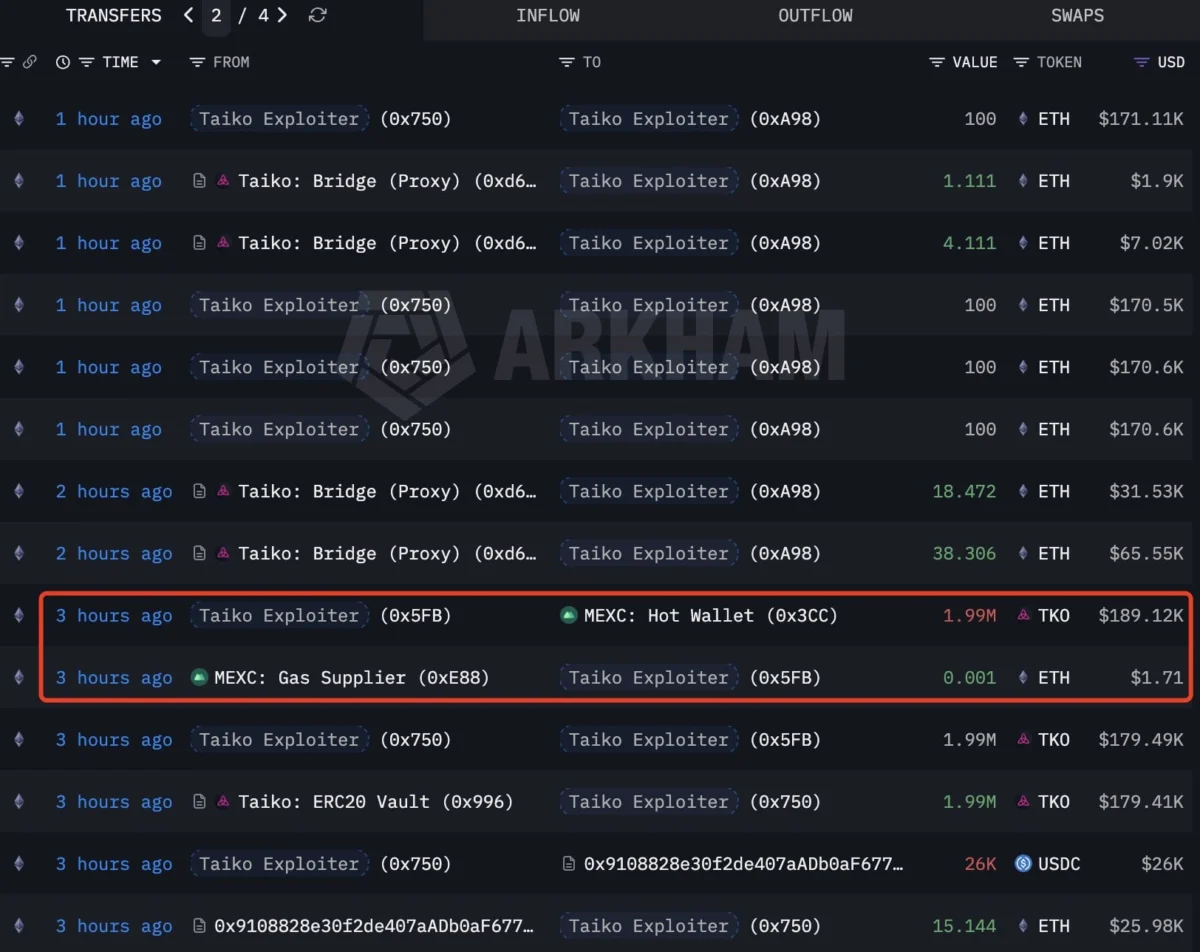
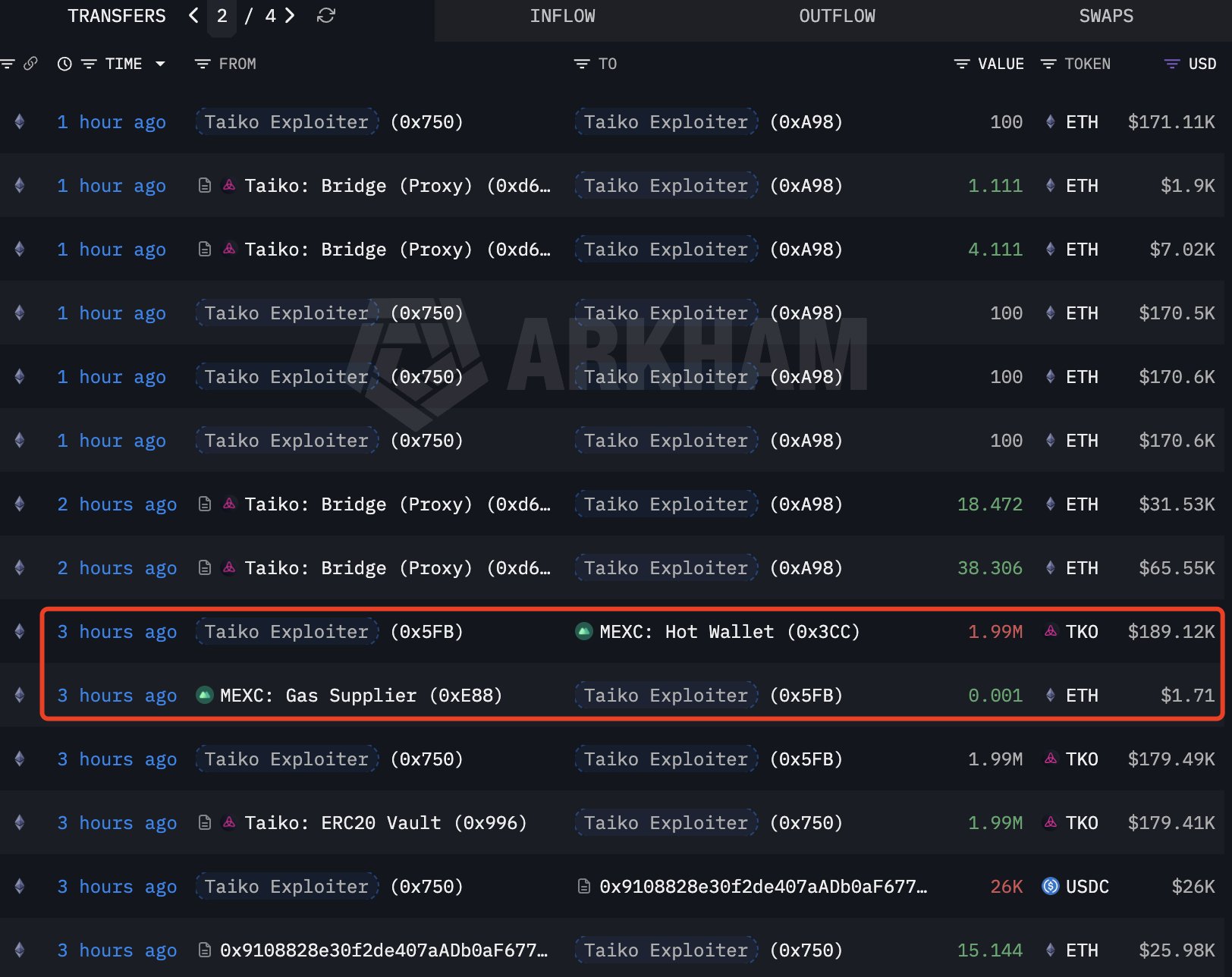
Following the initial theft, the perpetrator transitioned into a "monetization phase"—a common pattern in high-profile crypto exploits. The goal of this phase is to obscure the origin of the funds and convert them into liquid assets. Data provided by Arkham Intelligence indicates that the attacker moved quickly to offload a portion of their haul, transferring 1.99 million TKO tokens (valued at approximately $189,000) to the hot wallet of the MEXC cryptocurrency exchange. This move suggested an urgent need for liquidity, likely in an attempt to exit the ecosystem before security teams could coordinate a freeze.

Chronology of the Incident
To understand the scope of the crisis, one must look at the timeline of events as they unfolded on-chain:
- The Breach: The attacker exploited the chain-state verification failure, draining assets from the Bridge Proxy and ERC20 Vault.
- Consolidation: The stolen assets were aggregated into a series of interconnected wallets.
- Liquidation Attempt: A portion of the TKO tokens was moved to MEXC in an attempt to cash out.
- Detection and Response: Taiko’s security monitoring systems flagged the anomaly.
- Emergency Halt: To prevent further drain, Taiko’s core team ordered a total cessation of block production.
- Mitigation: The team reached out to centralized exchanges (CEXs) to blacklist the attacker’s addresses and prevent further off-ramping of stolen funds.
Supporting Data and Market Impact
The financial fallout of the hack was immediate and measurable. Beyond the $1.7 million directly stolen, the market reacted with volatility. The TKO token price plummeted by approximately 10%, sliding from $0.1279 to a low of $0.07499 in the immediate aftermath.
Forensic Snapshot
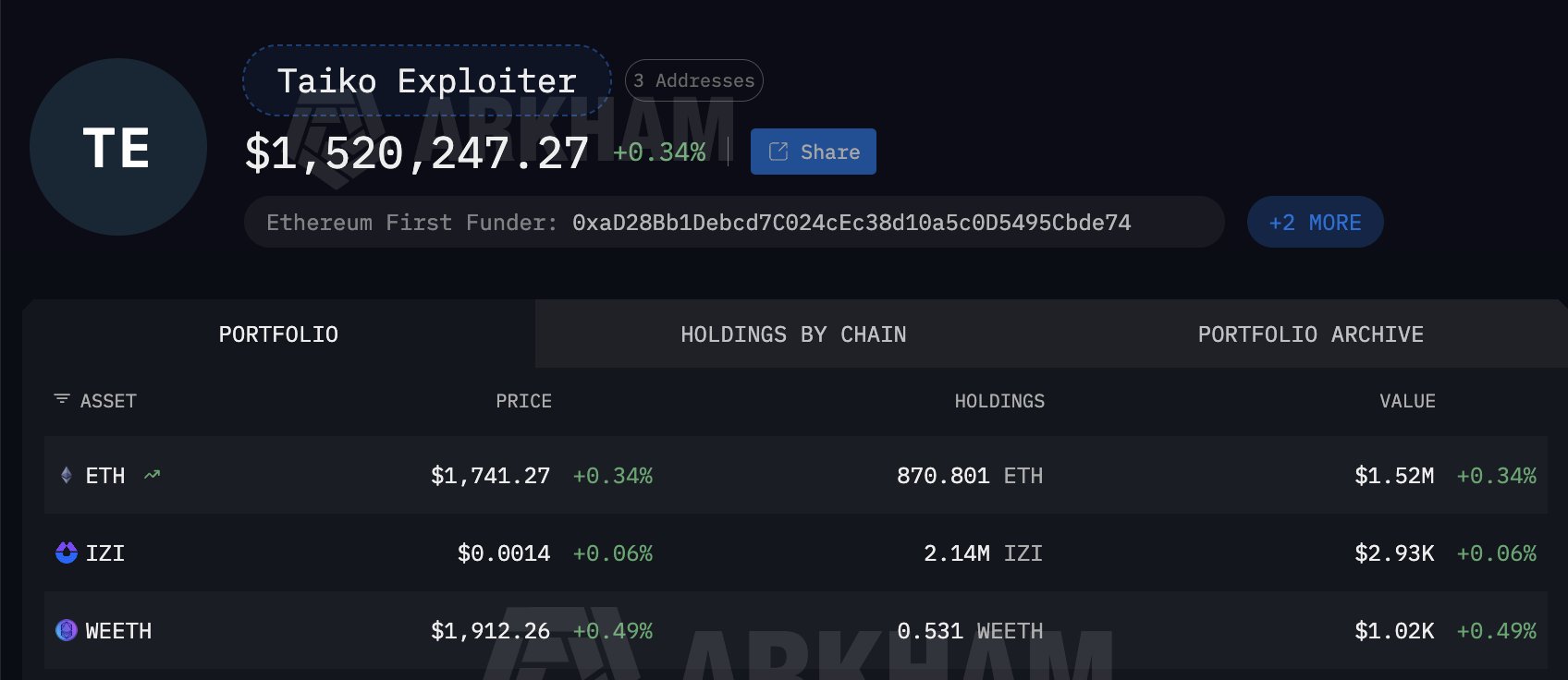
According to the latest data from Arkham, the exploiter continues to hold approximately 870.8 ETH, valued at roughly $1.52 million. This concentration of capital in a single address is a double-edged sword: while it represents the majority of the stolen loot, it also makes the funds easier for blockchain intelligence agencies and law enforcement to track in real-time. Any move from this address will likely trigger automated alerts for every major exchange globally.
Network Health Metrics
Interestingly, despite the breach, the network’s Total Value Locked (TVL) metrics have shown a surprising, albeit complex, reaction:
- DeFi TVL: Increased to approximately $3.84 million, a rise of 3.64%. This suggests that while some users panicked, others may have been utilizing the network for arbitrage or opportunistic liquidity provision.
- Bridged TVL: Remained relatively stable at $12.85 million, indicating that a mass exodus of assets from the bridge did not occur.
- Network Activity: Weekly transaction counts sat at 324,630, a 3.37% decline compared to the previous week, reflecting a cooling-off period as the community awaited further updates from the developers.
Official Responses and Containment Strategy
Taiko’s response to the crisis was characterized by rapid, decisive action. Once the integrity of the chain-state verification was identified as the point of failure, the core team moved to stabilize the network.
Stopping the Bleeding
The decision to cease block production was a drastic but necessary step. By halting block proposers, the team effectively "froze" the network’s state. While this resulted in a temporary interruption of service, it prevented the attacker from executing further malicious transactions or potentially draining additional liquidity from secondary pools.
Coordination with Exchanges
In the modern era of crypto-security, the role of centralized exchanges is pivotal. By identifying the attacker’s wallet addresses and publicly sharing them, Taiko enabled major platforms like MEXC to blacklist the funds. This "coordinated defense" strategy is increasingly becoming the standard for projects hit by exploits, as it effectively traps the attacker’s stolen assets on the blockchain, rendering them "tainted" and difficult to spend without triggering KYC (Know Your Customer) compliance protocols.
Implications: The "Infrastructure-First" Security Paradigm
This incident forces a broader shift in how the industry perceives security. Most previous exploits in the DeFi space targeted user-level behaviors, such as phishing, private key management, or social engineering. However, the Taiko breach targeted the underlying infrastructure.
Rethinking Security Assumptions
When the infrastructure itself—the very code that validates the blockchain’s truth—is compromised, the impact is systemic. This exploit raises uncomfortable questions about the security assumptions built into current Layer 2 rollups. If a verification mechanism can be bypassed, it suggests that the "trustless" nature of these solutions may be more fragile than previously assumed.
Developers and auditors must now move beyond simple smart contract audits. They must subject the "core plumbing"—the state transition logic and the verification proofs—to more rigorous, formal verification processes.
The Path Forward for Taiko
For Taiko, the path forward involves two distinct phases: technical remediation and community restoration.
- Technical Remediation: The team must conduct a comprehensive audit of their bridge architecture and state-verification proofs. This likely involves implementing multi-signature requirements for critical state changes or introducing a "circuit breaker" mechanism that can automatically pause the bridge if suspicious outflow patterns are detected.
- Community Restoration: Trust is the most valuable asset in DeFi. Taiko must be transparent about the "how" and "why" of this breach. Providing a clear roadmap for how the stolen funds will be addressed—and how users will be protected moving forward—will be essential to retaining their user base.
Conclusion
The $1.7 million Taiko exploit serves as a sobering milestone for Ethereum scaling solutions. While the team’s rapid response prevented a total catastrophe, the breach highlights the inherent risks of pioneering new, complex infrastructure. As the industry matures, the focus must shift from rapid deployment to robust, redundant security models. The story of this exploit is not yet over; as the attacker remains at large with $1.52 million in ETH, the eyes of the blockchain community remain fixed on the wallet addresses associated with the crime, awaiting the next move in this high-stakes digital chess game.
