

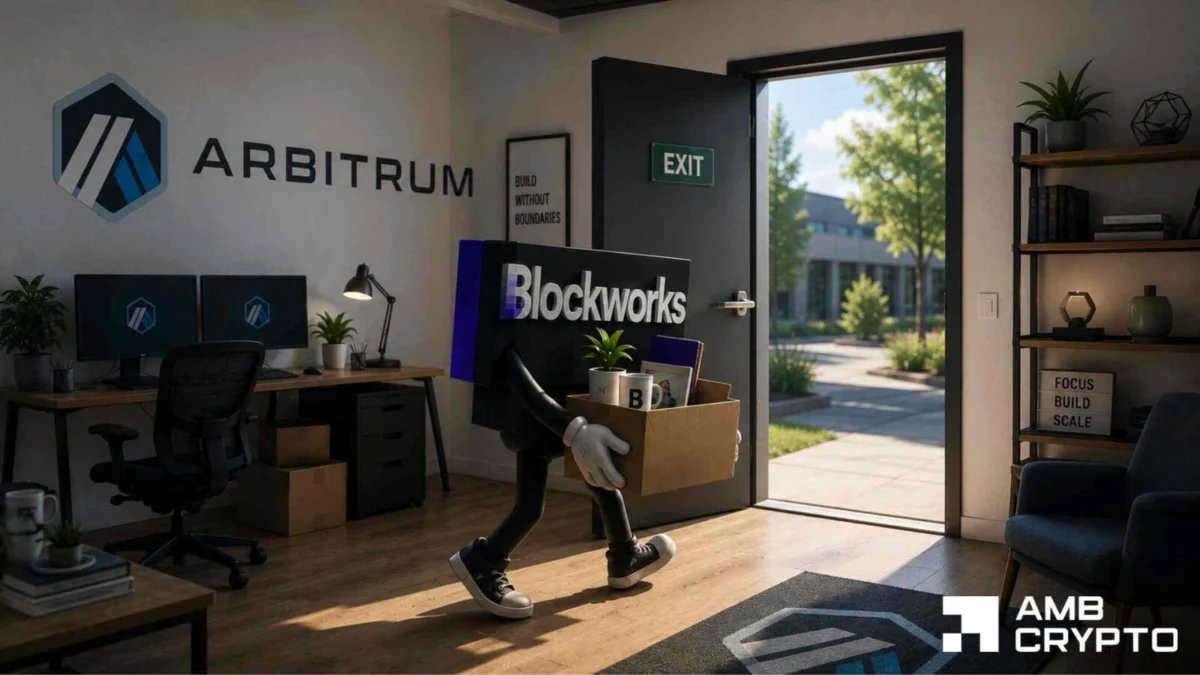
In a move that has sent ripples through the decentralized finance (DeFi) ecosystem, Blockworks Advisory, one of the most prominent institutional delegates in the Arbitrum DAO, has announced it will wind down its governance operations. The decision marks a significant milestone in the evolution—or perhaps the existential crisis—of Decentralized Autonomous Organizations (DAOs). As one of the largest voting entities on the Arbitrum network, Blockworks’ withdrawal forces a broader conversation about the sustainability of professional delegation and the shifting power dynamics between "Labs" companies and community-led governance structures.
Main Facts: A Strategic Realignment
On June 1, 2024, Blockworks Advisory issued a formal statement clarifying that its decision to step back from active delegation is a strategic realignment rather than a vote of no confidence in the Arbitrum ecosystem. As the second-largest delegate on the network, trailing only Entropy Advisors, Blockworks has historically acted as a crucial bridge between institutional capital and on-chain decision-making.
The firm emphasized that its withdrawal should not be interpreted as a bearish signal for the Layer 2 chain. "Stepping back from active delegation is, for Blockworks, a way to align with the current business goals of our organization, and should not be read as a lack of appreciation for Arbitrum nor a bet against the Arbitrum DAO itself," the statement noted. Despite this diplomatic phrasing, the market reacted sharply, with the ARB token experiencing a 6% dip, exacerbated by broader macroeconomic volatility and a Bitcoin-led market pullback.
Chronology of the Governance Model
To understand why this exit is significant, one must look at the "three-layered approach" that has defined the blockchain industry for the past several years:
- The Labs Layer: Entities such as Offchain Labs (for Arbitrum) or Aave Labs (for Aave) act as the original architects. They raise capital, build the underlying technology, and maintain the software’s core integrity.
- The Foundation Layer: Serving as the legal bridge, the Foundation manages treasury reserves and interfaces with legacy legal systems to protect the protocol from jurisdictional reach.
- The DAO/Governance Layer: Theoretically the most decentralized, this layer consists of token holders who vote on treasury allocations and network upgrades, ostensibly shielding the protocol from centralized regulatory scrutiny.
For years, this structure was viewed as the "gold standard" for decentralized governance. However, the equilibrium is fracturing. Recent tensions—most notably the governance conflict within the Aave DAO—have exposed the fragility of this model. When original builders (Labs) and decentralized voters (DAOs) hold divergent visions, the resulting friction often leads to professional delegates, who act as mediators, abandoning the project entirely.
Supporting Data: The Concentration Problem
The narrative that DAOs are truly "decentralized" is increasingly under fire from both academic research and market data. A recent study by the European Central Bank (ECB) provided a sobering reality check, revealing that in many DeFi DAOs, governance is highly concentrated. The report noted that a handful of wallets—often representing institutional delegates or the founding team—control up to 96% of the delegated voting power.
This centralization creates a paradox: if governance is dominated by a few, the cost of coordination is high, and the incentive to maintain active, professional representation becomes a burden that firms like Blockworks are increasingly unwilling to shoulder. When the "community" is merely a proxy for a few powerful stakeholders, the professional delegate role shifts from being a facilitator of democratic process to a high-liability administrative position.
Official Responses and Industry Sentiment
The industry’s reaction to the Blockworks announcement has been a mix of resignation and cautious analysis. Joseph Axisa, a specialist in legal advisory and managing partner at Axis Group, provided a stark assessment of the current environment.
"As DAOs continue to die—often being effectively usurped by Labs companies—this is a decision that will become more common amongst several professional delegates," Axisa stated. His perspective highlights a growing trend: professional firms are realizing that the regulatory and operational risks of managing DAO governance often outweigh the benefits, especially as Labs companies exert more control over the roadmap and treasury.

Blockworks has encouraged its former delegators to seek out new, active contributors, signaling a belief that while the current model is flawed, the Arbitrum ecosystem itself maintains a "bright future." However, the departure of a major institutional voice leaves a power vacuum that could be filled by either smaller, more agile delegates or, conversely, by the very "Labs" entities that the DAO was originally designed to check.
Implications: The Death of the "Three-Layered" Ideal?
The implications of this shift are profound. As we move toward a new phase of blockchain development, the concept of the DAO is undergoing a forced maturation.
1. Regulatory Clarity and the End of "Decentralization Theater"
For years, the "three-layered approach" was used as a defense against regulatory scrutiny. By claiming the DAO held the power, Labs companies argued they were not centralized entities. However, with the SEC and other global regulators moving toward clearer frameworks—such as the CLARITY Act—the need for this elaborate "decentralization theater" is diminishing. If Labs companies are now willing to openly take more control, the need for complex, performative DAO governance may decline.
2. The Rise of "Labs-Centric" Governance
We are entering an era where protocols may transition to more transparently centralized models. If the Labs companies are the ones driving development, funding, and maintenance, they are increasingly demanding a commensurate level of control over the protocol. While this may rankle the ideological purists of the DeFi movement, it could lead to more efficient, faster-moving, and technically stable protocols.
3. The Professional Delegate Dilemma
Professional delegates have long occupied a "middle-man" space. They provide the expertise that retail token holders lack, but they are often caught in the crossfire between community expectations and Labs-led priorities. The Blockworks exit proves that professional delegation is not yet a sustainable business model in an environment where governance power is shifting away from the community. Unless DAOs can find a way to incentivize and protect these delegates, we may see a mass exodus of institutional expertise.
4. Market Consequences
The 6% drop in ARB value serves as a barometer for investor sentiment. When major participants exit governance, it signals instability. For token holders, the uncertainty of who will guide the future of the network—and whether that guidance will prioritize their interests or those of the Labs company—is a risk factor that cannot be ignored.
Conclusion: What Lies Ahead?
The wind-down of Blockworks’ role in Arbitrum is not an isolated incident; it is a symptom of a broader structural transformation. The experiment of "pure" DAO governance is being tested against the realities of legal, financial, and operational complexity.
Moving forward, the industry must decide whether it wants to return to the ethos of total decentralization—which requires a massive, engaged, and empowered community—or accept a more pragmatic, Labs-led structure. For now, the "three-layered approach" is showing significant signs of fatigue. Whether this leads to the extinction of the DAO model or its evolution into a more resilient, realistic form of digital governance remains to be seen. One thing is clear: the era of the "hands-off" DAO is ending, and a more challenging, hands-on era of governance has begun.
